Mamata-Modi spat takes center stage in West Bengal

mamata

In today’s final phase of India’s six-week national elections, attention has increasingly shifted to West Bengal, which will elect the final 17 of its 42 seats in the lower house of the Indian parliament, the Lok Sabha (लोक सभा).India Flag Icon

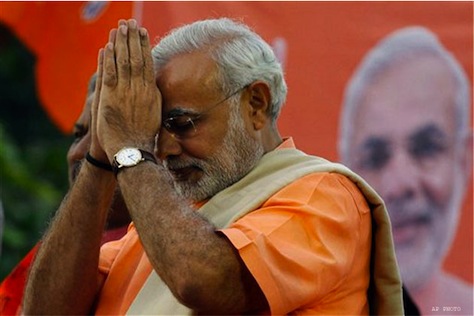
But even as he tries to sweep the rest of the country, Gujarat chief minister Narendra Modi, the leader of the conservative, Hindu nationalist Bharatiya Janata Party (the BJP, भारतीय जनता पार्टी) will find precious few votes in West Bengal.

As far as that goes, neither will his national rival, the secular Indian National Congress (Congress, भारतीय राष्ट्रीय कांग्रेस), which has governed India for the past decade under the leadership of party president Sonia Gandhi and prime minister Manmohan Singh.

That’s because, like so many of India’s states these days, West Bengalese politics is dominated by entirely regional forces.

Between 1977 and 2011, West Bengal featured the longest consecutive communist government in elective history — under the long-serving chief minister Joyti Basu, from 1977 to 2000, and his successor Buddhadeb Bhattacharya, from 2000 to 2011. For 34 years, the Communist Party of India (Marxist) (CPI(M) ruled West Bengal as the largest party of the Left Front (বাম ফ্রন্ট) coalition.

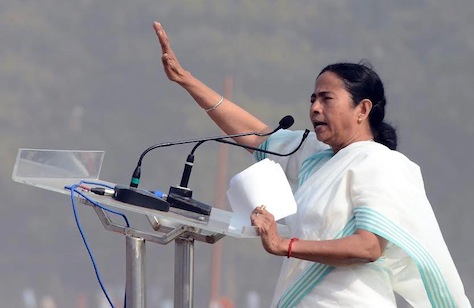
That all changed with the 2011 state assembly elections, when Mamata Banerjee (pictured above), known simply as ‘didi‘ (‘sister’ in Bengali), swept to power in a lopsided victory. She and her allies now control 227 of the 294 sets in the legislative assembly. Banerjee, who began her career in the Congress Party, formed the All India Trinamool Congess (TMC, সর্বভারতীয় তৃণমূল কংগ্রেস) in 1997.

Banerjee quickly joined the National Democratic Alliance (NDA) and became railways minister in the BJP-led government of Atal Bihari Vajpayee. She re-aligned herself with the Congress Party in   2009 as part of the United Progressive Alliance (UPA), and once again served as railways minister, this time under Singh.

She returned to West Bengal for the 2011 state campaign, leading the TMC to its overwhelming victory. As chief minister, Banerjee has emerged as one of the most powerful players in Indian politics, and while she may not have lived up to high expectations that followed her victory three years ago, she’s generally seen as a relatively honest public servant and she’s worked to improve health and education programs throughout West Bengal, traditionally one of India’s poorer states on a per-capita basis.

It’s difficult to place Banerjee politically. At the state political level, she and the TMC are ideologically to the right of the Left Front, naturally, and at the national level, Banerjee has allied with both the major parties. It’s perhaps most correct to say that Banerjee is a populist, veering left or right as convenient for her political future or for West Bengal’s relationship vis-à-vis the central government.

But an alliance with the BJP seems unlikely as Modi and Banerjee has increasingly traded harsh barbs on the campaign trail.

Much of the explanation lies at the intersection of religion and politics. Modi is trying to maximize Hindu support in West Bengal, but also in the voter-rich states of Uttar Pradesh, Bihar and elsewhere in the ‘Hindi belt.’ Banerjee, for her part, is increasingly trying to unite Muslim voters in West Bengal, which comprise over one-quarter of West Bengal’s 91 million residents.

Modi has attacked the West Bengal state government for its handling of the Saradha Group financial scam that defrauded 1.7 million Indians, mostly in West Bengal, of up to $6 billion. Earlier this month, India’s supreme court referred the current investigations to India’s Central Bureau of Investigation amid signs of political interference. Modi has also taken a hard stand against Bangladeshi illegal immigrants. Last week, Banerjee pushed back, calling Modi a ‘donkey,’ and chastising him as the ‘butcher of Gujarat’ for his alleged role in deadly riots there in 2002.

Why is this all so important?  Continue reading Mamata-Modi spat takes center stage in West Bengal

Final South African election results

For the record, I’ve updated the final charts from this week’s earlier South African national elections — you can read more analysis of what the results mean here, and you can read more coverage leading up to the vote heresouth africa flag

Here’s the final result for the national vote:

 SA14vote2

The final result for the ruling African National Congress (ANC) was 62.15%, That’s slightly less than in 2009, when it won 65.90% of the vote and in 2004, when it won 69.69% of the vote, but it’s close to the 62.65% that it won in the initial 1994 post-apartheid election. It’s generally an impressive victory, and though it falls short of the two-thirds margin that president Jacob Zuma may have hoped for, the ANC didn’t come close to falling below the 60% mark, as some of its officials once feared.

The Democratic Alliance (DA) posted its best-ever election result, gained 5.57% on its 2009 showing. But it’s still far, far behind the ANC, and it has quite a long path if it wants to become a truly credible alternative to the ANC.

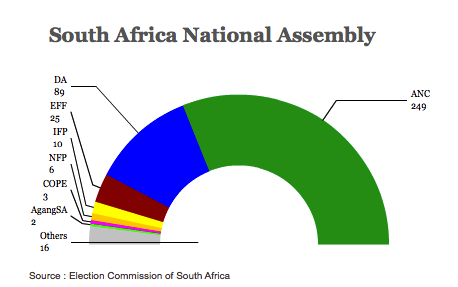
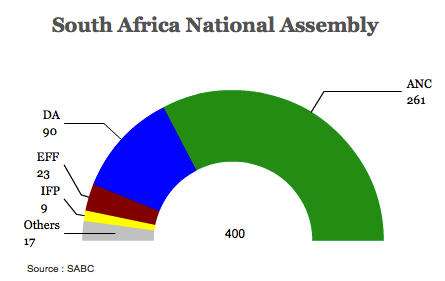
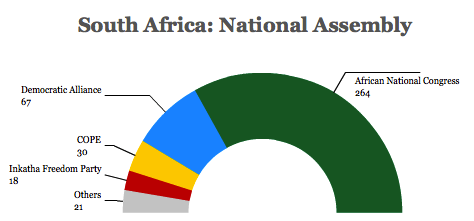
Here’s the expected seat distribution in the 400-member National Assembly:

SANA2

The ANC will drop from 264 seats to just 249 seats. Although it won’t have a constitutionally relevant two-thirds majority, it could still reach that threshold if former ANC Youth League president Julius Malema, who was kicked out of the ANC and now leads the Economic Freedom Fighters (EFF), which won 25 seats in its first-ever election, joins forces with the ANC majority.  Continue reading Final South African election results

The cynical politics behind the Benghazi ‘scandal’

gowdy

I’m always super-hesitant to jump into commentary on American politics, mostly because there’s so much to learn about politics and policy elsewhere in the world. USflag

But the decision by the US House of Representatives and House speaker John Boehner on Thursday to form a select committee to ‘investigate’ the Benghazi attacks is one of the reasons I find US politics so utterly discouraging.

A select committee is a ‘special’ committee created for a specific, targeted purpose. The House typically creates a select committee when one or more of the existing House committees don’t have enough authority or capacity to carry out that purpose. For example, between 2007 and 2011, the House, under Democratic control, authorized a select committee on energy independence and global warming.

Of all the mistakes that US president Barack Obama has made in six years in foreign policy, the Republican leadership has generally focused on the Benghazi sideshow — at the expense of more fundamental and, constitutionally controversial matters.

Why ‘Benghazi’ has become such a spectacle

It’s easy to understand why ‘Benghazi’ makes for such a sensational affair. The attack left four US personnel, including Christopher Stevens, the US ambassador to Libya, dead. It left the Obama administration, just weeks before a presidential election, slack-jawed to explain why US security failed so spectacularly.

Add to that the post-Watergate alchemy, whereby shouting ‘cover-up’ can spin routine politics into scandal, a White House that’s been reluctant, perhaps understandably, to work enthusiastically with its Congressional interlocutors, and a zero-sum political environment where House Republicans show, time after time, that they are willing to take extraordinary measures to achieve certain objectives (e.g., last autumn’s government shutdown, routine debt ceiling crises).

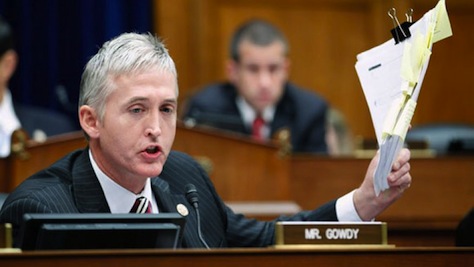
It’s easy to see the political advantage for Republicans in opening a select committee to investigate the matter. Trey Gowdy (pictured above), the two-term congressman from South Carolina, who will head the committee, is already talking about the investigation in terms of a ‘trial,’ with Gowdy and his committee as the prosecution and the Obama administration as the defense. Continue reading The cynical politics behind the Benghazi ‘scandal’

South Africa: early election results point to ANC landslide

zumawins

There wasn’t any doubt that the ruling African National Congress (ANC) would win the fifth post-apartheid election in South Africa’s history.south africa flag

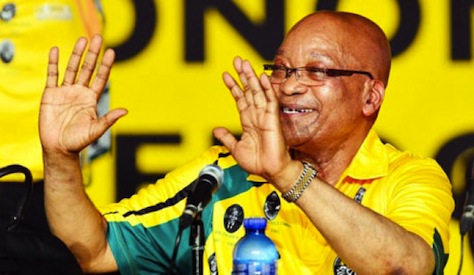
But relatively poor showings by South Africa’s various opposition parties seem to have failed to hold the ANC under 60% of the national vote, with the party set to enter its third decade in power. Under the leadership of Nelson Mandela in 1994, the ANC rose to prominence after a decades-long struggle against white minority rule, and its political dominance hasn’t seriously been challenged at the national level in the past 20 years. That’s despite growing malaise over economic conditions, income inequality and mass unemployment. That’s also in addition to growing concerns about corruption under the leadership of president Jacob Zuma (pictured above), who will now be reelected to a second term once South Africa’s newly elected National Assembly convenes later this month.

Notably, the election was the first to include the votes of the ‘born-free’ generation, South Africans who were born after the end of the apartheid era. It was also the first election held after Mandela’s death last December at age 95.

* * * * *

RELATED: South Africa votes in 5th post-apartheid election: what you need to know

* * * * *

Voters in South Africa yesterday elected all 400 members of the National Assembly and the governments of all nine provinces.

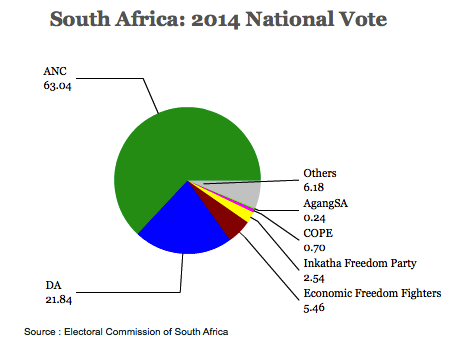
With just over 85.5% of the votes counted, the ANC led with 63.04% of the vote. The opposition Democratic Alliance (DA) was winning 21.84%, its highest vote total to date. In third place was the newly formed Economic Freedom Fighters (EFF) with 5.46%. Its leader, Julius Malema a former ANC Youth League head and a one-time Zuma enthusiast, was kicked out of the ANC two years ago, and he’s campaigned on a neo-Marxist platform of widespread land redistribution to black South Africans and nationalization of key South African industries, including mining.

* * * * *

RELATEDWho is Julius Malema?

* * * * *

Here’s the national breakdown — and the anticipated seat count, on the basis of the current results:

SA14vote

SANA14

So for all the hand-wringing over the corruption, a deadly confrontation with striking mineworkers, the tension within the ‘tripartite’ alliance among the ANC, the South African Communist Party and the Congress of South African Trade Unions (COSATU), the ANC will hold almost exactly the same number of seats in the National Assembly that it held prior to the elections.

What does this mean for South African policy? Continue reading South Africa: early election results point to ANC landslide

Bratušek, Slovenia’s first female prime minister, resigns

alenka

It’s been a busy season for politics in the Balkans this year — Croatia began the year for the first time as a member of the European Union, Serbia’s snap elections in March returned a resounding victory for Aleksandar Vučić and his center-right Progressives, protesters in Bosnia and Herzegovina are calling for new conditions to longtime economic and political stagnation, and Macedonia’s center-right government recently won a fourth consecutive term in power.slovenia

Now it’s Slovenia’s turn.

Alenka Bratušek, the country’s first female prime minister, resigned on Monday, calling into question whether the shaky Slovenian economy will avoid an international bailout that Bratušek worked to avoid in her 13-month government.

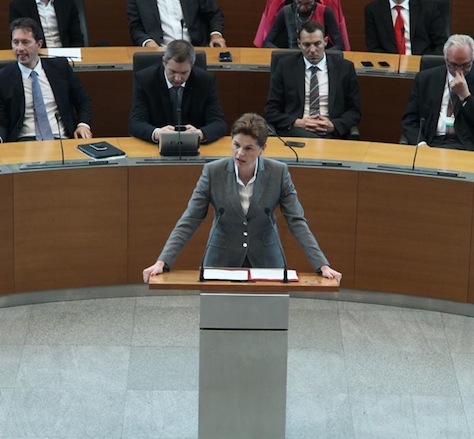
Bratušek’s resignation follows internal upheaval within her own party, Pozitivna Slovenija (Positive Slovenia), still a relatively new center-left political party. With voters fed up with the two dominant parties, Positive Slovenia burst onto the political scene in the most recent December 2011 parliamentary elections. It won the largest bloc of seats (28) in Slovenia’s 90-member, unicameral national assembly, the Državni zbor.

In the 29 months since the last election, Slovenia has now had both a center-right coalition government and a center-left coalition government, and both have fallen. That means that Slovenia likely faces snap elections this summer or early in the autumn, and Bratušek, 44, has suggested that she will form her a new party of her own to contest to them.

Bratušek (pictured above) was never the driving force within the party, however, whose founder is Zoran Janković, a former retail businessman who served as the mayor of Ljubljana, the Slovenian capital, from 2006 until 2011, and against since 2012 following his failure to become Slovenia’s prime minister.

Janković returned to the leadership of Positive Slovenia late last month after engineering a putsch ousting Bratušek as leader. That, in turn, unraveled the coalition that Bratušek built in February 2013.  Continue reading Bratušek, Slovenia’s first female prime minister, resigns

Why is Syria holding a presidential election in the middle of a civil war?

basharvbashar

It’s always been somewhat baffling to me why authoritarian rulers and dictators go through the motions of sham elections. Syria Flag Icon

The voters inside the country know better than anyone else that the elections aren’t a real choice, and in many cases, boycotting the vote or voting for the ‘wrong’ candidate, if a choice is even permitted, can carry perilous results.

International observers aren’t really fooled, either. With the proven work of folks like the National Democratic Institute and the Organization for Security and Co-operation in Europe, there’s a 21st century international standard for free and fair elections, and the NDA, OSCE and other similar groups have a thoroughgoing process for certifying the sanctity of elections in developing democracies.

Furthermore, in the world of social media and 24-hour news, it’s harder to carry out the kind of widespread fraud. That doesn’t mean elections are perfect. In Venezuela, the collapse of the state, governing institutions and chavismo mean that a totally fair election is almost impossible. But there’s nonetheless a limit — even with a decade’s worth of dirty tricks, Nicolás Maduro managed only a narrow win in April 2013, for example.

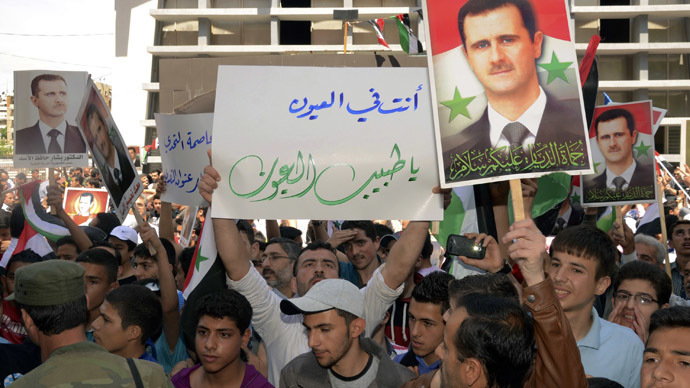
So why is Syrian president Bashar al-Assad pushing forward with an election on June 3?

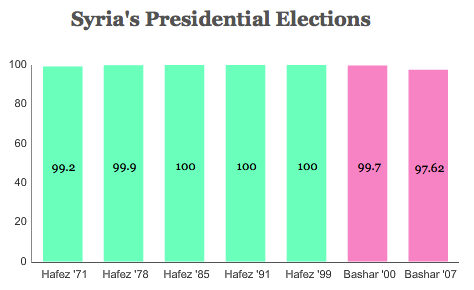
In case you were wondering about the outcome, here’s a chart of every presidential election in Syria since Hafez al-Assad came to power in a military coup in 1971:

syriaelections

In each of the prior ‘elections,’ Syrian voters were presented with a yes-or-no choice on the incumbent, either Hafez al-Assad or, since his death in 2000, his son, Bashar al-Assad.  Continue reading Why is Syria holding a presidential election in the middle of a civil war?

India Lok Sabha elections: Phase 8

gandhisiblings

If you can believe it, today marks the one-month anniversary since the first polls opened in India’s gargantuan nine-phase general elections. India Flag Icon

Today, with 439 members of the Lok Sabha (लोक सभा) already elected, India is now just two election days away from completing the voting process. Results will be announced on May 16 — just nine days from today.

The eighth phase adds 64 more seats to the total.

Uttar Pradesh

Fifteen seats will be selected in Uttar Pradesh, India’s most populous state and the biggest prize of the election, with 80 seats.

The most watched contest is in Amethi, something of a Nehru-Gandhi family heirloom:

  • It was first won by Sanjay Gandhi, the son of longtime prime minister Indira Gandhi in 1980.
  • When Sanjay died in an airplane crash, his brother Rajiv Gandhi held the seat from 1981 (including as India’s prime minister between 1984 and 1989), until his assassination in 1991.
  • Rajiv’s Italian-born widow Sonia Gandhi held the seat from 1999 to 2004, though she is running today in the adjacent Rae Bareli constituency.
  • Rahul Gandhi, the son of Rajiv and Sonia Gandhi, has held it for the past decade, and he’s leading the campaign of the governing Indian National Congress (Congress, भारतीय राष्ट्रीय कांग्रेस) in 2014 — with prime minister Manmohan Singh stepping down, Rahul Gandhi would likely become prime minister if his party defies polling predictions and wins the elections.
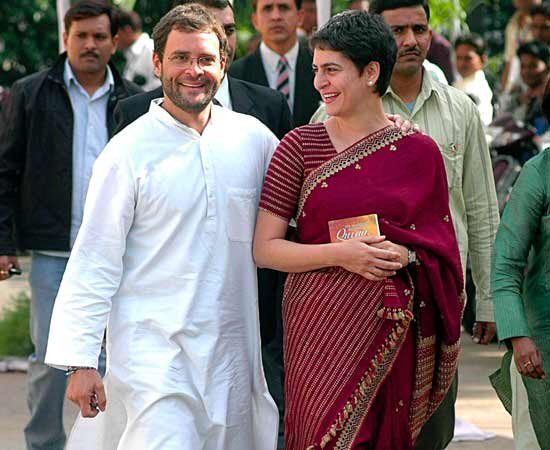
  • Rahul’s sister, Priyanka Vadra (pictured above with Rahul), is running the Congress campaign behind the scenes — though with an increasingly public role.

Though Rahul Gandhi’s official opponent is Smriti Irani, a former television star, he’s really running against Narendra Modi, the prime ministerial candidate of the Bharatiya Janata Party (the BJP, भारतीय जनता पार्टी), who took the fight earlier this week to Amethi, a sign of confidence in the ‘Modi wave’ that the BJP and many national polls say is sweeping India after a decade of Congress-led rule (though polls have been wrong before, in 2004 and even in 2009).

Modi on Monday delivered a scathing attack on the entire Nehru-Gandhi family, calling it arrogant and angry — it’s the Indian political equivalent of spiking the ball as Modi appears on the verge of winning a landslide BJP victory:

There is no doubting Modi’s intention, which was to offer the spectacle of his presumption; the presumption of a “chai bechne wala” humiliating the “raj parivar” in their own backyard. The class warfare trope, beloved of old socialist-era Hindi films, played beautifully to his exceptionally large gallery. They cheered each time Modi pronounced ‘Sssonia madam’ with his now trademark sibilant hiss…. The truth is that Modi didn’t really need to go there. Yet he did because, simply, he could — hold a giant rally in Amethi and heap personal invective on the Gandhi family. 

Modi attacked Priyanka Vadra for her ‘arrogance’ in dismissing the local BJP candidate and baiting her into an angry response by attacking her father. Modi, who is considered ‘OBC’ (Other Backward Classes), a constitutionally protected class, and who once sold tea for a living, played both the class card and the caste card against the Gandhis.

Vadra accused Modi of practicing ‘neech rajniti‘ — or low-level politics — and Modi slammed back that it’s not a fault that he was born into a ‘neech jaati‘ — or lower caste. In states like Uttar Pradesh and Bihar, where caste and politics are unmistakably linked, Modi has been careful to shy away from caste-based campaigning, though top Modi aide Amit Shah has been working for months behind the scenes to manage a savvy BJP campaign designed, in part, to maximize the caste divisions among rival parties.

Hindu poet Kumar Vishwas is running as the candidate of the newly formed good-government, anti-corruption Aam Aadmi Party (AAP, आम आदमी की पार्टी, Common Man Party), which rose to prominence in the December 2013 Delhi elections and briefly held power for 49 days until AAP leader and Delhi chief minister Arvind Kejriwal resigned when the legislative assembly blocked his keystone corruption bill.

Andhra Pradesh

The remaining 25 seats in the southern state of Andhra Pradesh are up for grabs, too. Continue reading India Lok Sabha elections: Phase 8

South Africa votes in 5th post-apartheid election: what you need to know

World Bank, South Africa 2007.

South Africans go to the polls for the fifth time in the post-apartheid era today in a race that the ruling African National Congress (ANC), the liberation movement that forced the end of minority white rule in 1994, is nearly guaranteed to win.south africa flag

South Africans will elect all 400 members of the National Assembly, by proportional representation on a closed-list basis (which may explain, in part, the hierarchical party strength of ANC governance). They will also elect governments in South Africa’s nine provinces.

Here’s the current breakdown:

SANatlAssmly

Notably, it’s the first election that will feature the ‘born-frees,’ the generation of South Africans who were born after the end of apartheid rule. Though they’re only 2.5% of the electorate today, they’ll become an increasingly vital demographic, and they might well change the face of South African politics over the next decade.

* * * * *

RELATED: Even with victory assured, is the ANC’s future at risk? 

* * * * *

Jacob Zuma, the president since 2009, is leading the ANC campaign, despite his relative unpopularity as South Africans face dwindling economic growth, rising unemployment and the sense that the ANC is more interested in maintaining — and abusing — power than attending to the pressing policy concerns of most South Africans. Zuma’s spending on ‘security improvements’ to his home at Nkandla has captured the widespread disgust of much of the electorate. His government’s handling of a mining strike at Marikana two years ago ended with a clash with police that killed 44 people in the worst state-sponsored violence since the apartheid era. The fallout has severely strained the so-called tripartite alliance among the ANC, the Communist Party of South Africa and the Congress of South African Trade Union (COSATU).

* * * * *

RELATED: Zuma is strongest president on HIV/AIDS in South African history

* * * * *

Notwithstanding those concerns, the ANC is almost assured of victory, thanks to its role as the liberation movement that ended apartheid under the mythic leadership of former president Nelson Mandela, who died late last December. The biggest question is whether the ANC will achieve the support of at least two-thirds of the electorate — it could win just 60% (or even less) of the vote.

* * * * *

RELATED: How Nelson Mandela’s death provides South Africa a challenge and an opportunity

* * * * *

The chief opposition party, the Democratic Alliance (DA), seems set to increase its support to a historically high level, possibly more than 20% or even 25%. Continue reading South Africa votes in 5th post-apartheid election: what you need to know

Zuma is strongest president on HIV/AIDS in South African history

aids-in-southafrica-grafiti

When Jacob Zuma, now poised for an almost certain second term as South Africa’s president, faced criminal rape charges in 2006 stemming from sexual relations with a woman that he knew to be HIV positive, he later remarked that he didn’t use a condom and claimed that he took a shower afterwards to reduce the risk of contracting HIV. south africa flag

So when he emerged in 2007 as the heir apparent in the ruling African National Congress (ANC), there wasn’t much hope that Zuma would necessarily bring an incredible amount of sophistication to HIV/AIDS policy in a country that’s long suffered from health policy failures.

Yet almost immediately after becoming the country’s third post-apartheid president in 2009, Zuma effected nearly a 180-degree turn on HIV/AIDS policy. There was little doubt that his HIV/AIDS policy could be any worse than that of his predecessors.

Notwithstanding the triumph of Nelson Mandela’s historic presidency, Mandela himself admitted in the 2000s that he didn’t do enough to acknowledge the growing threat of HIV/AIDS infection, which would ultimately kill Mandela’s youngest son Makgatho, a fact that Mandela made public upon his son’s death in 2005.

His successor, Thabo Mbeki, was even worse. A proponent of aberrant medical theories that HIV, in fact, might not cause AIDS, Mbeki stalled as the rest of sub-Saharan Africa embraced new treatments and prevention strategies, leading to what some studies claim to be over 300,000 premature deaths in South Africa.

South Africa, like the rest of southern Africa, has one of the world’s highest HIV/AIDS rates. Like many issues in South Africa, race plays a significant role — a recent survey showed that the HIV rate among black Africans is around 15%, with a 3% rate among the ‘coloured’ (the South African term for mixed-race persons) population and a 0.3% rate for whites. The highest risk is for black females, aged 15 to 49, who are affected at a rate of 23.2%.

* * * * *

RELATEDEven with victory assured, is the ANC’s future at risk?

* * * * *

Zuma is almost certain to be reelected as president after the May 7 parliamentary elections that will, once again, return the ruling ANC to power.  But amid widespread unhappiness over South Africa’s economic performance and its government’s record on everything from individual rights to corruption, Zuma’s policy turn on HIV/AIDS could ultimately become the strongest policy accomplishment of an otherwise disappointing presidency.   Continue reading Zuma is strongest president on HIV/AIDS in South African history

How the 2002 Gujarat riots became so important to the 2014 election

modiriots

Earlier this year, when Narendra Modi, the frontrunner to become  India’s next prime minister, decided to run from Varanasi, a city that many in India consider to be India’s holiest, many of his supporters co-opted a Hindu chant, ‘har har Mahadev,’ a traditional greeting in Varanasi among Hindus.India Flag Icon

The chant praises the Hindu lord Shiva, also known as Mahadev, and it literally means, ‘rid us of pain,’ though it was once a battle cry of ancient Hindu kings.

Modi’s supporters co-opted the chant as ‘har har Modi,’ a turn of events that even left some Hindu scholars uncomfortable. Though Modi and other leaders in his party, the conservative, Hindu nationalist Bharatiya Janata Party (the BJP, भारतीय जनता पार्टी) eventually called on supporters to desist, it’s become the most notorious ‘dog whistle’ in a campaign where religious tension is bubbling fervently below the surface.

It also confounded worries among India’s religious minorities that they might be second-class citizens under a Modi government. The overwhelming majority of Indians are Hindu, including nearly 80.5% of the Indian population, largely as a result of the 1947 Partition that created the Muslim-majority Pakistan. But 13.4% of India’s population is Muslim — another 2.3% is Christian, another 1.9% is Sikh and another 0.8% is Buddhist. In a country of 1.236 billion people, that translates to over 165 million Muslims, and that’s a fairly large group of folks that could feel threatened by a potential Modi government.

For many Indians, the key question of this year’s national elections has less to do with development or economics but rather about a series of riots in 2002 that left at least 790 Indian Muslims, and possibly up to 2,000 Muslims, dead.

Those riots, which took place in Gujarat, were one of the first crises in the administration of a new chief minister, Narendra Modi, just four months on the job. Modi had succeeded Keshubhai Patel, another BJP chief minister whose rule faltered after the loss of several by-elections and charges of mismanagement of the relief efforts from a devastating 2001 earthquake in Gujarat.

Twelve years later, Modi’s response to those riots and the lack of clarity over his responsibility for the bloodletting is at the heart of the national election campaign. Suspicion that Modi subtly encouraged the violence has dogged him ever since. Though he’s been technically absolved by the Indian supreme court, the Gujarati riots prevented Modi from receiving a visa to enter the United States in the mid-2000s and Modi himself has refused to apologize for the tragedy that took place on his watch. even as Modi has increasingly used his economic stewardship of Gujarat as the basis of his presidential-style campaign.

So what actually happened? And why has it become so central to the current election campaign?  Continue reading How the 2002 Gujarat riots became so important to the 2014 election

What’s going on with Gerry Adams and the Northern Irish police?

gerry

With just less than a month until voters in both Ireland and Northern Ireland choose their representatives to the European Parliament, the Belfast police have for the past four days given the Irish republican Sinn Féin a potent campaign issue — and exacerbated tensions nearly two decades after the struggle between Irish Catholics and Protestants moved from killing and violence to the realm of politics. northernirelandIreland Icon

Northern Ireland’s police force arrested Gerry Adams, the leader of the republican Sinn Féin since the early 1980s on Wednesday, holding him for four days in relation to one of the most brutal murders of the Northern Irish violence. Other Sinn Féin leaders, including Northern Ireland’s deputy first minister Martin McGuinness, have attacked the arrest as a political stunt, but other politicians in both Northern Ireland and the Republic of Ireland have been more reticent to comment on what’s become an unpredictable turn of events.

The  arrest relates to the 1972 murder of Jean McConville, a mother of 10 who was pulled from her home by armed gunmen within  the Irish Republican Army. She was later killed and ‘disappeared,’ her remains found only in 2003. It was a particularly cruel murder among many such killings during Northern Ireland’s  ‘Troubles,’ the violent struggle between unionist Protestants who largely supported Northern Ireland’s status within the United Kingdom, and Irish nationalist Catholics, who wanted northern Ireland to be part of a unified Irish republic.

The struggle dates to 1921, when the United Kingdom partitioned Ireland into the largely Protestant Northern Ireland and the largely Catholic Southern Ireland. A year later, Southern Ireland became the ‘Irish Free State,’ but most of Northern Ireland’s residents remained committed unionists, despite a strong, organized Catholic minority that favored Ireland’s unification. When the Republic of Ireland gained full independence in 1949, Northern Ireland remained part of the United Kingdom, a status that continues to this day. The IRA began an armed struggle against British rule in Northern Ireland in the late 1960s.

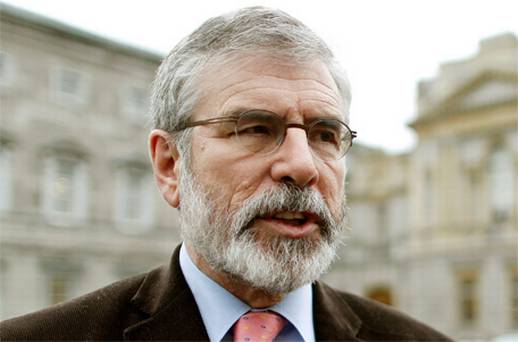
Throughout the worst of the political violence in the 1970s and the 1980s, Sinn Féin emerged as the political arm of the IRA. Though Adams (pictured aboveclaims that he was never a member of the IRA, there were always strong links between the two organizations, and Adams has never apologized for advancing the IRA’s political interests.

Adams surrendered to police on Wednesday in connection to the re-opening of the investigation, and they held him in custody through the weekend, going so far as to obtain a court order in request of an additional 48 hours to interrogate Adams. He was released earlier Sunday without charge — for now.

Former IRA leader Brendan Hughes accused Adams of having organized and ordered the killing on suspicion that McConville was a British spy. Hughes died in 2008, but made the claim to a Boston College historian compiling an oral history of the Troubles. Hughes strenuously broke with Adams after the Sinn Féin leader accepted the terms of the Good Friday Agreement, so his accusations must come with some amount of skepticism — he’s also been dead for six years, making his charge against Adams problematic from an evidentiary point of view.

Shaun Woodward, a British Labour MP and former secretary of state for Northern Ireland, argues in The Guardian that Adams’s arrest highlights the need for a way to address the atrocities committed during the Troubles in a manner that doesn’t jeopardize the future of Northern Ireland’s government and what’s still very much an ongoing peace process:

South Africa dealt with its past through a Truth and Reconciliation Commission. I can already hear the politicians screaming no, but that’s to be expected: the thing is to take the argument directly to the people. Nor is it for outsiders to choose whether this model could work for Northern Ireland. What is clear is that we need something that allows justice to be seen to be done, without crippling the peace process or simply avoiding the issue. Without a mechanism that is both fair and based on quasi-judicial principles, it is impossible to imagine that Northern Ireland will ever successfully move out of the clenched jaws of its grisly past.

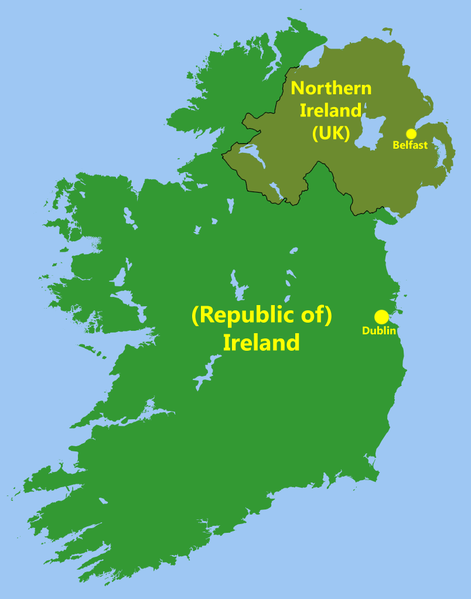
So what does this latest development mean for politics in Northern Ireland and in the southern Republic of Ireland?

471px-Ireland-Capitals

Adams’s arrest could derail 16-year peace in Northern Ireland

The 1998 ‘Good Friday’ agreement largely brought the sectarian violence to an end, and Adams now leads Sinn Féin as a force within both Northern Ireland, where the party sits on the Northern Ireland Executive — it largely governs alongside its rivals, the Democratic Unionist Party (DUP), and other parties. Sinn Féin holds four ministries, the DUP holds five ministries, and three other parties hold another four ministries. Adams’s colleague McGuinness has served as the deputy first minister of Northern Ireland since 2007. Continue reading What’s going on with Gerry Adams and the Northern Irish police?

Meet Juan Carlos Varela, Panama’s new president

veep

Polls showed Juan Carlos Varela trailing in third place going into Sunday’s presidential vote, but the outgoing vice president shocked the country, and he will become Panama’s next president after leapfrogging both the candidate of the outgoing, term-limited president and the candidate of the Panamanian center-left.Panama Flag Icon

With 82.12% of the votes counted, Varela (pictured above), the candidate of the conservative Partido Panameñista (Panameñista Party), one of the country’s oldest parties, led with 39.00% of the vote.

panama14 president

Trailing in second place was José Domingo Arias, the candidate of term-limited, outgoing president Ricardo Martinelli and the center-right Cambio Democrático (CD, Democratic Change), with 31.87%. In a surpassingly weak third place was environmentalist and former decade-long mayor of Panama City Juan Carlos Navarro, the candidate of the center-left Partido Revolucionario Democrático (PRD, Democratic Revolutionary Party), who was winning just 27.79% of the vote. 

* * * * *

RELATEDPanamanian presidential race is all about Martinelli

* * * * *

Until the votes were actually counted, the race seemed like it was set become a photo finish between Arias and Navarro. 

So what happened?  Continue reading Meet Juan Carlos Varela, Panama’s new president

Who is Mmusi Maimane? (Possibly the next premier of Gauteng).

Mmusi+Maimane+XXX

While left-wing populists like Julius Malema have received much more attention internationally as South Africa prepares for its national elections on May 7, Mmusi Maimane is the rising star to whom the rest of the world should be paying attention.south africa flag

He’s quickly becoming one of the chief spokespersons for the Democratic Alliance (DA), the largest opposition party in South Africa. Although polls show that the DA will nonetheless lose next month’s elections by a massive margin to the ruling African National Congress (ANC), the DA hopes to build on its gains from 2004 and 2009 to win its greatest level of voter support yet. 

In Gauteng, the economic and financial hub of South Africa, and the most populous province in the country with 12.25 million people, Maimane is campaigning hard to become Gauteng’s next premier in one of nine provincial elections that are taking place simultaneously with national elections.

Maimane (like a growing number of world politicians) has been compared to Barack Obama for his quick rise, youthful image and the liberal use of the Obama playbook in his campaign for premier. In 2011, he ran for mayor of Johannesburg, South Africa’s largest city, and he wound up as the opposition leader of the city council. At 33, he’s waging a credible campaign against the ANC, anchored with a pledge to sort legal title for over 200,000 urban South Africans who have only informal ownership of their homes.

Critics in the ANC charge that he’s a convenient black face for a party that draws support predominantly from the white community in South Africa. But as the DA’s support grows, and voters become disenchanted with the ANC, especially the so-called ‘born-frees,’ the emerging class of young voters who never lived under apartheid, voting patterns are slowly changing. If Maimane leads the DA to victory in Gauteng — or even wages a sufficiently tight race — he’ll easily become the party’s dominant figure.

He’s capitalized on the ANC’s unpopularity in several regards — police brutality deployed against miners during a strike in Marikana a couple of years ago, pervasive corruption that’s now highlighted by $23.5 million in state spending for ‘security improvements’ to president Jacob Zuma’s home in Nkandla, and pervasive unemployment among South Africa’s young, urban, black population.

Here’s an ad from last month that went viral after South Africa’s government tried to ban it from the airwaves — it shows just how damning the anti-Zuma and anti-ANC message has become:

It also helps that the ANC in Gauteng is divided by rival factions — that’s why the incumbent, Nomvula Mokonyane, doesn’t seem to be running for reelection, and the provincial secretary general David Makhura is leading the ANC campaign, even though the ANC hasn’t formally announced a candidate for premier.

Dali Mpofu, a longtime ANC politician — who once allegedly had an affair with Winnie Mandela in the 1990s — left the ANC to join Malema’s socialist Economic Freedom Fighters (EFF) in November 2013, and is leading the EFF’s efforts as its premier candidate in Gauteng. That, too, could pull votes away from the ANC, much to Maimane’s benefit.

Given those dynamics, and given Maimane’s serious policy proposals and considerable political talent, it’s a puzzler why Maimane isn’t the overwhelming favorite in the race.

Some of the answer lies in the wariness of South African voters to turn away from the ANC, which still looms mythically for its role in ending white apartheid rule 20 years ago.

In 2009, the Democratic Alliance won 16.66% of the vote and increased its representation in the 400-member National Assembly from 47 to 67, and it won control of the Western Cape province. Polls show that the Democratic Alliance will win between 20% and 25% this time around. The DA is expected to retain control in Western Cape (where the DA’s leader Helen Zille, a white former Cape Town mayor and former journalist and anti-apartheid activist, serves as premier). It will also contest for control of Northern Cape province as well.  Continue reading Who is Mmusi Maimane? (Possibly the next premier of Gauteng).

Panamanian presidential race is all about Martinelli

Ricardo-Martinelli

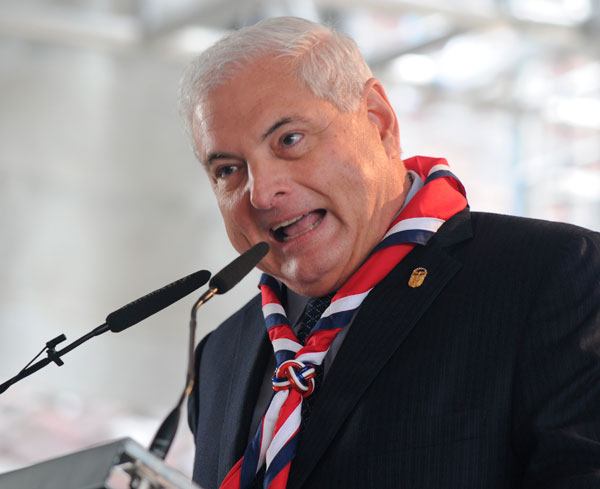
If he could run for reelection, it seems certain that Ricardo Martinelli, the grocery chain tycoon-turned-politician, would almost certainly win a second term in office — he’ll leave the Panamanian presidency this year with approval ratings in excess of 60%.Panama Flag Icon

But with Panama’s law prohibiting consecutive terms, the closest Martinelli can come to a second term is by supporting the ticket of his own center-right Cambio Democrático (CD, Democratic Change), whose vice-presidential candidate is Panama’s first lady, Marta Linares de Martinelli.

* * * * *

RELATED: The internal politics of the widening of the Panama Canal 

* * * * *

Martinelli has a strong record. Panama’s economy has grown by an average of between 8% and 9% through his five-year term (significantly boosted by the revenues garnered from the country’s eponymous canal.). He’s also introduced supplementary pensions for Panamanians over 70, built Panama City’s metro system, and spent around $20 billion on infrastructure projects. That includes the $5.25 billion Panama Canal expansion initiated by his predecessor, though the expansion has faced cost overruns and worker strikes that have postponed the expected completion date from 2015 to 2016.

He’s faced accusations, however, that he’s undermined Panamanian democracy, bullied opponents and presided over such a culture of corruption that Martinelli himself may face bribery charges in Italy after leaving office.

ariasyamigos

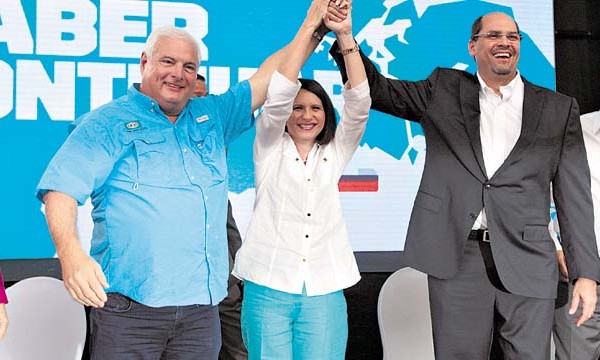
Critics argue that the CD’s presidential candidate, José Domingo Arias, another former businessman who served two years as minister for foreign trade and three years as minister for housing and land development under Martinelli, is merely a figurehead. They worry that if Martinelli’s wife (pictured above with Martinelli and Arias) is vice president, the incumbent will continue to control too much power in Panama. Despite a constitutional provision that appears to limit family members of the incumbent from running for president or vice president, Martinelli’s allies on the Panamanian supreme court have not blocked Linares’s vice presidential candidacy. But there’s also a sense that most Panamanians realize this going into the weekend’s vote.

In a fierce column for the Wall Street Journal last month, Mary O’Grady chastised Martinelli for trampling Panamanian democracy. She was shocked (shocked!) that a Central American president may have promised greater spending in exchange for a parliamentary majority over the past five years, and she ultimately compared Martinelli (unconvincingly) to Nicaraguan strongman Daniel Ortega:

In 2012, Mr. Martinelli tried to pack the Supreme Court by adding three new seats to guarantee his influence and raise the odds that he might overcome the prohibition on re-election the way Daniel Ortega did in Nicaragua. When Panamanians went to the streets to resist, he withdrew the proposal. The lust for power remains.

It’s worth noting that even in Costa Rica, which has the best governance standards in all of Central America, two recent former presidents have been convicted of corruption. It’s also a pretty rich argument for a columnist in a country where the frontrunners for the 2016 presidential election are the wife of a former president (Hillary Clinton) and the son and brother of two former presidents (Jeb Bush). Martinelli himself took to Twitter to attack her in a fairly petty retort, which wasn’t perhaps the most convincing step.

All pearl-clutching aside, and without getting into the theoretical question of ‘good corruption’ and ‘bad corruption,’ Martinelli certainly isn’t the first Latin American president on the right or the left to chafe at term limits. Though initially instituted to prevent the kind of personality-based caudillos that had a tendency to co-opt presidential systems throughout Latin America in the 19th and 20th centuries, strict one-term limits make presidents from Mexico to Chile lame ducks from the first day of their administrations. It’s not surprising that politicians like Martinelli (and like former Honduran president Manuel Zelaya) are looking for ways to escape the yoke of single term limits.

The two main challengers to Arias come from Panama’s two traditional parties. Continue reading Panamanian presidential race is all about Martinelli

Will the UK continue its military support for Brunei’s shari’a regime?

cameronsultan

Generally speaking, in the world of foreign affairs, even in east Asia, no one really thinks much about Brunei. brunei

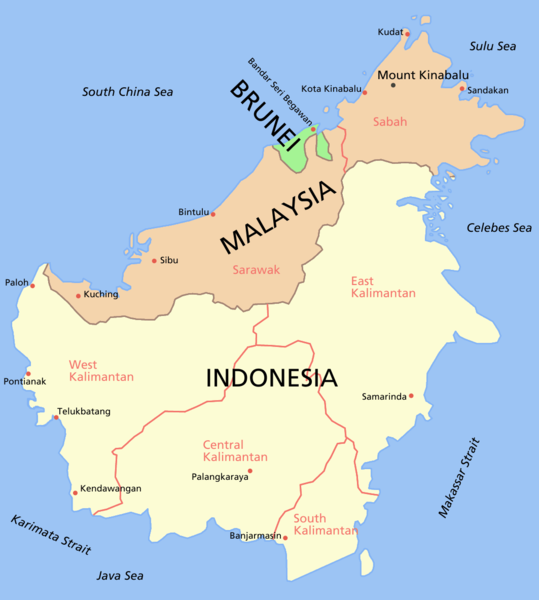
It’s a tiny sultanate of just over 412,000 people on the coast of Borneo, an island that’s otherwise shared by Malaysia and Indonesia. Generally speaking, the population isn’t unlike that of the rest of Malaysia — it’s around 66% ethnic Malay and 11% ethnic Chinese. 

But for historical and governance reasons, the historical sultanate was never subsumed into Malaysia, either during or after British colonial rule. Today, it has sufficient oil and gas deposits (which account for around 90% of its GDP) to make it one of the wealthiest countries in the world, on  a per-capita basis. Think of it as southeast Asia’s version of Qatar, or a bizzaro Singapore, with resource-based wealth instead of finance and services.

Its sultan, Hassanal Bolkiahhe, who has ruled the country as essentially his own personal fiefdom since his coronation in 1967 (17 years before Brunei received its full independence from the United Kingdom), and whose personal wealth is estimated at $20 billion, announced in October 2013 that his government would introduce shari’a law, and the new stringent Islamic laws began to take effect today. Bolkiahhe, who has limited press freedom and outlawed political parties in Brunei, simultaneously serves as the country’s prime minister, finance minister and defense minister. 

borneo

But as it begins to transition toward a repressive version of shari’a, the world is certainly paying attention to Brunei now — and largely condemning the draconian nature of its new criminal penalties. 

Under the new laws, Brunei has criminalized insulting the prophet Mohammed, failure to attend Friday prayers, alcohol use and extramarital pregnancy, and strengthened punishments for violating those and other laws. Furthermore, a conviction for sodomy is now subject to death by stoning; as the shari’a regime gradually takes effect, a conviction for theft will eventually be subject to amputation.

Though neighboring Malaysia and Indonesia are known for their relatively relaxed Muslim societies, which feature greater social and religious tolerance than many Middle Eastern countries, Brunei has always been significantly more conservative — alcohol, for example, was always technically forbidden, and shari’a law played a role in some civil arrangements among Muslims, including marriage. But the new push for shari’a covers far more ground, leading to condemnation from the United Nations and other international human rights groups:

The UN’s human rights office said this month it was deeply concerned about the changes, adding that women typically bore the brunt of punishment for crimes involving sex.

“It’s a return to medieval punishment,” said Phil Robertson, deputy Asia director for Human Rights Watch. “It’s a huge step back for human rights in Brunei and totally out of step with the 21st century.”

Problematically, only about two-thirds of Brunei’s residents are Muslim — 13% of the population is Buddhist and 10% is Christian. Though shari’a technically applies only to Brunei’s Muslims, there are obvious concerns among the country’s non-Muslims and among many of the British and other multinational corporations that do business there.

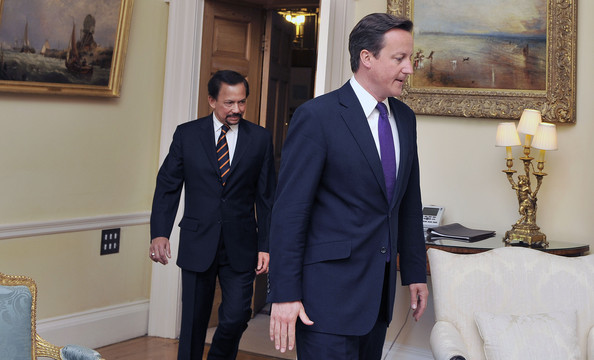
That could put British prime minister David Cameron (pictured above, with Brunei’s sultan) in a tough spot, because of the unique relationship between the United Kingdom and Brunei.   Continue reading Will the UK continue its military support for Brunei’s shari’a regime?