Tag Archives: russia

Komorowski trails in shock Polish presidential vote result

komorowski

It’s safe to say that Polish president Bronisław Komorowski’s surprise second-place finish in the first round of the presidential election on Sunday was one of the most unexpected events in Polish politics of the past decade.Poland_Flag_Icon

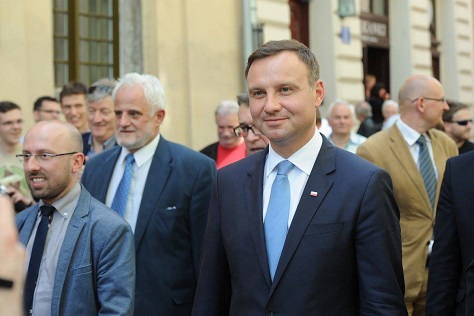
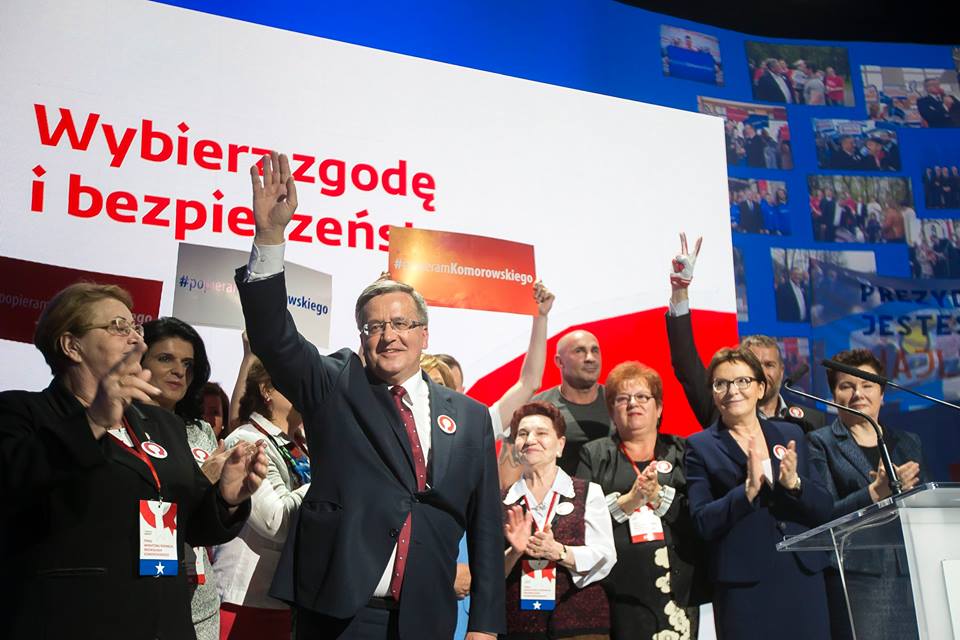
Even after exit polls showed Komorowski (pictured above) training the conservative Andrzej Duda, it was still difficult to believe the popular, capable, moderate incumbent could have failed in a race where polls previously gave him a wide lead.

Though the presidency is chiefly ceremonial, the president serves as commander-in-chief of the Polish army and represents Poland in international affairs, though the prime minister (nominally selected by the president) establishes foreign policy. Notably, the Polish president also has a veto right over legislation, though a three-fifths majority of the Sejm, the lower house of the Polish parliament, can override a presidential veto.

The presidential vote is widely seen as a prelude to the more important parliamentary elections expected to take place in October 2015.

duda

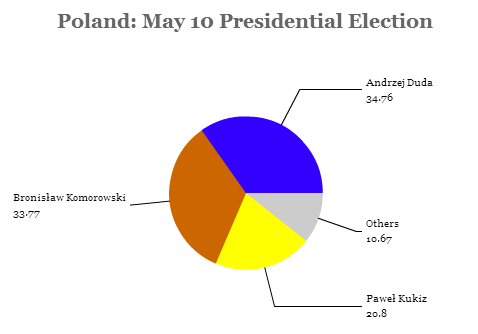
Complacency among Komorowski’s supporters, the gradual rise in support for Duda (pictured above) and the surprisingly robust protest vote for former rock musician Paweł Kukiz, who waged a populist campaign that called for more direct representation in national elections. Kukiz demands the elimination of party-list proportional representation and the introduction of single-member constituencies, with legislators individually responsible for their voters’ demands. Ironically, Kukiz’s call for a first-past-the-post system coincides with widespread dissatisfaction with the electoral process in Great Britain, where the FPTP system made for some rather inequitable results in last week’s election. Nevertheless, Kukiz won over one-fifth of all voters on Sunday, and both remaining candidates are keen on winning over his supporters.

polandpresidential

Both candidates will now advance to a May 24 runoff and, though Komorowski is still expected to win reelection, there’s a chance that Duda could use the momentum of his first-round victory in the next two weeks to propel himself into the presidency. Duda, a 42-year-old member of the European Parliament, is the candidate of the nationalist, conservative Prawo i Sprawiedliwość (PiS, Law and Justice) that held power between 2005 and 2007. Unlike Komorowski, he opposes plans for Poland to join the eurozone.

* * * * *

RELATED: Kopacz puts imprint on Poland’s new government

* * * * *

Komorowski, nominally an independent but tied closely to the more pragmatic governing Platforma Obywatelska (PO, Civic Platform), receives generally high marks for his performance as president. Komorowski, a former defense minister, has struck a reassuring tone on the threat of growing Russian ambitions in Ukraine and eastern Europe, and his reelection campaign has sought to reassure voters that he will be a steady hand with respect to Poland’s security.  Continue reading Komorowski trails in shock Polish presidential vote result

Who is Juha Sipilä? The man who wants to become CEO of Finland, Inc.

sipila

If the voters of Finland elect challenger Juha Sipilä as its next prime minister, the former telecommunications minister will have the iPhone to thank.finland flag

That’s because the Finnish economy was in recession in 2012 and 2013, and it registered only tepid growth last year. In part, it’s due to Nokia’s loss of market share. Once a synonym for state-of-the-art technology in mobile phones, the exponential rise of the iPhone in the past eight years left the Finnish champion reeling for new areas of growth and shedding jobs near the Finnish capital of Helsinki.

Notwithstanding plans for Nokia to merge with French telecoms equipment provider Alcatel announced last week, Nokia’s global dominance in mobile smartphones collapsed over the course of the four-year government of the center-right, liberal Kansallinen Kokoomus (National Coalition Party) while Samsung and Apple increasingly pushed Nokia out of the market. Nokia ultimately sold it devices and services business to Microsoft in 2013. Simultaneous woes have afflicted Finland’s once-thriving timber market.

So it’s not surprising that voters are poised to elect Sipilä as their next prime minister, a former telecommunications executive who aims to run Finland like a private-sector company.

There’s a sense that voters also want to punish the National Coalition. Even former prime minister Jyrki Katainen appeared to sense that when he stepped down last spring to take a position at the European Commission, where he currently serves as the Commission’s vice president for jobs, growth, investment and competitiveness. Katainen left it to his former European affairs minister, Alexander Stubb, to lead his party into the March 19 elections. Polls suggest that has become increasingly difficult over the course of the past 10 months since Stubb assumed the premiership.

A victory for Sipilä would return the Suomen Keskusta (Centre Party) back to power after a four-year hiatus in opposition. Sipilä came to politics only recently, elected for the first time in 2011 to the Eduskunta, Finland’s 200-member unicameral parliament after a successful career in the telecommunications  industry.  Continue reading Who is Juha Sipilä? The man who wants to become CEO of Finland, Inc.

What are the chances of snap elections (again) in Greece?

putintsipras

It’s a sign that fiscal affairs in Greece are bad when the sensible Plan B to cover the Greek government’s looming shortfall involves loans from Moscow (despite protests to the contrary).Greece Flag Icon

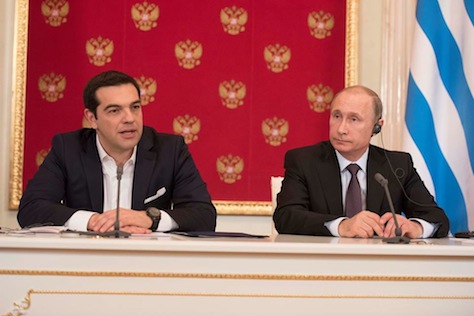
Greek prime minister Alexis Tsipras has dismissed European sanctions against Russia, and he met Russian president Vladimir Putin in Moscow earlier this week, signaling to the European Union that Greece is keeping its options open if ongoing debt talks fail. Though Tsipras didn’t seek any financial assistance from Putin, he failed to convince Putin to lift a ban on Greek agricultural exports.

The even more outlandish Plan B involves demanding reparations from Germany for World War II damages, amounting to €278.7 billion. Perhaps not coincidentally, that’s just a little more than the €240 billion in financing that Greece has received in the last half-decade under two bailout programs from the European Commission, the European Central Bank and the International Monetary Fund.

Today, Greece’s government, not even three months old, will repay a €460 million portion of its debt to the International Monetary Fund. But that doesn’t mean that all is well in Athens, where last year’s green shoots of economic recovery are now obscured by the uncertainty of a leftist administration that’s engaged in brinksmanship over Greece’s financing and, ultimately, over the wider question of national fiscal sovereignty in today’s eurozone.

* * * * *

RELATED: EU should give Tsipras a chance to govern

RELATED: What a Eurogroup-brokered deal with Greece might look like

RELATED: Seven lessons from the Greek election results

* * * * *

 Why Tsipras can’t (and won’t) make a deal on Berlin’s terms

Without a deal, Tsipras will go down in history as the prime minister who led Greece out of the eurozone, willingly or not. Politically, however, Tspiras can’t agree to any deal that the Eurogroup seems to be offering. That’s increasingly a recipe for Tsipras to call fresh elections early this summer, but there’s no guarantee the results will solve the Greek-EU political quagmire.

Tsipras and his anti-austerity SYRIZA (the Coalition of the Radical Left — Συνασπισμός Ριζοσπαστικής Αριστεράς) were elected three months ago on a pledge to renegotiate the terms of Greece’s debt with its European lenders and end the harsh austerity measures that have exacerbated Greece’s contracting economy and growing unemployment. But the EU’s leaders, including Commission president Jean-Claude Juncker, German chancellor Angela Merkel and, presumably, ECB president Mario Draghi, no longer fear the ‘contagion’ effect of a Greek eurozone exit.  Continue reading What are the chances of snap elections (again) in Greece?

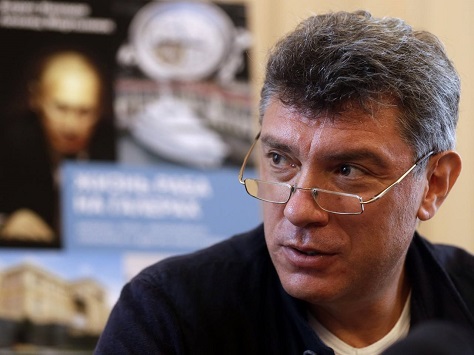
A look at Nizhny Novgorod, where Nemtsov began his career

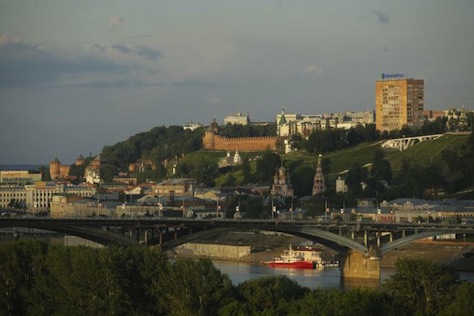
nizhniyPhoto credit to The Moscow Times.

In the aftermath of Boris Nemtsov’s shocking assassination, his friends in Russia and abroad are remembering him primarily for his role as a liberal opposition leader in the Putin era and for his short-lived tenure as first deputy prime minister under former Russian president Boris Yeltsin. Russia Flag Iconnizhny

Nemstov’s appointment as deputy prime minister lasted just four months, however, when Yeltsin dismissed him and other top government officials in the tempest of the 1998 ruble crisis. It was a sharp fall for someone that even Yeltsin hinted might one day be his successor.
nizhnyPhoto credit to BBC.

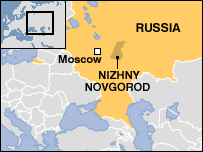
Instead, Nemtsov’s more enduring legacy in Russian government involves the six years he spent as the first post-Soviet governor of Nizhny Novgorod oblast in the Russian heartland that lies hundreds of miles to the east of Moscow — it lies north of the Caucuses and the Turkish-Iranian border.

* * * * *

RELATED: Nemtsov’s shocking assassination rocks Moscow

* * * * *

The oblast is home to Nizhny Novgorod, once Russia’s third city after Moscow and St. Petersburg. Named Gorky (after the writer Maxim Gorky) from 1932 until the fall of the Soviet Union, it plays an important, if shrinking, role as a hub for the Russian industrial heartland. The city, which rests at the point where the Volga river meets the Oka river, dates to the 13th century. During the Soviet era, it was a center of military activity and, accordingly, foreigners were prohibited from visiting the city. With the collapse of the Soviet Union, however, Nizhny opened both to tourists and capitalists alike.

Nemtsov, a bright and charismatic physicist who first engaged public policy in protest over the nuclear disaster at Chernobyl, was appointed Nizhny Novgorod’s governor in November 1991. In December 1995, when Russia was still an emerging democracy (and not a failing democracy, or a puppet democracy or an outright autocracy), Nemtsov was reelected at a time when privatization and liberalism had become so unpopular that Yeltsin himself was struggling politically to defeat communist and ultra-nationalists.

As governor, Nemtsov enthusiastically embraced the wave of liberal reforms that Yeltsin and Anatoly Chubais, first deputy prime minister before Nemtsov, were introducing across the country. Unfortunately, however, those policies also caused massive economic dislocation and cultural disorientation. Nevertheless, Nemtsov won praise from free-market advocates like former British prime minister Margaret Thatcher and from Western bankers keen on the investment opportunities in a newly opened Russia. He was close not only to the young group of market-oriented reformers in government, but also to opposition liberals, most notably the liberal, pro-democratic ‘Yabloko’ bloc, then led by Grigory Yavlinsky, who advised Nemtsov on economic reforms in Nizhny Novgorod and who remains the intellectual godfather of the Russian opposition movement (here’s a recent interview with Novaya Gazeta).

In his book Resurrection: The Struggle for a New Russia, the inimitable David Remnick writes that Nizhny Novgorod was a bright star in the Russia of the 1990s:

Beyond Moscow, the most encouraging region is centered around Nizhny Novgorod, where young and progressive politicians like Boris Nemtsov have made good on their promises to create ‘capitalism in one country.’ One of the biggest problems with the Soviet economy was that it was so heavily militarized; Nizhny Novgorod, the third-largest city in the country, has been one of the most militarized of all. And yet not only has the city managed, through privatization, demonopolization, and bond issues, to create thriving service and production economies, it has also managed to convert 90 percent of its collective farms to private hands.

But today, Nizhny is a case study in just about everything that’s wrong with the country — a confluence of the economic, environmental and demographic tragedies that are afflicting Russia in the 21st century. The oblast’s population has fallen from 3.71 million in 1989 to just 3.31 million in 2010, and the city is shrinking by around 15,000 annually as the death rate far exceeds the birth rate. Nizhny is now the fifth-most populous city, eclipsed by cities like Novosibirsk in Asian Russia.

As the prolific writer Anna Nemtsova (no relation to Nemtsov) has chronicled, her home city of Nizhny is not only one of the fastest shrinking cities in Russia, it’s one of the fastest shrinking cities in the world:

In 2014, [Nizhny] achieved an ­unenviable distinction: in the first six months of the year, 26,350 people died and only 18,700 babies were born – the population of Nizhny shrunk by 7,600 people in six months, its highest ever death rate. No bombs fell on the city during the period, no epidemics hit, no natural disasters struck its population. For the past two years Nizhny had been the fifth fastest shrinking city in the world.

In Siberia, of all places, cities like Novosibirsk and Krasnoyarsk are growing, even while Nizhny is failing. That’s not all Nemtsov’s fault who, after all, hadn’t been responsible for its government in nearly two decades. Moreover, as grim as Nizhny now appears today, it might have been even worse without the effects of Nemtsov’s shock therapy in the 1990s.

Nemtsova also writes about the city’s current mayor, whose wife spends much of her time in southern France. Valery Shantsev, the oblast governor since 2005 (one year after the Kremlin ruled that governors will be appointed directly and not elected) previously served for a decade as a former deputy mayor of Moscow under the fabulously corrupt Yuri Luzkhov.

Even as the region’s current leaders seem more like neo-feudalist, criminal vassals of Putin’s Kremlin, it’s clear that Nemtsov, in the 1990s, fell short of the economic miracle he was trying to achieve, and it’s important not to omit that failure from his legacy. It will be tempting now to remember Nemtsov for all his qualities as an opposition leader since the rise of Vladimir Putin, to paint him in broad strokes as a pro-democracy, pro-reform dissident and a man of principle. Nemtsov, of course, was all of those things.

But it’s not quite that simple, because he shares responsibility for  the wave of creative destruction unleashed throughout the Russian economy in the 1990s. Even if the Yeltsin-Chubais-Nemtsov reforms were a necessary step in Russia’s transition from a top-down communist state, they engendered economic suffering unknown to Russia for decades, scars that still afflict Russian collective memory today. The failure, in aggregate, of the reformers to establish broad-based economic prosperity, and the even more damning perception that they created a new class of oligarchic robber-barons set the conditions for Russia’s slow march back to autocracy.

Nationalism, the state security apparatus, a culture of corruption. All of these things are to blame for the rise of Putin-era illiberalism. But to understand the genesis of the Putin regime today requires a blunt and unflinching assessment of the failures of the regime that preceded it. After all, it was Yeltsin himself who plucked Putin out of relative obscurity in naming him as his fifth and final prime minister in August 1999.

Putin came to power, not in a vacuum, but into a specific context of economic, political and cultural conditions that Boris Nemtsov helped shape, both for better and for worse.
Estonian election results: Reform Party wins third term

roivas

Estonia’s parliamentary election proves what is becoming a nearly iron-clad thesis about Baltic politics: so long as social democratic parties in the Baltic States nurture ties with Moscow and pitch themselves to the narrow pool of ethnic Russian voters, centrist and center-right governments will continue to win elections and govern.estonia

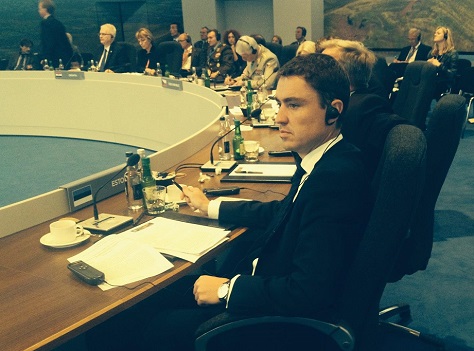
So it was in Estonia on March 1, as it became clear that the center-right Eesti Reformierakond (Estonian Reform Party) would win its third consecutive national election, the first under its 35-year-old prime minister Taavi Rõivas (pictured above in Ukraine last year), who is expected to continue leading Estonia’s government.

* * * * *

RELATED: Russian threat dominates Estonian election campaign

* * * * *

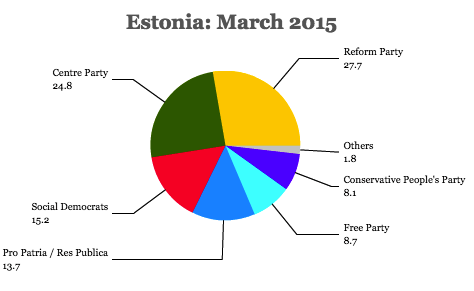
Despite polls that showed that the center-left Eesti Keskerakond (Estonian Centre Party), led by former prime minister and Tallinn mayor Edgar Savisaar might emerge as the leading party, Reform bested the Centre Party by nearly 3%.

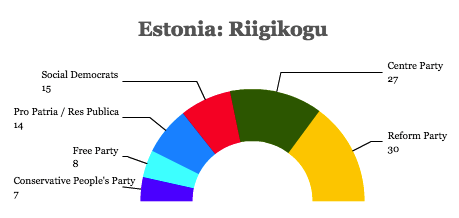
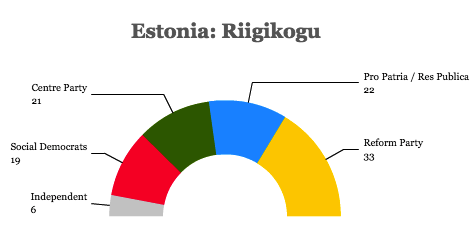
Nevertheless, both the Reform Party and its junior partner in government, the Sotsiaaldemokraatlik Erakond (Social Democratic Party), lost some ground — the two parties will, in aggregate, lose seven seats and six short of an absolute majority in the Riigikogu, Estonia’s 101-member unicameral parliament.

Estonia 2015 Riigikogu 2015

Luckily for Rõivas and the Reform Party, there are two new parties in the Estonian parliament, and one of them is a strong fit for a three-party coalition. The liberal Eesti Vabaerakond (Free Party), founded last September by Andres Herkel, an Estonian intellectual, could easily find common ground with Reform. Continue reading Estonian election results: Reform Party wins third term

Russian threat dominates Estonian election campaign

roivas

With the world’s attention on a political assassination in Moscow, voters in the former Soviet republic of Estonia go to the polls tomorrow, March 1, with the threat of Russian aggression looming on its eastern border. estonia

Three days ago, US troops, as part of NATO exercises, paraded in Narva, one of Estonia’s largest cities, resting on the Russian border, and Russian troops reciprocated with a similar show. Though it felt like a Cold War throwback, the demonstration highlights just how seriously Estonia, a member of NATO since 2004, and other NATO allies are taking the possibility of a Russian incursion in the Baltics.

Under that tense penumbra, voters will elect all 101 members of Estonia’s parliament, the Riigikogu, where the center-right  Eesti Reformierakond (Estonian Reform Party) currently controls the largest bloc of seats and governs in coalition with the centrist Sotsiaaldemokraatlik Erakond (Social Democratic Party).

Riigikogu

Some polls show, however, that the center-left Eesti Keskerakond (Estonian Centre Party) narrowly leads the Reform Party, with the Social Democrats and the conservative opposition party, Isamaa ja Res Publica Liit (IRL, Pro Patria and Res Publica Union), trailing close by in third and fourth place.

It’s the first time that Estonia’s youthful new prime minister Taavi Rõivas (pictured above) will lead the Reform Party into an election. When longtime prime minister Andrus Ansip stepped down in March 2014 after nine years in office, the idea was that he would switch jobs with former Reform Party leader, prime minister and European commissioner Siim Kallas. That worked out for Ansip, who’s now Estonia’s representative to the European Commission with a ‘super-portfolio’ for the digital single market.

Kallas, however, was tripped up by a scandal dating to his days as Estonia’s central bank president in the 1990s, and he stepped out of consideration for the premiership. Other heavy hitters like former foreign minister Urmas Paet also demurred.  That meant that the challenge fell to the 35-year-old Rõivas, whose government experience included just two years as social affairs minister. Married to pop singer Luisa Värk, Rõivas has been a member of the Estonian parliament since 2007 and is generally seen as close to Ansip.

The Centre Party’s leader, Tallinn mayor Edgar Savisaar, is nearly three decades older, and he served briefly from 1991 to 1992 as Estonia’s first independent prime minister. During the campaign, he’s made much of Rõivas’s relative inexperience. Continue reading Russian threat dominates Estonian election campaign

Nemtsov assassination rocks Moscow

nemtsov

Throughout the Putin era, it hasn’t been uncommon to see political opponents harassed or even killed.Russia Flag Icon

Anna Politkovskaya was gunned down in 2006 in the elevator of her building in central Moscow after writing several highly praised books detailing the dark side of life in Russia under president Vladimir Putin.

Officials in the United Kingdom protested furiously when, as if out of a Cold War thriller novel, former Russian secret service agent Alexander Litivinenko was apparently poisoned with the radioactive polonium-210 a month later.

Alexei Navalny, who rose to prominence more recently as a critic of Putin and the corruption of Russian government, has been harassed and imprisoned on politically motivated charges.

* * * * *

RELATED: The idea of a nuclear war with Russia is absolutely crazy

* * * * *

Business leaders like Boris Berezovsky and Mikhail Khodorkovsky were exiled and imprisoned after Putin’s government decided that they amassed too much wealth in the fire sale of the 1990s when Putin’s predecessor, Boris Yeltsin, sold many of the former Soviet Union’s public assets.

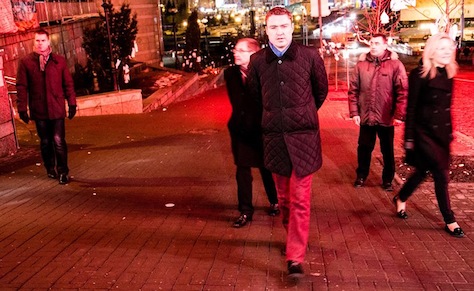
But the assassination of opposition figure and former Yeltsin-era deputy prime minister Boris Nemtsov is the most brazen attack yet. I’m sure no one will ever be able to tie Nemtsov’s murder to the Kremlin, which is already officially condemning the murder. The attack — an audacious murder on the streets of Moscow when Nemtsov was otherwise on a Friday night stroll — sends a chilling message to everyone in Russia who opposes Putin’s increasingly autocratic rule (not to say that Putin’s rule was even incredibly liberal or democratic).

Nemtsov’s assassination seems certain to subdue a planned opposition march scheduled for Sunday.

Don’t think for a moment that this isn’t exactly the gruesome image the Kremlin wants its critics to see — a dissident gunned down in the back just footsteps away from the Kremlin walls: Continue reading Nemtsov assassination rocks Moscow

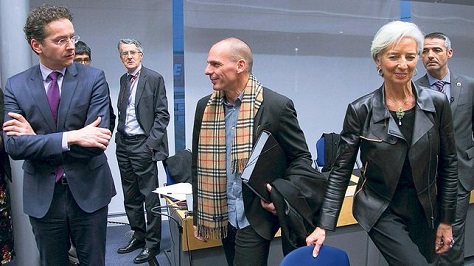
What a Eurogroup-brokered deal with Greece might look like

eurogroup

At times this week, it has felt nearly like the European Union was brokering a bailout of Ukrainian debt, while working to negotiate a ceasefire with Greece.European_UnionGreece Flag Icon

But as Greece’s new left-wing government and the Eurogroup, the collection of eurozone finance ministers, work over the weekend for a new Greek debt deal to float Greece’s treasury for the next two years (or thereabouts), there are glimmers of hope on both sides that a deal might possibly emerge. Negotiations continue as the February 28 deadline approaches, when Greece’s current bailout program is scheduled to end.

So what might that deal ultimately be? Above all, any deal that attempts to put Greece on a long-term path to prosperity needs to start from the notion that its debt burden of nearly 175% of GDP growth is simply unsustainable. You might not hear that in public from figures like German chancellor Angela Merkel, German finance minister Wolfgang Schäuble, European Commission president Jean-Claude Juncker or Eurogroup president and Dutch finance minister Jeroen Dijsselbloem, but it’s likely another story in private.

No matter how many cuts successive governments make to future budgets, the cost of servicing that debt will cripple its ability to provide the same level of public services to Greek citizens — especially at a time when unemployment remains so high. (Not everyone has the view, however, that the Greek debt burden is so incredibly unsustainable).

* * * * *

RELATED: A Russian bailout may have always been Plan B for Tsipras

RELATED: Seven lessons from the Greek election results

* * * * *

Here’s an outline of what to expect — perhaps as soon as early Monday morning: Continue reading What a Eurogroup-brokered deal with Greece might look like

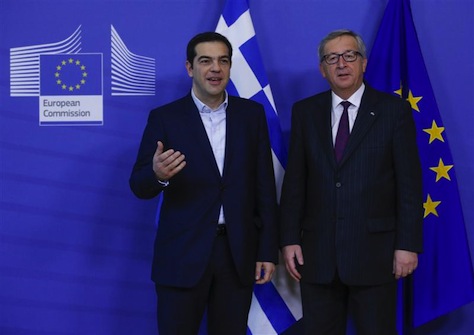
A Russian bailout may have always been ‘Plan B’ for Tsipras

junckertsiprasPhoto credit to ELTOS/ELTA.

It may have seemed odd that, within hours of taking office, Greece’s new prime minister Alexis Tsipras struck out at the European Union to delay and ultimately weaken the bloc’s resolution to extend sanctions against Russia and certain actors within the Russian government.Greece Flag IconRussia Flag Icon

The incident shed light on an under-explored element of policy preferences of Greece’s new governing party, the leftist SYRIZA (the Coalition of the Radical Left — Συνασπισμός Ριζοσπαστικής Αριστεράς), including its reluctance to embrace NATO and the traditional military and security alliance that links the United States and the European Union. Tspiras, who has visited the Kremlin several times, has forcefully opposed the EU sanctions against Russia stemming from its involvement in the unrest in eastern Ukraine.

Furthermore, Tsipras’s choice to form a coalition with the right-wing, anti-austerity Independent Greeks (ANEL, Ανεξάρτητοι Έλληνες), and to appoint ANEL’s leader, Panos Kammenos, as defense minister, brought into government a brand of right-wing nationalism with roots in traditional Greek Orthodoxy and plenty of euroscepticism.

Throughout the campaign and, indeed, for years, Tspiras has publicly evoked confidence, if not outright cockiness, that he would be able to negotiate a deal to lighten Greece’s debt load if elected to power. Presumably, many commentators believed that meant Tsipras was willing to engage EU elites, including German chancellor Angela Merkel, in a game of ‘chicken’ over Greece’s potential exit from the eurozone. That’s probably still true.

But the common view among most economists is that Greece’s leverage on this point is growing weaker. Merkel and others have privately briefed that the eurozone is much stronger now than in 2012 when the ‘Grexit’ issue first became a real concern, and they don’t believe that the contagion from a Grexit today would be considerable. Greece’s turmoil can be isolated, but caving to the demands of the Tsipras government could embolden radical leftists elsewhere in Europe, especially in Spain, where the leftist Podemos movement now leads polls in advance of elections later this =year. The European Central Bank last week essentially backed Merkel’s view by announcing that it would refuse to accept Greek bonds as collateral, pushing the burden of risk on Greek debt exclusively upon the Greek central bank. Greek finance minister Yanis Varoufakis clashed publicly with German finance minister Wolfgang Schäuble last week as well, noting that he didn’t even ‘agree to disagree’ with Schäuble over the Greek debt standoff.

But Kammenos’s comments yesterday about Greece’s ‘Plan B’ make it clear that the Tsipras government believes it has another, potentially more explosive card it can play:

“What we want is a deal. But if there is no deal – hopefully (there will be) – and if we see thatGermany remains rigid and wants to blow apart Europe, then we have the obligation to go to Plan B. Plan B is to get funding from another source,” he told a Greek television show that ran into early Tuesday. “It could the United States at best, it could be Russia, it could beChina or other countries,” he said.

The United States is certainly not going to undermine Merkel and the EU leadership, especially to bail out a far-left government in Greece. Furthermore, China’s recent history demonstrates that it very rarely makes splashy political moves in foreign policy outside regional Asian politics (such as in Bhutan or Sri Lanka).

That, of course, leaves Russia, which shares a common form of Christianity with Greece in Orthodoxy, and which also happens to be in the middle of the most high-stakes geopolitical struggle with NATO since the end of the Cold War. Continue reading A Russian bailout may have always been ‘Plan B’ for Tsipras

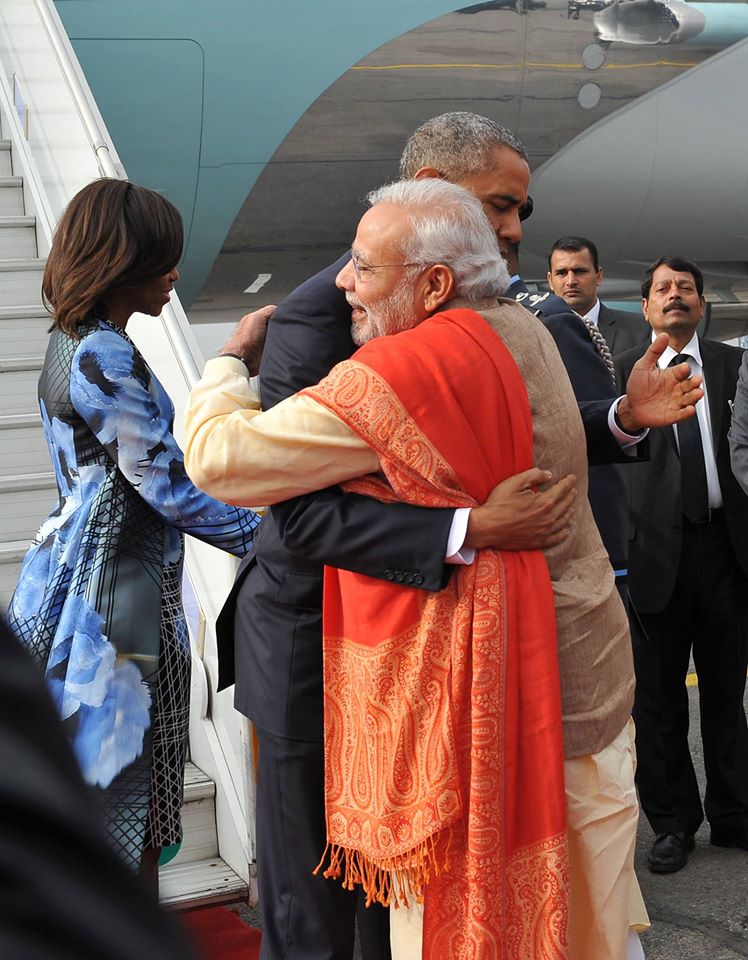
Photo of the day: Obama meets Modi

obamamodi

The most incredible thing about US president Barack Obama’s most recent three-day trip to India, which began today, is that Indian prime minister Narendra Modi can pull off such a sincere welcome less than six weeks after citing Russia as India’s top defense partner, even as he and Obama would later announce a new US-India nuclear energy deal.India Flag Icon

Has any world leader had such a strong first nine months in office from a geopolitical strategic perspective?

Keep in mind that Modi, barred from the United States for nearly a decade due to his alleged role in the anti-Muslim riots in his home state of Gujarat, was not always particularly keen on strengthening relationships with the United States. Instead, on the basis of his work promoting Gujarat, it was always more likely that he would look to China, Japan, Russia and the United Arab Emirates, where he wooed investment to his own state. With his emphasis on turfing out the corrupt and ineffective leadership of the Gandhi family, and with relatively little commentary on India’s foreign policy, no one expected Modi to build so many bridges in such little time.

Within just nine months, Modi has been the guest of honor at a state dinner at the White House, and he packed Madison Square Garden, filled with tens of thousands of North Americans of Indian descent thrilled to hear from India’s most powerful leader in three decades. By all accounts, Modi and Obama have developed a strong working relationship, unique for an American president who isn’t particularly known for his chemistry with world leaders.

Today, however, Modi has the grin of a prime minister, who, despite a decade as a pariah throughout much of the West, now revels in being suited by everyone — not just the United States and Russia, but China, Brazil, Japan, Europeans, Africans. In foreign policy, Modi is running a positive-sum game. What other countries in the world could manage to nurture such close relationships, strategic and otherwise, with Russia and the United States simultaneously? (Serbia, maybe? The United Arab Emirates? The list isn’t incredibly long.)

Modi, whose social media use has been nimble, was quick to post a photo of his warm welcome for Obama early Sunday morning. But one look at his Facebook and Twitter feeds, which often border on the campy side, show that he doesn’t just delight in Obama — in 2015 alone, he’s featured shots with German finance minister Wolfgang Schäuble,  Israeli agriculture minister Yair Shamir, Astrakhan provincial governor Alexander Zhilkin, Iranian presidential adviser Akbar Torkan, Canadian immigration minister Chris Alexander, Macedonian prime minister Nikola Gruevski, among many (many) others.

What’s becoming clear is that while Modi has taken only a gradual approach to reforming India’s government, slowly introducing changes to make the bureaucracy more efficient, the theme of Indian pride is constant in the Modi approach to both domestic and foreign policy. Continue reading Photo of the day: Obama meets Modi

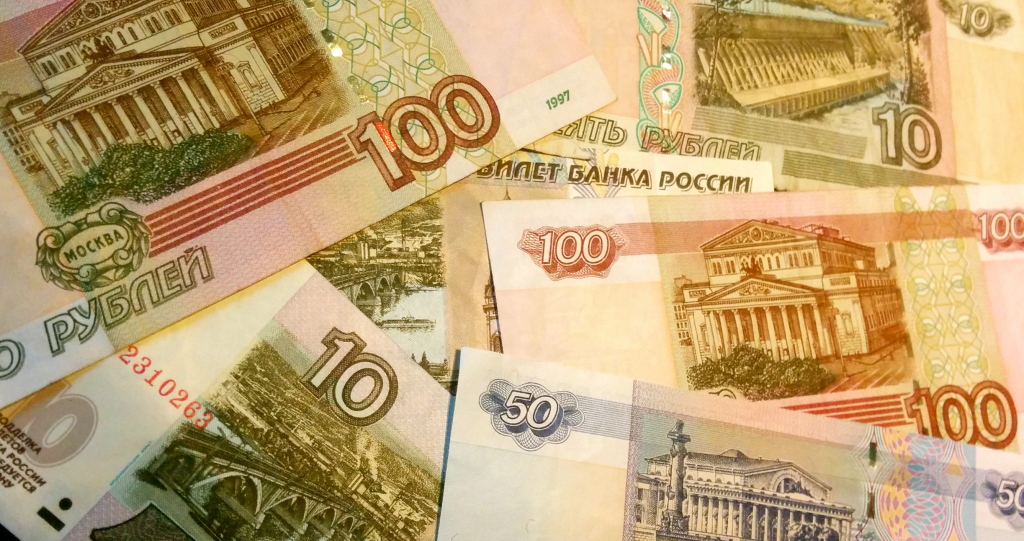
Why the West shouldn’t root for Russia’s rouble freefall

rubles

It might be tempting today for policymakers in Berlin, Washington, Brussels and London to have a moment of schadenfreude at the Russian currency crisis, which seems to deepen by the hour.Russia Flag Icon

But as Russia’s economy significantly weakens, those same officials might regret their glee if it causes Russian president Vladimir Putin to double down on the nationalist rhetoric and geopolitical aggression that’s characterized his third term in office. The Guardian‘s Larry Elliott declared that with today’s collapse, the West has won its ‘economic war’ with Russia and otherwise christened it ‘Russia’s Norman Lamont moment,’ a reference to the British pound’s collapse in 1992:

Back in September 1992, the then chancellor said he would defend the pound and keep Britain in the exchange rate mechanism by raising official borrowing costs to 15%, even though the economy was in deep trouble at the time.

European and US governments slapped economic sanctions against several top Russian officials earlier this year, largely in retaliation for Russia’s annexation of the Crimean peninsula in March and the Kremlin’s continued role supporting separatists in eastern Ukraine. Even today, US president Barack Obama indicated that he would support even more economic sanctions against Russian weapons producers and other companies tied to the Russian defense industry after the US Congress overwhelmingly passed a new anti-Russia bill with bipartisan support.

The last Russian financial crisis in 1998 coincided with slowdowns across the developing world, an ominous sign for the struggling Brazilian, Indian and Chinese economies. It may have even precipitated the 1998-99 Asian currency crisis.

Much of Putin’s support in the last decade and in his first stint as president from 2000 to 2008 rested on the economy’s strong performance. After the embarrassing and impoverishing experience of the Soviet Union’s collapse, the Putin era brought an end to the grinding poverty that characterized the presidency of his predecessor, Boris Yeltsin. Buoyed by rising demand for Russian oil and gas, Putin presided over a boom in the mid-2000s that materially raised incomes across Russia, especially in cities like Moscow and Saint Petersburg.

That continued even through the presidency of Dmitry Medvedev, when Putin, barred from a third consecutive term, instead served as prime minister. But since returning to the Kremlin in 2012, Putin has faced an increasingly precarious economy, and as Max Fisher and other commentators have convincingly argued, the political basis for Putin’s government has shifted from economic grounds to increasingly nationalist and populist rhetoric. That explains the Kremlin’s machinations in Ukraine and its growing political standoff with Europe and the United States, a stand that’s boosted Putin’s previously flagging approval ratings.

If that’s true, though, the risk of Russian aggression is actually rising as its economy deteriorates. There are now several potential catalysts — the currency crisis could easily engender a wider economic recession, oil prices might continue their drop, or the United States and Europe could implement deeper sanctions. In such case, Russian president Vladimir Putin may respond by intensifying his saber-rattling against not only Ukraine, but the Baltic states, southern Europe, Moldova and Kazakhstan, to say nothing of Belarus, Georgia or elsewhere. Continue reading Why the West shouldn’t root for Russia’s rouble freefall

One solution to Moldova’s problems? Just join Romania.

moldovaPhoto credit to adrianhancu / 123RF.

By just about any measure, Moldova’s first quarter-century as an independent state has been inauspicious long before last weekend’s parliamentary elections.moldova

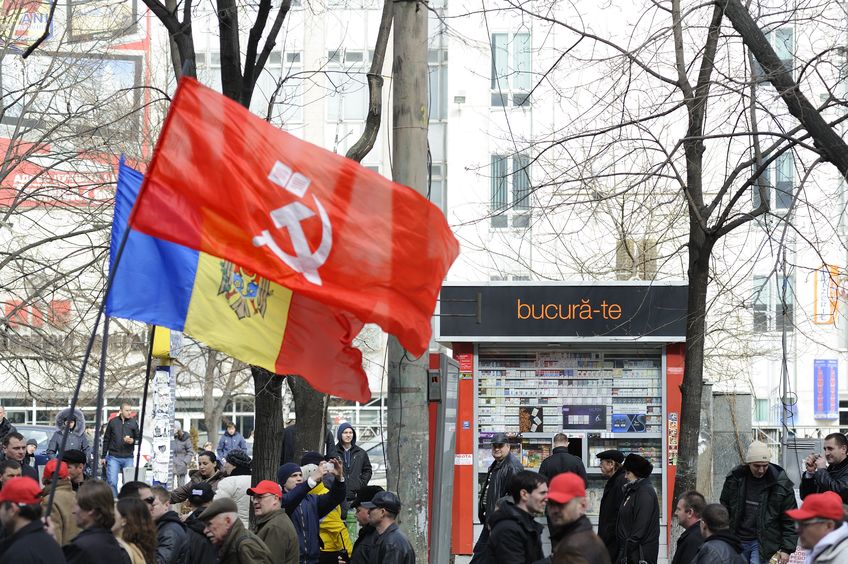
Emerging from the Soviet Union as a new state engaged in a war with separatists in Transnistria, Moldova is today the poorest country on continental Europe, and successive governments have left the country with antiquated and corrupt institutions that culminated in widespread protests (pictured above) and a political crisis in 2009. In 2014, no country in the former Soviet Union, including Ukraine, is perhaps more at risk from Russian aggression.

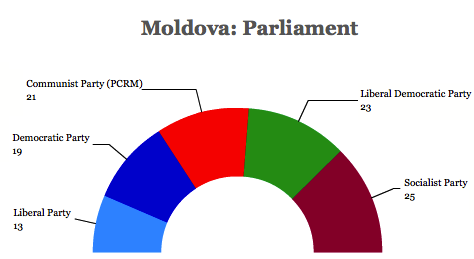
Though a coalition of three relatively pro-European parties appear to be moving forward to form a governing coalition, the winner in last Sunday’s vote was the Partidul Socialiştilor din Republica Moldova (PSRM, Party of Socialists of the Republic of Moldova), formed in 1997 and a fringe party until it received an endorsement from Russian president Vladimir Putin. The Socialists will enter Moldova’s 101-member Parlamentul (parliament), with 25 seats, the largest of five parties in the chamber.

moldova14

The Socialists benefitted chiefly from a decision on November 29 by Moldova’s supreme court of justice to uphold a lower court’s decision two days earlier to disqualify the pro-Russia ‘Homeland’ Party after it was found to have accepted foreign resources. Continue reading One solution to Moldova’s problems? Just join Romania.

Germany’s Left Party comes of age with Ramelow victory

bodoramelow

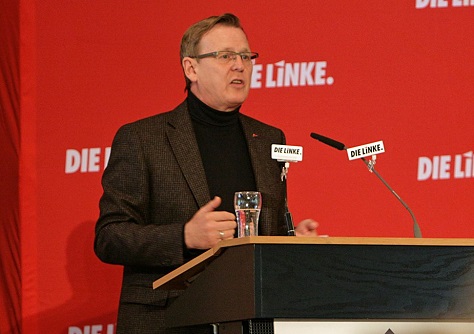
After months of inter-party negotiations, the east-central German state of Thuringia will have a government led by Bodo Ramelow, the state leader of the democratic socialist Die Linke (Left Party).thuringiaGermany Flag Icon

On the surface, it means that Die Linke, partially the successor to  Socialist Unity Party (SED) that ruled the eastern German Democratic Republic, will control a state government for the first time since reunification, which has bred a significant amount of controversy:

Never before in a fully democratic Germany has a regional election triggered so much protest, with thousands demonstrating outside the parliament in Erfurt on Thursday evening ahead of the vote, declaring that the “perpetrators” were heading back into office.

Demonstrators included former East German dissidents, some of whom had spent time behind bars for their opposition views. They shouted “Stasi out!” in reference to East Germany’s repressive secret police, and “The Social Democrats have betrayed us”.

Even center-right chancellor Angela Merkel has used stark language to reject a Left-led government, arguing that Ramelow’s victory is equivalent to putting Karl Marx in charge of government.

But that’s a fairly oversimplified narrative.

Ramelow and the Left will govern in coalition with two far more moderate center-left parties, the Die Grünen (the Greens) and the Sozialdemokratische Partei Deutschlands (SPD, Social Democratic Party). The SPD, nationally, governs in a ‘grand coalition’ with chancellor Merkel’s conservative Christlich Demokratische Union Deutschlands (CDU, Christian Democratic Union).

Moreover, the Left isn’t even the largest party in the Thuringia Landtag, the regional assembly:

thuringia landtag

Far from bringing a police state or a socialist revolution to the tranquil streets of sleepy Erfurt, the Left will be governing in coalition with two far more moderate partners. With the support of the Greens and the SPD, Ramelow’s government will have a one-vote margin in the Landtag. So even if it wanted to introduce radical far-left measures, the Left wouldn’t get very far.

* * * * *

RELATED: Thuringia and Brandenburg results: Left & AfD on the rise

RELATED: Left hopes to make eastern breakthrough
in German state elections

* * * * *

It’s not clear, however, that it wants to do so. Thuringia provides the party with the opportunity that it can govern responsibly, even with a different ideological perspective than Merkel’s prevailing CDU or the moderate SPD. While the Left is relatively pro-Russia, plenty of former chancellors, from Gerhard Schröder to Helmut Kohl, have struck more lenient views toward Russia than most European figures. While the Left is also anti-NATO, that’s because it’s on the more ultra-pacifist side of a political culture that for decades has been incredibly pacifist.

Ramelow, a Lutheran union leader born in West Germany, is hardly a flamethrower, and he’s an advocate of pro-growth, anti-austerity policies. He’s called for wider investment in education and wants to provide a free year of kindergarten to every child in the state.

Continue reading Germany’s Left Party comes of age with Ramelow victory

Ashton Carter will be Obama’s fourth defense secretary

100628-D-9880W-113.JPG

Just a week after US president Barack Obama in essence fired his defense secretary, former Republican senator Chuck Hagel of Nebraska, he has apparently found a successor — Ashton Carter.USflag

Carter served as deputy secretary of defense between October 2011 and December 2013 under both Hagel and Hagel’s predecessor, Leon Panetta, a longtime Democratic operative, former budget chief, Clinton administration chief of staff and California congressman.

Carter, who graduated from Yale University with majors in medieval history and physics, has an extensive background as under secretary of defense for acquisition, technology and logistics. He is a Rhodes scholar with a doctoral degree in physics as well.

As a defense secretary, he will be more like Panetta or Robert Gates, a master of the Pentagon and its bureaucracy and budget. He isn’t expected to be a visionary, like former Bush-era defense secretary Donald Rumsfeld, which is just as well, given that so much national defense policymaking is centered in the White House, not at the Pentagon. Nevertheless, The Atlantic‘s editor-at-large, Steve Clemons noted earlier on Tuesday on Twitter that Carter is hawkish with respect to Iran, which could nudge administration policy, a week after stalled negotiations over Iran’s nuclear weapons program were extended until July 2015.

* * * * *

RELATED: Hagel’s exit symbolizes Obama policy shift

* * * * *

Unlike Hagel (or even Panetta), Carter is not a politician, but rather a career technocrat and policy wonk.  As an assistant secretary of defense under US president Bill Clinton, Carter was responsible for international security policy, and he has written extensively on the topic of nuclear non-proliferation.

When Obama was looking to replace Panetta two years ago, Carter was on the short list as well, and there were indications that Hagel and Carter didn’t always see eye-to-eye at the Pentagon, one reason why Carter may have stepped down as deputy secretary late last year.

His background from the immediate post-Cold War period makes Carter especially cognizant of many issues in the former Soviet Union, perhaps an especially relevant qualification as Russia’s aggression toward Ukraine (and perhaps the Baltic states and Georgia) increases.

Carter is easily expected to win confirmation by the US Senate, which will be Republican-controlled as of early January, following Republican gains in both houses of the US Congress in November’s midterm congressional elections.

What a Republican Senate means for world politics

potomacview

On Tuesday, when tens of millions of US voters go to the polls, they are very likely to deliver a US Senate majority to the Republican Party.USflag

Six years into the administration of Democratic president Barack Obama and four years after the midterm elections that delivered control of the US House of Representatives to the Republicans and conservative speaker John Boehner, most polls and poll aggregate forecasts give the Republicans anywhere from a strong (70%) to moderate (74%) to an overwhelming (96%) chance to retake the Senate.

It’s not uncommon for the ‘six-year itch’ to reward the non-presidential party with gains in midterm elections. Throughout the post-war era, in every midterm election during the second term of a reelection president, the opposition party has made gains each time — with the exception of 1998, when the Democrats benefited from a strong economy and Republican overreach in pursuing  what would eventually become impeachment hearings against US president Bill Clinton over alleged perjury in the Monica Lewinsky affair.

It’s also not unheard of that foreign policy can drive larger narratives about presidencies.

Most recently, in 2006, Democrats recaptured both houses in midterm elections, forcing then-president George W. Bush to accept the resignation of his defense secretary Donald Rumsfeld, in light of the war in Iraq’s unpopularity and the unfolding sectarian civil war taking place there despite US military occupation. As it turns out, the 2006 midterms paved the way for a much more moderate tone to the final two years of the Bush administration and a change in strategy under Robert Gates, Rumsfeld’s successor, who ultimately stayed on as defense secretary until 2011, lending a sense of continuity to the Obama administration’s approach to defense policy.

So what exactly would a Republican Senate mean for US foreign policy in the final two years of the Obama administration? Continue reading What a Republican Senate means for world politics