A comparison of US and EU freedom of information regimes

For what it’s worth, I’ve been reviewing a law review article that I wrote in 2006 comparing, on the one hand, the U.S. Freedom of Information Act and, on the other hand, E.U. Regulation 1049/2001.European_UnionUSflag

The paper,  Ever Closer Transparency: Comparing the European Regulation on Public Access to Documents with the U.S. Freedom of Information Act, tries to accomplish three tasks: (i) establishing the theoretical context for freedom of information and the policy rationales underlying it, (ii) explicates the text of FOIA (5 U.S.C. §552), as adopted in 1966 and amended in 1974 in the United States, and Regulation 1049/2001, as adopted in the European Union in 2001, elucidating their similarities and differences, and (iii) providing five recommendations to strengthen the freedom-of-information regimes in each country.

Given that I spent the next part of the year taking the New York bar exam and jumping into a fund formation legal practice at Latham & Watkins, I never followed up with actually publishing the article, so I’m considering revising the paper and submitting it.

Any comments or recommendations on the original text (see in Scribd below — the link is here) are very much welcomed!

First Past the Post: March 19

papaamte

East and South Asia

The Liberal Democratic Party of Japan holds a 41% to 13% lead in this summer’s upper house elections against its chief rival, the Democratic Party of Japan.

North America

Former U.S. secretary of state Hillary Clinton, widely believed to be the 2016 Democratic presidential frontrunner, supports gay marriage.

Québec’s Liberal Party chooses Philippe Couillard as its new party leader.

Latin America / Caribbean

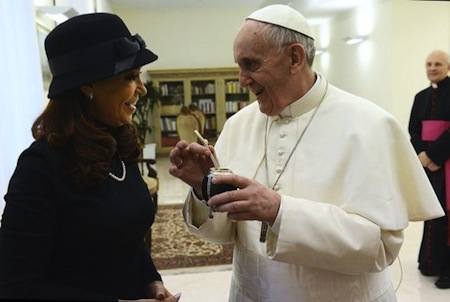
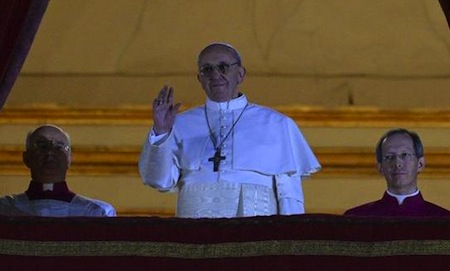
Pope Francis meets up in Rome with Argentine president Cristina Fernández de Kirchner (pictured above).

Mexicans resist foreign investment in Pemex, México’s state-owned oil industry. [Spanish]

Susana Villaran, the first female mayor of Lima in Perú, has survived a recall vote.

Sub-Saharan Africa

Liberian president Ellen Johnson Sirleaf wants to reform the country’s education system.

Kenyan president-elect Uhuru Kenyatta calls on the ICC to drop his case.

Was Raila Odinga’s campaign team to blame for his Kenyan presidential election loss?

Zimbabwe’s government arrests key opposition figures and human rights lawyers.

Europe

Will Pope Francis appoint a new Vatican secretary of state?

EU council president and former Belgian prime minister Herman Van Rompuy will step down in 2014. So will EU foreign representative Catherine Ashton will also step down.

In Bulgaria, both the ruling GERB and opposition Socialists have low support.

Leftist and human rights activist Laura Boldrini and Piero Grasso, a former anti-mafia magistrate, are the new speakers of the Italian lower and upper houses, respectively.

Middle East and North Africa

Syria’s rebel opposition has formed an interim government under a new prime minister, Ghassan Hitto.

Imprisoned PKK leader Abdullah Öcalan expected to call a ceasefire with Turkey.

Remembering the 10th anniversary of the U.S.-led Iraq invasion

iraq cartoon

Retired U.S. colonel Ted Spain lists 10 mistakes that the United States made in its Iraq invasion in March 2003 in a succinct and insightful piece in Foreign Policy today.USflagiraq flag icon

Virtually all of them — from the intelligence failures to the inability or incapacity to provide for post-invasion law and order to the flippant attitude of the U.S. to building diplomatic ties in advance of the invasion — have to do with inadequate pre-war planning.

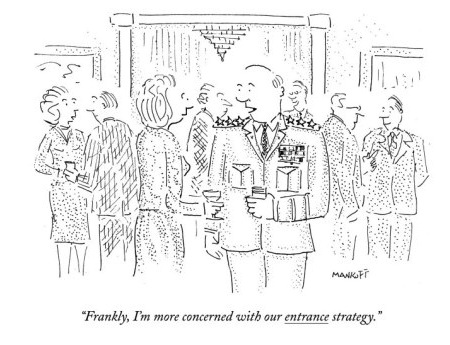
It reminded me of a cartoon that a friend rediscovered from The New Yorker over the weekend (pictured above), a poignant commentary on just how much hubris American policymakers, chief among them the Pentagon strategists under the leadership of U.S. Donald Rumsfeld, displayed in March 2003 before the Iraqi invasion.

It’s unclear today that the United States or the Middle East is more secure for having removed Saddam Hussein from power.  Lawrence B. Lindsey, at the time head of U.S. president George W. Bush’s national economic counsel, was essentially sacked for suggesting that the war might cost up to $200 billion.  It ended up costing $800 billion, nearly 4,500 U.S. troop deaths, 32,000 wounded and today, the U.S. military doesn’t even have so much as a small outpost in Baghdad since the absolute withdrawal of U.S. forces in December 2011.

Furthermore, the horrific prisoner abuse scandal at Abu Ghraib cost the United States whatever moral legitimacy it still had left a year after the invasion, which morphed from a quest to rid the country of phantom weapons of mass destruction into an aimless occupation to develop a democratic Iraq into a darker, counterinsurgency effort to stop a painful sectarian civil war.

And that’s even if you believe that the faulty intelligence that led U.S. political leaders to believe that Iraq was harboring weapons of mass destruction (it wasn’t — Saddam was posturing in large part to posture vis-a-vis Iran) was merely gross negligence and not outright manipulation and fraud.

Saddam was certainly no angel — and with the civil war in neighboring Syria reaching nearly a two-year anniversary under strongman Bashar al-Assad, the two countries provide quite a damning indictment for the Ba’ath Party (حزب البعث العربي الاشتراكي) in the two countries where it has been the dominant party in the last half of the 20th century.

But it’s certainly clear that Iraq is no better off for having suffered through the invasion and its aftermath.  Iraq today is, mercifully, a long way from the sectarian violence that marred in the civil war from 2005 to 2008 but today, clear strains exist among the Sunni, Shi’a and Kurdish Iraqis.

Millions of Iraqi citizens were either displaced in the sectarian violence or fled the country entirely, and an estimated 120,000 Iraqi citizens were killed in the fighting. 

maliki

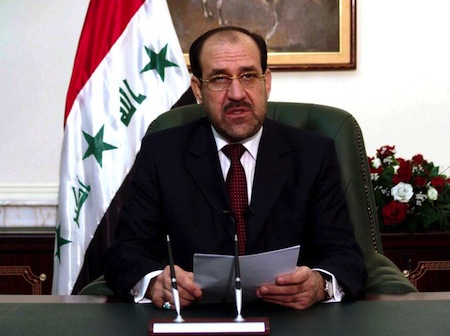
Iraqi prime minister Nuri al-Maliki (نوري المالكي) (pictured above), who leads a Shi’ite coalition in the Iraqi parliament, is hardly a secular democratic leader, and protests have increasingly opposed his government in recent months — despite a 50% increase in Iraqi oil production since taking power in 2006, Sunnis in Baghdad now stridently oppose the al-Maliki government.  The Iraqi parliament passed a law earlier this year limiting the speaker of the Iraqi parliament and Iraq’s prime minister and president to just two terms in office — that means al-Maliki will not govern Iraq after expected parliamentary elections in March 2014.

Those elections, by the way, will occur just months before another war-torn country in which the United States still has troops, Afghanistan, is set to select a successor to the term-limited president Hamid Karzai (حامد کرزی) after 12 years in office.

Iraq ranked in 2012 as the ninth-worst failed state in The Fund for Peace’s failed state index.  It’s perceived as the world’s 18th most corrupt country in 2012 according to Transparency International.  Though it’s made many gains in the past five years, it still ranks as just 131 out of 186 in the United Nations Human Development Report for 2013.

Above all, it bears repeating:

An estimated 120,000 Iraqi citizens died

You can’t place the blame for all of those deaths directly on the U.S. military or the Bush administration or Donald Rumsfeld.  But it’s indisputable that the invasion that the United States launched 10 years ago this week led to the unraveling of Iraqi civil society that unleashed the violence that led to those deaths.

If there’s one overweening lesson that the next generation of American security experts take away from the Iraqi war, whatever strides or obstacles that Iraq faces in the decades ahead, it’s that inadequate planning can doom even the most flawless initial invasion into a decade of painful, costly and terror-filled destabilization.

Thanks to Timothy Stewart-Winter for the cartoon by Robert Mankoff, which ran in The New Yorker in 2003.

What comes next for Cyprus and the EU following Friday’s haircut ‘bail-in’?

cyprus

nicenic

So much for ‘nice Nic’ — it’s not that he’s reverted back to ‘nasty Nic’ so much as ‘nonessential Nic.’European_Unioncyprus_world_flag

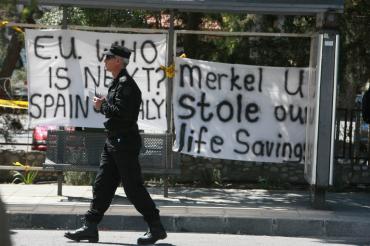
Fifteen days after his inauguration as Cyprus’s new president, Nicos Anastasiades (pictured above, bottom), was forced into what’s now become a growing domestic, eurozone and international crisis when European Union and International Monetary Fund leaders presented Anastasiades with a €10 billion bailout package.

The catch, of which you’re almost certainly aware at this point, is that an additional €5.8 billion of savings will come in the form of a one-time levy on all bank accounts in Cyprus — deposits of  €100,000 will pay a 9.9% levy and deposits of under €100,000 will pay a 6.75% levy, even those deposits are insured by a system similar to the FDIC guarantee in the United States.  Senior bondholders won’t take a haircut.

So if you’re a hedge fund, for now at least, you’ll receive fully 100% of the face value of any debt you hold in Cypriot banks.  If you’re, say, a widowed Cypriot pensioner with €30,000 saved in a Cypriot bank, you’ll wake up Tuesday morning to find that you now have just €27,975.

It’s impossible to overstate just how politically explosive the plan was — in one fell swoop, Europe’s leaders have single-handedly done all of the following:

  • undermined the Cypriot presidential administration just days after it was elected with the support of those same European leaders and a promise by Anastasiades that any bailout would not include deposit haircuts;
  • provided ammunition to every euroskeptic in Europe from Beppe Grillo in Italy to Nigel Farage in the United Kingdom by reinforcing the notion that European institutions suffer from a lack of democratic legitimacy and gratuitously trample national sovereignty;
  • pulled the rug out from under the financial industry in Cyprus, essentially the only growing sector in the Cypriot economy;
  • handed to Cyprus’s parliament — where Anastasiades’s center-right Democratic Rally (DISY, Δημοκρατικός Συναγερμός or Dimokratikós Sinayermós), controls just 20 out of 56 seats — a strong reason to vote against the deal, thereby exacerbating the uncertainty throughout the week;
  • undermined the concept of deposit insurance throughout the entire eurozone;
  • by Europeanizing — or even internationalizing — what should have been a small matter in a country with a GDP ten times smaller than Greece’s, potentially initiated bank runs in Italy, Spain, and who knows where else throughout Europe;
  • needlessly antagonized Russia in the process, and may have provoked Russia into making a politically explosive counter-offer to Cyprus; and
  • probably did nothing to help Cyprus’s long-term economic outlook, because if the levy weren’t enough to depress Cypriot growth and undermine its banking industry, further austerity designed to reduce Cyprus’s public debt is certain to send Cyprus’s GDP swooning for some time to come.

That’s right — the first major decision of the Eurogroup of eurozone finance ministers since choosing as its president Jeroen Dijsselbloem, a center-left finance minister newly elected in the Netherlands just last autumn, is to demand an increase in the Cypriot corporate tax rate from 10% to 12.5% and a further increase on Cyprus’s savings tax.

That’s in addition to the deposit haircut that everyone’s mostly focused upon.

Anastasiades seems to have had very little option but to accept the deal, despite the fact that European leaders, including German chancellor Angela Merkel, actively supported his presidential bid in last month’s election:

[Anastasiades] spoke on Saturday of a ready-made decision imposed on Nicosia in the form of a blackmail: Take it or have the eurozone crumble….

In a written statement he issued on Saturday afternoon, Anastasiades said “Cyprus came across a previously made decision, a fait accompli.” In his defense he said that the emergency situation “did not arise in the last 15 days that we have undertaken the country’s administration.”

In the February 24 presidential runoff, Anastasiades won a landslide victory, with 57.48% of the vote to just 42.52% for health minister Stavros Malas, the candidate of the socialist Progressive Party of Working People (AKEL, Aνορθωτικό Κόμμα Εργαζόμενου Λαού or Anorthotikó Kómma Ergazómenou Laoú).  

Anastasiades, in an address to the nation Sunday night, meekly argued that depositors would nonetheless receive bank shares in return for the one-time assessment and remained optimistic that recently discovered natural gas deposits in Cyprus might well boost Cyprus’s banks in the near future.

ATM Cyprus

The political fallout for Cyprus 

To the extent domestic politics is to blame for the current Cypriot crisis, AKEL is far from blameless — it’s unclear whether Cypriots will fault Anastasiades less than half a month into his administration more than his predecessor, Demetris Christofias, the country’s president from 2008 until last month.

Christofias and European leaders opened talks in June 2012 to secure a bailout, and Christofias even began to implement some small reforms, including a 5% VAT on food and drugs and an increase in the bank levy and tobacco taxes, but fell far short of European demands to reform public employment, the public pension system, and privatization of state-run industries in a country where unemployment has now risen to 14.7%.

In addition, the bailout talks were particular complex for other factors, including the outsized amount of the Cypriot banking sector’s debt, tied in large part to the Greek debt crisis.  In addition, many Russian oligarchs have deposited money in Cyprus’s banks, and Cyprus has been scolded in the past for the facilitation of money laundering from less-than-pristine Russian sources.

With Merkel up for reelection in September, it would have hardly been palatable for her to push through a German-funded bailout of dodgy Russian depositors, which was apparent enough in the latest round:

Merkel’s Finance Minister Wolfgang Schäuble had gone to Brussels with a firm mandate from Berlin: “no bail-in, no bailout”, said a member of her government. That meant: unless depositors took a hit, there would be no agreement and Germany would not contribute towards a package for Cyprus.

So talks never quite progressed, and with Cyprus facing imminent sovereign default, Anastasiades came rather easily to office with a plan to renew those talks, though he repeatedly refused to accept a deposit haircut of the kind now being implemented.

Although today was a bank holiday in Cyprus, banks were initially set to close on Tuesday, but will now be closed until Thursday as well, as the Cypriot parliament has repeatedly delayed taking up debate on the Cypriot package.

Anastasiades’s DISY, as noted above, controls just 20 out of 56 elected seats in the Cypriot House of Representatives (Βουλή των Αντιπροσώπων) and AKEL controls 19.  The centrist Democratic Party (DIKO, Δημοκρατικό Κόμμα or Dimokratikó Kómma), which backed Anastasiades in the presidential race, controls another nine seats.  Three additional parties that largely supported the center-left, independent Giorgos Lillikas in the presidential election control an addition eight seats, including five by the Movement for Social Democracy (EDEK, Κίνημα Σοσιαλδημοκρατών or Kinima Sosialdimokraton).

That means that if AKEL, EDEK and other small parties oppose the deal, DISY and DIKO hold just of 29 votes, just enough to pass the Cypriot package without any defections.

Moreover, DIKO’s leader has already called for changes to the bailout legislation, and it looks increasingly like Anastasiades lacks the support to win a vote in parliament, which means that European leaders will have to renegotiate the previous deal.  It’s not clear how much time Cyprus has before its banks (or its government) become insolvent.

Cold War redux?

Meanwhile, Russian president Vladimir Putin denounced the decision as ‘unfair, unprofessional and dangerous.’

Russia hasn’t indicated whether it will extend or otherwise change the terms of an existing €2.5 billion loan to Cyprus — if Russia refuses to extend the loan for another five years, the Cypriot bailout will need to be even larger.  So there’s that.

I wouldn’t be surprised if Anastasiades and members of the Russian government are discussing an alternative to the current European-IMF plan — the Republic of Cyprus, which occupies the southern half of the island of Cyprus, is not a member of the North Atlantic Treaty Organization, and a €17 billion bailout would be a small price for Russia to pay in exchange for closer military ties or a Russian naval base on the island.

Perhaps even more tantalizing for Russia, and its state-owned natural gas company Gazprom, are newly discovered natural gas deposits that Cyprus hopes will fuel future economic growth.  Indeed, there are already vague reports of a Russian counteroffer — the official Russian news agency seems to indicate that emergency talks have now been initiated:

Russia’s Gazprom has not offered the Republic of Cyprus financial assistance in restructuring the country’s banks in exchange for the right to gas production in the exclusive economic zone of Cyprus. Gazprombank initiated this offer, a spokesman for the gas giant told Tass.

That result would cause dismay among the United States and its European and NATO allies which, by the way, includes Turkey.  Turkey has occupied the northern half of the island of Cyprus since the 1970s — the Turkish Republic of Northern Cyprus declared its independence from the Greek Cypriot republic to the south in 1983, and the two have remained divided ever since.  So what’s an economic crisis and a domestic political crisis could also become a geopolitical security crisis soon enough.

The economic and political fallout for the eurozone

Reaction from economic commentators has been essentially universally negative since news broke early last weekend. Continue reading What comes next for Cyprus and the EU following Friday’s haircut ‘bail-in’?

How to approach transatlantic security and the ‘bubble’ problem in the Sahel

sahel

Security experts — including Julianne Smith, deputy national security advisor to U.S. vice president Joe Biden — gathered at Johns Hopkins University’s School of Advanced International Studies Thursday to discuss transatlantic security from Mali to Afghanistan.chad flag iconniger flag iconMali Flag Iconburkina faso flag iconmauritania flag

Among the newest issues on the transatlantic security agenda in the wake of France’s seemingly successful military incursion into northern Mali last month, is how NATO, the European Union, the United States and, increasingly, the African Union, can facilitate a lasting peace in the region.  Indeed, atlantic-comminity.org, a transatlantic online think tank, is engaging a week-long ‘theme week’ on security in the Sahel.

From Mali to …?

But even as the world — from Paris to Washington to Bamako — celebrates the liberation of Timbuktu and other key northern Malian cities from al-Qaeda in the Islamic Maghreb (AQIM) and other Islamic radical groups, tough questions remain about how to repair Mali, which still must arrive upon a peaceful settlement with Tuareg separatists in the north and return back to its peaceful, democratic path.

Even tougher questions remain about how to prevent another problem in any of the other countries in the Sahel — it’s not hard to draw a line between the influx of NATO-provided arms to Libya in 2011 and 2012 and the increasing instability in northern Mali.  It’s not hard to imagine that the French military success so heralded today in Mali could become the catalyst that causes, say, 2014’s crisis in Mauritania.  Or really any number of shaky nation-states in the western Sahel, from Mauritania to Chad.  Or southern Algeria.  Or, even worse, a relatively peaceful and stable west Africa.

Sarah Cliffe, a United Nations assistant secretary general for civilian capabilities, compared it to the regional problem in Central America in the 1980s — success in one country would result in another problem bubbling up in another country.  She argued that a regional solution is indeed necessary, primarily through political and security means and thereafter through economic means.

Hans Binnendijk, a senior fellow at SAIS’s Center for Transatlantic Relations, argues that Mali represents one of three kinds of transatlantic action:

  • the most formal approach, an ‘all-in’ response from the North Atlantic Treaty Organization (i.e., a response based on the Washington Treaty’s Article Five that states that an attack on one NATO member is an attack on all NATO members), as has been the case with the NATO action in Afghanistan since October 2001;
  • a less formal approach is a kind of ‘coalition of the willing’ among NATO members to take action, as was the case in the NATO-led assistance provided to Libyan rebels in the service of ousting longtime rule Muammar Gaddafi;
  • in contrast, the Malian approach was even more ad hoc, because one nation (France) simply acted because Mali’s government was running out of time.

James Townsend, deputy U.S. assistant secretary of defense for European and NATO policy, argued that Mali has become a laboratory for transatlantic security, in terms of providing an example for how transatlantic responses to crises may be organized in the future, noting that we’ll see more crises like Mali (though it’s hardly clear that the French leadership, already concerned about the taint of Françafrique, has much of an appetite for becoming a near-permanent military presence throughout its former African colonial empire).

Townsend is probably right, but his remarks reminded me of the old adage — if all you have is a hammer, everything looks like a nail.

That’s to say that military and security responses to Mali can only achieve a limited amount of success without economic development and political engagement — and it’s not clear that transatlantic allies have much, if any, strategy for Mali, let alone the Sahel, where military force can’t resolve the issues of, for example, how to bring Tuareg rebels to the table to build a stable version of the Malian state, how to approach water policy and climate change in the Sahel in light of more frequent droughts, how to end human slavery in Mauritania, how to address the Darfur refugees that remain in Chad, or how international institutions can facilitate the development 21st century Sahelian economies.

It’s great that AQIM has been ousted from Timbuktu, but what long-term relief can we take from a ‘whack-a-mole’ strategy that shifts the threat from country to country, year after year?

Continue reading How to approach transatlantic security and the ‘bubble’ problem in the Sahel

Trudeau now all but certain to become Liberal leader in Canada

trudeaudebate

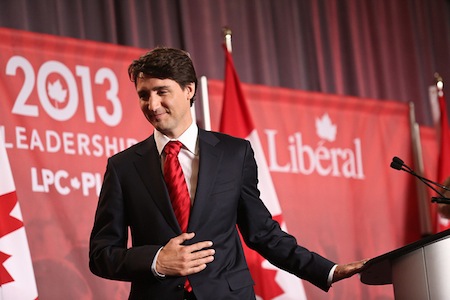
While everyone was watching to the Vatican City on Wednesday, another potential world leader took a step toward his own elevation — Justin Trudeau, whose chief rival for the Liberal Party leadership in Canada dropped out and endorsed him in advance of what’s now likely to be a mere formality on April 14. Canada Flag Icon

Like the new Pope Francis, Trudeau will assume control of a once-powerful organization that has had difficulty finding its purpose in a vastly changing world — the world of 21st century Canadian governance.  He’ll do so having risen to the leadership as the son of a beloved former prime minister on a campaign that’s little more substantive than rewarmed platitudes of what’s been orthodox Liberal policy of the past two decades and his airy good looks.

Right now, Canadians love him, though — they say that they would overwhelmingly support the Trudeau-led Liberals in the next election.  Today, however, with his election as leader all but certain, the Liberals remain mired in third place behind the Conservative Party and the New Democratic Party.  So it’s worth taking caution in reading polls that seem to show a Trudeau landslide in the next election — those polls suggest to me the upper limit of what Trudeau might achieve in a best-case scenario in 2015, when the next federal election is likely to be held.

As the leadership race approaches, though, the central question of Canadian politics has now become whether, on the one hand, Trudeau’s rock-star quality and popularity will wear thin after his coronation (dooming the Liberals to what must certainly be oblivion) or, on the other hand, Trudeau will rise to the occasion by navigating the top echelons of federal politics sufficient to bring the Liberals back into power by following in the footsteps of his father.

The future of Canadian politics — and Canadian policy in the next decade — rests on the answer to that question.

His chief rival Marc Garneau exited the race on Wednesday after releasing a survey that showed he would win just 15% of Liberal voter support to 72% for Trudeau, who he also endorsed.

As the first Canadian in outer space, Garneau is somewhat the John Glenn of Canada — he served as the president of the Canadian Space Agency from 2001 to 2006, and then moved into electoral politics, winning a seat in the 2008 election in the Québécois riding of Westmount in the Montréal area.  He’s thoughtful, articulate, and he hasn’t been unwilling to take on Trudeau — taking advantage of several debates to challenge Trudeau directly for running a campaign of ’empty words’ as an untested rookie.

Garneau, ironically, would have been a better candidate than any of the past three Liberal Party leaders — former prime minister Paul Martin, who lost the 2006 federal election to Stephen Harper’s ascendant Conservative Party; former environment minister Stéphane Dion, who won just 26% in the 2008 federal election; and former author and academic Michael Ignatieff, who won just 19% and 34 seats in the 2011 federal election, well behind the more progressive NDP that’s now Canada’s official opposition. He may well have even been a better Liberal leader than Bob Rae, who ruled out a run himself last year, despite receiving high marks for his performance as interim leader.

If Trudeau becomes prime minister in 2015, Garneau will obviously be at the top of the list to fill an important ministry.

But Trudeau fils has always been the frontrunner in the race, and it was never likely that anyone would be able to dislodge what the Liberals believe is their last shot at returning to electoral viability.  Sure, six additional candidate remain in the race — including former justice minister Martin Cauchon, former leadership contender Martha Hall Findlay and British Columbia MP Joyce Murray, who has called for center-left unity with both the NDP and Canada’s Green Party.

Nonetheless, it seems ever more likely that Trudeau will now overwhelmingly win the Liberal leadership and, sure, he probably seems like the best chance that Liberals have to retake power, even if they would need to quintuple their current 35 seats in the House of Ridings in order to win a majority.  We still don’t know if Trudeau’s breezy success in politics to date will continue after he wins the Liberal leadership, though even former prime minister Jean Chrétien, the last Liberal to have widespread electoral success, agrees that the race — and, implicitly, Trudeau’s energetic campaign — has boosted Liberal fortunes.

Either way, the Liberal Party in 2013 is a far cry from the Liberal Party that governed Canada for 69 years in the 20th century — a party dominated by elites from Montréal, Toronto and Ottawa — and personified by Trudeau’s father, Pierre Trudeau, prime minister in the 1970s and 1980s.  Continue reading Trudeau now all but certain to become Liberal leader in Canada

First Past the Post: March 15

East and South Asia

Haruhiko Kuroda wins parliamentary approval as the new governor of the Bank of Japan.

Li Keqiang is sworn in as China’s new premier.

North America

Justin Trudeau is all but certain to become the next Canadian Liberal leader.

Latin America / Caribbean

Christopher Sabatini on the legacy of Hugo Chávez.

Juan Nagel thinks the challenger campaign of Henrique Capriles in Venezuela is ‘kinda hopeless.’

Sub-Saharan Africa

Is the end near for Eritrea’s Isaias Afewerki?

Europe

SYRIZA leads in a potential Greek election.

And former French president Nicolas Sarkozy would defeat president François Hollande.

Middle East and North Africa

Israel has a new cabinet (more on this later).

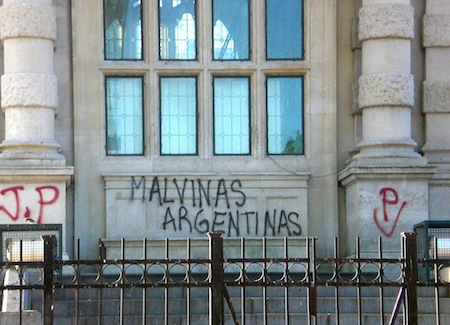
Does Argentina have a case in its fight for the Falklands/Malvinas?

(18) 'Malvinas Argentinas' -- Torres de los Ingleses

On Sunday and Monday, 1,517 eligible voters in the Falkland Islands (or, if you like, las Islas Malvinas) turned out to vote in the referendum on its status as an overseas territory of the United Kingdom.falklands flagUnited Kingdom Flag Iconargentina

Fully 1,513 voters supported the current status, and three voters disagreed.

That should be an open-and-shut-case, right?  Certainly under any principles of self-determination, a 99.74% victory for remaining under the aegis of the United Kingdom should be respected — the residents of the small islands that the United Kingdom (and the residents themselves) call the Falklands Islands and that Argentina call the Islas Malvinas, which lie just 310 miles off the coat of Argentine Patagonia (and over 8,000 miles from London).

Not so fast.

The dispute goes back to 1833 — and really, even further:

  • To the 1520s, when Argentines claims that Ferdinand Magellan discovered them on behalf of Spain.
  • To 1690, when the British say that captain John Strong first landed on the islands, naming them for Viscount Falkand.
  • To 1764, when both sides agree that France settled Port Louis, though the Argentine and British stories vary as to what happened next — a British expedition certainly arrived in 1765 but had left, however, by 1774.

By 1833, the British were back — it’s essentially pretty clear that UK settlers took control of the islands in that year, and that those settlers and their descendants have remained there continuously ever since.  But Argentina argues that it inherited the Spanish claim to the islands when it won independence.  It’s unclear whether Argentina’s then-ruler, Juan Manuel de Rosas, in 1850, as part of the negotiations for the Arana-Southern Treaty between the United Kingdom and Argentina, conceded the claim to the British. Maybe he did. Maybe not. It’s not formally a part of the treaty.

Of course, settlers in North America rebelled against UK colonial rule to great effect — and independence — in 1776.  But the claim here is different — and messier.

The UK-Argentine tussle only became more of an international tussle on Wednesday with the election of Jorge Mario Bergoglio, the archbishop of Buenos Aires as the new Catholic pope, Francis, who has asserted the Argentine claim to the islands. (For his part, monsignor Michael McMarcam the head of the Catholic Church on the islands, says the new pontiff is welcome in the Falklands/Malvinas).

Think of it this way: in a parallel world, imagine that the indigenous and Spanish settlers of Florida managed to withstand American invasion in the 1820s and form their own country.  Within a decade, the United States (or, if you’d like, the United Kingdom) took control of the Florida Keys and, despite their proximity to Florida (remember, it’s not a U.S. state but rather a sovereign nation in our parallel universe), formed settlements.  For generations, the US/UK and their Keys settlers and descendants held sufficient power to develop and deepen those settlements.  Is it necessarily an easy case, even 180 years later?  (Would your opinion change if you were Indian? Irish? Residents of Diego Garcia, the emptied British naval base in the Indian Ocean?)

The Argentine government argues that principles of self-determination don’t apply in the case of the Falklands/Malvinas, because the original generation of occupiers usurped the islands from Argentina, which was still in the growing pains of asserting its own independence.  But that was 180 years ago, and generations of Falkands settlers have called the islands their home ever since.  Is there a statute of limitations on such post-colonial claims?

For their part, Falklands settlers aren’t convinced:

I would like to know under what legislation the Argentine government calls it illegal. We approved it under our own laws here at the Falklands (Malvinas) and I was told that there is a meeting in the Argentine Congress on Wednesday to discuss its rejection. For a referendum that is illegal and for voters that don’t exist, they appear to be paying it a lot of attention.

The islands were the site of an infamous 1982 war between the United Kingdom (then under the leadership of prime minister Margaret Thatcher) and Argentina (then in the final years of Argentina’s last military junta that took power in 1976 and prosecuted the ‘Dirty War,’ in 1982 under the leadership of Leopoldo Galtieri).  Galtieri ordered an invasion of the islands in April 1982 (the joke is after one bottle of whiskey too many), hoping that his newly confirmed cold warrior bona fides from U.S. president Ronald Reagan would forestall a military response from the United Kingdom.

Galtieri was wrong. Continue reading Does Argentina have a case in its fight for the Falklands/Malvinas?

Greenland’s Siumut returns to power

aleqa

With the election results in, Greenland has made a decision to pull back — if only slightly — from the full-speed ahead instinct that’s propelled such deep mineral exploration in the past four years, including widespread interest in the island of 57,000 from everyone from the European Union to China.denmark flaggreenland flag

The populist leadership of Aleqa Hammond has returned the social democratic Siumut (Forward) to power — the party ruled Greenland for thirty years from home rule in 1979 until 2009.  In Tuesday’s election, Siumut won 42.8%, entitling it to 14 seats in the new Greenlandic parliament.

Its chief opponent, the governing Inuit Ataqatigiit (‘Community of the People’), won just 34.4%, entitling it to 11 seats.

Three remaining parties each won two seats: the center-right Atassut (Solidarity, or ‘Feeling of Community’) with 8.1%, the Partii Inuit (Inuit Party), which won 6.4% and seeks a referendum on new Greenlandic laws with respect to mining exploration and foreign workers, and the independence-skeptical Demokraatit (Democrats), with 6.2%, who formed a governing coalition with the Inuit Ataqatigiit from 2009 to 2013 under prime minister Kuupik Kleist.

It seems much more likely than not that Hammond will form the next government.

Hammond campaigned on a program that remained critical of a recent large-scale development law that would open the way to widespread foreign migrant labor and the exploration and development of gold, iron, oil, natural gas, rare earth elements and uranium — with the advent of climate change, the island, an autonomous country within the kingdom of Denmark, has garnered increasing attention from global mining interest.

Like Inuit Ataqatigiit, Hammond’s party is essentially pro-development, though with stringent social and environmental standards, if somewhat less enthusiastic about Greenland’s ultimate independence.

Caracas bleg

caracas

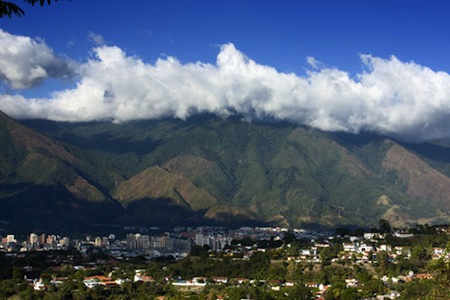
I’ll be in Caracas from April 9 to April 16 — hopefully in pursuit of learning a little more about chavismo, its supporters, its opponents and the state of current Venezuela in advance of — and during — the April 14 snap election there. Venezuela Flag Icon

Any tips — or contacts — are extremely welcome.

First Past the Post: March 14

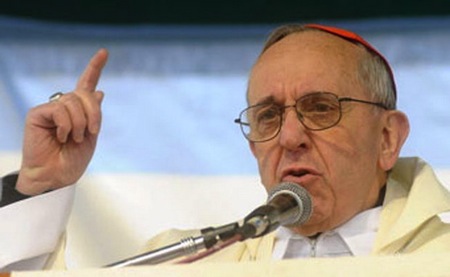
popefrancis

East and South Asia

Xi Jinping officially becomes the president of the People’s Republic of China.

A senior leader of the Khmer Rouge has died.

North America

Siumut wins Greenland’s election.

Liberal MP Marc Garneau drops out of Canada’s Liberal Party leadership race and endorses Justin Trudeau.

Vali Nasr makes waves with his criticism of being inside the Obama administration’s foreign policyteam.

Latin America / Caribbean

More on the Malvinas/Falklands vote.

Is Nicolás Maduro so assured of victory in Venezuela’s April 14 vote?

Maybe the body of Hugo Chávez will not be embalmed.

Argentina stunned to source the world’s next Catholic pontiff.

The political impact of the election of Pope Francis on Argentine politics.  [Spanish]

An interview with former Mexican president Vicente Fox.  [Spanish]

The love-hate relationship in Brazil.

Sub-Saharan Africa

Digging deeper into the Kenyan election victory.

Europe

Martin Wolf calls UK austerity indefensible.

UK home secretary Theresa May feels the wrath of 10 Downing Street for her murmurs of leadership challenge.

The collapse of François Hollande’s popularity.

Middle East and North Africa

Tunisia’s new government has been sworn in.

Settlers have much power as Israel’s new government takes shape.


What the election of the first Latin American pope means for world politics

Bergoglio1

So it’s Jorge Mario Bergoglio, the archbishop of Buenos Aires, who will take on the name Francis (or Francesco, in Italian — or Francisco in Spanish) as the Catholic Church’s first Latin American pope — an election that recognizes the centrality of Latin America in the Catholic Church but which also shines a spotlight on the Church’s role in Latin America during the Cold War and the liberation theology that developed in Latin America, which melds church teachings with the concepts of economic and social justice.

argentinavatican flag

I noted a few days ago on Twitter that, given the reticence to appoint an Italian pope, the closest thing that the conclave could have done is appoint an Argentine pope, given that Argentines have so much Italian ancestry anyway.  That turned out to be more prescient than I realized.

The conclave, consisting of  115 cardinals — 67 of whom were appointed by the retiring pope, Benedict XVI, and 48 of whom were elected by his predecessor, the late John Paul II — elected Bergoglio after just four ballots.  That’s the same number of ballots featured in the 2005 conclave that elected then-cardinal Joseph Ratzinger — Bergoglio, age 76, is rumored to have been the runner-up to Ratzinger in the previous conclave.  He’s been a cardinal since 2001 and the archbishop of Buenos Aires since 1998.

Bergoglio is also the first Jesuit pope — as Rocco Palmo of the invaluable Whispers in the Loggia blog writes, he’s certainly more moderate than either Benedict XVI or John Paul II:

This ain’t Francis I so much as John Paul I.

Although as the Bishop of Rome, Francis is the head of state of Vatican City, the world’s smallest sovereign country, he’s now the leader of the Catholic Church to which 1.2 billion people belong — one out of every six people worldwide.  Church teachings, for Catholics and non-Catholics alike, shape policy decisions throughout the world, with implications for civil rights (notably with respect to gender and sexual orientation), family planning and reproductive rights, and public health across the globe.

Latin America is home to 41% of the world’s Catholics — more than even Europe at this point — and in some ways, Bergoglio’s election can be seen as the arrival of Latin America’s centrality to global Catholicism.  It’s too much to say that geography was the main rationale for selecting the next pope, of course, but it has symbolic value and certainly the cardinals in the Sistine Chapel today and yesterday knew that.  With the Mormon church and protestant Christianity making inroads into Latin America, Bergoglio’s selection could both energize Latin American Catholicism and shine a light on some of the shortcomings of the Church in Latin America in previous decades.

So there’s no denying that the election of Francis I will have profound consequences on world politics — notably in Argentina and Latin America, but also in Europe and throughout the rest of the developing world.

Bergoglio is a long-time resident of Buenos Aires, and he’s been intimately involved in Argentine public life.  The selection will certainly shine a spotlight on Argentina, which under the rule of president Cristina Fernández de Kirchner, faces a potential debt default in 2013 amid ever-tough economic times.

But it will also bring to light tough questions for Bergoglio, who’s received criticism, along with the entire Church in Argentina, for not doing enough in the light of the military junta that took control of Argentina from 1976 to 1983 that initiated what’s known as the guerra sucia (‘dirty war’) that resulted in between 10,000 and 30,000 ‘disappearances’ of various political activists:

The Argentine church has acknowledged its failure to challenge the military’s anti-leftist repression, which according to human-rights groups left 30,000 people dead or “disappeared,” including dozens of Catholic clergy and lay activists.

To the harshest critics, church leaders were not merely indifferent to the violence but complicit in it. They say that includes Bergoglio, 68, who led Argentina’s Jesuits at the time. Such charges were revived after the death of Pope John Paul II, when Bergoglio was being mentioned as a possible successor.

An Argentine tribunal in January 2013 found that the Catholic Church was complicit in those crimes:

En lo que los corresponsales calificaron como un fallo histórico, la corte dijo que la jerarquía de la Iglesia Católica cerró los ojos y a veces incluso actuaron en connivencia, ante los asesinatos de sacerdotes progresistas.  Los jueces dijeron que aún hoy en día la iglesia sigue renuente a investigar crímenes cometidos durante el régimen militar.  [In what correspondents described as a landmark ruling, the court said that the Catholic Church hierarchy closed its eyes, and sometimes colluded, with the murders of progressive priests.  The judges said that even today the church is reluctant to investigate crimes committed during the military regime.]

As archbishop of Buenos Aires, Bergoglio has been viewed as a modernizer in pulling believers back to the Church, in the 1970s and early 1980s one of Latin America’s most conservative, following the fraught years of the guerra sucia.

In other ways, Bergoglio’s election brings to light the broader — and more uncomfortable — topic of the Catholic Church’s role in Latin America during the Cold War.  Latin American Catholics developed the concept of ‘liberation theology’ — the idea that church teaching is consistent with the struggle for economic and social equality.  As you can imagine, that concept was incredibly controversial during the Cold War under a pope, John Paul II, who grew up in Poland and became one the world’s most avowed foes of communism and the Soviet Union.  Church conservatives at the time argued that Latin American proponents of liberation theology were hijacking church teaching in the service of third-world Marxism. Continue reading What the election of the first Latin American pope means for world politics

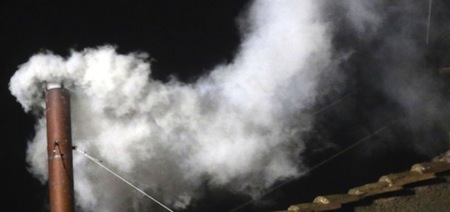
Fumata blanca

whitesmoke

In perhaps what’s the most awaited election result of 2013, white smoke from the Sistine Chapel indicates the 115 cardinals gathered to choose a successor to Pope Benedict XVI have done so — and on the fourth ballot (the same number it took for them to choose German cardinal Joseph Ratzinger.

vatican flag

In other news, right now would be a very good time for the White House to dump a lot of news that it wants buried on page A23.

Benedict XVI is the first pope in centuries to resign the papacy.

More thoughts when we find out who the 266th pope — and head of state of the Vatican City — will be.  Self-determinist that I am, here’s hoping they have chosen a native Vaticanese.
Photo credit to La Repubblica.

Zimbabweans vote on new constitution

Guest post by Andrew Novak

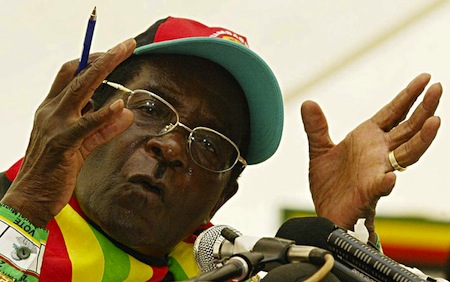
mugabe

Voters in Zimbabwe are expected to approve a new constitution in a referendum on Saturday, which will include sweeping changes to the structure of government and to the bill of rights. zimbabwe new icon

After a contentious four-year process of negotiation and input by the Constitution Select Committee (COPAC), representatives of Zimbabwe’s tripartite power-sharing government have completed a draft constitution that is ready to go to voters.  Earlier talks failed despite a near-agreement in spring 2012, after Zimbabwe’s president Robert Mugabe and the ruling party Zimbabwe African National Union – Patriotic Front (ZANU-PF) pulled out of talks with the two opposition factions of the Movement for Democratic Change (MDC).  More than 70,000 polling officers will be deployed in advance of the Saturday referendum at about 9,500 polling places nationwide.  In addition, international observers are also expected in Zimbabwe, including a delegation from the Southern African Development Community.

The new constitution overhauls the structure of Zimbabwe’s government, imposing term limits on the president, further limiting executive power, and placing the feared Central Intelligence Organization under civilian oversight.  Importantly, the president will no longer have unfettered ability to appoint senators, provincial governors, or members of the judicial services commission, which oversees judicial appointments, although he will still have the ability to appoint members of the tribunal that investigates judicial conduct.

The new constitution ensures fair access to state media to all political parties and places electoral oversight solely under the Zimbabwe Electoral Commission (previously, the state media was dominated by the ruling party and electoral management was divided among several offices).

For the first time, Zimbabwe’s constitution will include social, economic, and cultural rights, including a right to health care and education, although it limits these rights to citizens and permanent residents.  The constitution includes comprehensive protections for women’s rights and the rights of persons with disabilities, but it still bans same-sex marriage; the draft also sharply curtails but nonetheless retains the death penalty.

One noted shortcoming is that power is not devolved to the provinces, so the draft perpetuates the over-centralization of Zimbabwe’s government, although it does successfully limit the ability to suspend constitutional rights during states of emergency.

More generally, the constitution has met criticism for two major reasons: first, it does not completely restrain broad executive power; and second, it was produced in a negotiated fashion between the leaders of the three major parties, lacked sufficient public input, and was rushed to a vote only thirty days after the final draft was published. Continue reading Zimbabweans vote on new constitution

First Past the Post: March 13

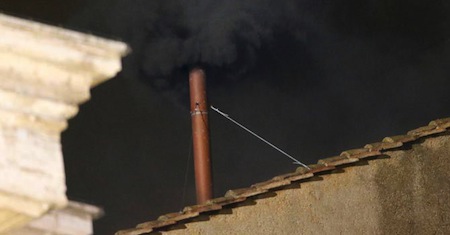
blacksmoke

East and South Asia

Forget the Falklands — Hong Kong residents would prefer to revert to British rule.

Japan seems set to join talks for the Trans-Pacific Partnership.

North America

With 70% of the votes counted, the social democratic (and populist — it’s in opposition to loosening local laws to allow the importation of largely Chinese foreign workers) Siumut, which governed from self-rule in 1979 until 2009, leads in Greenland with 48.4% of the vote, to just 29.6% for the pro-independence, socialist Inuit Ataqatigiit, which has ruled the country since 2009.

Former Canadian prime minister Jean Chrétien thinks Canada has lost its international swagger.

Louise Marchand has resigned as Québec’s top language watchdog after ‘pastagate’ brouhaha.

Latin America / Caribbean

Chilean poet Pablo Neruda’s remains will be exhumed in April.

Venezuela’s opposition reports an ambush against it.

Sub-Saharan Africa

A journalism strike in Togo.

One criticism of Zimbabwe’s draft constitution.

Europe

Spain ‘was virtually a feudal, agrarian economy the last time almost six million workers were unemployed.’

Marin Raykov, ambassador to France, will become Bulgaria’s caretaker prime minister.

The EU parliament comes to a consensus on the European Union’s budget.

No pope yet.

Armenia to get early parliamentary elections?

Middle East and North Africa

What Muqtada al-Sadr has been up to in Iraq these days.

Israel’s incoming coalition, still not finalized, seems set to agree on an increase of the Knesset threshold from 2% to 4%, which will harm Arab parties in particular.