Tag Archives: Hollande

The future of political communication is the viral Internet meme

twoferns

If you woke up this morning to the ‘leader of the free world’ doing an interview with Zach Galifianakis, immediately scratched your head and wondered whether you could be trusted to read anything before coffee, you weren’t alone.France Flag IconUSflagUnited Kingdom Flag Icon

When I first saw it, I thought it was a joke — surely this was Galifianakis somehow video-shopping the president of the United States into a forum that’s otherwise reserved for the likes of spanking Justin Bieber.

But no — and after a couple of sober, caffeinated views, I realized that this was for real.  So no matter what else was going on with your day today, in world or US politics, it was The Day That Barack Obama Turned Up On ‘Between Two Ferns.’  It dominated the US news cycle — even Jonathan Chait wrote about it! Continue reading The future of political communication is the viral Internet meme →

Can the Obama administration save François Hollande?

2ckb1152No one could miss the undertones of yesterday’s op-ed, co-written by US president Barack Obama and French president François Hollande, in The Washington Post and Le Monde:France Flag Icon

A decade ago, few would have imagined our two countries working so closely together in so many ways. But in recent years our alliance has transformed. Since France’s return to NATO’s military command four years ago and consistent with our continuing commitment to strengthen the NATO- European Union partnership, we have expanded our cooperation across the board. We are sovereign and independent nations that make our decisions based on our respective national interests. Yet we have been able to take our alliance to a new level because our interests and values are so closely aligned.

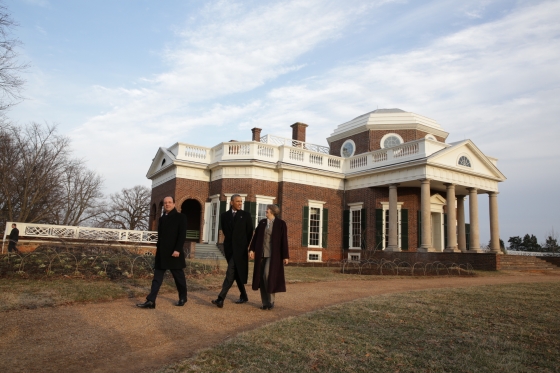
It was one of the biggest, wettest, sloppiest kisses that the Obama administration has given a foreign leader — and it’s not something that this administration does often.  It’s part of the red-carpet treatment that Obama is rolling out for Hollande, who visited Monticello, the home of Thomas Jefferson, in Virginia on Monday, and will be the host of a state dinner tonight at the White House.

It’s clearly an opportunity for the newly single Hollande to move on after a dismal January, when sensational headlines over his trysts with a French actress overshadowed his his attempts to introduce a new economic reform package.  It became a nearly monthlong saga that sent Hollande’s partner, Valerie Trierweiler, to a Paris hospital for over a week, and that ended with their breakup.

Time magazine, which a wide-ranging interview, asks this week on its cover whether Hollande can fix France.  It’s worth asking whether, first, the White House is trying to help fix Hollande.  Polls routinely show Hollande with an approval rating in the low 20s (or even high teens), making him the least popular president in the history of the Fifth Republic, not even two years into his five-year term.

The White House treatment, including Monday’s joint editorial, undoubtedly hopes to share of Obama’s star power with the widely derided president.  Obama needs Hollande’s help to finalize the US-EU free trade pact, the Transatlantic Trade and Investment Partnership, even though it could harm French farmers and wine producers by opening the European Union to cheaper US exports.  Obama will also need Hollande’s help to win a long-term nuclear energy deal with Iran while the temporary six-month deal remains in effect.

It’s true that France has been, surprisingly, almost as reliable a partner on US foreign policy as the United Kingdom in recent years.  Hollande has deepened France’s 21st century internationalism, of course, most notably through his decision to mount a largely successful intervention to keep northern Mali from falling to foreign Islamic jihadists, thereby giving Bamako the space to hold new elections and build a stronger national government.  French peacemakers in the Central African Republic may have also helped limit violence between Christians and Muslims in December and January and smoothed the way for Michel Djotodia’s resignation.  Hollande was willing to back a US military attack on Syrian president  Bashar al-Assad last August when the United Kingdom and the US Congress were not.


But credit for the hard work of repairing US-French relations, insofar as it relates to the newly muscular tone of French foreign policy, more appropriately rests with former president Nicolas Sarkozy, whose administration marked the true pivot on foreign policy.   Continue reading Can the Obama administration save François Hollande? →

Hollande’s economic restart falls flat amid domestic drama

scooter

Nothing screams ‘sexy’ more than… a payroll tax cut.France Flag Icon

With the French press salivating over French president François Hollande’s surprisingly sordid love life, Hollande tried to refocus his administration’s agenda last week at a press conference to announce a planned cut in France’s payroll taxes and other measures to boost France’s competitiveness.  It’s a bid to win back some control over his unravelling public image.  Hollande suffers from massively low approval ratings —  just 22% of French voters support Hollande (somewhat of an improvement over polls in November that gave him just 15% approval).  There’s even talk that his administration could augur the collapse of France’s Fifth Republic.

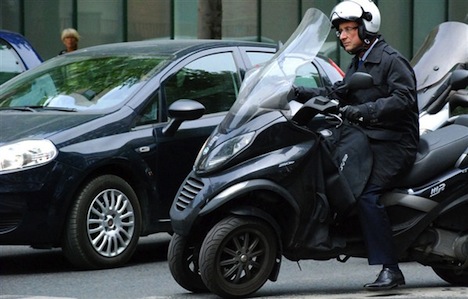
But Hollande’s policy revamp has been lost in the furor over Hollande’s alleged dalliance with actress Julie Gayet.  Tabloids showed photos of the French president sneaking off to meet Gayet on his scooter (pictured above), and the news seems to have sent his current partner, Valérie Trierweiler, to a Paris hospital for over a week.  Elected on the premise that he would bring decorum and normalité to the Élysée after the ‘bling-bling’ presidency of Nicolas Sarkozy, Hollande’s love life began overshadowing his presidency within days of his inauguration.

Trierweiler tweeted in support of Olivier Falroni, a dissident parliamentary candidate in June 2012, who was running against Ségolène Royal, Hollande’s former partner and the 2007 presidential candidate of the Parti socialiste (PS, Socialist Party).  Royal lost that race, despite Hollande’s support.  A reporter for Paris Match, Trierweiler fulfills the role of France’s first lady, complete with budget and staff, notwithstanding that she and Hollande never married.  Hollande and Royal also never officially married during their nearly 30-year relationship, which produced four children.

Trierweiler left the hospital after more than a week on Saturday afternoon, but the discord between France’s first couple continues to dominate headlines, with Le Journal de Dimanche reporting that presidential advisers are calling the relationship ‘finished.’  So much for Mr. Normality.  Though Sarkozy and his two predecessors, Jacques Chirac and François Mitterand, were both known for active love lives, the nature of media has changed since the French press kept Mitterand’s longtime mistress a secret from the public in the 1980s.

At a policy level, none of Hollande’s domestic troubles should matter.  But they come at exactly the wrong time, overshadowing Hollande’s push to make France’s economy more competitive.  At the center of Hollande’s proposal is a €30 billion payroll tax cut for French businesses, continue pushing forward with plans for €15 billion in budget cuts this year, with €50 billion more to follow over the next three years.  Though Hollande hopes that will make France’s businesses more willing to hire French workers, it seems unlikely to erase the mistrust Hollande has engendered by pushing a top income tax rate of 75% on incomes over €1 million, a troubled policy that seems set to take effect after facing legal problems in France’s top constitutional court.  Hollande and his leftist parliamentary majority pushed through a labor market reform in January 2013, but it was a relatively minor first step that merely streamlined the process for conducting layoffs.

Hollande would have engendered much more goodwill if he’d announced a retreat from the iconic 75% rate or announced a much bolder labor market legislation.  But that carries with it the risk of a full-scale revolt on the French left.  Continue reading Hollande’s economic restart falls flat amid domestic drama →

14 potential game-changers for world politics in 2014

2014crystalball

Though I rang in the new year with a list of 14 world elections to watch in the coming year (and 14 more honorable mentions to keep an eye on), I wanted to showcase a few more thoughts about what to watch for in world politics and foreign affairs in 2014.

Accordingly, here are 14 possible game-changers — they’re not predictions per se, but neither are they as far-fetched as they might seem.  No one can say with certainty that they will come to pass in 2014.  Instead, consider these something between rote predictions (e.g., that violence in Iraq is getting worse) and outrageous fat-tail risks (e.g., the impending breakup of the United States).

There’s an old album of small pieces conducted by the late English conductor Sir Thomas Beecham, a delightfully playful album entitled Lollipops that contains some of the old master’s favorite, most lively short pieces.

Think of these as Suffragio‘s 14 world politics lollipops to watch in 2014.

We start in France… Continue reading 14 potential game-changers for world politics in 2014 →

Latest Bettencourt turn removes obstacle for Sarkozy presidential bid in 2017

sarko2017

You thought you were tired of all of the talk in the United States about the inevitability of a presidential run by former secretary of state Hillary Clinton in November 2016.France Flag Icon

But imagine if your next presidential election isn’t until May 2017 and everyone is already speculating.

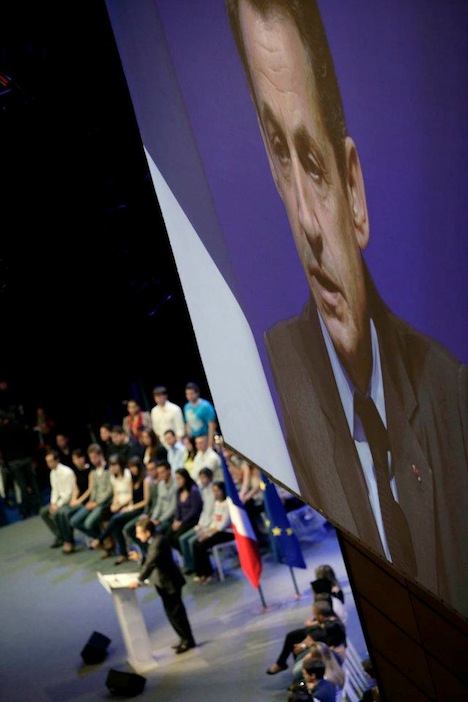
That’s the case in France, where former president Nicolas Sarkozy is now even more likely to become the frontrunner for the 2017 race for the Élysée Palace after French officials dropped a criminal case against Sarkozy in the so-called Bettencourt affair.

Sarkozy was accused of soliciting L’Oreal heiress Liliane Bettencourt for secret campaign funds.  The fundamentals of the scandal are similar to those for which former US senator and presidential candidate John Edwards stood criminal trial for soliciting secret campaign cash from banking heiress Rachel ‘Bunny’ Mellon, who was 96 years old at the time.

French judges are still pursuing an investigation over whether party officials in Sarkozy’s Union pour un Mouvement Populaire (UMP, Union for a Popular Movement) took advantage of Bettencourt’s mental frailty and advanced age in taking campaign donations for Sarkozy’s 2007 presidential campaign — in particular, former UMP treasurer Eric Woerth still faces criminal liability.  But after Monday’s decision not to include Sarkozy’s name in the list of those who face liability, the former president has escaped the worst of his potential legal and political troubles for the foreseeable future.

That means that the single-most difficult obstacle between Sarkozy and a 2017 presidential bid is gone.  Though he’s no longer mis en examen (placed under investigation) Sarkozy’s legal troubles haven’t totally evaporated, and he remains under a cloud of suspicion for a handful of other shenanigans, including allegations that Libya’s regime paid €50 million to Sarkozy’s 2007 campaign.  But the Bettencourt affair was always the most serious case against Sarkozy.

As with the Clinton 2016 speculation in the United States, it’s folly to think that we can forecast with accuracy the dynamics of an election that’s years away.  But it’s stunning in some ways that Sarkozy, who lost the May 2012 presidential runoff to François Hollande, the candidate of the Parti socialiste (PS, Socialist Party), remains such a strong challenger for 2017 just 17 months after leaving office.

Moreover, the specter of a Sarkozy return is affect French politics today (and not just 2017) by shaping the way that other top UMP officials posture and by placing pressure on the current, vastly unpopular Hollande regime — the possibility of a Sarkozy comeback also exerts a gravitational pull on the far right of French politics, too.

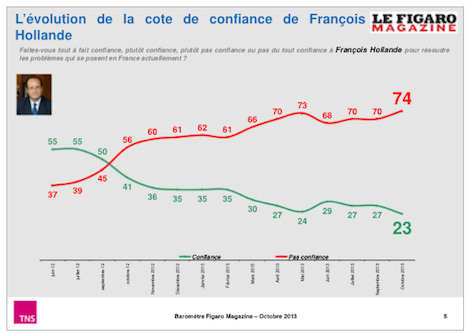
Only 23% of the French electorate has confidence in Hollande, according to an October TRS-SOFRES poll — Hollande has watched his popularity erode in record time to become the most unpopular president of the Fifth Republic:

Screen Shot 2013-10-08 at 3.33.14 PM

France’s GDP growth dropped from 2% in 2011 to exactly 0% in 2012, unemployment has risen to 10.9%, and the economy’s doing not much better in 2013.  Hollande was damaged almost from the beginning of his presidency over a nasty spat between his former partner, 2007 presidential candidate Ségolène Royal and his current partner Valérie Trierweiler.  His bold effort to introduce a top income tax rate of 75% (of incomes over €1 million) invited capital flight and global ridicule — and a rejection by France’s top constitutional court.

His woes are so great that I wondered back in May whether the French left (and France, generally) might have been better off if Dominique Strauss-Kahn had survived his sex scandal to run for president.

Most immediately, of course, all of the ‘Sarko 2017’ talk serves to prevent the emergence of a truly post-Sarkozy center-right standard-bearer.  Recall last November’s internal UMP primary to determine a new general secretary — right-wing candidate Jean-François Copé’s 50.03% was so narrow (and so challenged) by his opponent, the more moderate former prime minister François Fillon that the result threatened a UMP civil war.

Though the tensions subsided into more of a cold war than a civil war, there was always a sense that Copé was a stalking horse for a potential Sarkozy comeback — by defeating Fillon, Copé’s narrow win prevented Fillon from becoming the undisputed leader of the French right.

What was a Copé-Fillon showdown in 2012 has now transformed into a more open Sarkozy-Fillon showdown, with Fillon billing himself as the clean-break candidate for 2017, though Sarkozy himself has yet to decide whether to make a comeback bid for the presidency and is unlikely to join the political fray against either Fillon or Hollande anytime soon.  An IFOP poll earlier this year showed that six out of 10 French voters preferred that neither Sarkozy nor Fillon run in 2017, though Fillon generally held higher approval ratings as prime minister than Sarkozy did as president, and there’s reason to believe he would have made a better candidate for the UMP in 2012 than Sarkozy.

Meanwhile, no consideration of the UMP’s machinations would be complete without considering the far-right Front national (FN, National Front) that, if anything, is gaining more strength than either the UMP or the Socialists.  The far right notched a huge victory in a by-election in the southern canton of Brignoles on October 7, when the Front national candidate Laurent Lopez won 40.4% of the vote and will face a runoff against the UMP’s candidate Catherine Delzers, who won 20.8% (another far-right party, the Parti de France, won just over 9%.)

Despite Sarkozy’s lurch to the right on immigration and crime throughout his career, it didn’t stop Front national leader Marine Le Pen from winning 17.9% of the vote in the first round of the April 2012 presidential election.  Among the factors that could push the UMP away from Fillon and toward a leader like Sarkozy or Copé in 2017 is the fear that a relatively moderate standard-bearer like Fillon would allow Le Pen to siphon even more support from the center-right.

French debate on Syria intervention highlights Sarkozy legacy on world affairs

Jean Marc Ayrault

What a difference a decade makes.

freesyria Syria Flag IconFrance Flag Icon

Ten years after French president Jacques Chirac and France’s UN ambassador Dominique de Villepin made an impassioned stand in the United Nations against the US-led invasion of Saddam Hussein’s Iraq over the issue of weapons of mass destruction, France finds itself as the chief European ally in US president Barack Obama’s push to punish the Syrian regime of Bashar al-Assad for the alleged use of chemical weapons in Damascus late last month.

In a parliamentary debate in Paris yesterday, French prime minister Jean-Marc Ayrault (pictured above) made a strong case for intervention for the purpose of demonstrating the international community’s credibility in deterring the use of chemical, biological and nuclear weapons in the future.  Center-right legislators in the Union pour un Mouvement Populaire (UMP, Union for a Popular Movement), including the UMP’s parliamentary leader Christian Jacob, argued just as forcefully that French participation in a US-led strike against the Syrian regime of Bashar al-Assad — without the authorization of the United Nations Security Council — over the use of chemical weapons would isolate France’s role in the international community.

Although Chirac and the UMP also opposed unilateral intervention in Iraq in 2002 and 2003, it’s ironic that the UMP has suddenly found itself as the voice of opposition to Hollande because no one is more responsible for the transformation of France’s newfound assertiveness in world affairs than former president Nicolas Sarkozy, who succeeded Chirac in 2007, who struck a consistently muscular posture on foreign affairs.  Sarkozy, always keen to rejuvenate Franco-American relations, took a starring role alongside Cameron in the UN-backed NATO campaign to enforce a no-fly zone against Libyan leader Muammar Gaddafi in 2011 and support anti-Gaddafi rebels in Tripoli and Benghazi.

Had he won reelection in May 2012, Sarkozy would likely be just as enthusiastic as Hollande to support Syrian intervention — probably more so given the opportunity to supplant the United Kingdom as Obama’s chief partner.  Some former Sarkozy officials, notably former foreign minister Alain Juppé, support France’s forward role in Syria.

But Sarkozy, who may run again for president in 2017, has been uncharacteristically quiet on France’s role in any military action against Syria.

Silence or not, it’s the UMP’s Sarkozy who put France on the path to a more aggressive foreign policy, in part by returning France to NATO’s military command after a 40-year absence.  Since the start of Syria’s civil war two years ago, both Sarkozy and Hollande have called for Assad’s removal, and Sarkozy helped lifted the EU arms embargo on Syria to allow weapons to the anti-Assad opposition.

Hollande, who marked a rupture from Sarkozy in presidential style, social policy and economic policy, has largely followed Sarkozy’s path on foreign affairs.  Hollande ordered French troops into northern Mali earlier this year (like Libya, an action also approved by the Security Council) to reclaim territory that had been occupied by radical Islamists.  Though it was a limited intervention, taken with a light touch by a country long accused of pursuing a neo-colonial Françafrique policy since the 1960s, Hollande’s action looks for now to have been very successful in stabilizing Mali — Mali’s newly elected president Ibrahim Boubacar Keïta was sworn in yesterday.   Continue reading French debate on Syria intervention highlights Sarkozy legacy on world affairs →

Did Syria’s Assad regime have a Dr. Strangelove moment?

strangelove

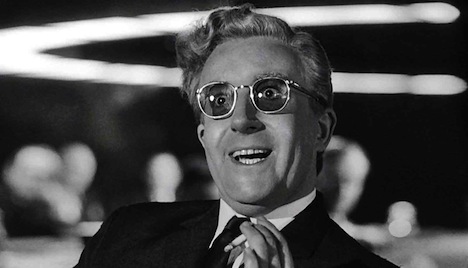
January 2014 marks the 50th anniversary of the release of Stanley Kubrick’s dark nuclear war comedy Dr Strangelove or: How I Learned to Stop Worrying and Love the Bomb.USflagSyria Flag Icon freesyria

It’s the charming tale of U.S. general Jack Ripper (Get it!?), who’s gone completely off his rocker and launches the world into a nuclear crisis as the United States and the Soviet Union bumble to stop the fallout from the chain of events that the wayward general sets in place.

In the U.S. war room, the meek U.S. president (played brilliantly by Peter Sellers) asks another general, ‘Buck’ Turgidson, why a renegade general somehow found a way to order the use of nuclear weapons outside the chain of command, given that the U.S. president is the only one authorized to launch a nuclear attack.

Turgidson replies, ‘And although I, uh, hate to judge before all the facts are in, it’s beginning to look like, uh, General Ripper exceeded his authority.’

It’s starting to look like last week’s horrific chemical warfare attack was a case of someone in the regime of Syrian president Bashar al-Assad exceeding his authority as well.

Did Syria have a ‘Dr. Strangelove’ moment?

And if so, how should the international community ‘punish’ the Assad regime if it turns out that a rogue pro-Assad commander launched the attack and not Assad or his top guard?  Is there some sort of negligence per se standard for crimes against humanity?  Even as British prime minister David Cameron is backing down from the urgency of an immediate Syria strike (at least until the United Nations finishes its initial assessment of the chemical attack in the days ahead) and French president François Hollande is emphasizing a political solution to Syria, the case for an overhasty, unilateral military response from the United States is falling apart in favor of a multilateral, evidence-based approach that would otherwise avoid further internationalizing the two-year, sectarian Syrian conflict.

Late Tuesday, Noah Shachtman, a nonresident fellow at the Brookings Institution broke the story in Foreign Policy that the United States and its allies are so certain that the Assad regime is responsible for last Wednesday’s attack on the basis of intercepted phone calls that largely show confusion and panic on the part of the Syrian regime:

Last Wednesday, in the hours after a horrific chemical attack east of Damascus, an official at the Syrian Ministry of Defense exchanged panicked phone calls with a leader of a chemical weapons unit, demanding answers for a nerve agent strike that killed more than 1,000 people. Those conversations were overheard by U.S. intelligence services, The Cable has learned. And that is the major reason why American officials now say they’re certain that the attacks were the work of the Bashar al-Assad regime — and why the U.S. military is likely to attack that regime in a matter of days.

But the intercept raises questions about culpability for the chemical massacre, even as it answers others: Was the attack on Aug. 21 the work of a Syrian officer overstepping his bounds? Or was the strike explicitly directed by senior members of the Assad regime? “It’s unclear where control lies,” one U.S. intelligence official told The Cable. “Is there just some sort of general blessing to use these things? Or are there explicit orders for each attack?”

Nor are U.S. analysts sure of the Syrian military’s rationale for launching the strike — if it had a rationale at all. Perhaps it was a lone general putting a long-standing battle plan in motion; perhaps it was a miscalculation by the Assad government. Whatever the reason, the attack has triggered worldwide outrage, and put the Obama administration on the brink of launching a strike of its own in Syria. “We don’t know exactly why it happened,” the intelligence official added. “We just know it was pretty fucking stupid.”

Of course, that calls into question the strident and unequivocal stance of many U.S. and European officials over the weekend and earlier this week, including British foreign minister William Hague and U.S. secretary of state John Kerry.

Today brings further news that top U.S. intelligence officials who have seen the U.S. report on the Assad regime’s culpability believe that it is not a ‘slam dunk’ case, a reference to the allegedly solid intelligence that the U.S. Central Intelligence Agency held in 2002 that implicated Iraqi president Saddam Hussein — erroneously — with having a nuclear weapons program:

A report by the Office of the Director for National Intelligence outlining that evidence against Syria includes a few key caveats – including acknowledging that the U.S. intelligence community no longer has the certainty it did six months ago of where the regime’s chemical weapons are stored, nor does it have proof Assad ordered chemical weapons use, according to two intelligence officials and two more U.S. officials.

But one senior U.S. official who read the report said Thursday that despite those caveats, the report assesses with “high confidence” that the Syrian government was responsible…. The official conceded that there is no proof listed in the report tying Assad personally to ordering the attack, but the official also said there was no mention in the report of the possibility that a rogue element could have been responsible.

That’s certainly very consistent with Shachtman’s report, and it makes intuitive sense.  With Assad generally winning the war and reclaiming ground against the disparate opposition, it makes no sense for Assad to draw the ire of the world by launching chemical warfare on civilians.  The timing, moreover, has always been suspicious given that United Nations chemical weapons inspectors were sitting in a Damascus hotel when the chemical attack occurred.  We know that the Assad regime has certain access to chemical weapons, and while there’s a possibility that some weapons have fallen into the hands of anti-Assad rebels, this explanation is certainly less harrowing than the alternative possibility that radical opposition elements launched a toxic chemical attack in the hopes of framing Assad and drawing the international community against him.

Although we’re still awaiting the intelligence report that the United States promised to release this week, the public British report released earlier today has been thoroughly panned:

In an echo of the buildup to the Iraq war in 2003, Downing Street took the rare step of releasing the assessment of the JIC to support its case that the Assad regime was responsible.  But the assessment was mainly based on “open source” evidence such as video footage of the victims and a judgment that the opposition does not have the capability to launch such an attack…

The JIC acknowledged that some of its assessment was based on “open source” evidence such as testimony from victims, doctors and video footage. But in a separate letter to Cameron the JIC chairman, Jon Day, said he had seen “highly sensitive” unpublished intelligence that supported their view that the regime had launched the attacks to clear the opposition from strategic parts of Damascus.

But, of course, the British government isn’t providing the unpublished intelligence, so their rationale essentially boils down to, ‘trust us.’  Moreover, as Guardian commentators Ian Black and Ian Sample write, the intelligence reports boasts no scientific evidence and rests on little more than informed speculation:

In one passage the JIC appears to weaken its own conclusions by noting that there was “no obvious political or military trigger for regime use of CW on an apparently larger scale now” – given the presence of the UN inspectors. It wrote that permission to authorise CW had “probably been delegated” by Assad to “senior regime commanders, such as [*]”. It added: “But any deliberate change in the scale and nature of use would require his authorisation.” That language suggests the possibility, as reported in the US, of unauthorised or accidental use of CW munitions.

Kerry’s forceful remarks on Syria fail to explain why Assad’s to blame

kerrysyria

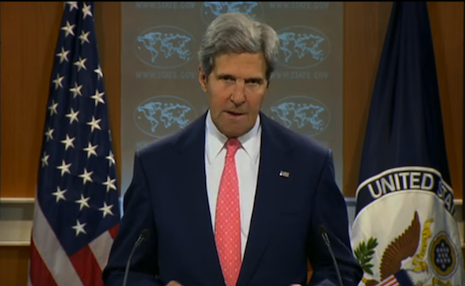
U.S. secretary of state John Kerry this afternoon emerged with some strong remarks about the unfolding international situation with respect to Syria, where chemical weapons were unleashed last Wednesday upon civilians in Ghouta in the eastern outskirts of Damascus and that killed up to 1,300 people.USflagSyria Flag Icon freesyria

Max Fisher at The Washington Post writes that Kerry’s remarks amounted to a ‘war speech,’ that the Obama administration has all but decided to respond to the chemical attack with air strikes.  I don’t disagree with that assessment, but the oddest thing about Kerry’s seven minutes on Syria was how much of it he spent arguing that the attacks were real — consider the following exchange:

Last night, after speaking with foreign ministers from around the world about the gravity of this situation, I went back and I watched the videos — the videos that anybody can watch in the social media, and I watched them one more gut-wrenching time. It is really hard to express in words the the human suffering that they lay out before us.  As a father, I can’t get the image out of my head of a man who held up his dead child, wailing while chaos swirled around him, the images of entire families dead in their beds without a drop of blood or even a visible wound, bodies contorting in spasms, human suffering that we can never ignore or forget. Anyone who could claim that an attack of this staggering scale could be contrived or fabricated needs to check their conscience and their own moral compass.  What is before us today is real, and it is compelling.

It’s no secret that I’m a fan of John Kerry (pictured above) — he’s had a strong start at State and that follows a generally impeccable senatorial record of thoughtful engagement on foreign affairs.  But with all due respect, I certainly hope the chief diplomat of the United States of America is spending more time reviewing the intelligence that the U.S., British and French governments allegedly have that implicates the Syrian president Bashar al-Assad in the chemical attack than watching shock footage on YouTube.

No one is arguing that the attack was contrived or fabricated — it’s a horrific slaughter that deserves a united and firm response from the international community conveying that the use of chemical weapons to kill civilians, including women and children, is unacceptable.  What remains at issue is determining who was responsible for the attack, and that’s why it was odd to watch Kerry spend more time knocking down a straw-man argument than explaining why the U.S. government is so sure that Assad was responsible for the attack.  Earlier today, Saleh Muslim, head of the Kurdish Democratic Union Party (PYD), who has clashed with both pro-Assad and anti-Assad forces, said that he doesn’t believe Assad is responsible for the attacks.  It’s a real question, and the U.S. media and the rest of the world should demand an answer.

What’s staggering is that, with all signs pointing to U.S. and British military poised to launch some kind of strike against Assad, the Obama administration still hasn’t made the case for why it believes that Assad — and not anti-Assad extremists looking to draw the international community into Syria’s two-year civil war — is to blame.  As many commentators have written, the timing of last week’s attack is incredibly suspicious, given that U.N. weapons inspectors were in Damascus during the attacks and that Assad has generally been gaining ground against the opposition, and there’s plenty of reason why the more radical elements among the anti-Assad opposition want to provoke the world’s ire against Assad.

It’s generally undisputed that Assad has stockpiled chemical weapons in the past, while we don’t know if any rebel group of the opposition now have access to them.  But that’s hardly a smoking gun.

The fact that Assad denied U.N. experts to inspect the scene for five days (and then allowed only 90 minutes of access today) is highly suspicious.  But in a court of law in the United States, that would amount to circumstantial evidence.  Remember that Saddam Hussein hedged over whether he had weapons of mass destruction in 2002 and 2003 mostly because he wanted to deter neighboring Iran.  Moreover, I can think of a half-dozen reasons why the Assad regime might hesitate to allow United Nations inspectors into the affected area.  (If Assad wasn’t actually responsible for the chemical attack, do you think he has enough control to guarantee the safety of U.N. inspectors from anti-Assad rebels?)

The international community deserves more from the United States, given its track record of failed intelligence over the proliferation of weapons of mass destruction (notably nuclear weapons) in Iraq in 2003.  That ‘slam dunk’ intelligence justified an eight-year military effort that catalyzed massive amounts of violence in Iraq.  New revelations this morning from Foreign Policy detailing the U.S. government’s complicity and acquiescence in the use of chemical weapons by then-ally Saddam Hussein in Iraq’s war against Iran in the 1980s only underscore the troublesome record that the United States has accrued on this issue. Continue reading Kerry’s forceful remarks on Syria fail to explain why Assad’s to blame →

U.S. says ‘very little doubt’ Assad responsible for Syrian chemical warfare, preps possible intervention

usnavy

The international response to last Wednesday’s chemical warfare attack on the outskirts of Damascus is fast congealing, with U.S., British and French intelligence all pointing to the regime of Bashar al-Assad as the culprit.USflagfreesyria Syria Flag Icon

An official in the administration of U.S. president Barack Obama said Sunday morning that there’s ‘very little doubt’ that Assad perpetrated the attack.  French president François Hollande said earlier today that there was ‘a body of evidence indicating that the August 21 attack was chemical in nature, and that everything led to the belief that the Syrian regime was responsible for this unspeakable act.’

Obama and U.K. prime minister David Cameron have discussed the possibility of some form of military intervention, according to The Guardian and other news sources.  Meanwhile, the Syrian regime, under pressure from its Russian and Iranian allies, has agreed to allow U.N. weapons experts to inspect the site of the attacks.  In a sour irony, U.N. inspectors were already in Damascus earlier this week when the attack occurred for the purpose of determining the extent of potential chemical warfare earlier this spring.

The outset burden on Western governments is to connect the dots to make clear why they believe Assad is responsible — a decade ago, U.S. and British intelligence claimed they had a ‘slam dunk’ case that Iraqi president Saddam Hussein was developing weapons of mass destruction,  launching a unilateral attack on what turned out to be incorrect intelligence.  If anything, there’s ample evidence in the revelations about PRISM and the Internet snooping by the U.S. National Security Agency that we shouldn’t necessarily take the governments of even liberal democracy at their word.

Remember that the timing of the chemical attacks is incredibly suspicious — Assad’s forces are generally winning via-à-vis the opposition forces in Syria, so it’s not incredibly clear why Assad would order a chemical attack now, especially under the noses of U.N. chemical weapons inspectors.  But given the Obama administration’s position that use of chemical weapons is a ‘red line’ that, if crossed, will merit an international response, there’s every reason for opposition forces to use a small-scale attack to try to draw U.S. and European power against Assad, and other radical Sunni elements sympathetic to both the anti-Assad forces and terrorist groups like al-Qaeda are more than happy to bait the West into intervening in the Syrian civil war.   But while it’s generally accepted that Assad has access to chemical weapons, it’s far less clear that any of the disparate rebel groups have them or have access to them.

Even if Assad is guilty of what amounts to a war crime, there’s still reason to tread lightly.  If Assad is responsible, he should face a wide berth of sanction under international law — those might include further tightening economic and diplomatic sanctions against Assad, his inner circle and the Syrian military, action sanctioned by the United Nations Security Council to destroy Assad’s chemical weapons or destroy his ability to deploy them in the future (including a no-fly zone), a fully empowered U.N. peacekeeping force, and an indictment from the International Criminal Court against Assad and the top military or other Syrian officials directly responsible for the chemical attack.

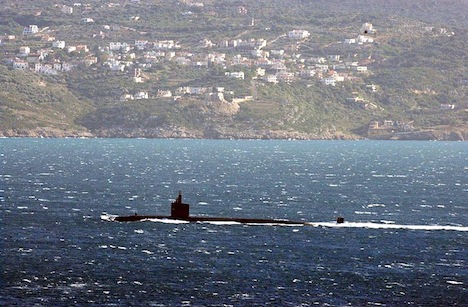
But even though U.S. defense secretary Chuck Hagel is preparing for ‘all contingencies,’ and U.S. warships in the eastern Mediterranean are already positioning for a potential attack, the international community can still respond in an affirmative way short of immediate U.S.-led military action.  Moreover, if Assad were removed tomorrow, Syria would still face a power vacuum, the potential for even more intense fighting between Shi’a/Alawite and Sunni Muslims within Syria and jockeying among various opposition groups, which range from secular Assad opponents to very conservative Islamic fundamentalists.  Those are just the known potential downsides for Syria — the unknown consequences and the potential adverse reaction in Iraq, Lebanon and elsewhere in the Middle East are more reason to tread lightly.

The next week is likely to bring even louder calls for the United States and/or the United Nations to act. To do something.

But the challenge for the Obama administration is that foreign policymaking in real time is very difficult, while political soundbytes are as easy as they are worthless.  There’s obviously a role for U.S. and international leadership to register a stand for human rights and against crimes of humanity.  But don’t trust anyone — in the United Kingdom, in the United States, in the Middle East — who has a ‘clear’ answer in mind for how the international community should now respond.

Don’t let hawks like U.S. senator John McCain convince you otherwise — the response to the latest turn in Syria’s conflict is more complicated than the polar choice of ‘doing nothing’ and launching a U.S.-led attack on Syria, guns-a-blazin’.  Given the U.S. history of intervention in the Middle East, and the horrific sectarian violence that followed the U.S.-led removal of Saddam Hussein in Iraq, it would be less controversial for the United Nations — not the United States — to take the lead in the organizing the international response.  Also don’t let liberal interventionists try to convince you that the United States should act immediately in order to avoid a Rwanda-style genocide in the Middle East.  Though the international community largely stood aside while 800,000 Tustis were hacked to death by Hutus in the 1994 Rwandan genocide, they welcomed the belated French intervention that served to provide relief and refuge to the genocidaires themselves.

Who is Ibrahim Boubakar Keïta?

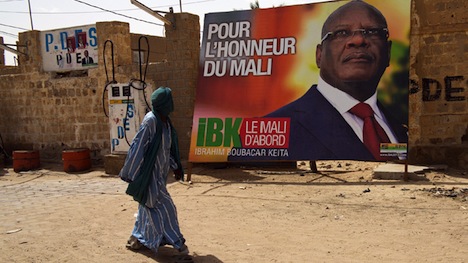
IBK

Though we still have not heard any official results from Mali’s historic Sunday election, which were initially due Tuesday and have now been postponed until tomorrow, it’s hard to escape notice of the unofficial word that former prime minister Ibrahim Boubakar Keïta is leading the vote, perhaps by a large enough margin to avoid a planned August 11 runoff.Mali Flag Icon

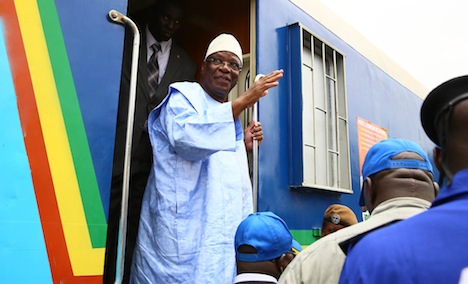
It’s difficult to know whether the delays are from the actual vote-counting itself or from behind-the-scenes talks among the various stakeholders in the election results.  Either way, when the votes are announced tomorrow (the last day that election officials have under law to announce them), it seems all but certain that Keïta (pictured above) will come out on top in a vote that saw the highest turnout in Mali’s history — around 53%.

Election observers, who have had consistent access to voting conditions in Mali, in contrast to yesterday’s vote in Zimbabwe, largely reported that Sunday’s election was essentially free and fair.  But another leading contender, Soumaïla Cissé, has already warned that he will challenge the results if Keïta, popularly known simply by his initials, ‘IBK,’ wins the first round outright, and his party has accused IBK’s supporters of ballot-stuffing.  Keïta appeared to be running particularly strong in Bamako, Mali’s capital in the south of the country, though Cissé, who was born in the northern city of Timbuktu, claimed that he was running stronger in the country’s interior.

Despite meeting the basic thresholds for a legitimate election, there have been concerns that in holding such a hasty vote after the country’s recent liberation, the election would be marred by insufficient time for a issues-based campaign, by flaws in the mechanics of holding a new vote, and by the fact that a million northerners remain displaced inside Mali or in neighboring countries.  The election was the first following a political crisis that saw the country’s elected president since 2002, Amadou Toumani Touré (also known by his initials, ‘ATT’), toppled in a military coup last March, thereby postponing what had been the planned March 2012 election to choose a successor to Touré.  The coup, however, subsequently emboldened Tuareg separatist resistance groups in the north, and Malian forces were unable to prevent the takeover of much of northern Mali, first by Tuareg groups like the National Movement for the Liberation of Azawad (MNLA), and later by homegrown and foreign-based Islamic radicals, who introduced sharia law in Timbuktu, one of the largest cities in northern Mali.  French president François Hollande launched a military intervention in February 2013 to liberate the north and to secure the transitional government’s control of Bamako.  France and the United States have both pushed for rapid elections in order to facilitate permanent peace talks between Bamako and Tuareg separatists, in hopes that it will secure the Sahel region from transformation into a base for Islamic terrorism.

Given the likelihood that IBK is on the precipice of leading Mali — either after tomorrow’s announcement or after the August 11 runoff vote — what do we know about him, and how will he approach the myriad economic, political and security challenges facing Mali over the next five years? Continue reading Who is Ibrahim Boubakar Keïta? →

Despite fears, Mali’s rushed presidential election seems like a success — for now

maliIBK

In an otherwise busy weekend for elections, voters in Mali went to the polls yesterday to select a new president, despite the fact that the country has a long way to go in securing a peace agreement to definitively end the crisis of the past 16 months. Mali Flag Icon

It’s no secret that the international community has pushed for an ambitious timetable, just months after France sent troops to the country to restore order by pushing back Tuareg rebels and disparate Islamist groups that had taken control of northern Mali and threatened to overwhelm Bamako, Mali’s capital in the south.  Accordingly, French leaders are anxious to have an elected president that can push for a lasting peace between a legitimate central government and the separatist Tuaregs in the north.  French president François Hollande, aware of France’s heavy-handed history with respect its former African colonies and the legacy of Françafrique, has pushed for as rapid a transition as possible to a stable Mali.  The United States and other Western governments also want an elected government in order to renew political and other humanitarian aid to the country that’s been on hold since a military coup in March 2012 that ousted Amadou Toumani Touré (known popularly as ‘ATT’ in Mali).

But given that France’s military mission only ended in February, there’s been a steady stream of criticism from both inside and outside Mali that the country was not yet ready for an election so soon after its political crisis, and that Paris and other Western governments had pushed Mali into an election sooner than necessary in order to stitch up a peace deal rather than secure a long-term political settlement.

On one hand, Sunday’s presidential race was itself an extension of the postponed election originally planned for March 2012, which was cancelled in the aftermath of last year’s coup that only exacerbated the turmoil in northern Mali, and three of the four frontrunners in Sunday’s race had previously planned to run in the March 2012 vote.  ATT, who had governed Mali since 2002, had announced he was stepping down and, before the ill-timed coup, Mali seemed set for a fairly normal election and a peaceful transfer of power from ATT to a new administration.  It’s also true that the installation of a new government with the legitimacy of a popular mandate could accelerate the momentum for a permanent ceasefire with northern rebels, and the restoration of U.S. aid will certainly boost investment.

But on the other hand, it’s not at all clear that Mali is ready to make that transition when life is still returning to normal — nearly half a million Malians have either fled to neighboring countries in the Sahel or remain internally displaced, and the rush to Sunday’s vote was plagued with confusion over establishing polling places, distributing biometric voter cards in a country of 16 million people and revising voter rolls that had not been updated in four years.  It remains to be seen if northern Malians, some of whom still support the National Movement for the Liberation of Azawad (MNLA) that declared the independence of the northern territory of Azawad and some of whom are voting abroad or elsewhere in the country, will deem the vote to have been legitimate.

Although the French forces are largely seen as having been successful earlier this year in ending Mali’s crisis, it was Western intervention in the region that may have led to the fighting in the first place.  Although northern rebel groups have continuously agitated for autonomy since Mali’s independence in 1960, there’s a strong case that Western-provided arms made their way from rebels in Libya fighting against Muammar Gaddafi. Once Gaddafi fell from power, those arms found their way from sympathetic Libyans to nomadic northern Tuaregs, who share much more in common culturally and politically with Libyans than with their southern Malian countrymen.

Given the bumbling role of Western powers that arguably fueled Mali’s crisis, the specter of unintended adverse consequences looms large.

Sunday’s vote seems to have gone about as well as reasonably expected, however, and it may have well marked the largest turnout of any election in Malian history.  Despite fears to the contrary, the voting took place without any violence in Mali’s north, and there were no reports of massive fraud or systemic errors, and that should be deemed as an initial success.

But even if the vote took place without major incidents, there’s no way to know if the election will have been a success.  In many ways, it’s just the first step of a process that, if successful, will heal a rift that goes back more than half a century.  Furthermore, the hasty election heightens the risk that Mali’s new president might not share the same respect for democracy as ATT — by holding elections with the country still recovering from crisis, voters might prefer a candidate with strongman qualities who could lead Mali to slide backward on democracy in the years ahead.  Ultimately, the international community knows that its goal of a peaceful Sahel that’s not a sanctuary for Islamic jihad must be complemented and supported by a Mali that’s making progress toward internal stability, economic growth and national unity (and there’s no guarantee that chasing radical Islamists out of northern Mali won’t destabilize neighboring Niger or Mauritania).  It’s easy to imagine faulting Hollande for pushing Mali too soon toward normalization, ironically due to efforts to keep France’s post-colonial footprint as light as possible.  Continue reading Despite fears, Mali’s rushed presidential election seems like a success — for now →

After Britain and France, will Vietnam be the next country to enact same-sex marriage?

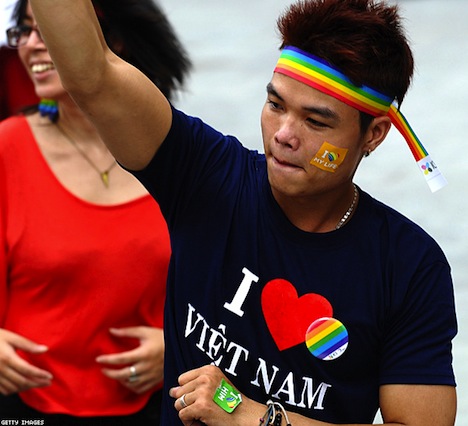
gayhanoi

Now that the House of Lords has approved changes to the same-sex bill in Parliament in the United Kingdom, same-sex marriage is set to become a reality in England and Wales (a separate Scottish bill is set to follow) under Conservative prime minister David Cameron.vietnam

That follows the final enactment of same-sex marriage in France earlier this summer — though the center-right and far right have vocally opposed it, the Assemblée nationale passed the measure with ease in June, fulfilling one of president François Hollande’s key campaign promises.

Great Britain (once Scotland joins) will become the 14th nation-state to have enacted legal same-sex marriage, joining France and eight other European countries,* as well as Argentina, Brazil, Canada and South Africa.  That doesn’t include México City or the 13 states (and the District of Columbia)** in the United States that have enacted marriage equality, which comes with the full set of rights and privileges of federal law following the recent U.S. Supreme Court ruling in United States v. Windsor that rules the 1996 Defense of Marriage Act unconstitutional.  Last month, Germany’s constitutional court delivered same-sex partnerships a key victory by ruling that they are entitled to the same tax rights as other married couples.

So what’s the next horizon in what’s become a global fight for LGBT rights and marriage equality?

Vietnam.

Probably not what you were thinking, right?  After all, Asia has not typically been the most hospitable battleground for LGBT rights.

Moreover, Vietnam is a socialist republic and a one-party state ruled by a party, the Đảng Cộng sản Việt Nam (Vietnamese Communist Party), that’s been enshrined through Vietnam’s constitution as the sole organ of political affairs since 1975, when North Vietnam formally overran South Vietnam, thereby uniting the entire country under communist rule.  The Vietnamese government is repressive on just about every other vector — press freedom, internet freedom, and of course, the kind of political freedom that would allow a challenge to the governing elite.  Though the country has been transformed economically as its one-time Marxist roots have been eroded into a more state capitalist approach, and its top destination for exports is now the United States (relations between the two countries have now been normalized for nearly two decades), the zeal for liberalization hasn’t met with the same enthusiasm in other quarters.

Vietnam is most well-known internationally for its economic growth — it’s a ‘Next Eleven‘ country and, while its GDP growth has slowed in recent years, it’s still poised to become a breakout economic power in southeast Asia.  It’s also a party to the ambitious Trans-Pacific Partnership negotiations that could ultimately establish a free-trade zone among the United States and other South American and Asian countries.

It’s less well-known for its positions on social justice, but it would be a huge coup for the global marriage equality movement — with over 90 million people, it’s the 13th most populous country in the world, and it would be the first Asian jurisdiction to recognize same-sex marriage.  Continue reading After Britain and France, will Vietnam be the next country to enact same-sex marriage? →

ElBaradei set to become interim Egyptian prime minister in post-Morsi gamble for ‘reset’

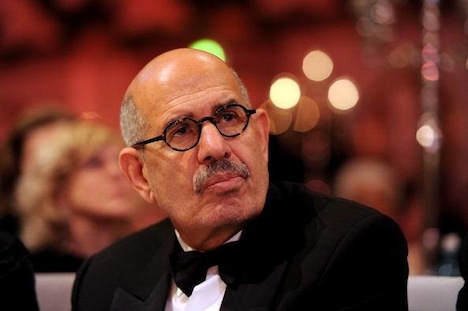
elbaradei

UPDATE: Egyptian officials are now distancing themselves from earlier reports that Mohamed ElBaradei will be Egypt’s next prime minister — that doesn’t incredibly change the analysis, though.  ElBaradei’s ties to the West, not to mention the other drawbacks mentioned below, help us understand why Egypt’s new military-backed government may have had second thoughts about ElBaradei, especially if they are hoping to bring Salafist Al-Nour Party leaders into the fold.

* * * *

Mohamed ElBaradei is set to become Egypt’s interim prime minister just four days after Mohammed Morsi was deposed as from the Egyptian presidency by the country’s armed forces.

egypt_flag_new

ElBaradei, the former director general of the International Atomic Energy Agency, is a well-known figure whose international credibility runs far deeper than that of newly-installed interim president Adly Mansour, formerly the chief justice of the Egyptian constitutional court.  His selection as prime minister will bring instant gravitas to the emerging post-Morsi regime in Egypt, at least vis-à-vis the rest of the world.

But deploying ElBaradei into power is not risk-free — for either the new government or for ElBaradei’s reputation.

The danger is that his selection won’t be enough to ameliorate the governance crisis that has now accelerated with the Egyptian military’s decision to remove Morsi.  After all, though Morsi’s government had few allies after its troubled year in office, it’s hard to believe that the Muslim Brotherhood still doesn’t command the largest bloc of supporters within Egypt, and their wrath at the military’s turn against the Muslim Brotherhood may not be soothed by the appointment of any caretaker, no matter his seniority or even-handedness.  ElBaradei’s appointment comes just a day after pro-Morsi supporters of the Muslim Brotherhood staged a day of protest — the ‘Friday of rejection’ — demanding the return of Morsi to the presidency that met with tense, sometimes violent, resistance from the Egyptian military.  It’s too early to predict that Egypt is descending into a kind of civil war — despite a troubling lynching of four Shi’a Muslims last month, the largely Sunni Egypt doesn’t really feature strong Sunni-Shi’a schisms that have propelled sectarian violence more recently in countries like Iraq and Syria, and most Egyptians, even its more conservative Islamists, hold the military in high regard, for now at least.  But there’s no guarantee that ElBaradei can keep political violence from spiraling further out of control, propelling ever more turmoil to Egyptian industry, trade and tourism.

Even if no one will miss the ineptitude of the Morsi government, ElBaradei’s new power doesn’t come imbued with much of a mandate.  Though Egypt’s post-Mubarak transition was troubled from its inception, the successful conduct of free and fair presidential elections last summer was a key milestone on Egypt’s road toward a more democratic state.  While it’s true that the anti-Morsi protests had ballooned to a size even larger than those against Mubarak in February 2011, the more relevant factor is that Mubarak was never elected in a free election the way that Morsi was only a year ago.  So while political scientists debate whether last week’s events amounted to a coup (spoiler: yes, of course it was a coup, even if the U.S. administration doesn’t use the word ‘coup’), ElBaradei and his military supporters will come to power having undermined the most visible democratic credential that Egyptians could boast since the Arab Spring began.

By contrast, though French president François Hollande remains incredibly unpopular after just one year into a five-year term,  no one seriously thinks the French military is set to remove him from office to install a center-right president in France.  Moreover, ElBaradei will become Egypt’s new leader after having pulled out of last year’s presidential race, and it was not entirely clear that ElBaradei would have won in any event.  But it would have been better for the country today if ElBaradei had remained in the race to make a full-throated case for a secular, liberal democratic Egypt and to bring the fight to Morsi on the basis of the merits of his own ideas, not on the coattails of the military’s guns.

Unlike former foreign minister and Arab Council secretary-general Amr Moussa and former air force chief Ahmed Shafiq, ElBaradei is not tainted as felool — the ‘remnants’ of the government that Hosni Mubarak led from the 1980s until 2011.  But as the Tamarod (‘Rebellion’) movement has gathered steam in its efforts to oust Morsi, ElBaradei has managed to unite a disparate coalition of anti-Morsi interests, including Moussa, much of the former military establishment, elements of the so-called ‘deep state’ and supporters of former presidential candidate Hamdeen Sabahi, whose leftist, Nasser-style nationalism nearly vaulted him into last June’s presidential runoff.  If Monsour, ElBaradei and the new interim government succeed in organizing a new presidential election, Sabahi would certainly be the frontrunner to win it (unless ElBaradei himself runs, though he’s said he’s not interested in the presidency for himself).

As ElBaradei has noted in the days leading up to and following Morsi’s forced removal, the Morsi presidency was far from perfect — ElBaradei had routinely accused Morsi of becoming a ‘pharaoh’ in office, and he mocked Morsi’s Islamist agenda by noting acidly that ‘you can’t eat sharia.’  Though Morsi won only a narrow victory last June over Shafiq, he triumphed by assembling a broader coalition that transcended his own Muslim Brotherhood supporters, and, in recognition of that reality, Morsi initially called  for a broad inclusion of diverse views in formulating policies in office.  One of his first steps in August 2012, in firing longtime army chief and defense minister Field Marshal Hussein Tantawi, and replacing him with Abdel-Fattah El-Sisi, was an incredibly successful masterstroke, temporarily at least, in marrying the political interests of the Muslim Brotherhood and the Egyptian military.  Ironically, it was El-Sisi, who owed his position as commander-in-chief of the Egyptian armed forces to Morsi, who green-lighted the action that toppled Morsi.

But as Bassem Sabry explained in illuminating detail on Thursday in Al-Monitor, the clear point at which Morsi lost control over the country was his ill-fated decision last November to push through a vote on the country’s new constitution.   Continue reading ElBaradei set to become interim Egyptian prime minister in post-Morsi gamble for ‘reset’ →

Why isn’t separatism or regionalism more dominant in the politics of Bretagne?

DSC08445

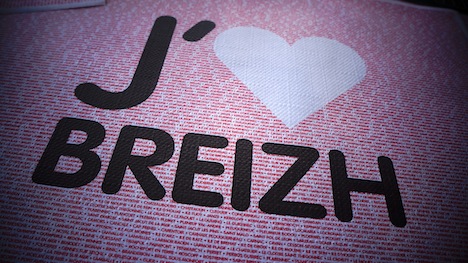
I’ve spent much of the past week traveling through Bretagne (or ‘Breizh’ in the local Breton language) — the peninsula that juts out from northwestern France into the Atlantic Ocean, and I’ve spent some time thinking about regionalism in France and why Bretagne, with its  Celtic roots, geographic isolation, historical independence and distinct language, isn’t more like Scotland or Catalonia politically. brittany_breton_region_flag-1France Flag Icon

With just over 3 million residents, the region of Bretagne is home to about 5% of France’s population, though the administrative region of Bretagne doesn’t include all of what was considered Bretagne historically — another 1 million people live in Loire-Atlantique, which is technically part of the Loire region despite its historical inclusion within wider Bretagne.  Regardless of the current regional borders, Bretagne is a unique part of France, and its cultural heritage sets it apart as at least as unique as any other region of France, given that it was settled by Celtic migrants from the north who successfully rebuffed Vikings, Normans, Gauls and Franks for centuries in what, during the Middle Ages, was known as Armorica.  Despite its independence, Bretagne increasingly became the subject of both English and French designs in the early half of the millennium, and the region was one of the chief prizes of the Hundred Years War between England and France in the 14th and 15th centuries, which finally settled France’s hold on Bretagne.

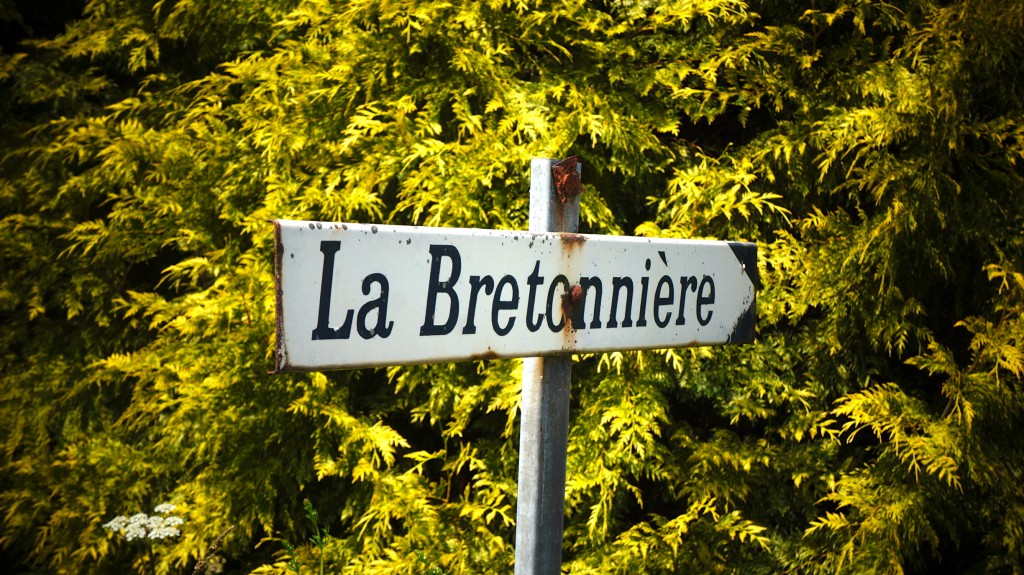
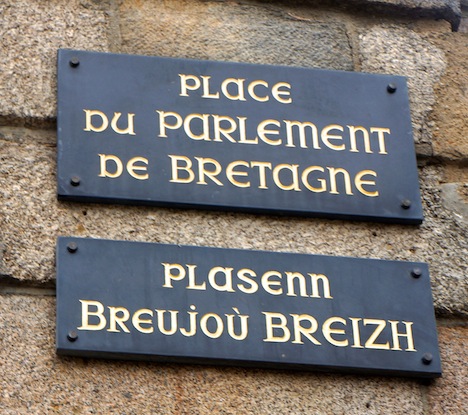
Moreover, Breton — and not French — was the dominant language spoken in the region through much of the 19th century.  Despite the universal use of French today and a declining number of Breton speakers, around 200,000 native speakers remain, and Breton features prominently on many public signs in the region, especially as you go further west in Bretagne.  (Another second language, Gallo, is used by around another 30,000 Breton residents).
DSC08918

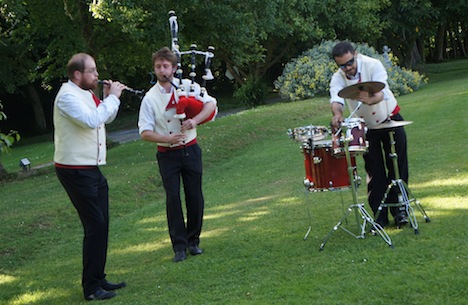
Bretons, such as Jacques Cartier, dominated the earliest French efforts to explore and colonize the New World and, even in the 19th century, the region’s role in transatlantic shipping and trade meant that its ties with far-flung places like Newfoundland and Labrador were just as influential as the region’s ties to Paris.  Cultural ties with other Celtic regions such as Wales, Scotland and Ireland have long overshadowed French cultural influences as well — Breton music has a distinct character and often features bagpipes not dissimilar to those found in other Celtic folk music traditions.
DSC08738

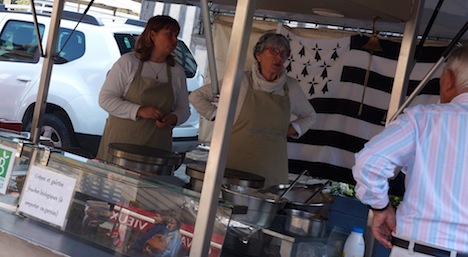
Furthermore, there’s been a resurgence in interest in Breton heritage and cultivation of Breton language in the past 30 years, even as the number of Breton speakers is set to decline over the next decade to just over 50,000.  Its distinctive black-and-white flag, the Gwenn-ha-du, developed in the 1920s during a prior wave of Breton nationalism, flies throughout Bretagne much more prolifically than do other regional flags elsewhere in France.
DSC08268

But Bretagne is not a hotbed of separatist agitation like Catalonia or Basque Euskadi in Spain or like Québec in Canada.  Nor does it especially have a history of autonomist politics similar to those throughout western Europe — Flanders in Belgium, Galicia in Spain, or northeastern Italy.

Celtic nations, in particular, have long agitated for greater political autonomy throughout western Europe.  Scotland will hold a referendum on independence in September 2014, and both Scotland and Wales have routinely supported devolution of power within the United Kingdom.  The move for  independence in Ireland, another of Bretagne’s Celtic cousins, was perhaps the most successful European nationalist movement in the first half of the 20th century.

The region does have a regionalist party, the Union Démocratique Bretonne (the Breton Democratic Union, or the Unvaniezh Demokratel Breizh in Breton), but the party holds no seats in the Breton regional assembly, and in the most recent 2010 regional elections, it won just 4.29% of the vote.  In the June 2012 parliamentary elections to the Assemblée nationale (National Assembly), the UDB’s Paul Molac won election, though technically as a member of France’s Green Party, which contested the elections in alliance with the Parti socialiste (PS, Socialist Party) of French president François Hollande.

If there’s any trend worth marking in Bretagne, it’s that the left has done increasingly well in Bretagne in recent years, to the point that Bretagne could even be considered a Socialist stronghold within France.  Hollande defeated former president Nicolas Sarkozy in the region by a margin of 56% to 44% in the second round of the May 2012 presidential election and in 2007, though Ségolène Royal lost the presidency to Sarkozy nationwide, she won Bretagne in the second round by a margin of 53% to 47%.  Traditionally, the nationalist, far-right Front national of Jean-Marie and Marine Le Pen have not succeeded to same degree in Bretagne as they have in other parts of France.

But Bretagne simply hasn’t boasted an incredibly strong politics of regionalism, despite several waves of Breton nationalism throughout the 20th century and the current revival of Breton linguistic and cultural heritage.
DSC08594

Why exactly is that the case?

As you might expect, there’s not a single magic answer, but four factors in particular go a long way in explaining why Bretagne hasn’t developed the same level of regionalist politics as, say, Scotland or Catalonia: the five-century duration of French control over Bretagne, the highly centralized nature of the French government, historical reasons rooted in the 20th century and, above all, the lack of an economic basis for asserting Breton independence.

Continue reading Why isn’t separatism or regionalism more dominant in the politics of Bretagne? →

As U.S. awaits DOMA decision, Germany’s constitutional court weighs in on gay rights

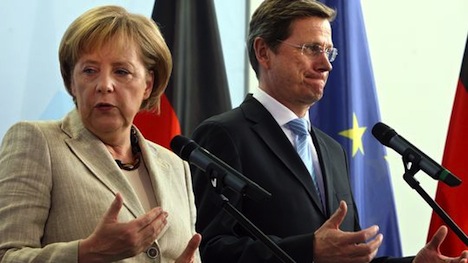
merkelwesterwelle

By the end of June, the U.S. Supreme Court will render decisions in two of the most important legal cases to affect same-sex marriage in the United States: Hollingsworth v. Perry, which could result in the repeal of California’s Proposition 8, a ballot measure that overturned the state legislature’s enactment of same-sex marriage, and United States v. Windsor, which could strike down the U.S. Defense of Marriage Act.  DOMA, a 1996 law that prohibits same-sex couples from federal benefits of marriage, has been struck down by lower U.S. courts as a violation of the ‘equal protection’ clause of the 14th amendment of the U.S. constitution.  Others have argued that it violates the right of states to determine their own marriage laws and the ‘full faith and credit’ clause of the U.S. constitution that requires states to recognize the law, rights and judgments of the other U.S. states. Germany Flag Icon

Both decisions are among the most highly anticipated opinions of the Court’s summer rulings.

But Germany’s top constitutional court, the Bundesverfassungsgericht, got out in front of the U.S. Supreme Court last week with a landmark decision of its own that in many ways mirrors what proponents of same-sex marriage hope will be a harbinger of the U.S. decision on DOMA.

In a decision that could place pressure on chancellor Angela Merkel in advance of Germany’s federal election in September, the constitutional court ruled that same-sex couples in registered civil partnerships are entitled to the same joint tax filing benefits as those in opposite-sex marriages, exactly the rights that DOMA was originally enacted to prohibit in the United States.  The decision put the fight for German same-sex marriage on the front page of European newspapers in a summer when the parliamentary battles to enact same-sex marriage in the United Kingdom and France have otherwise dominated headlines.

It’s surprisingly in many ways that France and the United Kingdom have been more progressive on same-sex marriage rather than Germany.  Although polls show nearly two-thirds of the British and the French support same-sex marriage, a February 2013 poll showed that three-fourths of Germans support same sex-marriage.  Moreover, UK prime minister David Cameron is the center-right leader of a Conservative Party that faces its most pressing political pressure today from the right, not from the center, and the virulent anti-marriage rallies in France and the widespread opposition to same-sex marriage on France’s center-right means that French president François Hollande’s push for marriage equality, a policy that he campaigned on in 2012, has met significant turbulence.

But Germany’s evolutionary approach to marriage equality has taken a more subdued path through the constitutional court in Karlsruhe as much as through the Bundestag, Germany’s parliament.  Former chancellor Gerhard Schröder and his coalition partner Volker Beck successfully pushed for the enactment of the Life Partnership Act in 2001 when the Sozialdemokratische Partei Deutschlands (SPD, Social Democratic Party) controlled the government in coalition with Beck’s Bündnis 90/Die Grünen (the Greens).  Following the German constitutional court’s blessing of the law in 2002, the Bundestag followed up in 2004 with revisions to the law that increase the rights of registered life partners, including rights to adoption, alimony and divorce, though not parity with respect to federal tax benefits.

Since taking power in 2005, chancellor Angela Merkel has not pushed additional rights for same-sex couples, which puts her at awkward odds with her coalition partners, the Freie Demokratische Partei (FDP, Free Democratic Party), which supports marriage equality and whose former leader Guido Westerwelle (pictured above with Merkel), Germany’s foreign minister and its vice-chancellor from October 2009 to May 2011, is openly gay.

Both Merkel’s Christlich Demokratische Union Deutschlands (CDU, Christian Democratic Party) and the CDU’s sister party in Bavaria, the more socially conservative and Catholic-based Christlich-Soziale Union in Bayern (CSU, the Christian Social Union in Bavaria), have been traditionally opposed to gay marriage, and as recently as March, the CDU and the CSU reaffirmed their opposition to extending tax benefits to same-sex partners, even though the February 2013 poll showed that two-thirds of CDU-CSU supporters favored same-sex marriage outright.

Despite parliamentary inactivity in Berlin, last week’s decision by Germany’s constitution court, however, is just the latest decision from Karlsruhe that has edged same-sex registered partnerships ever closer to full marriage equality.  Continue reading As U.S. awaits DOMA decision, Germany’s constitutional court weighs in on gay rights →