Live-blogging Canada’s election results

canadavotes

Will Justin Trudeau and the Liberal Party win a majority government or a minority government? Will prime minister Stephen Harper’s Conservatives emerge with the largest number of seats? How far could the New Democratic Party fall? Canada Flag Icon

Join Suffragio at 8 p.m. ET for live analysis of the 42nd Canadian federal election.

canada2015 house2015

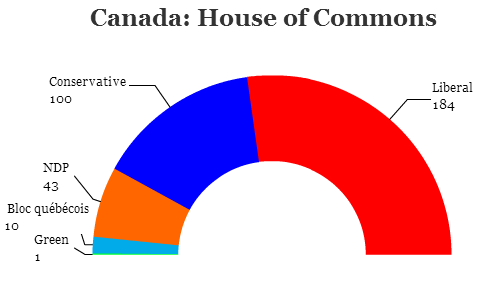
1:25 am. It’s time to wrap things up here on the East Coast. Some of the final numbers might yet change, but the live blog will end with the latest numbers — both in terms of vote share and the seats of the House of Commons.

stephanedion

1:15 am. Another Liberal grandee worth watching is Stéphane Dion (pictured above), who unexpectedly won the Liberal leadership in 2006 after Paul Martin’s election defeat. Dion, a former environmental minister and intergovernmental affairs minister, easily won reelection in his Montreal-based riding. He’s one of the few remaining links not only to the Martin frontbench but to the Chrétien frontbench. It’s nearly certain that he will play some high-profile role, at least initially, in the Trudeau government — especially with the high-stakes climate change summit in Paris approaching next month.

beaulieu

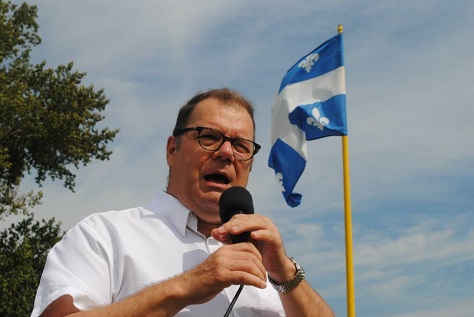
1:01 am. Ironically, Bloc hardliner Mario Beaulieu (pictured above), whose year-long leadership proved so disastrous, was elected from his La Pointe-de-l’Île riding tonight, pushing the NDP into a narrow third place.

joyce murray

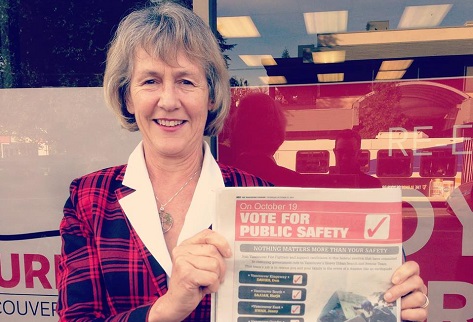
12:51 am. One of the people to watch in the next Liberal government is Joyce Murray, the runner-up to Trudeau in the 2013 election. An MP from Vancouver, Murray has taken a much more conciliatory approach to the NDP and the Green Party.

joeclark

12:43 am. Former Progressive Conservative prime minister Joe Clark (pictured above), who defeated Pierre Trudeau in the 1979 election, is discussing the two Trudeaus on CBC:

‘I have to say, his performance in the campaign has been extraordinary… he demonstrated who he was.  His father had clearly proven his essence and strength. Justin Trudeau has done the same thing. They are very different people, but one of the things they have in common is they reflected their age, they reflected the generation they were elected to led. Both of them, as Justin Trudeau indicated tonight, were optimists, I think the son a little more enthusiastically than the father.’

oliver

12:41 am. CBC has now called the riding of Eglinton-Lawrence in Toronto for Marco Mendicino, who will defeat the outgoing Conservative finance minister Joe Oliver (pictured above). That removes yet another potential leadership contender and a potential interim leader.

12:35 am. Not to take anything away from the massively impressive Liberal victory, but this isn’t the best speech I’ve ever heard, even from Trudeau. It’s rambling, and phrases like ‘a Canadian is a Canadian is a Canadian’ do not project the kind of gravitas that he will need to demonstrate in the two-week transition to 24 Sussex Drive.

12:32 am. Trudeau talking about meeting a woman in a hijab, who said she was voting Liberal ‘to make sure her little girl has the right to make her own choices in life and the government will protect those rights.’

But note that the niqab wasn’t a complete loser for Harper, especially in Quebec, where the Conservatives will double their seats to 10 and where the Bloc will also make gains. I fear that this story isn’t over yet.

trudeauwins

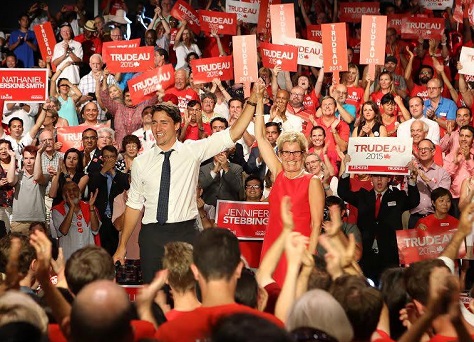
12:14 am. Trudeau takes a victory lap against the sometimes harsh personal campaign that his opponents ran against him: ‘This is what positive politics can do, this is what a positive, hopeful vision and a platform and a team together can make happen.’ It’s sort of spiking the ball against Harper and even Mulcair for the patronizing attitude that they took against Trudeau’s inexperience. Trudeau has been an MP only since 2008, and he won the Liberal leadership just five years later. The Conservatives ran ads openly asking whether Trudeau was up to the job, and Mulcair often criticized ‘Justin’ in patronizing terms, at times, in the campaign’s leadership debates.

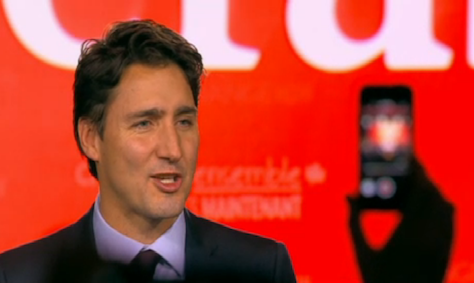
12:11 am. Justin Trudeau, Canada’s new prime minister, is set to take the stage for his victory speech. Continue reading Live-blogging Canada’s election results

A region-by-region guide to Canada’s election

Former Toronto mayor Rob Ford, who declined to run for reelection last year, showed up at an Etobicoke rally for prime minister Stephen Harper last week. (CBC)

One of the reasons why it’s so hard to predict the results of tonight’s federal election in Canada is the diversity of political views across a country that contains 10 provinces and three territories across over 3.85 million square miles. Canada Flag Icon

By the time the last polls close at 7 p.m. Pacific time, we may already have a good idea of who will lead Canada’s next government. Or we may be waiting into the wee hours of the morning as results from several hotly contested British Columbia ridings.

With plenty of three-way races pitting the Conservative Party of prime minister Stephen Harper against both the Liberal Party of Justin Trudeau and the New Democratic Party (NDP) of opposition leader Thomas Mulcair, there’s room for plenty of fluidity on a riding-by-riding basis. The contest is even less predictable because it’s the first election to feature an expanded House of Commons that will grow from 308 to 338 seats.

All of this means that as returns come in, it’s important to know what to expect from each region of Canada, where political views vary widely.

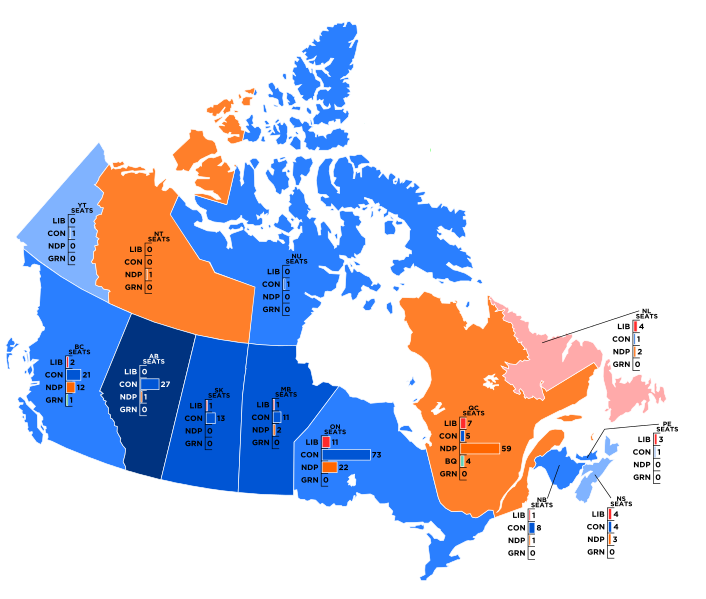
The state of play after the last federal election in 2011. (Wikipedia)


*****

Ontario

trudeauwynne
Ontario premier Kathleen Wynne hosted a large rally for Liberal leader Justin Trudeau in August. (Facebook)

The most important battleground of them all, governments are won and lost in the country’s most populous province. Since the 2011 election, Canada has added 30 seats to the House of Commons, and 15 of those new seats are in Ontario, giving the province 121 of the 338 ridings across the country.  Continue reading A region-by-region guide to Canada’s election

Why a Liberal-NDP coalition in Canada feels inevitable

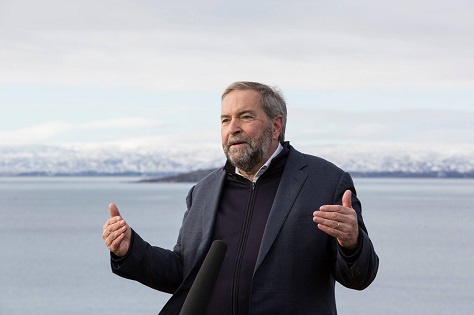
NDP leader Thomas Mulcair and Liberal leader Justin Trudeau partipicate in a March 2014 forum. (Jean Levac / Ottawa Citizen)

Roughly speaking, there are three plausible outcomes from tonight’s Canadian federal election.Canada Flag Icon

The first, increasingly likely (with a final Globe and Mail poll giving the center-left Liberal Party a lead of 39.1% to just 30.5 for the Conservative Party), is an outright Liberal majority government. It’s a prospect that no one would have expected a few days ago and certainly not when the campaign began with Liberal leader Justin Trudeau stuck in third place. But as the Liberals have pulled support from the New Democratic Party (NDP) and possibly even from the Conservatives in the final days of the campaign, they just might make it to the 170 seats they’ll need to form a government without external support.

The second, increasingly unlikely, is a Conservative win. No one expects prime minister Stephen Harper to win a majority government again nor anything close to the 166 seats he won in the 2011 election (when the number of House of Commons seats was just 308 and not yet the expanded 388). Under this scenario, Harper would boast the largest bloc of MPs, even though an anti-Harper majority of NDP and Liberal legislators would be ready to bring down Harper’s shaky minority government on any given issue. Despite a growing Liberal lead, there’s some uncertainty about the actual result. That’s because Canada’s election is really 338 separate contests all determined on a first-past-the-post basis. In suburban Ontario, throughout British Columbia and in much of Québec, where the NDP is most competitive, left-leaning voters could split between the NDP and the Liberals, giving the Conservatives a path to victory with a much smaller plurality of the vote. (In the waning days of the campaign, several groups have tried to urge strategic voting to make sure the anti-Harper forces coalesce on a riding-by-riding basis).

The safest prediction is still a Liberal minority. For a party that currently holds just 34 seats in the House of Commons after former Liberal leader Michael Ignatieff’s 2011 disaster, a plausible increase of 100 seats would be a massive improvement, validating the Liberals’ decision to coronate Trudeau as the party’s last saving grace. Despite the NDP’s loss of support, it is still expected to have some resiliency in British Columbia and Québec. Getting to 170 from 34 might just be a step too far, but it’s certainly no failure if Trudeau falls short in just one election cycle.

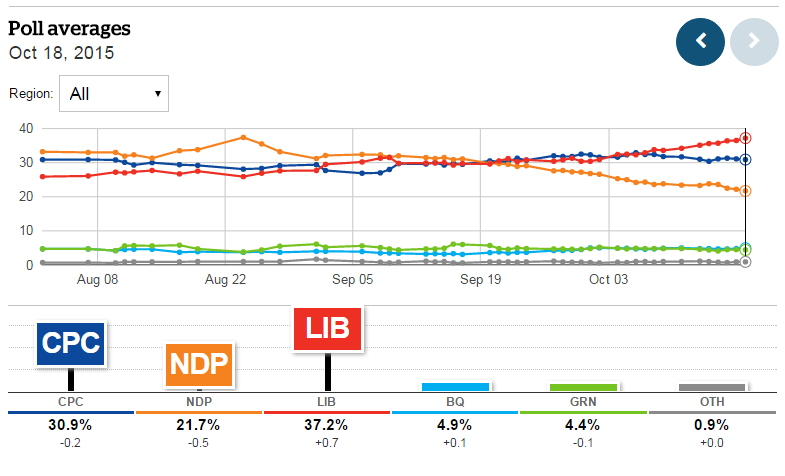
What seems clear from the trajectory of Canada’s 42nd election campaign is that Canada’s two parties of the center-left easily attract in aggregate over 50% of the vote in national polling surveys. Together, their lead over the Conservatives isn’t even close. Over the past month, as the Liberals have gained support, it’s chiefly come at the expense of the NDP, which was winning many more of those centrist and left-leaning voters at the beginning of the campaign:

cbc101815

As the Liberals gained, the NDP correspondingly lost support, indicating that the fluidity in the election has come from anti-Harper voters shopping for the most attractive alternative. Continue reading Why a Liberal-NDP coalition in Canada feels inevitable

In Canada’s election, Keystone’s not the only controversial pipeline

Energy East

In a debate on foreign policy late last month, each of Canada’s would-be prime ministers parried over the Obama administration’s long-delayed decision not to approve the Keystone XL pipeline. Both of prime minister Stephen Harper’s chief opponents targeted his approach to defending the Keystone XL project, and opposition leader Thomas Mulcair snapped at Harper’s tone altogether:Canada Flag Icon

“It’s an old saying that you catch more flies with honey than with vinegar,” Mulcair said. “You are pouring vinegar all over the Americans.” Harper said that he has worked “productively, overall” with Obama and the U.S. during his reign as prime minister.

But Keystone XL isn’t the only pipeline matter that the next Canadian government will face. It’s possibly not even the most important pipeline or even the most important issue as Canada prepares to join a crucial global summit on climate change regulations in Paris in November.

But for all the accomplishments of prime minister Stephen Harper in the past nine years (lower taxes, attempts at budget surpluses, aggressive pursuit of free trade agreements, a more relaxed attitude to federalism), it might be surprising that such an energy-friendly government of an Albertan prime minister who comes from a Conservative Party with deep roots in the Canadian west hasn’t overseen the full completion of any major pipeline projects.

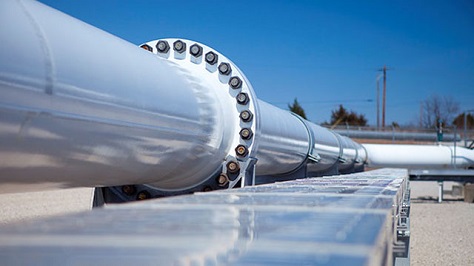
A National Geographic-designed map that lays out Canada's major proposed oil pipelines.(National Geographic)
A National Geographic-designed map that lays out Canada’s major proposed oil pipelines.(National Geographic)

But the next government will increasingly be faced with key decisions about whether to allow a handful of projects to proceed. Four major pipelines, in particular, have emerged in the campaign, some of which are more popular than others. While the Green Party is almost universally opposed to the projects and the Conservatives are almost universally supportive, each pipeline brings with it a bundle of environmental, economic and even cultural issues. In particular, the four pipelines have been an opportunity for the two center-left parties, Mulcair’s New Democratic Party (NDP) and Justin Trudeau’s Liberal Party to stake out contrasts against each other. Continue reading In Canada’s election, Keystone’s not the only controversial pipeline

Anti-migrant mood brings record win for Swiss People’s Party

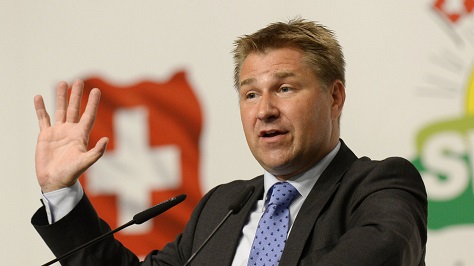
Toni Brunner, the leader of the Swiss People's Party, will celebrate his party's best-ever result in October 18 elections. (Keystone)
Toni Brunner, the leader of the Swiss People’s Party, will celebrate his party’s best-ever result in October 18 elections. (Keystone)

Amid dual concerns about rising immigration and creeping concerns about the reach of the European Union’s writ in non-member Switzerland, today’s Swiss national elections are further evidence of a rightward shift that could complicate governance in a country with a long tradition of consensus-driven government.
swiss

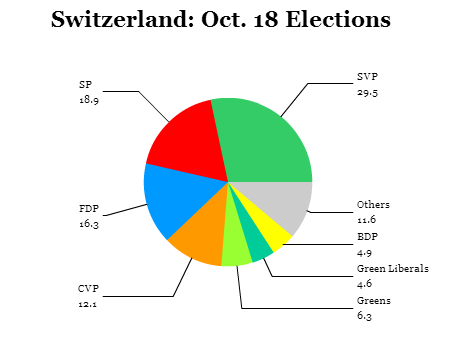
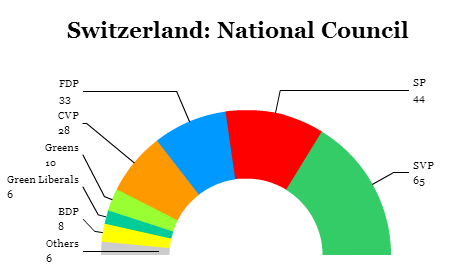
Though Switzerland hasn’t received the deluge of refugees as neighboring Austria and Germany, fears about the largest number of refugees arriving in Europe since World War II, boosted the anti-immigration, right-wing Schweizerische Volkspartei (SVP, Swiss People’s Party), which won a record 65 seats in Switzerland’s 200-member Nationalrat (National Council), the lower house of the bicameral  Bern-based Bundesversammlung (Federal Assembly) — more seats than any other single party has won at any election since 1917. Those gains follow the successes of the far-right Freedom Party in two state elections in the past three weeks in neighboring Austria.

swiss2015 swisscouncil

When one party wins an election in Switzerland, it doesn’t mean that the party controls government. Instead, under the Swiss ‘concordance’ system, the four major parties of both left and right share membership on the Federal Council, a seven-member executive board that governs Switzerland and that is indirectly elected by the Federal Assembly. Historically, the Federal Council prides itself on collegiality and compromise. The Swiss presidency rotates annually among the seven members, though the presidential role is chiefly ceremonial. Furthermore, there’s no equivalent of a ‘prime minister,’ and the strong regional government of Switzerland’s 26 cantons means that executive power in the country has always been particularly weak, dating to the federal system agreed in 1848.

But Sunday’s result is prompting calls for a Rechtsrutsch — a move from a grand-coalition government to a more clearly right-leaning government on the basis of the SVP’s superior result.

****

RELATED: Swiss immigration vote threatens access to EU single market

****

Both houses of the Federal Assembly will determine the Federal Council’s composition in a secret ballot on December 9. The SVP’s rising strength means that it will take a much more aggressive stand toward shifting the Federal Council to the right, tightening Swiss policy on immigration and the European Union.

In addition to the National Council, Swiss voters were also electing all 46 members of the upper house, the Ständerat (Council of States). Continue reading Anti-migrant mood brings record win for Swiss People’s Party

Guinea struggles with election amid few truly democratic institutions

Supporters of Guinean president Alpha Condé gather ahead of the west African country's October 11 election.
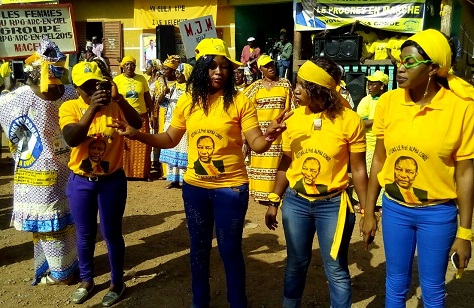
Supporters of Guinean president Alpha Condé gather ahead of the west African country’s October 11 election.

It’s not surprising, perhaps, that as the votes from Guinea’s October 11 presidential election are counted, incumbent Alpha Condé is leading with nearly 60% of the vote. guinea

This is a country where it took six years to schedule a single set of elections for the country’s parliament.

The west African country is the first of three Ebola-stricken countries to hold an election since the epidemic ended late last year, and Condé, who won election in 2010 in the first democratic vote in Guinea’s post-independence history, was expected to fall somewhat short of a majority — forcing a runoff with his 2010 rival, Cellou Dalein Diallo, an economist and, for a brief time, prime minister under Guinea’s 24-year dictator, Lansana Conté. Only weeks before the election, Guinea marked its first Ebola-free week since the height of the crisis.

As it became clear throughout the week that the vote count will show Condé with an unassailable lead, Diallo has withdrawn from the contest following last Sunday’s election, citing fraud and a generally unfair campaign environment. Diallo’s allies had previously called for a delay in the elections, citing delays in providing voting cards to all potential voters, and Diallo himself called for a re-run in the immediate aftermath of the voting, alleging ballot stuffing and other fraudulent practices. EU observers, for what it’s worth, declared the elections sufficiently valid so as not to require a revote, even while analysts are doubting whether sub-Saharan Africa is necessarily becoming more democratic.

* * * * *

RELATED: West Africa’s Ebola crisis is as much
a crisis of governance as health

RELATED: Guinea struggles to schedule elections after opposition protests and six years of delay

* * * * *

With 11.75 million people, Guinea is a fast-growing country in west Africa, though it’s struggled since independence. The first country to break with French colonial rule, it had no democratic institutions to speak of until five years ago. Its first leader, Ahmed Sékou Touré, ruled as an autocrat for a quarter-century, and the country held its first election in 2010 following a two-year military transitional government that took power after Conté’s death.  Continue reading Guinea struggles with election amid few truly democratic institutions

Geoffrey Howe showed Britain the path forward on Europe

howe

It was fitting, perhaps, that Geoffrey Howe, the Tory statesman, died the same weekend that prime minister David Cameron listed his four demands for reforming the European Union — a prelude to the expected 2017 referendum on British EU membership.United Kingdom Flag Icon

Howe died at age 88 after a heart attack on Saturday, ending one of the most accomplished lives of postwar British politics. Entering the House of Commons for the first time in 1964, Howe served as a trade minister under Conservative prime minister Edward Heath. But it was during Margaret Thatcher’s reign  that put him in a real position to shine — first as chancellor between 1979 and 1983, during some of the headiest days of the Thatcherite free-market revolution, and later as foreign secretary from 1983 to 1989, when he tackled the US invasion of Grenada, the denouement of the Cold War, the Libyan crisis and, of course, an increasingly adversarial relationship between Thatcher and the European Economic Community.

It was Howe’s resignation speech in 1990 as deputy prime minister, having been unceremoniously demoted by Thatcher from the foreign office, that led to her own downfall just 12 days later.

The speech today is worth watching, not for its drama (though it contained that in spades — Howe’s quiet and gentlemanly manner couldn’t have been more devastating in its effect) but for its warning on Europe, especially with the 2017 referendum looming.

At the time, Howe challenged both Thatcher’s style and substance on Europe. In particular, he took issue with her reluctance to admit the United Kingdom into the ‘currency snake’ that set the value of the UK pound within a narrow band. He also chided her attitude toward ruling out, in absolute terms, any British participation in a single currency: Continue reading Geoffrey Howe showed Britain the path forward on Europe

Eight things Americans should know about the Danish (and Nordic) welfare state

sandersclinton

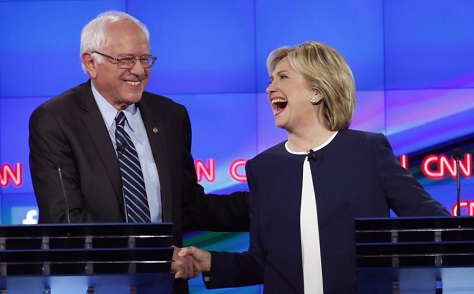
Tuesday night’s Democratic presidential debate had barely started when the two leading contenders, former US secretary of state Hillary Clinton and US senator Bernie Sanders of Vermont immediately clashed.USflagdenmark flag

Over Denmark.

That’s right. Before Iran or Cuba, Syria or Russia, the US Democratic debate began with a minor tussle over a small Nordic country that’s home to just 5.614 million people.

From the beginning of his campaign, Sanders has called for a Nordic-style state that pays for single-payer health care, free education and other state-provided benefits, and he defended the Nordic model as a lodestar for US policy-making on Tuesday night:

Those are some of the principles that I believe in, and I think we should look to countries like Denmark, like Sweden and Norway, and learn from what they have accomplished for their working people.

Clinton, for her part, argued that the Danish model wasn’t particularly well suited for the United States:

But we are not Denmark. I love Denmark. We are the United States of America. And it’s our job to rein in the excesses of capitalism so that it doesn’t run amok and doesn’t cause the kind of inequities we’re seeing in our economic system.

Neither candidate necessarily went beyond a surface-level comparison with the Nordics, though.

When Sanders — a self-described ‘democratic socialist’ — refers to the Nordic model, he’s referring to a generic set of policies that describe a typically high-tax, high-services government that provides health care, education, child care, ample family leave, copious unemployment benefits and, in some cases, up to five weeks of annual vacation time for workers. It’s often described as a kind of hybrid system that melds elements of socialism and capitalism. Denmark proportionately spends more than 150% on social welfare spending than the United States — 30.1% of GDP, compared to the US standard of 19.2%.

Increasingly, however, across the Nordics, the rise of center-right and sometimes far-right groups have succeeded in reforming that understanding of the welfare state by trimming benefits and reducing taxes, all while pushing for policies that encourage innovation and easing business regulation. Today, there are center-right governments in four of the five Nordics (Finland, Norway, Iceland and Denmark), and an eight-year, reformist center-right government ended just last autumn in Sweden under the still-popular former prime minister Göran Persson. In three of those countries, governments rely on hard-right and often anti-immigrant parties to support their policy agendas.

Taken together, the Nordics — and that includes Denmark — are generally some of the happiest, wealthiest, most productive and surprisingly competitive in the global marketplace.

But the story of the Nordic model is much more complex and nuanced, and there are reasons why it might work better in northern Europe than elsewhere, including the United States.

Here are eight features of the Danish system, in particular, that help explain some of that context — both good and bad.
copenhagen1

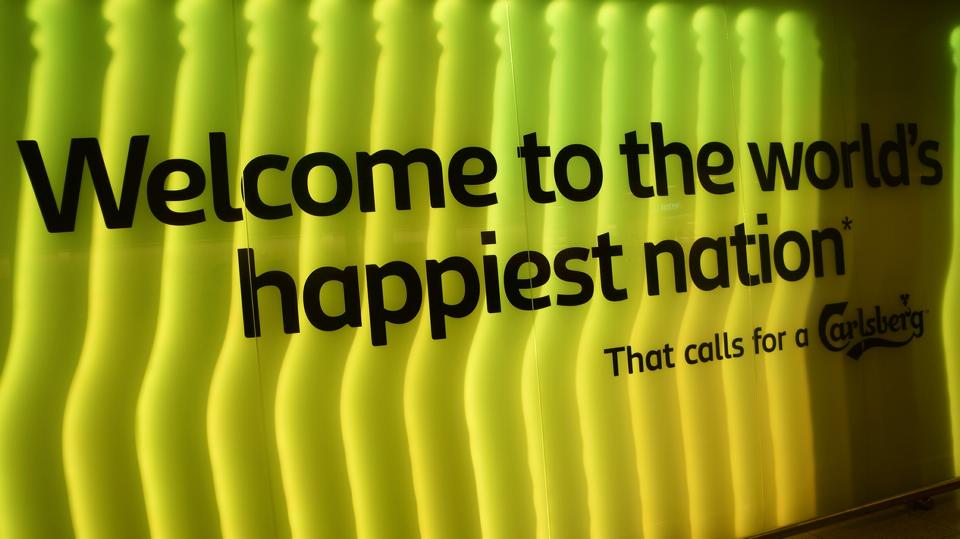
1. Denmark has been ranked the ‘happiest country in the world’

In Danish culture, there’s a concept called hygge, and it’s said that there’s really not an English language translation for it — warmth, coziness, contentment.

It’s one of the elements that motivates the Danish welfare state, and it explains why, for many Danes, consumerism isn’t as important as spending time with family, working reduced hours and using more free time to pursue individual hobbies and non-professional lives.

That explains, perhaps, why a couple of years ago, Denmark was ranked the happiest country in the world.

But it also explains why peculiarly Danish or Nordic or European cultural features do not easily translate in a country like the United States, and why policies based on Danish cultural attributes might not be nearly as popular in the American context.

2. Its reformed welfare state is actually pro-business

The fact of a strong welfare system isn’t necessarily incompatible with a pro-business orientation. As Marian Tupy wrote earlier for the Cato Institute, Denmark today is ranked as an easier place to do business than the United States, boasts a freer trade regime and slightly outpaces the United States on economic freedom.

Companies like Mærsk dominate global shipping, and Danske Bank is a key financial operator throughout northern Europe. But Denmark’s system has also unleashed as much creativity as commercialism. LEGO is a Danish concept, and the country spawned an entire school of designers in the mid 20th century Denmark, most notably the architect Arne Jacobsen. Today, there’s no more cutting-edge trend in cuisine than the ‘new Nordic’ cuisine, and its hub is Copenhagen, which is home to several Michelin-starred restaurants.

It’s true, however, that the Danish welfare state isn’t your father’s Nordic welfare state. Since the 1970s, successive center-right governments, including that of prime minister Anders Fogh Rasmussen in the 2000s, have tried to freeze tax increases or even lower taxes in certain cases, especially for business. Despite the enduring popularity of the Danish welfare state, Danes are increasingly aware of the demands that an aging population will make. So far, reforms include an increase in the retirement age from 65 to 67 gradually over the next eight years, a decrease in the limit for unemployment benefits from four years to just two and certain limits on grants provided to students.
copenhagen2

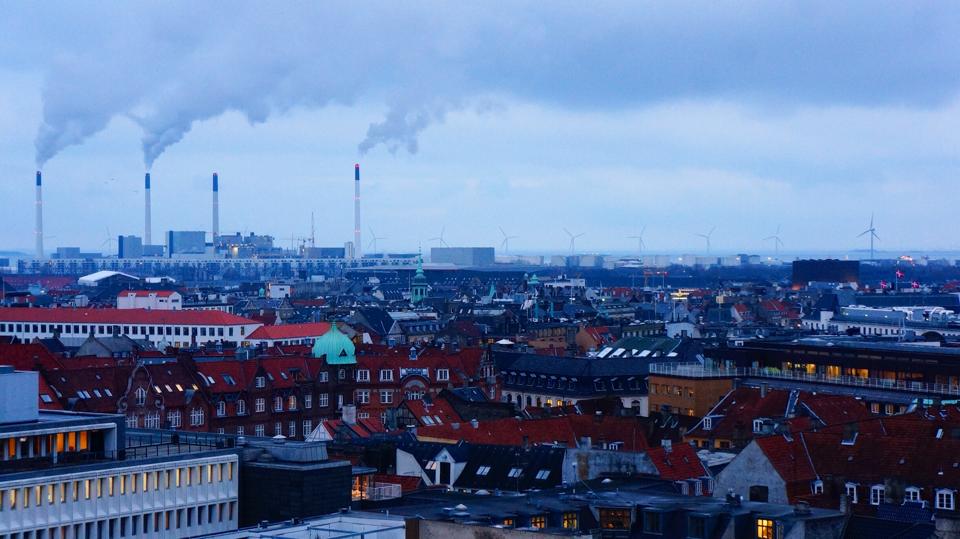
3. It gets nearly 50% of its electricity from wind power

Environmentalists also take much delight with Denmark. It was a leading developer of wind power as a renewable energy source in the 1980s, and today wind power amounts to 39% of Denmark’s total electricity consumption — and that’s set to rise to 50% within five years. On some particularly windy days, Denmark meets up to 140% of its total electricity needs.

Though the results of Denmark’s renewable energy program give heart to environmentalists, they should also perk up capitalists as well. Wind power is now big money, at least for Denmark, despite the highly subsidized start-up costs of building offshore wind farms. Moreover, its push to reduce its reliance on fossil fuels resulted from a sense of conservative prudence from the aftermath of the 1970s oil shocks.

4. Education, even for adults, is an important public value

One of Denmark’s national heroes is the 19th century philosopher Nikolaj Gruntvig, who is credited with formulating Denmark’s national education theory. That translated, from the 1840s onward, a dedication to the value of public education in Denmark. Even today, Denmark has a tradition of the folkehøjskole, or ‘folk high school,’ where adults can return to education to obtain new skills for their careers or even just for fun or for post-retirement intellectual stimulation.

That’s one of the reasons that free education is such a cherished value in Denmark. But it also shows that the roots of the Nordic welfare system are often centuries in the making. Unlike, say, in the United Kingdom, where universal government-run health care was a postwar phenomenon, the ingredients of the Danish welfare system lie in the rise of social democratic and agrarian political movements in the 19th century, and the communal spirit of compromise and reform goes back to the 18th century of beyond.
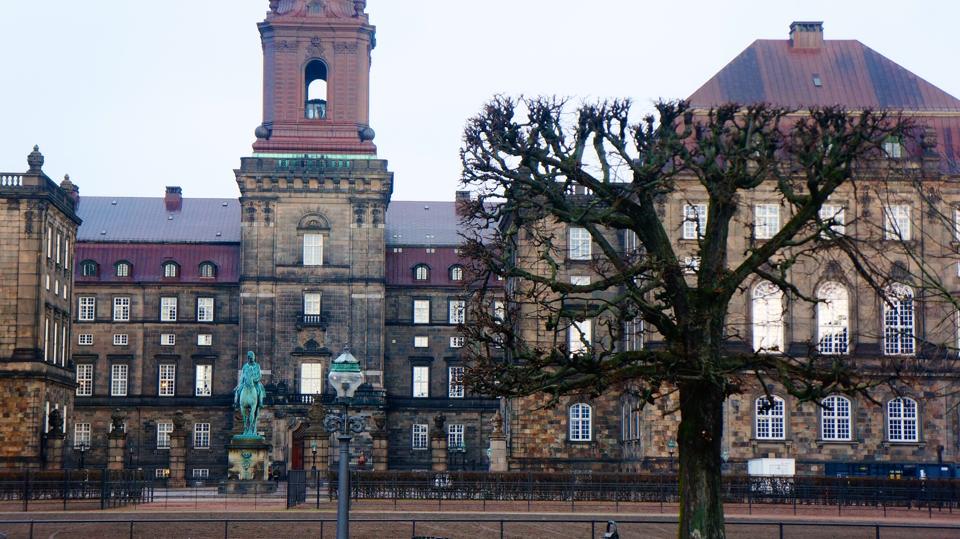
copenhagen3

5. Freedom of information is key to government transparency

Scandinavian countries were some of the first countries to enact freedom-of-information laws. Sweden’s Freedom of the Press Act dates back to 1766, for example, and Nordic countries have generally pushed to expand the European Union’s freedom-of-information directives more widely. Denmark’s most recent law, the Access to Public Administration Files Act, even includes certain private and public energy suppliers in the scope of what’s covered.

That comes with its own benefits. Denmark ranked first in Transparency International’s 2014 Corruptions Perception Index — the United States ranked just 17th, far behind Denmark, Finland (3rd), Sweden (4th) and Norway (5th). The ethos of good government and transparency infuses every level of government (and it’s one of the motivating themes of the hit television series Borgen, a three-season show about the personal and professional lives of Danish politicians and journalists).

The perception that the Nordics are an essentially corruption-free zone are another reason why businesses are so keen on relocating there.

But it’s also the kind of place where an official like Clinton would never be able to get away with keeping a secret server, unbeknownst to the Obama administration, to conduct official and unofficial state business alike.

6. Family leave policies are quite generous

In Denmark, parents receive a full year of maternity and paternity leave — mothers are guaranteed 18 weeks and fathers are guaranteed two weeks, with a further 32 weeks to be split up as between the two parents as they see fit. That’s aside from a guarantee of up to five weeks of vacation time annually for workers.

Though no one expects Sanders (or anyone else, for that matter) to introduce single-payer health care to the United States, there is a growing sense that the United States should offer at least some basic parental leave. American workers currently have no federal guarantee of maternity or paternity leave nor do they have a right to vacation leave — something that makes the United States an extreme outlier throughout the developed world.

This is one area where there’s cause for optimism. If Clinton, as widely expected, wins the Democratic nomination, she will be well-placed as the first female nominee of a major party to make this a chief policy priority. There’s a great symbolism in the notion that the first American woman in the presidency will also implement the first universal maternity leave policy.

But it’s an issue that could resonate with conservatives as well. In the United Kingdom, prime minister David Cameron and the Conservative Party campaigned on extending tax credits for child care. Though he ultimately abandoned it, former Australian prime minister Tony Abbott, also a conservative, campaigned in 2013 on expanding paid parental leave. Certainly, social conservatives and Christian voters who value strong families might also champion a policy. It’s one area where, in an increasingly polarized political scene, both Republicans and Democrats might come to agree.
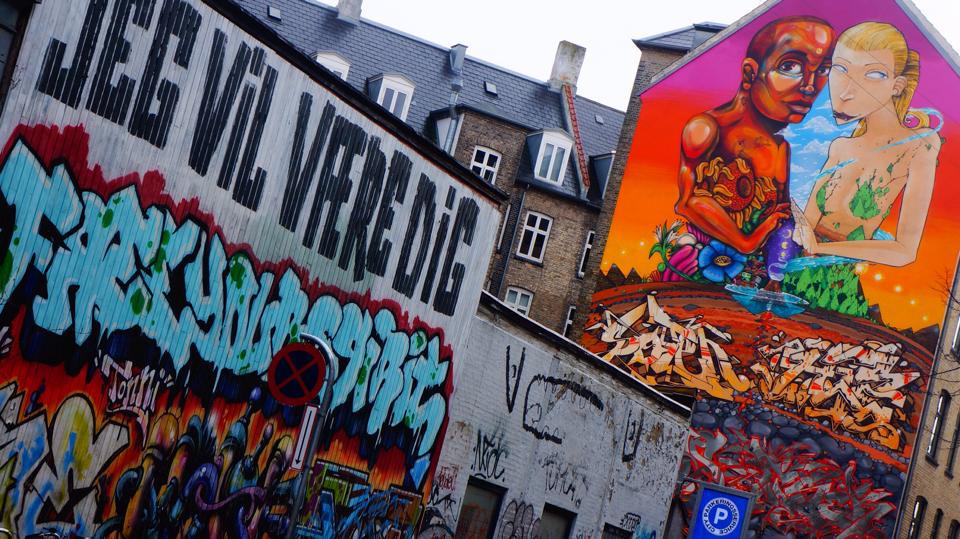
copenhagen4

7. The population is more homogeneous —
and far less welcoming to immigrants

One of the theories behind the Nordic model’s success is that countries like Denmark have greater civic trust because they have small and, on the whole, homogeneous populations. That’s one of the reasons that critics say a Nordic-style approach would never work in such a sprawling and heterogeneous place like the United States.

But that also points to one of the darker sides of Danish policy.

Only recently, Denmark’s center-right government made global headlines for its unwelcoming attitude to mostly Muslim refugees arriving on European shores. It went so far as to take out Arabic-language advertisements in Lebanese newspapers noting that family reunification might not be possible and that public assistance for immigrants is now lower.

The message is clear — Denmark is not a particularly welcoming place for immigrants. Denmark, notably, opted out of the migration quota system agreed among the vast majority of EU nations earlier this year. In early December, Danes will vote in a referendum that could see the country ‘opt-out’ of certain justice and home affairs standards.

The anti-Islam and anti-migrant Dansk Folkeparti (Danish People’s Party) won more votes in the recent June 2015 snap elections than any other party, with the exception of former prime minister Helle Thorning-Schmidt’s center-left Socialdemokraterne (Social Democrats). As the Social Democrats’ left-wing allies lost votes, it remained for the third-placed center-right Venestre to form a minority government under current prime minister Lars Løkke Rasmussen, who depends on the People’s Party as well as other smaller center-right parties to govern.

The rise of the Danish far-right (and the Scandinavian far-right in general) has pushed both of the major parties toward less migrant-friendly positions. Even Thorning-Schmidt tried to co-opt that message earlier this year with billboards proclaiming that migrants to Denmark would have to find work.  One of Rasmussen’s first actions as prime minister was to enact, in August, on a highly divided vote, a measure that cuts benefits by 45% for immigrants who have not lived in Denmark for seven of the last eight years.

Sweden, which remains far more welcoming of migrants, especially Syrians and others from outside the European Union, has not responded to the refugee crisis with the same level of closed-mindedness as the Danish. Nevertheless, growing antipathy toward immigrants (in Denmark and Sweden alike) and increasingly multicultural Nordic populations will certainly test the ‘homogeneity theory’ in the years ahead.

8. There’s not just ‘one’ Nordic model

Generally speaking, it’s a mistake to refer to a single Nordic model, because the five countries that comprise the Nordics are actually very different. Denmark and Sweden, on one hand, spent much of the past half-millennium as colonial powers. Norway, Iceland and Finland, on the other hand, spent much of the past half-millennium as subjugated colonies — Iceland won its independence from Denmark only in 1944, and Norway won its independence from Sweden in 1905. Today, that filters through culture and geography — Stockholm and Copenhagen are imperial cities, while Oslo and Helsinki are not.

Norway’s vast oil wealth, in particular, makes it a special case that has elements of other Nordic states, but also the problems that many petrostates face. Finland’s longtime relationship with Russia gives it a certain sensibility in European geostrategic matters (and that explains why both it and Sweden are still not members of NATO).

Neither Iceland nor Norway are members of the European Union, lest their rich fish stocks be subject to competition from Spanish and Greek fishermen. While Finland is a member of the eurozone, both Denmark and Sweden have retained their own national currencies and control over their monetary policy.

All of which is to say that even Scandinavians can’t agree on which ingredients are most key to their ‘model’ — and that makes its export outside the northern European context all the more difficult.
Marlon James is a superb pick for the 2015 Man Booker Prize

Marlon James is the first Jamaican author to win the Man Booker Prize. (Facebook)

Every year, I pick one of the shortlisted (or even long-listed) books for the Booker Prize to read in the early autumn.jamaica

Some years (Simon Mawer’s The Glass Room and former Economist Russian correspondent AD Miller’s Snowdrops), I realize it’s probably not going to win the actual prize, though I always choose the book that interests me the most. Truth be told, in other years, it’s ‘none of the above.’

This year, I was immediately drawn to Marlon James and his A Brief History of Seven Killings, a political crime thriller set against the backdrop of the Bob Marley phenomenon and the tense political violence of 1970s Kingston. In 1972, Michael Manley and the leftist People’s National Party (PNP) took power, pulling Jamaican policy towards socialism and, more importantly during the Cold War, took its foreign policy toward a more friendly tone with Cuba. Its opponent, the center-right Jamaican Labour Party (JLP), had a similarly cozy relationship with the United States. Both parties had ties to street gangs and patronage networks on the streets of Kingston and, as the 1976 election campaign geared up, Kingston became the site of incredible violence.

Though it’s been associated with Bob Marley and the genesis of the idea came to James from the events surrounding the failed 1976 assassination attempt on Marley’s life, “The Singer” is more plot device than subject in the book, suffusing the text like a cloud of incense. It’s not, by any means, a historical retelling of any part of Marley’s life — and it’s a much better book for it, by the way. (Notably, Kevin Macdonald’s 2012 Marley biopic details much of the political and cultural background of Jamaica in the post-independence era and I found it a better introduction to Jamaica’s politics than to reggae music).

Aside from the Tarantino-style violence and more than a nod to Graham Greene’s third-world spy noir, I knew that the book had a lot of ingredients that would endear it as a potential Booker winner — the epic historical context that Hilary Mantel’s Wolf Hall and Bring Up the Bodies had, the complex characterization and structures like David Mitchell’s Cloud Atlas or Eleanor Catton’s The Luminaries, the sharp post-colonial message like Arundhati Roy’s The God of Small Things.

And I was right! James won the prize earlier today, notably the first Jamaican to do so — though not the first Caribbean author (the Trinidadian V.S. Naipaul was the first to do so in 1971.

Here’s the review from The New York Times.

Here’s the review from The Guardian.

How the hope of Canada’s first NDP government dissolved

After next week's election, polls show that Thomas Mulcair will not only fall short of becoming prime minister; he may no longer be the official opposition leader. (Facebook)
After next week’s election, polls show that Thomas Mulcair will not only fall short of becoming prime minister; he may no longer be the official opposition leader. (Facebook)

After leading the polls in July, August and much of September, the New Democratic Party (NDP) now seems likely to place third after next Monday’s election.Canada Flag Icon

Much of the NDP’s fall is attributable to the corresponding rise of support for the Liberal Party under the leadership of Justin Trudeau, who spent much of the summer languishing in third place. Not so long ago, Mulcair appeared the favorite among Canadian voters to become the next prime minister. Today, however, polls suggest he will not only fall short of government, he’ll fall back from opposition leader to third-party status.

How did the NDP end up in such a strong position, as recently as a month ago, and how did it and its leader, Thomas Mulcair, squander such a historic opportunity?

If you’re just tuning in, the conventional wisdom goes something like this: Continue reading How the hope of Canada’s first NDP government dissolved

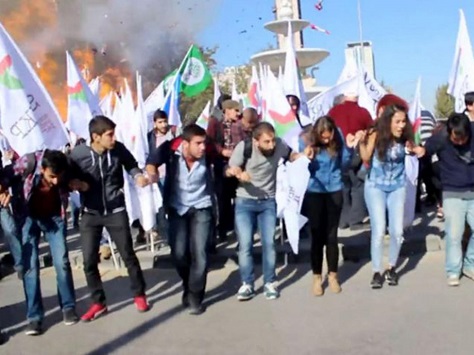
Ankara bombing curdles already-fraught Turkish election campaign

Two explosions blasted Ankara on Saturday, resulting in over 100 deaths in the worst terrorist incident in modern Turkish history. (AFP/Getty)

Arguably no one can claim that he or she speaks more for the Turkish conscience than Orhan Pamuk, the only Turk to win the Nobel Prize for literature.
Turkey

In unusually strong terms, Pamuk told the Italian daily La Repubblica yesterday that the divisive policies of Turkish president Recep Tayyip Erdoğan are partially to blame for creating an environment of instability and chaos that served as the backdrop to Saturday’s deadly bombing in Ankara:

“The electoral defeat enraged Erdogan,” Pamuk told the daily, arguing that the setback, which resulted in new elections being scheduled for November 1, was also behind the recent resumption of hostilities between the army and Kurdish militants.

“He didn’t succeed in convincing the Kurds to give him their votes for his plan to create a presidential republic,” Pamuk said. “That is why he decided to go to the polls again on November 1. But neither the government nor the army were satisfied with how things were going and they agreed to resume the war against the Kurdish movement.”

The country now finds itself even more divided in the wake of a terrorist bombing that has now killed more than 100 people, the deadliest such attack in the history of the modern Turkish republic.

The Ankara attack and its political fallout are now set to dominate the last 19 days of the election campaign, and it augurs the possibility of ominous threat to Turkish democracy.

*****

RELATED: How the AKP hopes to regain
its absolute majority in November

*****

Erdoğan, elected president two years ago and whose Adalet ve Kalkınma Partisi (AKP, the Justice and Development Party) rose to power initially in 2002, has not yet delivered more than a short statement in response to the bombing. Prime minister Ahmet Davutoğlu’s remarks Saturday initially blamed ISIS/ISIL/Islamic State, Kurdish  nationalists or left-wing activists for the attack, though the government says it now believes, on the basis of hard evidence, that the Islamic State is behind the bombings. The attack is similar to a suicide bombing in the southern border town of Suruç that killed 33 people in July — and that set Turkish armed forces in action against Islamic State. Nevertheless, ISIS militants, who are never incredibly bashful about such attacks, have not taken credit for the bombings.

Selahattin Demirtaş, a Kurdish human rights attorney who leads the Kurdish-interest HDP, blamed the government for stoking tensions that led to the Ankara bombings. (Facebook)

The Suruç attack also brought angry reprisals from Kurdish militants against Turkish police and military personnel. Erdoğan responded by escalating tensions, thereby bringing to an end a years-long ceasefire with the Partiya Karkerên Kurdistanê (PKK, Kurdistan Workers’ Party), an armed Marxist group that has intermittently fought the Turkish military since the 1980s. Until this summer, greater cultural autonomy and political freedom for Turkey’s Kurdish population, and a growing sense of security and peace under the mutual ceasefire, had been one of Erdoğan’s most crucial legacies.

No longer. Continue reading Ankara bombing curdles already-fraught Turkish election campaign

Häupl holds off far-right threat in Vienna elections

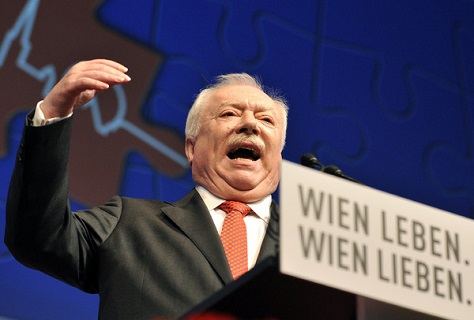
Vienna's Social Democratic mayor, Michael Häupl, has held power since 1994. (Hans Punz/aPA)
Vienna’s Social Democratic mayor, Michael Häupl, has held power since 1994. (Hans Punz/aPA)

Sometimes, what doesn’t happen in an election matters more than what does happen.austria flag

So it was in Vienna on Sunday, when Michael Häupl, the longtime center-left mayor held onto power. That’s not so surprising, because his Sozialdemokratische Partei Österreichs (SPÖ, Social Democratic Party of Austria) has controlled Vienna’s state government in every election in the postwar era.

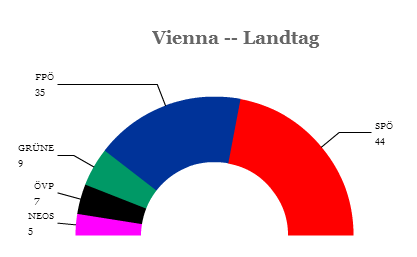
What’s more, though polls showed that the far-right Freiheitliche Partei Österreichs (FPÖ, Freedom Party of Austria) was trailing the Social Democrats by just 1% in the week before Vienna’s elections, the Freedom Party actually lost by nearly 10%. Though the Freedom Party’s result marks a gain against its prior result in 2010, and its strength is growing amid the backdrop of Europe’s migration and refugee crisis, its failure in Vienna is notable.

vienna election

After an election campaign that pitted Häupl in competition directly with the Freedom Party’s leader Heinz-Christian Strache, the far right’s failure to break through should come as a relief to Austria’s entire political mainstream, of both right and left. Had Strache won the election, it would have shaken the foundations of the grand coalition that governs Austria under Social Democratic chancellor Werner Faymann.

vienna2015

Vienna, aside from being Austria’s capital, is also the country’s largest state, with 1.8 million of Austria’s 8.6 million people, so elections for the Landtag invariably influence the national political climate. Die Grünen (the Greens/Green Alternative), the third-placed party, won enough seats to give the SPÖ-led coalition a majority in the state assembly. Continue reading Häupl holds off far-right threat in Vienna elections

One reasons for Americans to support TPP? Absolving US sins in Vietnam.

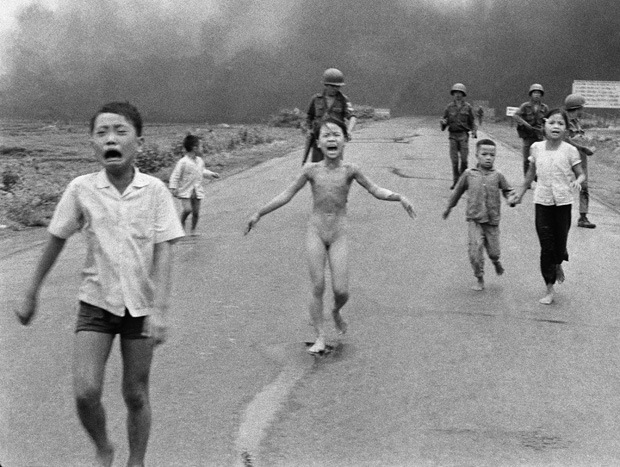
FILE - In this June 8, 1972 file photo, crying children, including 9-year-old Kim Phuc, center, run down Route 1 near Trang Bang, Vietnam after an aerial napalm attack on suspected Viet Cong hiding places as South Vietnamese forces from the 25th Division walk behind them. A South Vietnamese plane accidentally dropped its flaming napalm on South Vietnamese troops and civilians. From left, the children are Phan Thanh Tam, younger brother of Kim Phuc, who lost an eye, Phan Thanh Phouc, youngest brother of Kim Phuc, Kim Phuc, and Kim's cousins Ho Van Bon, and Ho Thi Ting. (AP Photo/Nick Ut)
The iconic June 8, 1972 photo that shows 9-year-old Kim Phuc after an aerial napalm attack on suspected Viet Cong forces. (AP Photo/Nick Ut)

There are a lot of reasons to be cynical about the Trans-Pacific Partnership.USflagvietnam

Like most multilateral trade deals, it seems to bring with it all of the ‘warts and barnacles’ that always seem to accompany these kinds of trade deals:

  • Complex enforcement mechanisms (like ISDS) sometimes seem to threaten to override national sovereignty.
  • Agreements too often fail to address poor labor and environmental standards in the developing world and, when they do, enforcing more equal standards is difficult.
  • Ignoble compromises over intellectual property force higher prices for life-saving drugs throughout the developing world and benefit Hollywood at the expense of locally produced culture.
  • In a globalized world where the World Trade Organization reduced many tariffs to nearly zero over the last half-century, free trade deals too often fail to liberalize non-tariff barriers to trade, at least to the extent that proponents might prefer, especially in the most highly protected industries like agriculture and services.

Hillary Clinton, who often championed the TPP when she served as the Obama administration’s secretary of state, came out against the trade deal last week, citing the protections for pharmaceutical companies and the lack of mechanisms that deal with potential currency manipulation. Those are odd reasons, though, as many analysts have noted, and her opposition comes after sustained support for the trade deal when she was in office. If anything, the protections for drug companies are far lower than those companies sought (just five to eight years of protection instead of the 12 years that the United States originally wanted). Moreover, currency manipulation has never particularly been an issue of focus in multilateral trade deals, and it’s doubtful that the US government could have won any serious concessions on currency, even if it tried.

Generally speaking, even if you dislike the TPP’s ‘warts and barnacles,’ there’s still a strong theoretical basis for freer trade. But there’s an even more important reason to support the TPP.

Vietnam.

No country stands to gain more from the benefits of free trade and liberalization than Vietnam. As Tyler Cowen eloquently wrote in April for Marginal Revolution:

It has large numbers of state-owned enterprises, and its policies toward such enterprises could use more transparency and predictability, as indeed TPP would bring.  Most generally, Vietnam is not today a free country.  Bringing Vietnam into TPP would further ensure their attachment to a broadly liberal global trading order.  TPP also would bring free(r) labor unions to Vietnam.

Other analysts agree, and there’s a growing consensus that Vietnam will be among the top winners if TPP becomes a reality. With tariffs on garments and footwear set to fall to zero under the TPP, Vietnamese exports will get a boost in the United States at the expense of China and even other free-trade partners like Mexico, because labor costs are still lower in Vietnam. That will help Vietnam maintain its advantage for low-cost manufacturing, even as multinational companies look to even lower labor costs in Laos and Cambodia. Moreover, despite challenges ahead, a widely cited analysis by the Petersen Foundation identified Vietnam as the country with the most to gain from the TPP:

Vietnam would face significant challenges in implementing an agreement that requires stringent disciplines in areas such as labor and government procurement. It also faces tough challenges in maintaining a macroeconomic environment that permits adjustment and encourages long-term investments. But overall, Vietnam’s participation in the agreement is well-founded.
TPP will, accordingly, increase the diversity of Vietnam’s trading partners and reduce its economic reliance on China. When the Obama administration talks about the benefits of TPP in strategic or even military terms, this is one of the most important points — TPP will lessen China’s hold on the southeast Asian economy, at least in the short term, both to the benefit of countries like Vietnam (as well as Malaysia and even more developed countries like Japan and Singapore).

Greater trade between the United States and Vietnam, and greater trade between Vietnam and the European Union, pursuant to another free-trade agreement concluded earlier this year, is expected to increase foreign direct investment in Vietnam, which could help develop a more high-tech and services-based economy and a more educated workforce.

Moreover, arguably no country in the world has suffered more at the hands of US incompetence during a war that today seems as pointless as it was brutal. From the My Lai massacre to carpet-bombing and the gratuitous use of napalm, the US-led war in Vietnam in the 1960s and the 1970s didn’t even accomplish its goal of keeping south Vietnam free of communism. The Cold War mentality at the time skewed the nature of Ho Chi Minh’s original struggle, initially more about self-determination and nationalism than about communist ideology. No one today would argue that the war was worth the sacrifices of US forces, the South Vietnamese or the North Vietnamese.

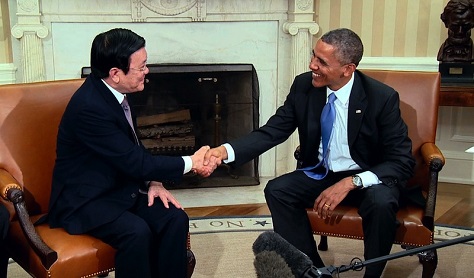
Vietnamese president Trương Tấn Sang met with US president Barack Obama at the White House in July 2015. (White House)

With TPP, the United States has a chance to ameliorate some of those harms. It was Clinton’s husband who restored normal relations with Vietnam in 1995, and it was Republican George W. Bush who facilitated Vietnam’s WTO entry in 2007. Pulling Vietnam, through TPP, into the global mainstream economy is the next logical step in reducing poverty in a country that’s growing at an estimated 6% this year, and Goldman Sachs, for example, predicts that the Vietnamese economy will surge from $186 billion (the world’s 55th largest) to $450 billion by 2025, making it the world’s 17th largest.

Continue reading One reasons for Americans to support TPP? Absolving US sins in Vietnam.

Literature and Peace prizes both send potent political messages

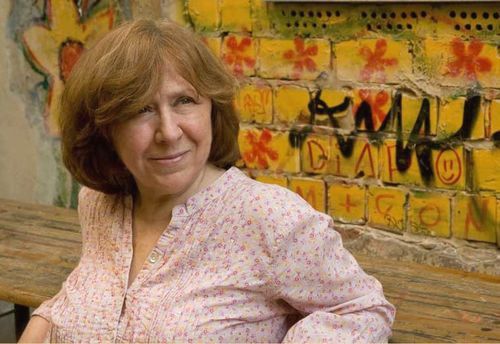
Svetlana Alexievich, a Belorussian and nonfiction writer, won the Nobel Prize for Literature on Thursday.

Everyone expects the Nobel Peace Prize to have a political meaning.tunisia flagbelarus flagnobel-peace-prize

By the very nature of the prize, it’s not surprising when the Oslo-based awarding committee makes a decision that is affected by — or that subsequently affects — international politics. That follows almost directly from the very words that Swedish chemist Alfred Nobel used to describe the prize’s qualifications:

The most or the best work for fraternity between nations, for the abolition or reduction of standing armies and for the holding and promotion of peace congresses.

That was true earlier this morning, when Tunisia’s National Dialogue Quartet received the 2015 Nobel Peace Prize. The decision highlights Tunisia’s peaceful transition to democracy and the crucial role that the quarter played in late 2013 to salvage Tunisia’s fragile transition. With an economy that’s still struggling, Tunisia nevertheless remains the only Arab Spring country to depose its leader that is also still working to enshrine a democratic system of government. Libya, Syria and Yemen are locked in anarchy or civil war, and Egypt’s democratically elected president, Islamist Mohammed Morsi, was deposed in a 2013 coup by the Egyptian military. The award is a reminder that the Arab Spring really did bring forth some good in one of the most difficult regions of the world. As the awarding committee itself noted, the prize is essentially a nod to the Tunisian people themselves:

More than anything, the prize is intended as an encouragement to the Tunisian people, who despite major challenges have laid the groundwork for a national fraternity which the Committee hopes will serve as an example to be followed by other countries.

*****

RELATED: How Tunisia became the success story of the Arab Spring

*****

But it was arguably Thursday’s prize to Svetlana Alexievich for literature that makes the bolder and more timely political statement, even though it was awarded by the Swedish Academy (and not by the Norwegian Peace Prize selection committee).

The award would have been edgy enough solely because the Swedish Academy awarded the prize to a nonfiction writer and a journalist. As Philip Gourevitch wrote in The New Yorker in October 2014, the Prize has historically favored fiction over nonfiction, and most especially over contemporary journalism.

Literature prize a shot against Lukashenko — and Putin

But Alexievich’s award — for ‘her polyphonic writings, a monument to suffering and courage in our time’ — came just three days before a sham election in Belarus.

Continue reading Literature and Peace prizes both send potent political messages

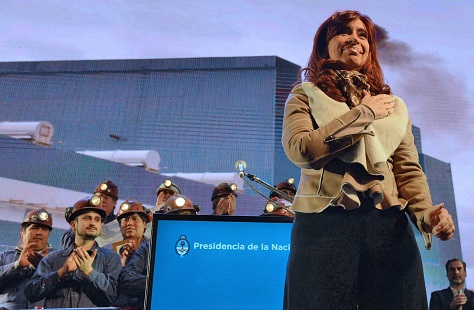
Kirchner 2019 comeback could complicate Scioli presidential bid

CFK
There’s no constitutional impediment to stop Cristina Fernández de Kirchner from waging a 2019 presidential bid. (Facebook)

Despite Daniel Scioli’s seemingly easy rise over the course of 2015 to become the frontrunner for the Argentine presidency after the October 25 general election, the most persistent criticism he faces is that he will not be his own man in office, but instead a puppet — or even a placeholder — of Cristina Fernández de Kirchner.argentina

Term limits are forcing Kirchner to step down, after eight years in office that followed four previous years when her late husband, Néstor Kirchner occupied the Casa Rosada. This year’s election will be the first since 1999 when a Kirchner hasn’t been on the ballot, and there’s already plenty of speculation that Scioli is just a transitional figure designed to bridge two eras of kirchnerismo.

There’s probably something to those rumors. Kirchner herself succeeded her own husband, in what was widely discussed as a plan to pass the presidency between the two (a plan that went sideways when Néstor died in 2010). If her party had won a two-thirds majority in the 2013 midterm elections, it was entirely plausible that they might have amended Argentina’s constitution to provide her a path to a third consecutive term.

There’s nothing necessarily nefarious about Kirchner’s plans, if true, to return to the presidency in 2019. In Latin America, where executive-strong governments are often checked by strict term limits (in many cases, presidents are limited to a single consecutive term), it’s not unusual for popular former presidents to return to office. That’s currently true for two of Argentina’s neighbors — Uruguay reelected left-wing Tabaré Vázquez to the presidency last December after a four-year stint out of office; Chile did the same, where the center-left Michelle Bachelet returned to office, after an equal four-year break, in December 2013.

Despite (or perhaps because of) the sinking popularity of Brazilian president Dilma Rousseff, a widespread corruption scandal and a tough economy, the widely-loved Luiz Inácio Lula da Silva is openly considering a run in the 2018 election after eight years out of office.

Even in the United States, it’s still a good bet to assume that the wife of a former president will face off for the presidency in 2016 against the son and brother of two other former presidents.

*****

RELATED: Scioli leads in Argentine presidential race after primaries

*****

But for Scioli, the Kirchner legacy is much more complicated, and the specter of a Kirchner restoration could drain much of his credibility as an Argentine president — especially among a business class that hopes he will (however gently) reverse course on nationalization, capital controls and Argentina’s freeze in global debt markets, pushing Argentina to a more orthodox economy.  Continue reading Kirchner 2019 comeback could complicate Scioli presidential bid