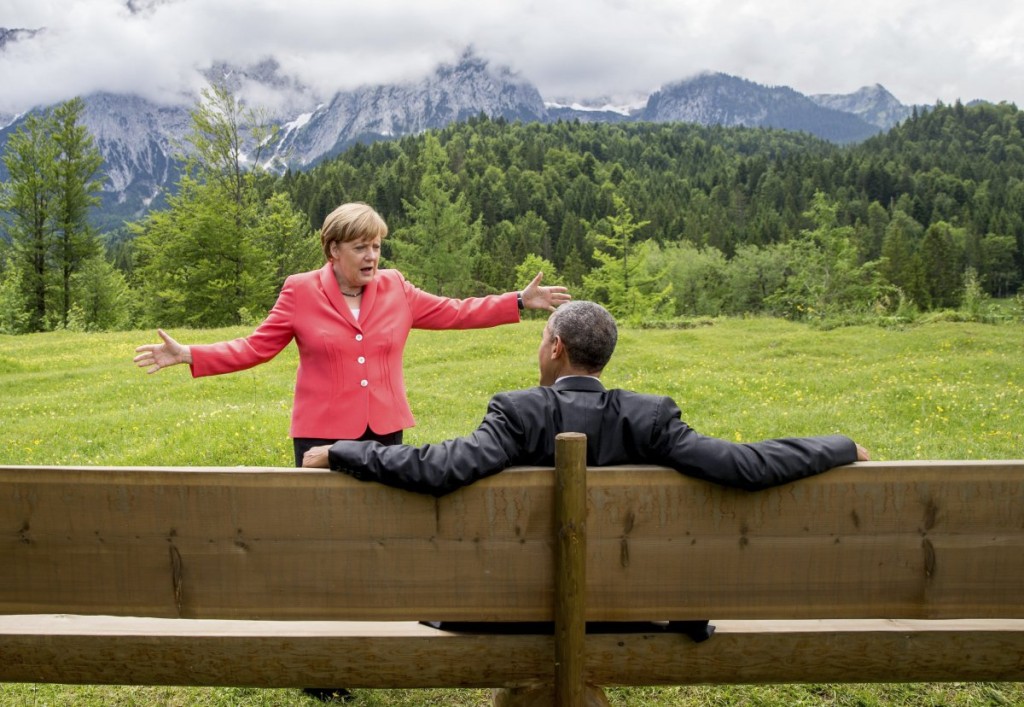
It’s the most important trans-Atlantic politics meme since that time US president Barack Obama took a selfie with British prime minister David Cameron and Danish prime minister Helle Thorning-Schmidt.
A throwback to The Sound of Music, yes, as the leaders of the G7 (just when we’d gotten used to G8) gathered at Schloss Elmau in the Bavarian Alps to consider the risks to the global economy — most notably, the risks from Russia’s continued mayhem in Ukraine and its growing isolation in the rest of the world. Greece, too, is high on the agenda, with time running out for the beleaguered country to make a deal with its European and IMF creditors.
It’s disappointing, however, that Obama’s first beer in the country was non-alcoholic. (Hint, Mr. President: You’re doing it wrong).
The real question: how would Julie Andrews tackle Russian president Vladimir Putin, or ISIS, or the fallout from a potential Greek fall from the eurozone, or US-EU free trade? Or climate change? That high-profile conference in Paris is only five months away…
Since US president Barack Obama announced on December 17 of last year that the United States will seek to normalize relations with Cuba (for the first time since 1961), there’s hardly been a day without some little nugget of news about the world opening a little more to Havana.
In some cases, it’s been US-based companies, from Netflix to iTunes to AirBNB, announcing that they will take steps to do business in Cuba.
But there’s also been a steady stream of world leaders making the trip to Cuba — the European Union’s high representative for foreign policy, Federica Mogherini, visited Havana in March, New York state governor Andrew Cuomo led a delegation in April. Pope Francis, who facilitated normalization talks between the United States and Cuba, is set to pay the island a visit in September, and US secretary of state John Kerry is tentatively planning a trip as well.
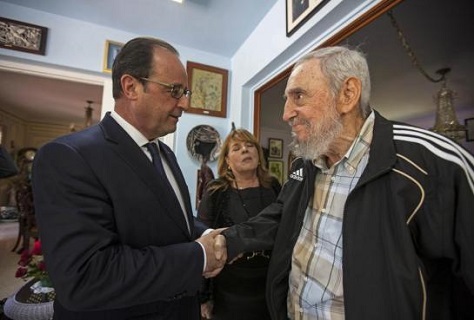
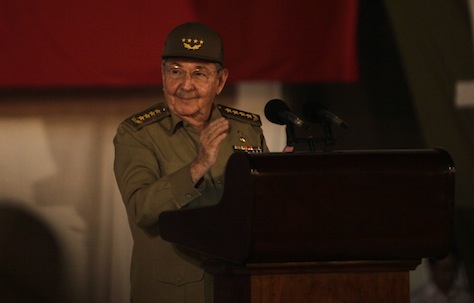
Today, however, on the same day that Cuban diplomats said that the country would exchange ambassadors with the United States by the end of the month, it was French president François Hollande’s turn. Hollande met with both president Raúl Castro and his brother, former president Fidel Castro. In remarks at the University of Havana, Hollande called on the United States to end its decades-long embargo of the island country, adding that the embargo has slowed the pace of Cuban development.
Despite the recent increase in official visits from international figures, Hollande is the first French president in more than a century to visit Cuba, and he’s the first Western leader to visit the Castro-led regime in Cuba since former Spanish prime minister Felipe González in 1986.
Hollande’s visit — and the endearing tone with which he embraced the Castro brothers — wasn’t universally popular with everyone.
Prominent writer Yoani Sánchez gently chided Hollande in a post at her Generation Y website (via the English version) for failing to meet with any dissidents or activists during his visit:
On this visit we needed reaffirmation that the France of the Rights of Man still believes in the unshakeable values that recognize the rights of individuals to disagree, to express their differences without fear and to organize around them. We demanded some words of support, words that would confirm for us that the government of the European country is willing to support, in Cuba, the desires for freedom that have so marked and modeled its own national history.
A man who has declared that French and Cubans have “shared the same movement of ideas, the same aspirations, the same philosophical inspiration, cannot believe that he has visited a country where citizens have chosen by their own free will to subordinate themselves to a totalitarian power. Does Hollande think that we have tacitly chosen the cage? Does he suppose, perhaps, that we are comfortable in our chains?
Courting controversy for his refusal to issue a formal apology from Japan to South Korea and other Asian neighbors whose nationals were conscripted into service as ‘comfort women’ during World War II, Japanese prime minister nevertheless embraced the United States in a joint address to the US Congress Wednesday:
My dear friends, on behalf of Japan and the Japanese people, I offer with profound respect, my eternal condolences to the souls of all American people that were lost during World War II.
Though Abe expressed deep repentance for Japanese actions that caused suffering to Asian neighbors, and though Abe said that Japan must not avert its eyes from that, he bluntly noted that ‘history is harsh’ and that ‘what’s done cannot be undone.’ Presumably, that includes the abduction of women forced into sexual slavery by the Japanese army during World War II across much of Asia, chiefly in Korea, which remained under Japanese occupation from 1910 to 1945. Even discussing the issue today is still widely controversial in both Japan and South Korea, but it’s enough of an affront to South Korea that South Korean president Park Geun-hye has only met with Abe once — and apparently, she was less than impressed with Japanese diplomacy.
Abe’s refusal, and the refusal of prior Japanese prime ministers, to apologize has caused diplomatic tension with China and, more importantly for US purposes, South Korea, which US officials hope can become a closer Japanese ally in their mutual quest to balance China’s growing regional power. Though the US-Japanese relationship is strong today, it’s odd, upon reflection, that a Japanese official would apologize to the country that deployed not one, but two, atomic bombs on Japan while remaining recalcitrant vis-a-vis Korea.
Mike Honda, a Democratic member of the US House of Representatives from California and himself an American of Japanese descent, brought Lee Yong-soo, a Korean woman forced into service as a ‘comfort woman’ in 1944 at the age of 16, to Abe’s congressional address in protest.
Mistrust between the two countries runs deep. Surveys show that Abe is more unpopular throughout South Korea today than North Korea’s leader, Kim Jong-un.
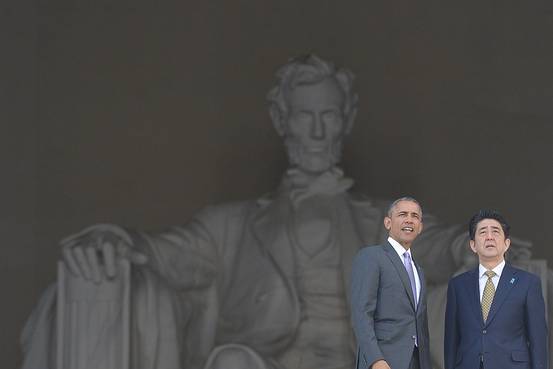
The apology issue was the most contentious of a broad portfolio of policy issues between the United States and Japan, as Abe continues his red-carpet visit to the United States, which included a personal tour of Washington’s monuments with US president Barack Obama (pictured above with Abe) and a state dinner on Tuesday night. Continue reading Seoul-Tokyo relations at heart of US ‘Asian pivot’ wishlist→
Fully 15 out of 19 hijackers in the September 2001 terrorist attacks on New York and Washington were Saudi nationals, products of a country governed by a royal family in a centuries-long symbiotic relationship with fundamentalist Wahhabism. When US special forces finally found and killed Osama bin Laden (also a Saudi national) in 2011, he was being protected by Pakistani forces, with plenty of sympathizers within Pakistan’s military and intelligence community.
Neither Saudi Arabia nor Pakistan, however, have ever been designated by the US State Department’s State Sponsors of Terrorism’ list, which has always had more to do with the geopolitics of American foreign policy than with reality.
So on the heels of US president Barack Obama’s meeting with Cuban president Raúl Castro at the Summit of the Americas last weekend (pictured above), the Obama administration announced on Tuesday that it would recommend removing Cuba from the ‘State Sponsors of Terrorism’ list. The recommendation will take effect in 45 days, following the Obama administration’s notification to the US Congress. Though Congressional action is unlikely to halt Obama’s decision, Obama will need the Republican-controlled Congress to approve any measure to lift the embargo initially imposed on Cuba in 1960 by the United States. Former president George W. Bush took a similar decision with respect to North Korea in June 2008 in consideration for the reclusive country’s decision to allow greater inspection of its nuclear sites.
Republican president Ronald Reagan initially added Cuba to the list in 1982, when it became clear that its leader Fidel Castro was supporting leftist guerrilla movements across Latin America that the Reagan administration believed imperative to stop. Nevertheless, Sandinista-controlled Nicaragua in the 1980s and Hugo Chavez’s firmly anti-American government in Venezuela in the 2000s never landed on the list. The most recent 2013 State Department review that justified Cuba’s continued ‘terror sponsor’ status reads like satire, noting that the Cuban government is harboring fugitives from the US justice system, Basque nationalists and Colombian rebels. Never mind the Spanish government concluded a ceasefire with the Basque guerrilla ETA in 2011 and even though Havana was by 2012 hosting talking between the Colombian government and the left-wing FARC.
Though a few dozen US nationals are currently in Cuba evading American law, Cuba is hardly the only country guilty of this. Edward Snowden has been in Russia nearly two years. Yemen, Somalia and dozens of other countries are likely harboring individuals who pose much greater threats to US national interests than Cuba these days. The decision leaves just Syria, Sudan and Iran on the list, all of which have ties to the Lebanese militia Hezbollah or the Palestinian group Hamas.
Cuba participated in the pan-American summit last week in Panama City only for the first time since 1994 when the first summit was held, and though Obama and Castro outlined their countries’ respective differences at length, Obama argued that the longstanding enmity between the two countries originated in another time:
“The United States will not be imprisoned by the past — we’re looking to the future,” Mr. Obama, 53, said of his approach to Cuba at the summit meeting’s first plenary session on Saturday. “I’m not interested in having battles that frankly started before I was born.”
“The Cold War,” he added, “has been over for a long time.”
Critics, from hawkish Republicans to Democrats like former Senate foreign relations committee chair Robert Menendez condemned Obama’s decision, and it’s not clear that Obama will succeed in his quest to lift the embargo in the remainder of his administration. Obama’s critics also include the Miami-born Marco Rubio, a Republican senator from Florida and the son of Cuban immigrants. Rubio, who became the third major Republican to announce a presidential campaign on Monday, sharply denounced the Obama administration’s overtures to Cuba, putting him out of step with many American voters, including increasingly younger Cuban Americans.
Though the decision to remove Cuba is mostly symbolic, it will open Cuba to the global payments system because international banks with links to the United States have largely avoided handling Cuban funds, out of fear of repercussions from the US department of justice. That, in turn, will facilitate the formal re-opening of embassies in both Havana and Washington. Lifting the designation also means that the US government may now provide greater economic assistance.
Domestic policy considerations have long delayed the thawing of US-Cuba relations, but Cuba hasn’t been sponsor of terrorism in decades, and there’s no evidence that Cuba ever supported any kind of terrorism that truly threatened US national interests. Even in the absence of the parallel US opening to Cuba, the Obama administration’s decision to remove Cuba from the list of terrorism sponsors was long overdue.
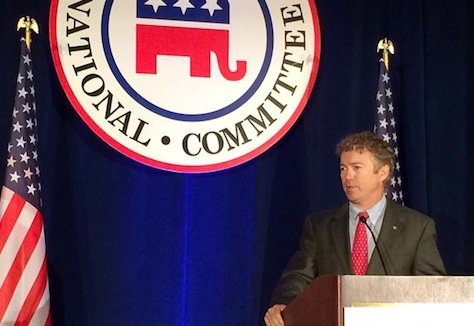
With the dream of uniting an unlikely coalition of socially liberal Millennials, fiscally conservative ‘tea party’ supporters and a swatch of economic liberals in both parties, US senator Rand Paul of Kentucky became the second major US figure to launch a 2016 presidential bid today.
His chances of winning the White House aren’t, frankly, great. But they’re not non-existent, and if he wins the Republican nomination, he could potentially convince a much wider electorate to support him over the frontrunner for the Democratic nomination, Hillary Rodham Clinton, the former US secretary of state. If he fails, he’ll still have burnished his profile as a thoughtful foreign policy counterweight within the Republican Party — sort of a conservative version of the former Democratic senator from Wisconsin, Russ Feingold. More importantly, he will drive a necessary debate on controversial aspects of US foreign policy that are increasingly taken for granted.
As a deeply libertarian voice in the US Senate and an avowed non-interventionist when it comes to the Middle East, Paul will present the strongest challenge to mainstream US foreign policy that, despite recently squabbles over Iran, Israel and Russia, remains chiefly bipartisan in nature. He will make the case for a truly alternative US policy worldview that questions everything from a 14-year global approach to terrorism, Internet surveillance and civil liberties, the proliferation of unmanned ‘drone’ aircraft in the US effort to stop radical Islamism, the use of drones to target US nationals abroad, ongoing US military action in Afghanistan and escalating action in Syria and Iraq, and the Obama administration’s ongoing diplomatic initiatives with Cuba and Iran. He is also likely to question the US Congress’s decades-long supine position on foreign policy.
Paul will find many traditional allies on the right, who believe that the United States is at its best when its military adventurism is kept to a minimum, and he will find many traditional allies on the left, where even Obama supporters have grumbled for years that his administration features more continuity than rupture with many aspects of the foreign policy developed by his predecessor, George W. Bush. Initially, Paul will benefit from supporters who backed his father, Ron Paul, the US congressman from Texas, in his 2008 and 2012 presidential contests. Though Paul (the father) served as something like the crazy/wise uncle of the Republican contests in 2008 and 2012, there’s a sense that his son is both more polished and more pragmatic.
Paul will also benefit from the quiet support of Mitch McConnell, Paul’s Kentucky colleague in the Senate. Paul’s support crucially boosted McConnell, now the Senate majority leader, to primary and general election victories in the 2014 midterm elections. McConnell’s support and his access to national donors should give Paul the kind of ‘insider-outsider’ credentials to make him a serious threat for the nomination. It wouldn’t be surprising to learn that Paul has reached out to the 2012 nominee, former governor Mitt Romney, with whom Paul’s father developed a close relationship in the 2012 contest. Other young, libertarian-minded Republican officials might also support Paul.
Paul’s campaign means that the Republican nomination contest will feature the most robust debate since perhaps the 2008 nomination contest between Obama and Clinton on the role of the United States in the world. Already, Paul has demonstrated his willingness to break with Republican orthodoxy by cautiously welcoming the Obama administration’s relaxation of ties with Cuba. His reticence to engage US troops abroad will also bring him into conflict with much more hawkish Republican voices so long as Iran, Yemen and the Islamic State (ISIS/ISIL) top the list of US foreign policy headaches as the 2016 campaign season unfolds.
But Paul’s presence in the 2016 contest will most importantly highlight that there’s just not that much difference between Clinton, on the one hand, and the Republican foreign policy establishment that would likely take power if Republican frontrunners like former Florida governor Jeb Bush or Wisconsin governor Scott Walker.
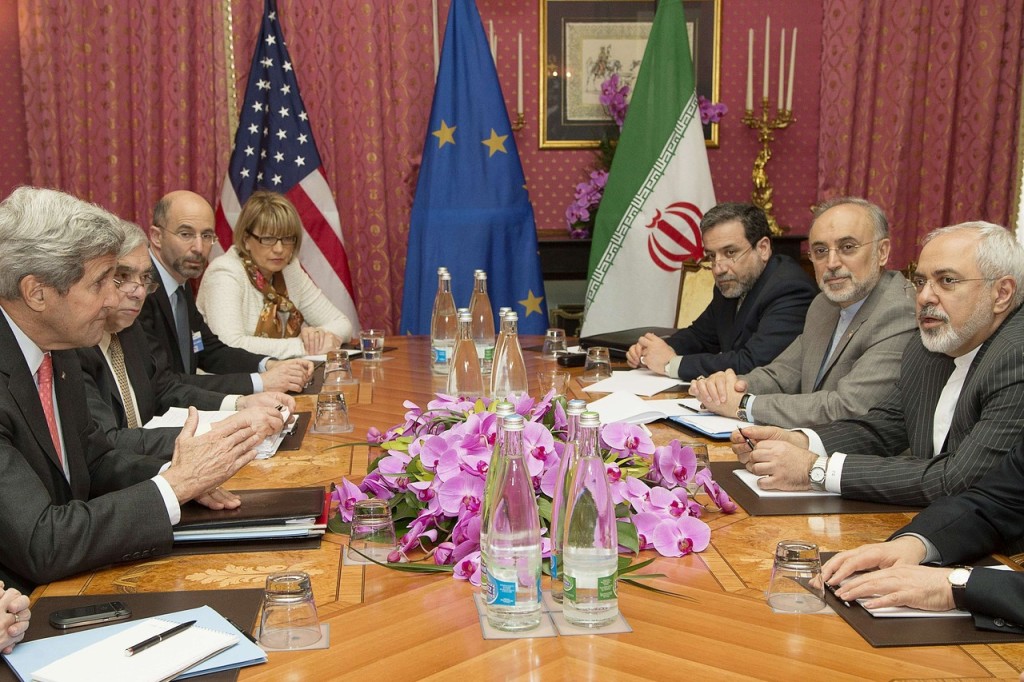
Today’s announcement of a deal between Iran and the ‘P5+1’ countries, with a final June 30 deadline looming, is being met with cautious optimism today as the European Union’s chief foreign policy official Federica Mogherini, Iranian foreign minister Javad Zarif and US secretary of state John Kerry all make statements about the deal from Lausanne, Switzerland.
The key to the deal? Iran will be permitted to enrich fuel for its civil nuclear energy program, including the use of centrifuges, though not to the level necessary to build a nuclear weapons program. Furthermore, Iran has agreed with the International Atomic Energy Agency (IAEA) to monitor and diligence all current and past nuclear operations to uncover the extent of any Iranian determination to build a nuclear weapons program.
It will certainly rank, if it’s finalized, as one of the top foreign policy accomplishments of US president Barack Obama.
According to European officials, roughly 5,000 centrifuges will remain spinning enriched uranium at the main nuclear site at Natanz, about half the number currently running. The giant underground enrichment site at Fordo – which Israeli and some American officials fear is impervious to bombing – will be partly converted to advanced nuclear research and the production of medical isotopes. Foreign scientist will be present. There will be no fissile material present that could be used to make a bomb.
The deal is sure to bring howls from its opponents, including many skeptics in the United States, including Congressional Republicans and many Democrats as well, and Israeli prime minister Benjamin Netanyahu, who has said that any deal must preclude Iran from any enrichment. But as negotiators from the P5 + 1 — the five members of the United Nations Security Council and Germany — and Iran work through the details of the deal in the next three months, it seems more likely than not that the deal will be finalized, opening the way to lifting international sanctions against Iran imposed by the United Nations (if not exactly all the sanctions currently in place by the United States).
In some ways, Malcolm Fraser was the ‘George W. Bush’ of Australian politics.
For many Australians, especially on the left, his road to the premiership was tainted by the original sin of having taken power in a bloodless coup, when he convinced Australia’s governor-general to appoint him prime minister (and ousting Labor’s Gough Whitlam) in the middle of a political meltdown that, to this day, serves as a touchstone for constitutional crisis in Australia. As defence minister from 1969 to 1971, Fraser was among the first officials who bore responsibility for bringing Australia into the US-led Vietnam quagmire.
Fraser, who quickly won his own mandate in 1975, and again in 1977 and in 1980, died today at age 84. He served as prime minister from the center-right Liberal Party and, though he came to office with a reputation for very conservative rhetoric, governed more as the patrician Ted Heath than free-marketeer Margaret Thatcher. Though he’d become Australia’s third-longest serving prime minister — he left public office after his 1983 defeat by popular Labor leader Bob Hawke — he became in his later years a pariah in Liberal circles, beginning with what many young Liberal firebrands believed to be a milquetoast and unambitious record for an eight-year premiership.
In his later years, however, Fraser became something else altogether. When his former treasurer, John Howard, returned the Liberals to power in 1996, he quickly found in Fraser more of a critic than an ally. The most searing rupture came over Iraq, ironically, with Fraser denouncing Howard’s willingness to send Australian troops to fight an American war in the Middle East.
By the end, Fraser had made peace with his ally Whitlam, who preceded Fraser, his old rival, in death by just five months. Fraser had so alienated Howard and the Liberal hierarchy that Fraser became he of an inconvenient fact, too contrarian to embrace with a record too long to forget.
Like Bush, however, whose efforts to reverse the HIV/AIDS plague across sub-Saharan Africa loom larger to his legacy with every passing year, Fraser too had a humanitarian side. He was a friend to the opponents of South Africa’s apartheid regime before it became a politically safe position, and he even opposed white minority rule in what was then Rhodesia, hastening the rise of majority rule in the new Zimbabwe (at a time when no one could have known just how horrendously Robert Mugabe would betray the promise of its independence). He pushed forward legislation to boost indigenous Australians, and he boosted immigration by welcoming Vietnamese refugees to Australia.
He died unloved — neither by the Liberals who viewed the Fraser years as a wasted opportunity nor by the Labor stalwarts who thought Fraser nothing more than a usurper. But his final message is one that US policymakers should hear more often, as outlined in his 2014 book, Dangerous Allies, a critique of the bilateral relationship between the United States and Australia.
Fraser’s most enduring legacy, beyond the disastrous constitutional plotting that ended Whitlam’s premiership, will be the voice he found later in life, two decades after the end of his own premiership in questioning Australia’s passive willingness to join the United States in short-sighted foreign policy. Continue reading What Malcolm Fraser can teach the United States→
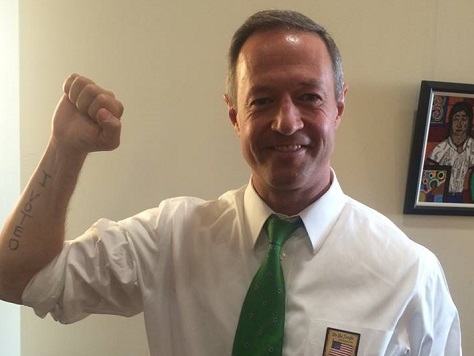
The most damning thing that you can say about former Maryland governor Martin O’Malley isn’t that he was underwhelming, either as governor or as Baltimore mayor.
It’s that we were merely whelmed by him.
Even today, as O’Malley prepares to become the most serious challenger to former US secretary of state Hillary Rodham Clinton for the Democratic Party’s presidential nomination, there’s not a whole lot you can pin on O’Malley, for good or for ill. He lacks the psychopolitical baggage of a Clinton candidacy, but he also doesn’t own any single issue or represent any broader movement. He’s a set of technocratic biceps with a penchant for data-driven policy and Celtic rock.
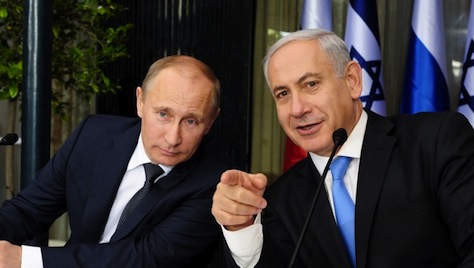
It’s still irresponsible chatter to suggest that Russian president Vladimir Putin’s nine-day absence from public view is anything more serious than the flu.
But as Julia Ioffe wrote Saturday in The Washington Post, even if Putin’s absence is, as very likely, caused by something as mundane as the influenza epidemic currently sweeping through Moscow, it is becoming a more serious event because of the highly personalized system of Russian government where everything has become so micromanaged by Putin and his close allies. The longer Putin’s absence, the greater the chances of an internal coup or putsch, perhaps by the internal security forces, the siloviki, upon whose support Putin rose to power in the 2000s:
You can see why some in Russia are panicking right now—or veiling their discomfort in humor. It certainly doesn’t help that Putin’s disappearance comes at a particularly nervous time for the country. It is at war in Ukraine, its economy is shuddering under sanctions and historically low oil prices, and the opposition leader, Boris Nemtsov, was recently gunned down steps from the Kremlin. There is a sense in Moscow that the wheels are coming off. To Moscow’s chattering class, Putin’s disappearance confirms that impression.
Meanwhile, on Tuesday, in national elections, Israeli prime minister Benjamin Netanyahu’s center-right Likud (הַלִּכּוּד) is set to win fewer seats in Israel’s parliament, the Knesset (הכנסת) than the center-left Zionist Union (המחנה הציוני) of Labor Party leader Isaac Herzog and former justice minister Tzipi Livni. Though it’s too soon to write off a third consecutive mandate for Netanyahu, the March 17 vote is the toughest electoral fight for Netanyahu since he lost his first bid for reelection in 2001.
Even if Israeli president Reuven Rivlin, a former Likud speaker in the Knesset, convinces Likud and the Zionist Union to form a national unity coalition, polls show that Herzog, and not Netanyahu, would become prime minister. That would place deadening pressure on Netanyahu’s leadership of Likud, where capable replacements, such as former interior minister Gideon Sa’ar, are waiting in the wings.
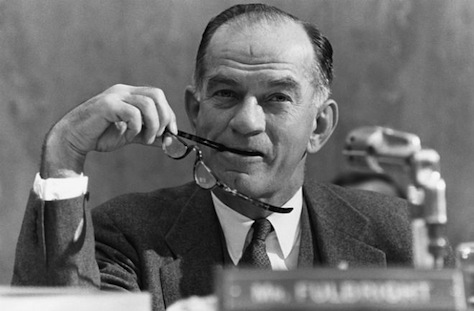
One of the great contrasts lurking underneath the latest outrage of the day in American politics is that Arkansas, the state that produced as its senator throughout the late Jim Crow era was a progressive Democratic voice and a crucial dissenting clarion on Vietnam. Fulbright, whose name is synonymous with thoughtful foreign policy in the 1960s and the 1970s, a multilateralist who helped midwife the United Nations and who stood up to the tyranny of Joseph McCarthy’s deranged anti-Communist witch hunts. He also thought the segregation of African Americans was perfectly fine, he joined the filibuster against the Civil Rights Act of 1964, and he opposed the Voting Rights Act of 1965. He served as the head of the Senate Foreign Relations Committee from 1959 to 1974. He was rumored to be John Kennedy’s top choice to be secretary of state, ultimately disqualified by the his shameful support for segregation.
On Monday, Tom Cotton (pictured above), the heir to the other Arkansas seat in the United States Senate, and who won the seat as the darling of the ‘tea party’ movement on the American right, drew verbal missiles from much of the American left (and quite a few moderate Republicans) for organizing a purposefully inflammatory letter to Iran, just as US president Barack Obama and his administration enter a crucial period in negotiations over international sanctions against Iran, a country of over 77 million people, and its desire to build a nuclear energy program.
The chasm between Fulbright and Cotton is amazing. It’s a lesson in the dynamism of American politics or, really, any political system. The same jurisdiction that just 60 years ago produced a Fulbright can today produce a Cotton. The same jurisdiction than seven years ago enthusiastically supported hard-line conservative ‘principalist’ Mahmoud Ahmadinejad, with his venal anti-Semitic rhetoric, can today embrace the liberal reforms of Hassan Rowhani.
It’s also a lesson that no single political leader or official is right all of the time. Just as Fubright’s record on civil rights appears to us today as inhumane and unjust, Cotton could one day emerge as a thought leader on any number of issues. (Though probably not on Iran, if his Monday letter is any indication).
Yes, Tom Cotton’s letter is basic
No one will remember this stunt a year from now or a decade from now. It probably won’t even have much of an impact by the time March 24 arrives, the latest artificial deadline established by the ‘P5+1’ group of countries reaching for a workable deal in respect of Iran’s nuclear energy program.
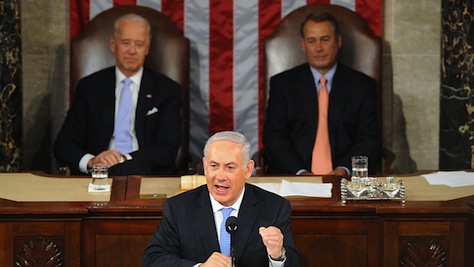
For a week, US House speaker John Boehner’s decision to invite Israeli prime minister Benjamin Netanyahu to address a joint session of the US Congress has stirred controversy in the capitals of both countries, but especially in Washington, where commentators of all political stripes are attacking the veteran Israeli leader for the breathtaking breach of protocol in bypassing the administration of US president Barack Obama and dealing exclusively with Obama’s political opponents in the legislative branch. The Atlantic‘s Jeffrey Goldberg, perhaps the leading US commentator on Israeli affairs and the bilateral relationship, slammed the move in a piece on Tuesday headlined, ‘The Netanyahu disaster.’
Yes, Netanyahu wants to stop Iran from becoming a nuclear power, and he’s made it clear that he will stop at nothing to thwart Tehran from enriching even the tiniest bit of uranium in its quest to develop its nuclear energy industry — to say nothing of a nuclear-armed Iran.
Yes, Netanyahu is a political foe of the Obama administration and, time after time, he’s gone out of his way to indicate his disapproval of its approach to Iran and other issues central to Israeli regional security. Netanyahu has increasingly developed common cause with the US right, and he has a fervent supporter in Sheldon Adelson, one of the wealthiest Republican donors in the United States (he almost single-handedly bankrolled former speaker Newt Gingrich’s 2012 presidential bid) and a top Netanyahu financier in his own right.
But neither of those are the real reason that Netanyahu is so eager to speak before the US Congress, now entirely controlled by the Republican Party. Nor will Netanyahu be dissuaded by arguments that it’s a fantastic breach of protocol that will make an already tense relationship with the Obama administration worse. After all, Netanyahu practically endorsed Mitt Romney, Obama’s Republican challenger for the presidency in 2012, and he easily won his own battle for a new term as Israeli prime minister two months after the American presidential election. The potential of alienating a sitting US president certainly didn’t harm Netanyahu’s own domestic political prospects two years ago. The fact that Netanyahu is one of the few US allies who so often publicly contradicts the US president might even boost his standing among Israeli voters.
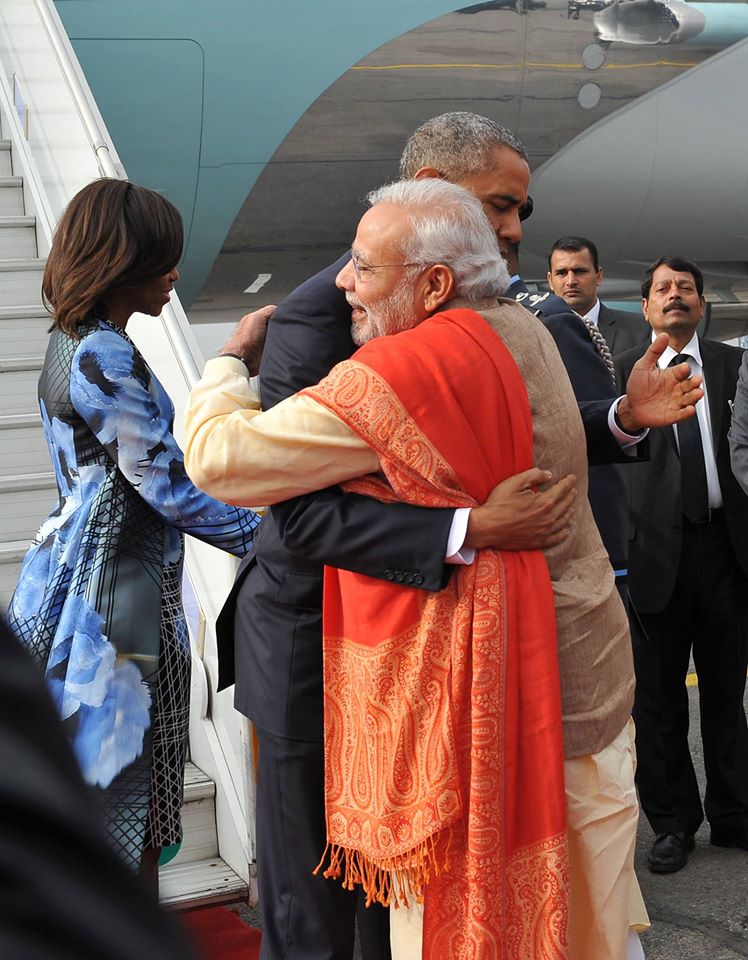
The most incredible thing about US president Barack Obama’s most recent three-day trip to India, which began today, is that Indian prime minister Narendra Modi can pull off such a sincere welcome less than six weeks after citing Russia as India’s top defense partner, even as he and Obama would later announce a new US-India nuclear energy deal.
Has any world leader had such a strong first nine months in office from a geopolitical strategic perspective?
Keep in mind that Modi, barred from the United States for nearly a decade due to his alleged role in the anti-Muslim riots in his home state of Gujarat, was not always particularly keen on strengthening relationships with the United States. Instead, on the basis of his work promoting Gujarat, it was always more likely that he would look to China, Japan, Russia and the United Arab Emirates, where he wooed investment to his own state. With his emphasis on turfing out the corrupt and ineffective leadership of the Gandhi family, and with relatively little commentary on India’s foreign policy, no one expected Modi to build so many bridges in such little time.
Within just nine months, Modi has been the guest of honor at a state dinner at the White House, and he packed Madison Square Garden, filled with tens of thousands of North Americans of Indian descent thrilled to hear from India’s most powerful leader in three decades. By all accounts, Modi and Obama have developed a strong working relationship, unique for an American president who isn’t particularly known for his chemistry with world leaders.
Today, however, Modi has the grin of a prime minister, who, despite a decade as a pariah throughout much of the West, now revels in being suited by everyone — not just the United States and Russia, but China, Brazil, Japan, Europeans, Africans. In foreign policy, Modi is running a positive-sum game. What other countries in the world could manage to nurture such close relationships, strategic and otherwise, with Russia and the United States simultaneously? (Serbia, maybe? The United Arab Emirates? The list isn’t incredibly long.)
Modi, whose social media use has been nimble, was quick to post a photo of his warm welcome for Obama early Sunday morning. But one look at his Facebook and Twitter feeds, which often border on the campy side, show that he doesn’t just delight in Obama — in 2015 alone, he’s featured shots with German finance minister Wolfgang Schäuble, Israeli agriculture minister Yair Shamir, Astrakhan provincial governor Alexander Zhilkin, Iranian presidential adviser Akbar Torkan, Canadian immigration minister Chris Alexander, Macedonian prime minister Nikola Gruevski, among many (many) others.
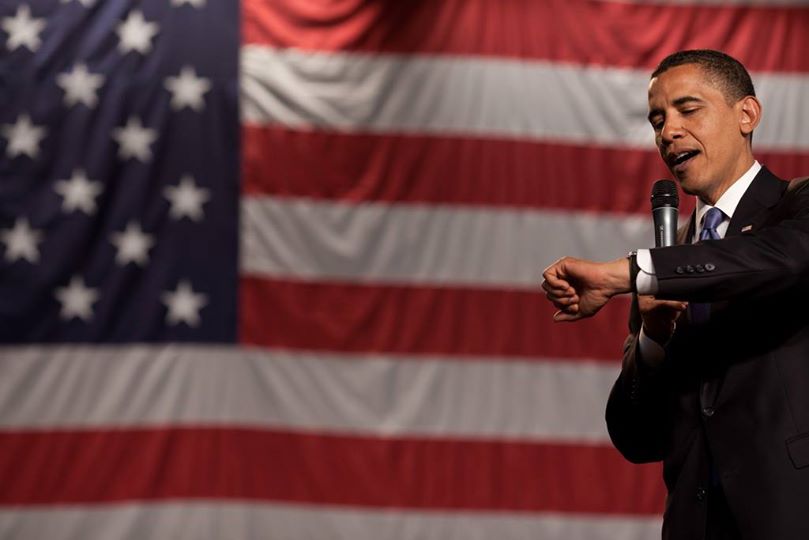
What’s becoming clear is that while Modi has taken only a gradual approach to reforming India’s government, slowly introducing changes to make the bureaucracy more efficient, the theme of Indian pride is constant in the Modi approach to both domestic and foreign policy. Continue reading Photo of the day: Obama meets Modi→
In one of the most significant foreign policy steps of his administration, US president Barack Obama announced widespread changes in the US-Cuba relationship on Wednesday, including the reestablishment of the first US embassy in Cuba in over a half-century and relaxed rules for US commerce, travel and engagement with the island nation of 11.25 million.
It’s a historic play, and it yanks one of the biggest straw-men arguments out from under Cuba’s aging Castro regime. But the announcement brings with it more questions than answers for both the United States and Cuba, as the two countries begin negotiating a new chapter in a troubled relationship, even long before the 1959 Cuban Revolution, the failed 1961 Bay of Pigs / Playa Girón invasion and the 1962 missile crisis. Cuban disenchantment with the United States stretches back to at least the 1903 Platt Amendment that established unequal relations through much of the first half of the 20th century, culminating in the brutal regime of US ally Fulgencio Batista, overthrown in Castro’s 1959 revolution. Obama shrewedly signalled in his statement Wednesday that he understands the broader arc of Cuban-American relations by quoting José Martí, a founding father of Cuban independence who was killed in 1895 by Spanish forces.
As the two countries, which represent two very different brands of political thought within the Western hemisphere, begin to set aside their differences, here are six questions that are as unclear today as they were last week. Continue reading Six key questions about the landmark Cuba deal→
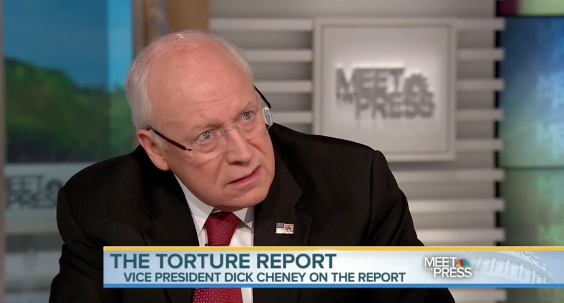
The most audacious part of former US vice president Dick Cheney’s interview on Meet the Press on Sunday was not that he would ‘do it again in a minute.’
No one doubts that Cheney (pictured above) has no doubts about the aggressive ‘enhanced interrogation’ techniques that may have amounted to torture. To me, two other moments stood out. One was when Cheney invoked the memory of the September 2001 terrorist attacks when NBC’s Chuck Todd asked him for his explicit definition of terrorism:
“Torture is what the Al Qaeda terrorists did to 3,000 Americans on 9/11,” Cheney said on NBC. “There is no comparison between that and what we did with respect to enhanced interrogation.”
It was a masterful political argument, perhaps, insofar as Cheney shifted the question from the technical definition of torture to making an emotion-based argument rooted in the instinctive fear surrounding the horrific attacks 13 years ago on New York and Washington, DC. Cheney ultimately defended the actions because they were approved by attorneys in the US Department of Justice at the time, but even former Justice attorney John Yoo, who authored the Bush administration’s ‘torture memos’ that authorized the CIA techniques, worries that some of the tactics revealed amount to torture.
Equally audacious was Cheney’s callous disregard for the fact that many detainees were ultimately deemed innocent. Cheney even dismissed the case of one detainee, Gul Rahman, who was left chained to a prison wall in Afghanistan to freeze to death:
“I have no problem as long as we achieve our objective and our objective is to get the guys who did 9/11 and it is to avoid another attack against the United States,” he said.
Rahman’s story, among other revelations of ‘rectal rehydration,’ ‘rectal feeding,’ and more widespread use of waterboarding than previously reported, comes from the executive summary of a report produced by the US Senate Intelligence Committee’s report on the abuses of the US Central Intelligence Agency in its conduct in the ‘war on terror.’
Both instances demonstrate just how willing Cheney and other officials in the Bush administration were to dispense with concepts like the rule of law and due process in their zealous efforts to prevent another terrorist attack on US soil. It matters that Cheney doesn’t seem to want to engage seriously about the definition of torture, and it matters that Cheney is non-plussed about the collateral damage of torturing possible innocents. Continue reading Cheney, Obama and the US security policy debate→
Gul Rahman (pictured above), an Afghan citizen arrested by US officials in Pakistan in October 2002, froze to his death on the floor of a prison in US captivity just a month later, stripped half-naked and chained to a wall in a secret ‘black site’ operated by the US Central Intelligence Agency in Kabul.
That’s one of several revelations from the US Senate Select Committee on Intelligence report respecting the CIA’s use of torture techniques in the wake of the September 2001 terrorist attacks and throughout two wars in Afghanistan and Iraq throughout the duration of the presidency of George W. Bush.
The techniques used by CIA interrogators, as outlined in the report, are more gruesome than previously reported, though I can’t imagine that it surprises anyone. It’s not completely unrealistic, for example, that interrogators could have waterboarded Khalid Sheikh Mohammed 183 times or that officials ‘rectally force-fed’ a suspect or conducted rectal searches that amounted to sexual assault. Vox has a look at the 16 most outrageous CIA abuses, and the Daily Beast has a similar look at the excesses described in the report, and there’s not much to add to it. The report speaks for itself — there’s not a particularly partisan way to spin ‘rectal rehydration.’
Like Bagram and Abu Ghraib and My Lai, the Kabul black site, known as the ‘Salt Pit,’ will become another byword for US hypocrisy, a new example of how American brutality abroad triumphed over the legal, moral and democratic ideals upon which the United States claims to hold sacred. In fact, the abuses that took place at the ‘Salt Pit’ make the prisoner abuses within the Iraqi prison of Abu Ghraib seem like a trip to summer camp.
Though the report redacts the role of other countries, responsibility for the shameful actions aren’t solely for the United States alone to bear, despite international calls, including from UN special rapporteur on counter terrorism and human rights, Ben Emmerson, for the United States to prosecute the perpetrators of the worst CIA violations. But countries like Romania, Poland, Lithuania, Thailand, Egypt and many, many others (their roles not always clear from the redacted report) were happy to host CIA ‘black sites,’ sometimes at a price, where most of the alleged torture took place. It’s a reminder that, of course, the world’s a messy place and our allies, many of which are longstanding or emerging democracies themselves, are happy to be silent partners in the darker aspects of what’s been an often stabilizing US global presence.
The report’s release wasn’t even certain, given efforts by the CIA and the administration of Bush’s successor, Barack Obama, to prevent or redact much of the report. Over the weekend, US secretary of state John Kerry reportedly tried to delay the report’s release in a phone conversation with the chair of the intelligence committee, Democratic senator Dianne Feinstein of California. The CIA itself has even admitted that CIA personnel spied on Senate staffers throughout the five-year process of investigating and writing today’s 6,000-page report, for which only a redacted 480-page executive summary was released. The efforts have brought together an odd-bedfellows coalition of officials, including Feinstein, who otherwise holds hawkish views with respect to the Obama administration’s anti-terrorism efforts abroad, and Republican senators, including John McCain and Lindsey Graham, both of whom have taken hard lines in favor of American interventionism in Iraq, Libya, Syria and elsewhere.
The refrain that we hear over and over again is that the report’s release will help ensure that the CIA abuses of the 2000s (call them ‘enhanced interrogation’ or torture) won’t happen again.