First Past the Post: August 7

South Korea’s leading presidential candidate Park Geun-hye takes a more flexible stance on the history of her father’s coup (which led to his rule of South Korea from 1961 to 1979).

Mario vs. Mario vs. Mariano.

Brussels is impressed with neither Dutch prime minister Mark Rutte nor the Dutch electorate (English summary here).

Spencer Ackerman at Foreign Policy takes a look at Pussy Riot and their turn as the face of the Russian opposition.

NPR continues some superb coverage of the Mali separatist crisis.

Kwesi Bekoe Amissah-Arthur, former governor of the Bank of Ghana, has been sworn in as the new vice president of Ghana.

Former Chilean president Michelle Bachelet argues that economic empowerment for women is central to future Latin American prosperity.

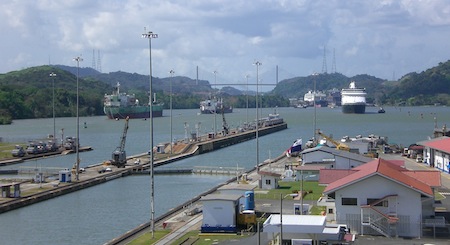
The internal politics of the widening of the Panamá Canal

Joshua Keating at Foreign Policy‘s blog Passport today points to the global ramifications of the widening of the Panamá Canal — a third lane is set to open in 2014, and it will allow much wider ships to pass through the Canal than the “Panamax” vessels currently designed to pass the Canal.

The new lane, which will allow for more efficient ships — economically and environmentally — is expected to affect global trade and energy flows in multiple ways, absolutely.

It’s not quite as rosy as all that — the third lane’s opening date is now all but certain to be later — in 2015 (well after the date of the next Panamanian general election in May 2014).

Although the Canal’s expansion is indisputably an economic boon to the small Central American country, it may not be such a boon for the fortunes of Panamá’s current president, supermarket magnate Ricardo Martinelli, who swept into office in a landslide 2009 promising to restore Panamá’s record GDP growth rates following the worldwide economic slump in 2008.

Since the U.S. handed over sovereignty and control of the Canal to Panamá in 1999 (the result of a controversial agreement — at least in the U.S. — signed by Jimmy Carter in 1977), Panamá’s already solid postwar GDP growth skyrocketed.  Starting in 2000, Panamá saw a rise in GDP growth that peaked at 12% growth in 2007 — it bottomed out at 3% in 2009 before bouncing back up to nearly 11% growth last year.

Much of that growth is of course linked to the Canal and construction and service industries tied to it.

Each successive administration has taken advantage of Panamá’s increased wealth: Mireya Moscoso, who came to power in 1999 and presided over the transfer of the Canal to Panamá, used Panamá’s economic prospects to strengthen social programs, especially for children.  Her successor, Martín Torrijos, initiated the Canal expansion project in 2006, and tried to lessen political corruption in Panamá.

Martinelli has presided over the return to breakneck GDP growth, and he’s also enacted a fair share of legislative reforms, which have merited approving nods from global investors.  As you might expect from a center-right businessman-president, Martinelli has enacted tax reforms to simplify tax collection, he has invested $20 billion into Panama’s infrastructure and he has championed the U.S.-Panamá free trade agreement, which was approved by the U.S. Congress and enacted into law by U.S. president Barack Obama in late 2011.  But Martinelli has also enacted an increase in the minimum wage and instituted pensions for the elderly.

Given his success so far, given the return of the Panamanian economy to double-digit growth rates, and given the lead up to the opening of the Canal’s third lane, you’d think that Martinelli would stand to gain most of the credit for that.  Instead, however, it’s much more unclear — Martinelli’s party is far from certain to make gains in 2014.

Continue reading The internal politics of the widening of the Panamá Canal

Dim hope for free and fair elections under dos Santos in oil-boom Angola


Angola is booming these days — and its capital Luanda, in particular (pictured, above), is booming, flush from the diamonds-and-oil wealth of a country that’s entering just its second decade of peace following independence in 1975 and a civil war that divided the lusophone southern African country of 18.5 million for the ensuing three decades.

For most Angolans, however, around 40% of whom still live in poverty, the benefits of one of the world’s best performing economies of the past decade have still not trickled down.  And that’s what should be the top issue when Angolans head to the polls on August 31 to elect members to the Assembleia Nacional.

Nonetheless, there’s no real indication that the elections will be any more than a show elections for the current regime:

The Angolan government is responsible for numerous incidents of political violence, intimidation of protesters, and crackdowns on peaceful demonstrations that might have a negative impact on the August 31, 2012 parliamentary elections, Human Rights said in a report released today. The government should end its crackdown on peaceful protests and the media with the start of the election campaign on August 1.

The 13-page report, “Angola’s Upcoming Elections: Attacks on the Media, Expression, and Assembly,” describes increasing incidents of political violence and intimidation. Human Rights Watch called on the government of Angola to promptly address these concerns, and urged the Southern African Development Community and the capital’s foreign diplomats to raise these issues with the government.

“The human rights environment in Angola is not conducive for free, fair, and peaceful elections,” said Leslie Lefkow, deputy Africa director at Human Rights Watch. “The Angolan government needs to stop trying to stifle peaceful protests, gag the independent press, or use the state media for partisan purposes if these elections are to be meaningful.”

 The president of Angola, at least nominally, since 1979, has been José Eduardo dos Santos, who is Africa’s second-longest serving leader.  Functionally, from 1979 until the end of Angola’s civil war in 2002, he was merely the leader of one side in a grueling civil war in a country used by both the United States and the Soviet Union as a deadly hot proxy for the Cold War through much of independent Angola’s early history — the civil war reached a less lethal phase only in 1991, with the end of the Cold War and the cessation of arms shipments to the combatants from the United States and from the Soviet Union.

Luanda, now one of the boomtowns of sub-Saharan Africa, is a city transformed.  As Felix Salmon noted last year, only 156 Angolan visas were issues to southbound Portuguese, but by 2010, that number was 23,787.  That may tell you something about the state of Portugal’s economy, but it also says something about Angola’s.  Despite significant slowdown (2010’s GDP growth rate was only 3.4%), Angola managed GDP growth of over 20% for each of 2005, 2006 and 2007, and hit nearly 14% in 2008 as well.  Angola’s oil production has increased so rapidly that it is thought to be China’s top oil supplier.

Angola’s Assembleia Nacional has 220 seats. In the last election, dos Santos’s Movimento Popular de Libertação de Angola – Partido do Trabalho (MPLA or the People’s Movement for the Liberation of Angola – Labour Party; yes, quite a mouthful) won fully 191 of those seats.  Since then, dos Santos has survived an assassination attempt and increasingly vocal protests against his rule.  Despite this unrest, and despite the passage of an anti-fraud electoral law in late 2011, no one believes dos Santos and the MPLA will wake up out of power after the August 31 election.

The country’s politics are still divided on lines that go back to its civil war — the main opposition is the União Nacional para a Independência Total de Angola (UNITA or the National Union for the Total Independence of Angola).  The one-time Soviet-backed MLPA is still dominated by the more northern Ambundu ethnic group (which represents around 25% of Angolans), while the US-backed UNITA is still dominated by the more southern Ovimbundu (37% of Angolans).  Even today, though, oil-rich Cabinda province, a sliver of Angola separated from the rest of the country by the Democratic Republic of the Congo, remains separatist-minded, despite the end of the civil war 10 years ago — it is dominated by Angola’s third-largest ethnic group, the Bakongo (about 13% of all Angolans — this group, too, had its own political entity in the Angolan civil war).

UNITA launched its campaign Wednesday, promising a more equal distribution of the gains from Angola’s economic boom, especially in the form of renewed investment in health, education, housing and employment.

While, it’s a platform that sounds fairly pedestrian and reasonable, but it’s still risible to think that UNITA would even have the opportunity to carry through with that agenda.

Angola may have mercifully put its civil war behind it, and a brighter economic future may well beckon, but it looks like the evolution of true democratic institutions will wait for a day beyond 2012.

Photo credit to Veziana Armandi via Flickr.

One year into the administration of Perú’s Ollanta Humala: a mixed bag

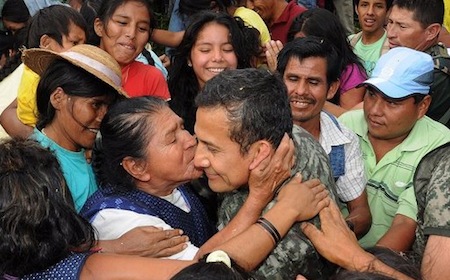
July 28 marked the one-year anniversary of Ollanta Humala (pictured above) as Perú’s new president — and it was marked by the appointment of Humala’s third prime minister since taking office.

The fear that many Peruvians had about Humala’s administration turned out to be a non-issue — whereas many Peruvians once feared that Humala would disrupt a decade-plus of staggering economic growth by turning Perú toward charisma nationalism.  Although the Peruvian economy keeps chugging along, however, social unrest has turned out to be a thornier problem for Humala.

The 2011 presidential campaign ended in a runoff between the two most polarizing candidates among five plausible presidents: the leftist Humala, the 2006 runner-up and a former Army officer, and Keiko Fujimori, the daughter of Alberto Fujimori, Perú’s president in the 1990s.  Mario Vargas Llosa, the Peruvian Nobel laureate, famously compared the choice as being akin to terminal cancer and AIDS — despite reservations about Humala, Peruvians also worried that Fujimori would pardon her father, currently in prison for committing embezzlement and for committing human rights abuses during his time in office, unleashing demons from an era that many Peruvians would rather not revisit.

When Humala won by a 3% margin, however, he moved quickly to assure Peruvians that he wouldn’t disrupt the booming economy, promptly appointing as his finance minister Luis Miguel Castilla, a deputy finance minister from the previous administration of Alan García.  Far from nationalizing Peruvian industry, Humala has essentially left economic policy unchanged from his predecessors of the past decade.

Félix Jiménez, Humala’s top campaign economic adviser, who briefly served as a presidential economic adviser, left Humala’s government in January 2012, and has since criticized Humala for being too beholden to orthodox economic policy and Peruvian economic elites.  Another former adviser, Oscar Dancourt, a former acting Central Bank president, also left the administration.

Those resignations were also, in part, a response to a December reshuffle that brought Oscar Valdés — an army officer and former military colleague of Humala’s — to power as prime minister.  His appointment caused several prominent leaders, including former president Alejandro Toledo, to decry the growing militarization of the Humala administration.

Valdés’s resignation last week, and his replacement by Peruvian justice and human rights minister Juan Jiménez, seems calibrated to adjust to many of those criticisms, which are tied to some of Humala’s biggest problems.  Jiménez had increasingly become a key troubleshooter for Humala, especially in contrast to the increasingly unpopular Valdés.

Chief among those problems, however, are the protests that have emerged in the mostly-indigenous Cajamarca and surrounding region in the northern highlands (in South America, as far as culture goes, it is said that altitude often matters more than nationality, but that holds true for politics and economic policy as well). Continue reading One year into the administration of Perú’s Ollanta Humala: a mixed bag

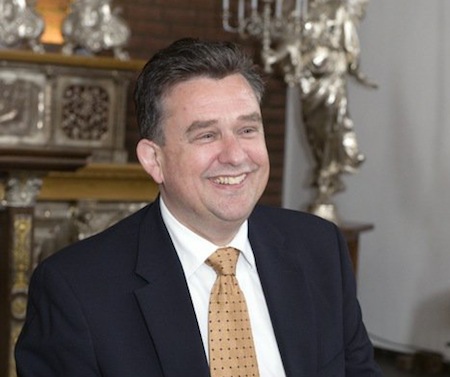
Who is Emile Roemer?

Europeans, including the Dutch, may well be unplugged and disengaged this month.

But ready or not, September 12 is nearly a month away, which means yet another European election — this time in the Netherlands, one of the six founding members of the European Economic Community in 1957, that body would develop into today’s European Union.  Dutch voters will elect 150 members to the Tweede Kamer, the lower house of the parliament of the Netherlands.

And today, after years of elections on social issues, the Dutch parliamentary election is poised to be fought, won and lost on one issue: budget austerity and bringing Dutch fiscal policy in line with the European ideal.

Given what we’ve seen this year all across Europe — the success of Alexis Tsipras’s anti-austerity SYRIZA coalition in Greece, the emergence of the anti-austerity Victor Ponta in Romania and the surge of Jean-Luc Mélenchon’s Front de gauche in the first round of the French presidential election — it’s no surprise that the breakaway pace-setter in the Dutch election has been not any anti-Muslim group, but the Dutch Socialistische Partij (SP, the Socialist Party), led by Emile Roemer.

As I noted last week, the prior 2010 election saw unprecedented levels of fragmentation among the Dutch electorate, and it led to six months of talks before a governing coalition emerged — Mark Rutte and his free-market, liberal Volkspartij voor Vrijheid en Democratie (VVD, the People’s Party for Freedom and Democracy) ultimately formed a weak minority government in coalition with the once-strong, now-withering center-right Christen-Democratisch Appèl (CDA, Christian Democratic Appeal), with outside support on a vote-by-vote basis from Geert Wilders’s right-wing populist and anti-Muslim Partij voor de Vrijheid (PVV, the Party for Freedom).  Rutte’s government fell in April when Wilders denied his support for a budget that would have reduced the Dutch budget deficit to just 3% of GDP next year.

In the current campaign, Wilders has attempted to deploy anti-Europe sentiment with as much gusto as he previously deployed anti-Muslim sentiment in 2010 (including wild rhetoric that would pull the Netherlands out of the eurozone).  But according to the latest IPSOS poll, both Wilders’s PVV and the CDA are sinking.  Even though Rutte’s VVD is holding steady as the top vote-winner, Roemer’s Socialists have vaunted into second-place — and are gaining.  Currently, the Socialists are projected to take 29 seats to 35 seats for Rutte’s VVD.  Other polls, moreover, give the Socialists a lead or put them in a tie with the VVD.

What does that mean? Even if the Socialists cannot form a coalition with, say, the longtime center-left Partij van de Arbeid (PvdA, Labour Party), which is currently polling in third place (projected to win 23 seats), the Socialists will nonetheless be a force to be reckoned with as never before.

And that means Emile Roemer will become a key power broker in Dutch — and European — politics.

So who is Roemer — and what can we expect from him?

Roemer remains a bit of a blank slate within the international media — for now, at least.

Continue reading Who is Emile Roemer?

Egypt’s new government sworn in today, featuring continuity from SCAF transitional government

The first Egyptian cabinet of newly elected Egyptian president Mohammed Morsi and his new prime minister Hisham Qandil was sworn in today.

That Field Marshal Hussein Tantawi (pictured above, with US defense secretary Leon Panetta) will continue to serve as defense minister in the cabinet of tells you everything you need to know about Egypt’s new cabinet.

Qandil admitted as much in a press conference following the ceremony — the cabinet will feature continuity over rupture.

Tantawi, Egypt’s minister of defense since 1991 and the head of the Supreme Council of the Armed Forces that took over Egypt’s government after the resignation of former president Hosni Mubarak, is the personification of the Egyptian military.  Although it was widely expected that he would continue in some role in Morsi’s government, at least initially, it makes clear that Egypt’s military will still wield a considerable amount of power, notwithstanding the transition to a democratically-elected president.

Otherwise, many of the “new” cabinet ministers are holdovers from the prior transitional government of SCAF prime minister Kamal al-Ganzouri, including the finance minister, Momtaz el-Said, and the foreign minister, Mohamed Kamel Amr, both career diplomats.

The remaining positions went mostly to longtime Muslim Brotherhood figures (although not to Khairat al-Shater, the Brotherhood’s first-choice presidential candidate), including:

  • Mostafa Mosaad, a member of the Brotherhood’s direct political vehicle, the Freedom and Justice Party (حزب الحرية والعدالة‎), was appointed higher education minister.
  • Tarek Wafiq, an engineer and head of the FJP’s housing committee, was appointed housing minister.
  • Salah Abdel Maqsoof, an outspoken Muslim Brotherhood journalist, was appointed minister of information (and will, notably, control access to state television and other key media sources).

The SCAF-heavy cabinet is already being criticized as lacking enough fresh faces, lacking women and lacking any political appointees from outside the Muslim Brotherhood.  Qandil’s appointment last week has been subject to much criticism — he’s been perceived as having insufficient political experience, a lacking economic background and very close ties to the Muslim Brotherhood.

One of the most promising appointments is the new justice minister, Ahmed Mekky, a prominent and reform-minded judge who is the former vice president of Egypt’s Court of Appeals, and Mohamed Mahsoub, a member of the centrist Al-Wasat party will be the minister of parliamentary affairs.

Despite an initial decision to appoint hard-line Salafist scholar Mohamed Ibrahim as minister of religious endowments, Morsi and Qandil appear to have backed down amid criticism and instead appointed Osama El-Abd, the vice-chancellor of Al-Azhar University, the oldest university in Egypt. Continue reading Egypt’s new government sworn in today, featuring continuity from SCAF transitional government

‘Politically bankrupt’ Rajoy running out of options in Spain

Speigel International earlier this week described a bit of the hopelessness of prime minister Mariano Rajoy who, only eight months into a government that was supposed to allow Spain to turn the corner, is watching his country sink even further into crisis.

Read it all, but this part, in particular, struck me as particularly insightful:

For too long, the prime minister believed that his mere presence at the head of the government was enough to ensure that Spain would stop “being a problem and become part of the solution.”

Rajoy’s bet was that a win by his center-right Partido Popular (PP, People’s Party) over the center-left Partido Socialista Obrero Español (PSOE, Spanish Socialist Workers’ Party) would be enough to assure investors that Spain could make it through the crisis. Sure enough, Rajoy’s PP won 186 seats to just 110 for the PSOE, even after José Luis Rodríguez Zapatero, prime minister since 2004, made clear he was stepping down as prime minister.

But that hasn’t stopped the crisis — if anything, Spain’s nightmare has accelerated in the past eight months, which makes Spiegel‘s description all the more depressing:

And what has Prime Minister Mariano Rajoy done? He hasn’t given a television address or uttered so much as an explanatory or reassuring word to Europe or his people. Instead Rajoy, 57, has disappeared into his office at the Moncloa Palace on the outskirts of the capital Madrid. Some say that he spends his time there staring helplessly and powerlessly at charts. He meets with business leaders like Siemens CEO Peter Löscher in rooms decorated with modern art, and he has even met with Spanish trade union leaders for the first time, though it was after they had already spoken off the record with German Chancellor Angela Merkel. Others say that Rajoy is irritating his European partners with hectic phone calls.

This behavior doesn’t inspire confidence. It seems more like a declaration of political bankruptcy.

What went so wrong? Continue reading ‘Politically bankrupt’ Rajoy running out of options in Spain

Charest makes it official: Québec goes to the polls September 4

Jean Charest, Québec’s premier since 2003 (pictured above), has dissolved his province’s Assemblée nationale and called a snap election for September 4 — just 33 days away.

His Parti libéral du Québec (Liberal Party, or PLQ) will be seeking its fourth consecutive mandate and Charest will be leading the PLQ for the fifth consecutive time since 1998, when he first left Canadian federal politics for Québecois provincial politics.  He’s been a decade-long fixture of the province’s government, and he starts out the race with even odds at best.

His main opposition is the sovereigntist (and leftist) Parti québécois (PQ), who leader, Pauline Marois, makes Charest look like a star campaigner.

But further to the right is former PQ minister François Legault, whose Coalition Avenir Québec (CAQ), a new center-right party formed only earlier this year, will attempt to pull votes from both the PQ and the PLQ.  Further to the left, Québec solidaire will also attempt to pull seats from the PQ and, to a lesser extent, the PLQ.

So what are the starting positions for the parties? Continue reading Charest makes it official: Québec goes to the polls September 4

Boris Johnson: the real mascot of the 2012 Summer Olympics

Hilarious. This is why Boris Johnson won the mayoral election of London initially in 2008 as a Conservative and was reelected in May 2012, despite a strong Labour wind, defeating former London mayor Ken Livingstone by a 3% margin.

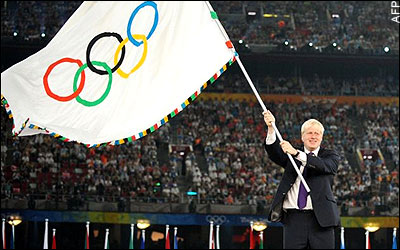
Also, forget the goofy one-eyed blobs, Boris is the true mascot of the 2012 Summer Olympics.  From the minute we saw him waving the Olympic flag at the end of the 2008 Summer Olympics in Beijing, with his jacket opened, signalling London’s much looser approach to the Games (compared to the tightly synchronized Beijing Games), you just knew there would be no other way:

He’s rarely on-message (although he can show discipline when he wants).

He’s a bit of a goofy Etonian toff, floppy hair and all, but he’s probably the UK’s most popular politician today, with the possible exception of Scotland’s first minister, Alex Salmond.

As I’ve noted, he may one day be a British prime minister, as he certainly has more personality than the entire front bench of the current Tory (well, Coalition) government combined.  It’s thought that David Cameron, then just newly enshrined as the new Tory leader, sent Boris off to run for London mayor to get him out of his hair as he plotted the Tories’ own return to Westminster.  But given the current trajectory of Cameron’s government (with many blaming George Osborne’s* austerity policies as the main cause of the UK’s double-dip recession), it is not unthinkable that Boris may well lead the Tories in the next general election cycle or two.

Certainly, the exposure from hosting the 2012 Games will do him no harm (especially given that businessman Mitt Romney transformed his leadership of the 2002 Winter Games in Salt Lake City into a stint as Massachusetts governor and into the Republican Party’s presidential nomination in 2012).

H/T to Andrew Sullivan, who calls Boris the “un-Romney”.

* George Osborne serves as chancellor of the exchequer — essentially, the UK’s finance minister.

Indian blackout a metaphor for India’s political, economic and infrastructure growing pains

With some pluck, The Guardian begins an editorial on India’s world-record blackout — nearly 700 million people without power — with the following joke:

Q. What do you call a power failure in Delhi? A. Manmohan Singh.

Womp, womp.  But the joke — and the blackout as a metaphor for India’s governmental and infrastructure impotence — cuts deep.

While authoritarian China pushes onward with so much of the world’s attention, India — a chaotic democracy of 1.2 billion — and its political leadership seem stalled.

As The Times of India writes, dubbing yesterday “Terrible Tuesday,” in “powerless and clueless” India, most of north India — including 684 million Indians — was submerged into a power-less world for the second day, with accusations levied at Uttar Pradesh, Haryana and Punjab for over-drawing power.  But that does not hide the fact of India’s antiquated grid system nor the fact of a domestic coal supply that can’t keep up with domestic demand.

On the day of the biggest power failure in, well, human history, power minister Sushil Kumar Shinde was promoted to home minister.

As The Times notes:

Moving Sushilkumar Shinde out of the power ministry now is like changing the captain of the Titanic when it’s reeling after hitting a giant iceberg. The country is in the midst of an unprecedented power crisis. For two days in a row, the grid has collapsed. This doesn’t cover Shinde with any glory. Yet he’s promoted as home minister. Even if that’s ignored, what’s pertinent at this point of time is that Shinde is likely to have some clue about the power problem; a new minister – who will be holding additional charge of the portfolio – will possibly have none.

The international view is not much better. The Guardian writes:

Whatever the unadmirable qualities of contemporary British politics, imagine any cabinet minister failing to apologise for presiding over such a first-class foul-up, then being awarded a promotion. Such, sadly, is the typical high-handedness of India’s political classes, who too often lack any sense of obligation to their voters.

It’s a brooding time for India today, with its most recent quarterly growth rate of 5.3% a nine-year low, its eight straight quarterly decline — while the United States or any Western European country would be elated at 5% annual growth, it means a slowdown of alarming proportions for a country that averaged nearly 8% growth in the past decade.

Banyan, The Economist‘s Asia column, points its finger at Coal India — a bloated, state-run disaster that cannot keep pace with demand:

Not enough coal is being dug up by the state monopolist, Coal India. As a result, generating companies, which own power stations, face the prospect of buying expensive imported coal, with ruinous consequences for their finances. Many are in danger of going bust. As this week’s cuts have shown, the national transmission system that shifts power around the country needs modernisation and investment—some $110 billion according to a McKinsey study. And finally the “last mile” local distribution companies, usually state-owned and which deliver power to homes and businesses, are all but bankrupt. Their tariffs are held artificially low by politicians more keen to win votes than balance the books. They have also chronically underinvested.

Tyler Cowen has also been out way ahead in sounding the alarm on India’s economic slowdown, as evidenced in an op-ed in The New York Times just last May, where he pointed to several causes to the slowdown.   Continue reading Indian blackout a metaphor for India’s political, economic and infrastructure growing pains

Il ritorno del Berlusconi — why his re-emergence in Italian politics is completely logical

There will be plenty of time to think about the next Italian general election if, as is likely, current prime minister Mario Monti is permitted to carry on with his technocratic government until April 2013, the last date upon which the next general election must be held.

It’s worth taking in two important stories from last week:

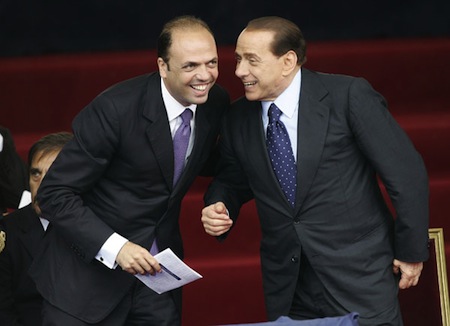
The Economist points us to reports in the Italian press that Silvio Berlusconi (pictured above, right), the éminence grise (well, surprisingly jet black) of Italian politics since about 1994, is likely to lead the center-right in the upcoming election and is taking an increasingly critical position against Monti’s government.

Italy’s federal government, a technocratic government formed under Monti, an economist and former European Commissioner, with a mandate to reform Italy’s sclerotic economy and shrink its bloated public sector — with the support of Berlusconi’s own center-right Il Popolo della Libertà (PdL, the People of Liberty) and the main opposition center-left Partito Democratico (Democratic Party), has managed to keep a skittish bond market at bay, which has been spared, for now, the same fate as Spain in the bond market last week.

Meanwhile, The New York Times last week showcased the fiscal problems of Sicily, which is tottering further on the edge of a debt crisis than Italy itself.  Monti’s government recently sent €400 million to Sicily to forestall a potential default by a region that has long been plagued by low growth, outsized government patronage and abuse of its considerably autonomous power — to say nothing of the Mafia corruption issue.

Today, in fact, Sicily’s regional president, Rafaelle Lombardo resigned following an indictment for corruption — elections follow for October 28 and 29 of this year.

Since November 2011, when Berlusconi stepped down, more or less in disgrace, he has kept a fairly low profile.

But everyone knows as long as he’s around, he would have been the chief behind-the-scenes power of Italy’s center-right.  So when he seemed to designate a successor in November in former justice minister, Angelico Alfano (pictured above, left), now the secretary of Berlusconi’s PdL, it seemed difficult to believe that Il Cavaliere, as Berlusconi is known in the Italian press, was really stepping aside.

Alfano, who is Sicilian, has not managed to recover any ground for the PdL (formerly — and potentially again in the future — known as Forza Italia) — one poll from SpinCon released on July 19 shows the PdL winning just 18% of the vote to 27% for the Democratic Party and 14% for the newly formed Euroskeptic and populist party of comic and blogger Beppe Grillo, the Movimento 5 Stelle (Five Star Movement).**

Italian politics have long been fragmented, but like Greece earlier this year, Italian voters seem to be fragmenting even further under the weight of austerity measures introduced by Monti’s government. Monti himself has said he will not run for election in his own right under any banner.

But above all, Berlusconi’s ace is that he still has more media power than anyone else in Italy.  He also remains the most charismatic leader among a political class of bores — for instance, has anyone outside of Italy even heard of Pier Luigi Bersani, the main center-left opposition leader?

Berlusconi practically invented Italian television in the 1980s by buying TV stations across Italy and harmonizing their content at a time when RAI (Italy’s public television network) was supposed to hold a monopoly on national stations.  He still holds an incalculable political advantage because of that power — it’s what helped him burst onto the political scene in 1994 and what helped him keep power in much of the 2000s, even through the last days of sordid accusations of his cavorting with underage girls and prostitutes at ‘bunga, bunga’ parties.

It’s not clear that Italian voters are willing to turn back to those days (a strong majority of voters say they refuse to back Berlusconi ever again), but if anyone can pull it off, it’s Berlusconi.

Also, for a premier who spent a significant amount of legislative time in the 2000s crafting immunity bills to protect himself from prosecution relating to all sorts of seamy dealings, Berlusconi is likely tempted by the shield from prosecution that yet another stint in office would bring — or at least tempted by the opportunity to parlay a political comeback into a term as Italy’s president in the future.

And at age 75, Berlusconi is a fairly young man by the standards of Italian institutions; Alfano was born in 1970. Italy is a country of old men — to have a forty-something prime minister is unheard of. (Recall that the 93-year-old Giulio Andreotti, a former prime minister in the 1970s and 1980s, now an Italian ‘senator for life’, was instrumental in bringing down the short-lived leftist government of Romano Prodi just six years ago.)

But Alfano’s Sicilian heritage raised an eyebrow in November and it does so especially now, with Sicily’s finances in the headlines and yet another Sicilian president resigned under ties to the omni-present curse of Mafia infiltration.

It’s worth remembering that “Italy” as a national concept really only emerged in the 1860s — and even today, just over 150 years after “unification,” it’s hard to think of Italy as a true country, even if you don’t believe that nationhood in Italy is really a myth-laden fluke.  You have to go back to the mid-1950s to find a Sicilian who has served as Italy’s prime minister — Mario Scelba.  No Sicilians have served as president of Italy in the current republic.  No Sicilians have served as president of Italy in the current republic.  That may not be so surprising, given that Sicily is so far away, not just geographically, but culturally from Rome, to say nothing of Milan or Florence or Turin.  Although Sicilian votes essentially enshrined Italy’s old Christian Democrats in power until the 1992 Tangentopoli (‘Bribesville’) scandal that, in effect, wiped clean Italy’s political slate, Sicilians have rarely held the highest office in Italian politics.

So with Sicily’s finances and its corruption in global headlines, the “Sicily question” is yet another for Berlusconi to sideline Alfano as the 2013 elections approach — for the time being, at least.
Aftermath of Romanian referendum leaves both sides with victory

Romania’s president Traian Băsescu narrowly survived a referendum on Sunday that would have removed him from office, but his meager support in the referendum will only further encourage his political rival, prime minister Victor Ponta. 

Although 87.52% of those who voted supported Băsescu’s impeachment (just 11.15% voted against it), only 46.23% of eligible voters turned out to vote on the referendum — lower than the 50% threshold required to remove the president.

In many ways, the vote may be the best situation for Ponta, whose social democratic Partidul Social Democrat (PSD, the Social Democratic Party) has formed an electoral union with the free-market liberal Partidul Naţional Liberal (PNL, the National Liberal Party).  Băsescu, who belongs to the rival center-right Partidul Democrat-Liberal (PD-L, the Democratic Liberal Party), will remain in office, but with significantly less political standing.

Ponta, whose electoral union won a landslide victory in recent local elections, is now the undisputed top mover in Romanian politics, and he will go into November elections with a very strong hand, given that Romanian voters blame the PD-L for austerity measures designed to bring Romania’s budget down to just 3% of GDP (as required pursuant to the terms of a loan from the International Monetary Fund that originated in 2009).

Ponta also remains another potential troublemaker (alongside Hungary’s Viktor Orbán) for the European Union to worry about.  He may have gone too far in the past three months since becoming prime minister — the European Union has been sounding the alarm at top volume for the past couple of weeks that it is not happy with Ponta’s efforts to undermine Romanian democracy and already-fragile legal institutions — calling the referendum, limiting Romania’s Constitutional Court, stacking Romania’s parliament with his own hand-picked leaders.

That he called the referendum was bad enough, but European leaders had made clear that Băsescu’s removal would have not been looked upon kindly.  Ponta and his allies therefore will emerge from Sunday’s vote having punished Băsescu, but not enough to bring the full force of EU ire upon them.

Romania votes today

Romanians go to the polls today for a special referendum to determine whether to remove Traian Băsescu, Romanian’s president since 2004, from office.

Voters will be faced with one question:  Sunteți de acord cu demiterea Președintelui României, domnul Traian Băsescu?  (Do you agree with the dismissal of the President of Romania, Mr. Traian Băsescu?)

If over 50% of eligible voters turnout, and if a majority answer “Yes,” then Băsescu will be removed from office.  Such a dismissal would be a massive political victory for Victor Ponta, Romania’s new prime minister since May 2012.  Ponta (who belongs to Romania’s leftist Social Democratic Party and whose allies include the free-market National Liberal Party) is looking to consolidate his power before heading into parliamentary elections on November 25 — his alliance currently seems much more popular than the Democratic Liberal Party to which Băsescu belongs and to which Emil Boc belongs — Boc was Romania’s austerity-minded prime minister from 2008 until February of this year.

Ponta and his allies have accused Băsescu of overstepping his constitutional authority as president, despite a ruling by Romania’s Constitutional Court to the contrary.

Ponta been accused by European Union officials of undermining democratic institutions in Romania — the removal of Băsescu, however unpopular he may be, will only reinforce doubts about the direction of Romanian rule of law.

As we wait for word from Bucharest, here are some of the first movements of Romanian composer György Ligeti’s Musica ricercata:

Ponta takes Romania to ‘cusp of dictatorship’ as Sunday’s presidential referendum approaches

Hungary’s Viktor Orbán seems to be in good company these days.

As it turns out, he’s no longer the only Eastern European leader who gives pause to European Union leaders worried about a backslide to democracy.

Since becoming prime minister of Romania in May of this year, Victor Ponta (pictured above) has taken an unorthodox approach to respecting Romania’s constitutional framework.  Ponta’s biggest gamble so far comes to a climax this weekend — on Sunday, Romania will hold a referendum on whether to remove Romania’s president, Traian Băsescu.  Ponta and his political allies argue that Băsescu overstepped his authority, and have moved to have him suspended from office pending the referendum.  Romania’s Constitutional Court has ruled otherwise, but the referendum is still going forward.

Accordingly, if over 50% of eligible voters turn out, and a majority vote to remove Băsescu, it could trigger even more worries about a quasi-constitutional coup d’état.  The European Union earlier this month issued a stinging report about Romania’s new government since Ponta’s ascension as prime minister, and European Commission president José Manuel Barroso minced no words about his concern:

“Challenging judicial decisions, undermining the Constitutional Court, overturning established procedures and removing key checks and balances have called into question the government’s commitment to respect the rule of law,” Barroso said. “Party political strife cannot justify overriding core democratic principles. Politicians must not try to intimidate judges ahead of decisions or attack judges when they take decisions they do not like.”

Romania, a country of 19 million people centered on the eastern edge of the EU, joined the EU only in 2007 after emerging in 1989 from a Communist dictatorship under longtime strongman Nicolae Ceauşescu — EU leaders are currently assessing whether to permit Romania to join the Schengen Area — Europe’s free-travel zone which has no internal border controls.

Like most countries in Europe, Romania’s political climate has been altered by difficult budget choices in light of the sovereign debt crisis across the EU.  The country is dependent upon loans granted initially in 2009 from the International Monetary Fund in exchange for commitments to bring down Romania’s annual budget deficit from a high of nearly 7% in 2009.  Despite rapid growth throughout the 2000s, Romania’s economy contracted by almost 10% in 2009 and 2010, and grew at only an anemic 1.5% in 2011.

Emil Boc, whose Christian democratic/conservative Partidul Democrat-Liberal (PD-L, the Democratic Liberal Party, and which is also Băsescu’s party) won the greatest number of seats in the 2008 Romanian legislative election, governed until February 2012 and attempted to enact austerity measures in order to bring Romania’s budget under firmer control.

When Boc’s government fell, Mihai Răzvan Ungureanu of the free-market liberal Partidul Naţional Liberal (PNL, the National Liberal Party), attempted to build a new government, with the support of the social democratic Partidul Social Democrat (PSD, the Social Democratic Party), the third of Romania’s three major parties.*  Although Ungureanu attempted to continue economic reforms, his government fell on a no-confidence vote on May 7, when the PSD’s Ponta replaced him.

Since then, it’s been an incredible two months for Ponta, whose government has attracted concern with staggering speed. Continue reading Ponta takes Romania to ‘cusp of dictatorship’ as Sunday’s presidential referendum approaches

In Mills’s passing, Ghana remains a touchstone for African democracy

Guest post by Andrew Novak.

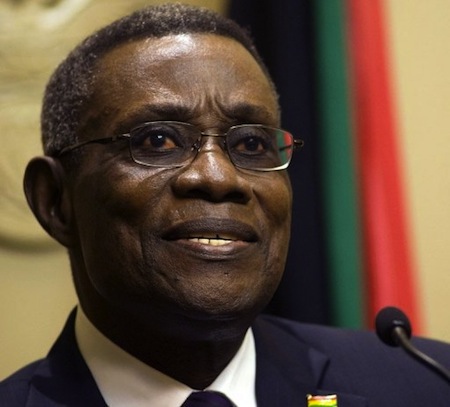
Ghanaian President John Atta Mills, 68, passed away on July 24, 2012.

The former vice president of Jerry Rawlings, the longtime, charismatic military ruler of Ghana turned democratically-elected head of state, Professor Mills was deferential to and often overshadowed by Rawlings throughout his political career.  The modest and scholarly Mills, who taught law at the University of Ghana, first ran for the presidency himself in 2000, when Rawlings was term-limited, but lost to opposition leader John Kufour of the New Patriotic Party (NPP) in Ghana’s first peaceful change of power since independence.

In 2008, when Kufour himself was term-limited, Mills ran against Kufour’s vice president, Nana Akufo-Addo, whom he trailed after the first round by a margin of 47.92% to 49.13%.  However, Mills ultimately defeated Akufo-Addo in the second round, with a margin of 50.23% to 49.77%, making it the closest peaceful election of its scale in modern African history.  Perhaps even more surprising, closely following the 2007 elections in Zimbabwe and Kenya, the vote led to Ghana’s second peaceful transition of power without a single life lost.

Professor Mills, said to have been at heart an academic rather than a politician, was a stickler for the constitutional rule of law.  By the end of his term Ghana was the fifth least corrupt country on the African mainland according to Transparency International.

When Ghana began offshore oil production for the first time in 2010, Mills vowed to avoid the waste and corruption associated with the oil industry in nearby Nigeria.  Last month, Mills accepted nearly all of the recommendations of the Constitutional Review Commission (CRC) to comprehensively update Ghana’s constitution, with proposed amendments to be submitted to popular referendum.  The CRC’s White Paper called for, among other issues, abolition of the death penalty, protection of consumer rights, constitutionalization of the right to a healthy environment, and establishment of a comprehensive legal aid scheme.  Whether the CRC’s recommendations will be implemented remains to be seen should Mills’s ruling party, the National Democratic Congress, lose the upcoming elections in December 2012 to the NPP.

Even at his death, the rule of law triumphed in Ghana when Vice President John Dramani Mahama was sworn in within hours.  In this way, Ghana avoided the same uncertainty as when Malawian President Bingu wa Mutharika passed away in office last April, sparking speculation that Vice President Joyce Banda would be passed over for the presidency in defiance of the constitution.

But unlike Ghana, Malawi’s change in power was dramatic — Mutharika ran an unpopular regime, one bleeding support from foreign donors and dogged by street protests, and Banda had previously been expelled from the ruling party.

Nonetheless, the peaceful transfers of power across the continent over the past year in Zambia, Senegal, Malawi, and Lesotho may well prove that democracy is maturing in Africa for one simple fact: three of these four countries, like Ghana, have experienced not just one but two peaceful transitions of power since independence.

Andrew Novak is the adjunct professor of African Law at American University Washington College of Law.  He has a J.D. from Boston University and an M.Sc. in African Politics from the London School of Oriental and African Studies—President John Atta Mills’s alma mater.

MAKING WORLD POLITICS LESS FOREIGN