Category Archives: United States

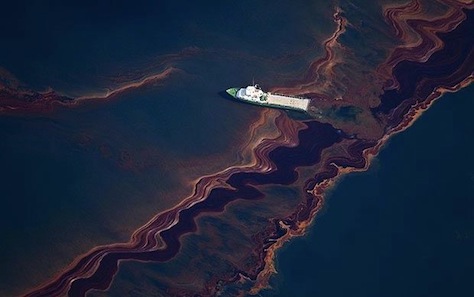
How the BP spill led to today’s Cuban embassy opening

bpdeepwaterPhoto credit to Reuters.

When US secretary of state John Kerry raises the US flag above the American embassy in Havana today, it will be a diplomatic highlight of the final 18 months of the Obama administration.USflagcuba

But its genesis lies partially in an unrelated disaster of the Obama administration’s first 18 months – the BP Deepwater Horizon oil spill in the Gulf of Mexico. US officials worried initially that weather patterns would disperse the oil to Cuban waters, exacerbating an already troubled relationship, and it’s a fluke of the oceanographic currents that the oil largely flowed chiefly westward back to the US coastline and not eastward internationally. But they also increasingly worried that growing Cuban designs for its own nascent offshore oil drilling program (in the Caribbean Sea just north of Havana, close to the Florida coast) could cause an even more serious accident that could pollute US waters.

William LeoGrande, a professor at American University and the co-author of a new book on decades of back-channel negotiations between Havana and Washington, argues that informal discussions over environmental hazards and future potential ecological disasters built trust between US officials and Cuban policymakers in a multilateral Caribbean-wide framework, paving the way for bilateral talks on normalization, environmental standards and offshore oil production.

It took the US government a while, however, to warm to the idea. Continue reading How the BP spill led to today’s Cuban embassy opening

Is Donald Trump the American version of Le Pen?

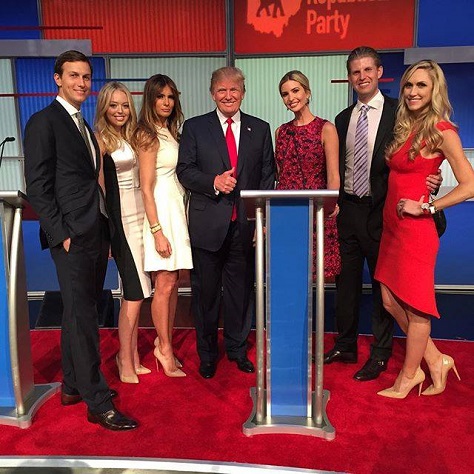
trumpdebate

Over the weekend, Le Figaro pondered whether Donald Trump, the tart-tongued real estate mogul, might be the U.S. version of Jean-Marie Le Pen, the French far-right founder of the Front national (National Front) who’s also become notorious for controversial statements and for trampling ‘political correctness.’USflag

Le Pen, after all, edged out the leftist prime minister Lionel Jospin in the 2002 presidential election, establishing the Fifth Republic’s most lopsided runoff between the noxious Le Pen and the incumbent, center-right Jacques Chirac. Le Pen’s daughter, Marine Le Pen, who is working to broader the FN’s appeal, is polling high in the 2017 presidential contest and may win one of the two final runoff spots.

There are significant differences between the Le Pen family and Trump. Le Pen pere frequently expressed his doubts about the Holocaust with a heavy dose of anti-Semitic populism — so far, Trump hasn’t started questioning the Holocaust or attacking Jewish Americans. But both Le Pen and his daughter developed a significant constituency of French voters by expressing outrage against the influx of immigrants into the country, a concern much closer to Trump’s heart (he announced his candidacy by attacking Mexicans, promising to build a wall along the southern US border and billing it to the Mexican government).

More recently, Marine Le Pen has broadened her attacks to include European institutions, including the eurozone, as an attack on the sovereignty of France. In her exclamations of “Oui, la France!” there’s more than an echo of Trump’s “Let’s make American great again” shtick.

But the support that Trump has amassed in the summer of 2015 isn’t so unlike the wave of populism that’s enveloped Europe (on both the right and the left). Though the US economic recovery has chiefly outpaced that of Europe’s, it’s not been an easy expansion. Sustained unemployment, tepid GDP growth and stagnant wages have left working-class and middle-class American voters less secure — just like working-class and middle-class European voters.

It’s no surprise that since 2010, several new voices of the populist right and the populist left have demonstrated their electoral muscle:

  • In Italy, comic and blogger Beppe Grillo obtained nearly a quarter of the vote in the 2013 elections, and polls show that he still commands upwards of 25% of the vote. Frank Bruni wrote in May in The New York Times that Trump shares much in common with Silvio Berlusconi, the media tycoon who dominated Italian politics from the mid-1990s to the late 2000s and, like Trump, reveled in controversial pronouncements. But Berlusconi was primed for politics by Bettino Craxi, the Socialist prime minister in the 1980s who was ultimately forced into exile in Tunisia; it’s not like George W. Bush or Newt Gingrich developed Trump as a protégé.
  • In the United Kingdom, anti-establishment candidates running for the Scottish National Party (SNP) wiped out longstanding Labour and Liberal Democratic strongholds in Scotland and, in the current Labour Party leadership contest, the far-left Jeremy Corbyn, a firm anti-austerian who wants to renationalize British railways, leads many surveys against more moderate opponents.
  • In Greece, the far-left Alexis Tsipras and SYRIZA (Συνασπισμός Ριζοσπαστικής Αριστεράς, the Coalition of the Radical Left) took power in January’s elections, and the equally far-left Podemos hopes to pull off a similar victory in Spain’s general election in December.

It’s not surprising that economic pain, angst about sovereignty, identity and migration and other doubts about ruling political elites are fueling the same kind of anti-establishment reaction in the United States, too, and it’s the same instinct that powered the ‘tea party’ movement of the early 2010s.

It’s too soon to tell what Trump’s lasting legacy will be on the 2016 presidential race. His poll numbers might soon collapse (or not). He could wipe out before the first votes are cast in the Iowa caucuses or the New Hampshire primary. He might win a few early contests before Republican elites step in (and they will) to deny him the presidential nomination. He’s still holding the door open to an independent third-party run in the general election.

But the real template for Trump isn’t necessarily Le Pen or Tsipras or Corbyn or Grillo or even Berlusconi, though they all draw support from the same anti-establishment, populist reservoir.

Instead, it’s a duo of neophyte businessmen who have taken on powerful (and experienced) political leaders over the past two years to upend the status quo. Though Andrej Kiska and Andrej Babiš aren’t necessarily household names, even in Europe, they represent more closely the kind of appeal that Trump — at his best, perhaps — could replicate to upend the Republican establishment.

If I were Corey Lewandowski, Trump’s campaign manager, I would be furiously studying each case to extrapolate lessons for Trump.

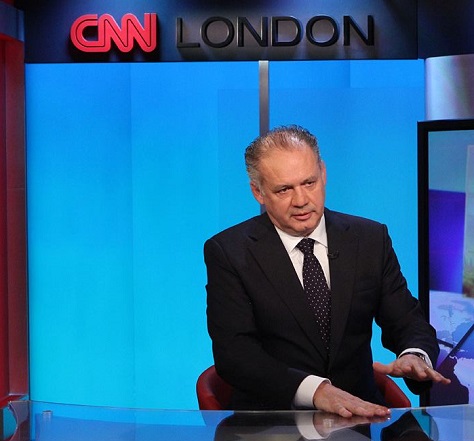
kiska

Kiska (pictured above) is a 52-year old businessman who spent much of his life as a entrepreneur in Slovakia, making his fortune in the installment payments and the credit business. Despite his failures to break into the US market, Kiska shifted to charitable works in 2006, founding Dobrý anjel (Good Angel), a charitable organization that provides funds for the seriously ill.

Running as an independent in the Slovakian presidential election in March 2014, Kiska defeated Slovakia’s sitting center-left prime minister Robert Fico. The Slovak presidency is effectively ceremonial, but Fico’s victory would have consolidated power between the ruling party and the presidency. Fico’s defeat dealt an otherwise popular figure a significant blow — and Kiska’s victory preserved a sense of constitutional balance between the executive and the parliamentary.

Going into the election, Fico was a well-liked prime minister and Slovakia’s economic record outpaced its closest neighbors; Kiska was a political newcomer. Fico’s party, Smer–sociálna demokracia, (Smer-SD, Direction-Social Democracy), still widely leads polls for next year’s general election, for example.

Unlike Trump, Kiska didn’t campaign on the macho, alpha-male persona of a successful businessman. But Kiska succeeded by planting doubts about Fico’s campaign and the fact that Kiska was personally untainted by political corruption and ties to Soviet-era politics. By all counts, he’s thrived in the presidential role since taking office last year. The lesson to Trump is that he can dial down the antics and still present a capable challenge to the GOP establishment. Though Trump may embellish the influence that his past donations might have procured, there’s no doubt he is right when he showcases the corrosive influence of money on politics in the post-Citizens United world.

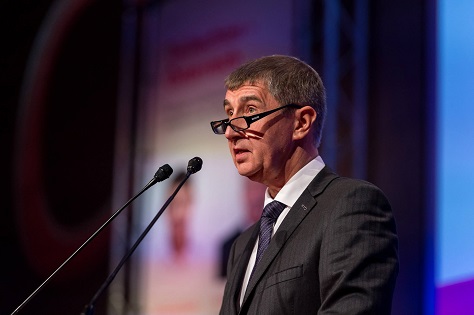
babis

Babiš (pictured above) is also a Slovak-born businessman, but the 60-year old made his fortune in the Czech Republic. Like Kiska, he left business to form a political party, Akce nespokojených občanů (ANO, Action of Dissatisfied Citizens) in 2011.

In the 2013 Czech elections, ANO won nearly 20% of the vote, finishing a strong second to the Česká strana sociálně demokratická (ČSSD, Czech Social Democratic Party) in a highly fragmented result. Babiš, who developed Agrofert, an agricultural and food processing company, into one of the most successful companies in the country, later purchased a series of media companies before he turned to politics as one of the wealthiest men in the Czech Republic. Not surprisingly, Babiš argued that he would govern the Czech Republic like a business.

More caustic than Kiska, and more sympathetic to neoliberal policies, Babiš attacked both Czech social democrats and conservatives as corrupt and dishonest, arguing for an end to immunity for political figures. In 2012 and 2013, despite his inexperience, he expertly filled a void for an electorate that had lost trust in the central European country’s ruling elite. In that regard, Trump’s rhetoric much more strongly resembles that of the pugilistic Babiš.

In the past four years alone, a center-right prime minister resigned after his chief of staff (with whom he had become romantically involved) was caught spying on the former prime minister’s wife. It’s also a country where a former Social Democratic prime minister won the presidency in early 2013 and immediately tried to outmuscle the Czech parliament in a constitutional power struggle. That gave Babiš the opportunity to present himself as the truth-telling man of action, despite fears that ‘Babišconi’ would become just another oligarchic leader and despite troubling accusations that he cooperated with the Czech internal police during the Soviet era as well as with the Soviet KGB.

Nevertheless, after the 2013 election, Babiš  set aside his differences with elites and brought ANO into the current government — he now serves as the country’s finance minister. Though the next Czech elections do not have to be held until 2017, ANO leads polls and there’s a good chance that Babiš could become the next prime minister.

The lesson here from Trump is that the righteous ‘pox-on-both-your houses’ anger of the outsider can be effective so long as it’s targeted on the tangible excesses and failures of the ruling class. But it’s not enough, as Trump has done, just to call yourself ‘smart’ and politicians ‘stupid.’ What made Babiš successful was presenting the devastating case for why Czech politics had become so broken.


Schumer’s right — if Iran wants nukes, the US can’t deter it indefinitely

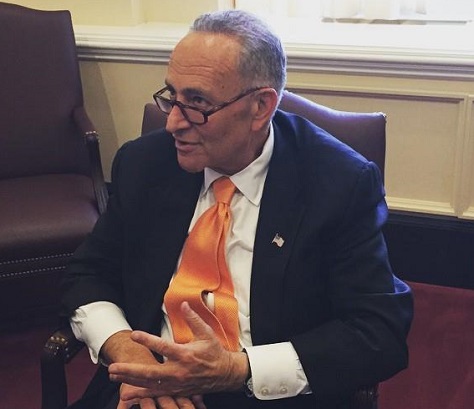
schumer

With the entire US political world focused on the Republican presidential debate last night, US senator Chuck Schumer quietly announced that, after much deliberation, he will vote against the nuclear energy deal negotiated between Iran and the P5+1 (the five members of the UN Security Council plus Germany).USflagIran Flag Icon

If Schumer thought his Thursday night announcement would fly under the radar, he was wrong — and US secretary of state John Kerry was quick to say that he ‘profoundly disagrees’ with Schumer. With Senate minority leader Harry Reid retiring after the 2016 election, and with Democrats in a very good position to retake control of the US Senate in 2016, there’s an exceedingly good chance that Schumer will be the Senate majority leader in less than 18 months’ time. Moreover, he’s one of the leading Jewish voices in American politics and, as a senator from New York, the US state with the highest proportion of Jewish voters in the country.

So it’s not surprising that Schumer, a longtime ally of Israel, would reject a deal that Israeli prime minister Benjmain Netanyahu fiercely opposes. (Though New York’s junior senator, Kirsten Gillibrand, announced her support for the Iran deal earlier this week).

* * * * *

RELATED: Winners and losers in the Iran nuclear deal

* * * * *

Schumer was careful to telegraph that he will not be working very hard to convince other Democrats to break ranks with the administration, and that’s probably the wisest course for someone who still wants to become the Democratic leader in the Senate after angering the party’s leftists. There’s no doubt that Schumer’s opposition will embolden the deal’s critics, and it may convince a handful of Senate Democrats to oppose the deal. But the Obama administration still believes opponents of the Iran deal will not achieve the 60 votes that they need to defeat it in the US Senate — or the 67 votes they would need to override Obama’s veto.

Chief among Schumer’s problems with the deal is the fact that after 15 years, Iran could conceivably be free of both international sanctions and restrictions on its nuclear energy program, thereby giving it the ability to build a nuclear weapon: Continue reading Schumer’s right — if Iran wants nukes, the US can’t deter it indefinitely

Four reasons why Puerto Rico won’t become a state anytime soon

51srars

For all the comparisons to Greece’s debt crisis, there’s one simple solution that many Puerto Ricans and mainland policymakers are prescribing to solve the commonwealth’s own financial crisis — and it’s not available to Greece or any other eurozone members. PR

Puerto Rico could simply become the 51st American state.

For the past 63 years, it’s been an estado libre asociado — a self-governing commonwealth that lies uncomfortably between a state and a territory, with bespoke elements unique to Puerto Rico, both good and bad.

Republican presidential contender and former Florida governor Jeb Bush supports statehood and in 2012, both US president Barack Obama and his rival, former Massachusetts governor Mitt Romney said they would support it if a clear majority of Puerto Ricans want statehood — Puerto Rico held a status referendum in the same election year. Pedro Pierluisi, Puerto Rico’s Democratic-affiliated non-voting delegate to the US  House of Representatives, made the case for it in an op-ed in The New York Times earlier this month.

* * * * *

RELATED: The next debt crisis in the United States may
require a Puerto Rico bailout

RELATED: Could Puerto Rico really become the 51st US state?

* * * * *

It’s true that both the Greek and Puerto Rican crises share much in common. Both governments are tethered to monetary policies that aren’t necessarily optimal. Functionally, that means neither Athens nor San Juan have a currency that they can depreciate to spur exports. Neither the European Central Bank nor the Federal Reserve can realistically be expected to tailor monetary policies to local needs. That, in turn, has exacerbated the effects from the economic forces of the past decade — the 2008-09 subprime crisis in the United States and the 2009-10 sovereign debt crisis in Europe, along with the economic pain of a nearly decade-long recession, rounds of tax increases and spending cuts, and accompanying rises in unemployment and downward pressure on wages. Lower growth, of course, means lower revenues and higher budget deficits — and more borrowing means higher yields that are now sucking Puerto Rico into a downward spiral. Alejandro García Padilla, its governor, made clear in late June that he believes the island’s $72 billion in debt is unsustainable.

In both scenarios, Greeks (through the Schengen zone) and Puerto Ricans (through the universal grant of US citizenship made in 1917 to allow Puerto Ricans to fight in World War I) can relocate to more economically prosperous European and American regions with ease. Migration means that fewer Puerto Ricans are left to service the growing debt — or build businesses and communities that can provide the revenues to fund schools and infrastructure. The island’s population is creeping downward; from a peak of 3.83 million in 2004, it was down to just 3.55 million last year. The pace of emigration is rising — to about 50,000 annually.

There are key differences as well between Greece and Puerto Rico.

Puerto Rico’s status is a relic of the late colonial era, and the United States acquired the island in 1898 as a result of its war against Spain (in Cuba, the Philippines and elsewhere). From the beginning, full-fledged independence has never been a popular option among Puerto Ricans. But nationalist sentiment rose so strongly by 1950 that two pro-sovereignty activists, Oscar Collazo and Griselio Torresola, attempted to assassinate US president Harry Truman.

The US policy response, Operation Bootstrap, adopted throughout the following decade to industrialize the island, transformed Puerto Rico into a more modern, urban place, even as American businesses consolidated the island’s farmland. But it never whisked Puerto Rico into a miraculous Caribbean Singapore, and it decimated small-scale agriculture.

Puerto Rico also suffers from the classic ‘island effect’ that economists sometimes describe of countries where dependence on imports and higher transport costs artificially increase the cost of living — a condition that’s often found throughout the Caribbean and islands, but that also affects Israel, a country surrounded by hostile Arab states with virtually no cross-border trade.

Most important of all, there’s no real talk of ‘PRexit,’ because no one believes that Puerto Rico could just abandon the ‘dollarzone.’ There’s no plan sitting in US treasury secretary Jack Lew’s desk that outlines the potential steps because it’s so much more implausible than a ‘Grexit.’

García Padilla is right that the crisis, decades in the making, is due to political factors as well as economic. Default may come soon — the Puerto Rican government says it doesn’t have enough cash to make a scheduled August 1 payment of nearly $170 million. That could launch a messy years-long default process, with the island trying to force haircuts on its bondholders. If San Juan can’t demand debt relief, protracted litigation might result in court rulings forcing Puerto Rico’s government to prioritize creditors over the salaries of public servants — galvanizing so much economic suffering that it would draw international condemnation over America’s neocolonial version of Greece.

There’s no effective Chapter 9 process for Puerto Rico, unlike for US municipalities, so the alternative of an orderly Detroit-style restructuring, isn’t available. The Obama administration, moreover, has made it clear that it doesn’t support a bailout — and it’s not clear that Republicans in Congress would be willing to provide the funds for any bailout.

So calls for statehood, in both Puerto Rico and on the mainland, and on the left and right, are on the rise, and predictably so. But as genuine as those calls might be, it’s a very, very unlikely result– and that will likely be true for a long time.

Here’s why. Continue reading Four reasons why Puerto Rico won’t become a state anytime soon

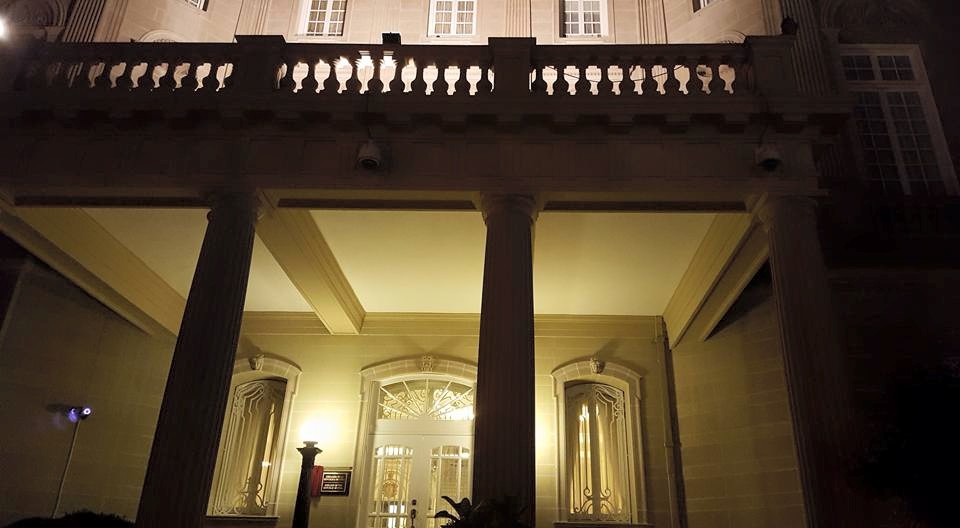
Photo of the day (night): Cuba’s embassy in DC

dccuba

It’s been over a half-century since the Cuban flag flew proudly over an embassy in Washington, D.C.cubaUSflag

Though the flag had been lowered with twilight, the Cuban embassy is a true embassy, and not just an interests section, for the first time since 1961.

As the clock struck midnight on 16th Street in Washington, hardly a soul passed the embassy, save for myself and an African-American woman who asked if this was the Cuban embassy (and yes, she, too, was disappointed that the flag had been lowered with dusk).

Say what you will about US-Cuban relations, the Castros or US foreign policy, July 20, 2015 was a day to remember.

You can read Suffragio‘s coverage of Cuba (including my own trip to Havana two months ago) here:

Why normalization with Cuba will be harder than advertised

Interview: Talking to Cuban artist Tania Bruguera

Photo essay — Cuba on the cusp… but for what kind of future?

Obama’s move to remove Cuba from terror list was long overdue

Six key questions about the landmark Cuba deal

A public interest theory of the continued US embargo on Cuba

One chart that explains Obama era Middle East policy

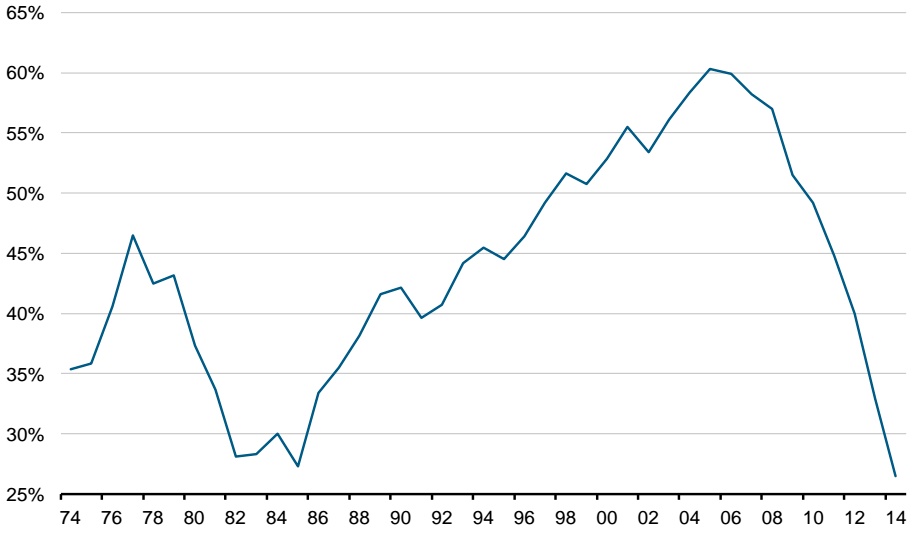
BoA ChartChart credit to Bank of America.

Within a half-century, the most important fact of the Obama administration might well be that it presided over an energy boom that de-linked, for the first time in many decades, US dependence on Middle Eastern oil and foreign policy.USflagIran Flag Icon

No other fact more explains the deal, inked with the Islamic Republic of Iran, that brings Iran ever closer into the international community — and no other fact brings together so neatly the often contradictory aspects of US president Barack Obama’s policy in the Middle East today.

* * * * *

RELATED: Winners and losers in the Iran nuclear deal

* * * * *

With the exception of a small peak in the mid-1980s, when prices tanked after the oil shocks of the 1970s, US imports of foreign oil are lower than ever — and that’s a critical component to understanding Tuesday’s deal between the P5+1 and Iran. Thanks, in part, to the shale oil and fracking revolutions, US oil reserves are at their highest levels than at any point since 1975. Bank of America’s chart (pictured above) shows that US dependence on foreign oil — net imports as a percentage of consumption — dropped to 26.5% by the end of 2014.

Making sense of the Obama administration’s Mideast contradictions

One of the sharpest criticisms of the Obama administration is that it has no overweening strategy for the region. On the surface, the contradictions are legion. To take just three examples: Continue reading One chart that explains Obama era Middle East policy

Obama’s error? Prioritizing TPP over TTIP

TTIPtalks

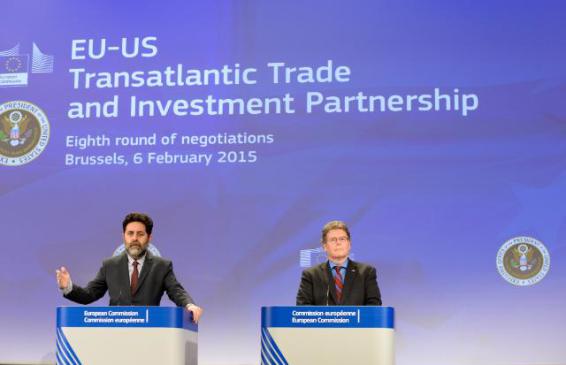
I write tomorrow for The National Interest that the Obama administration made a deep strategic error in allowing the fight for trade promotion authority become dominated by the Trans Pacific Partnership when the Transatlantic Trade and Investment Partnership would have been an easier sell. USflagEuropean_Union

Now, given the difficult fight to win fast-trade promotion authority, momentum may be shifting against both the TPP and the TTIP, especially in Europe, where leftists in the European Parliament are having second thoughts. The ramifications of the Obama administration’s strategic choice will linger far into the next administration, whether Republican or Democratic.

I argue that TTIP would have been an easier (and better) trade deal for three reasons. Continue reading Obama’s error? Prioritizing TPP over TTIP

Why ‘normalization’ with Cuba will be harder than advertized

DSC00108

HAVANA — On December 17, U.S. president Barack Obama announced that his administration would pursue executive policies designed to engage Cuba diplomatically and, potentially, restore relations between the two countries severed in 1960 – one year before Obama was born, as he himself noted in a joint conference with Cuban president Raúl Castro at the Summit of the Americas, the first time since the summits began in 1994 that a Cuban leader was invited to the affair. USflagcuba

It’s not only the White House that argues the 55-year embargo hasn’t worked – Republicans and Democrats alike, and Cubans, Americans and many others have long held that the embargo’s worst effects have fallen on the Cuban people, even as the policy gave Fidel Castro a convenient foil and excuse for the failures of his own government. No medicine? Blame the embargo, not the Revolution that guarantees universal health care to everyone. No food? Blame the embargo, not the abrupt end of Soviet subsidies, which plunged Cuba into what Castro euphemistically christened the “Special Period in a Time of Peace,” three years of hunger and deprivation where the average caloric intake dropped from around 3,000 calories per day to 1,400, according to some estimates. For all the initial promise of the Revolution, the reality fell far short for many Cubans, most especially for LGBT Cubans shuttled off to labor camps in the early 1970s and Afro-Cubans, who suffer from race-based income inequality decades after the Cuban government’s declaration that the Revolution “ended” racism. Even Fidel Castro admitted as much in a remarkable interview with Jeffrey Goldberg five years ago.

You don’t have to be a Nobel-winning economist, however, to realize that Cuba’s most recent financial benefactor, Venezuela, is going through some tough times. Two years after the death of leftist populist Hugo Chávez, oil prices are down and so is the level of production from PdVSA, the country’s state oil company. The official rate of the Venezuelan bolívar is comically lower than its market value, inflation runs rampant and shortages and rationing of basic foods and household goods is common. These days, everyday chavistas, who still hold faith in the socialist Bolivarian revolution, have taken to lobbing mangoes at Chávez’s successor, Nicolás Maduro, with messages desperately scrawled on them. Those less charitably inclined to Maduro, including opposition leader Leopoldo López and former Caracas mayor Antonio Ledezma, have been imprisoned. It’s dawning on the Castro regime that the days of exchanging Havana-trained doctors, Cuban intelligence agents and revolutionary slogans in exchange for cheap oil and other goodies may be coming to an end.

William LeoGrande, a professor at American University and the author of a new book on decades of back-channel negotiations between Havana and Washington, argues that the current round of negotiations isn’t the first time that U.S. and Cuban officials have sat down for talks, including the possibility of re-establishing diplomatic relations. This time around, the implosion of Venezuela, has refocused Cuban interest in reconciliation with the United States, which could provide Cuba the kind of tourist revenue and foreign development aid it desperately seeks.

“In one sense, Washington wants [normalization] more,” he said. “The United States was facing lots of diplomatic pressure from Latin America to change its policy towards Cuba. Now, the president has won a lot of credit, not just in Latin America, but around the world, for announcing his willingness to change policy. And it’s an important part of his foreign policy legacy, so I think the administration very much wants these negotiations to succeed.”

Privately, State Department officials agree that the Obama administration and the Castro regime are locked in a giant wager by launching a new era last December. The U.S. government is betting that a wave of liberalization and modernity will drag Cuba into the 21st century by empowering U.S. companies to do business directly with Cuban entrepreneurs, a step that will embolden individual freedom. The Cuban government is betting that it can liberalize à la carte by opening its economy, but not its politics, press or Internet, an approach that China and Vietnam have more-or-less successfully pursued.

News coverage since December paints a rosy, possibly naïve, tapestry of a partnership moving steadily forward. First were reports that Netflix would soon come to Cuba, something of a cruel joke for a country where Internet access is heavily restricted and censored, available for up to $10 an hour at designated government-run Internet cafes, universities and top tourist hotels. Then came AirBNB’s foray into Cuba, where homestays in casa particulares are a more popular option than overpriced hotels. JetBlue, earlier this year, announced grandiose plans to launch a commercial nonstop flight from New York to Havana by year’s end, followed this spring by hopes to re-establish a ferry service across the Straits of Florida between Key West and Havana. In March, Conan O’Brien hosted a virtual commercial for the faded glamour of a Caribbean playground filled with 1957 Plymouths, watered-down daiquiris and overpriced nights at the Tropicana. A high-profile delegation led by New York governor Andrew Cuomo and a group of state business leaders dropped in to talk about future opportunities. Havana is keenly anticipating a scheduled visit from Pope Francis in September, and there are promises of a possible stop by U.S. secretary of state John Kerry and even whispers that Obama himself might make a trip. A visit last month from French president Francois Hollande, the first Western European leader to visit the island since 1986, included an hour-long colloquy with Fidel Castro himself, though it also drew a critique from prolific blogger Yoani Sánchez  when Hollande failed to meet any dissidents during his short trip.

Even in a best-case scenario, the Obama administration’s move could go awry simply because of the political gravity of presidential term limits. None of the nearly two dozen 2016 Republican presidential candidates, excepting Kentucky’s libertarian senator Rand Paul, supports the opening to Cuba. Two candidates, Senator Marco Rubio, himself the son of Cuban immigrants, and former governor Jeb Bush, come from Florida and swear fealty to the fiercely anti-Castro Cuban community in Miami. It’s true that, given the widespread cultural and economic interest among Americans in Cuba’s future, no Republican may be able to undo Obama’s work by the time January 2017 rolls around. In the fight to lift the embargo, the momentum is on Obama’s side, and many business interests, including the American farm lobby, are enthusiastic about accessing Cuban markets. But if the U.S. interests section in Havana is converted into a full embassy, a hawkish Republican in the Oval Office will have vastly greater leverage to undermine the Cuban regime in far more serious ways than broadcasting churlish messages from an electronic ticker or funding outlandish USAID programs to design fake Twitter programs like “ZunZuneo” (the latter ultimately backfired when its popularity crested, filling the coffers of the state-run mobile phone company).

Cuba, too, is set for its own political transition in 2018, when Raúl Castro has pledged to step down as president. For now, his likely successor is 54-year-old Miguel Díaz-Canel, appointed as first vice president in 2013. Alternate reports describe Díaz-Canel as either a hard-liner or a reformer, with varying strengths of ties to the Cuban military (though Díaz-Canel isn’t himself a military figure).

In short, few have credible insight into what Díaz-Canel truly believes, whether he’ll even make it to 2018 as the heir apparent and, if so, whether he’ll just be the civilian puppet that perpetuates the rule of the Cuban military. In the meanwhile, Raúl Castro has groomed his son, 49-year-old Alejandro, a rising figure within Cuba’s all-important MININT. Alejandro traveled with Raúl to the Summit of the Americas, lingering in the background in the photos where Raúl  shook hands with Obama. Some Cubans believe that he will eventually emerge as the next Castro to rule the island. No one knows for sure, however, what the retirement of the elderly Castro brothers will mean for Cuba.

In the meanwhile, young Cubans are waiting for neither the Obama administration nor the Castro regime to deliver change to them. They’re getting on with making lives for themselves in a Cuba that, though still hampered by a heavy-handed state sector, provides more opportunities for them in decades. An informal poll of young Cubans on one weekend night in late May on the Malecón, the long walkway that rings the edge of Havana’s sea walls and where Cubans of every age and background flock on weekend nights, indicated that while Cuba’s youths are generally excited about closer ties with Americans, they don’t necessarily believe it will translate into better futures personally.

For those who believe that reform will not come soon enough, the United States continues to beckon. In the wake of Obama’s December announcement, the U.S. Coast Guard announced that a sharp uptick of Cubans took to boats in hopes of emigrating to the United States, fearing that reconciliation would mean the end of the favorable U.S. immigration policy towards Cubans. Under the current iteration of the U.S. Cuban Adjustment Act, the “wet foot, dry foot” policy extends a path to residency for any Cuban who makes it to American shores (though not to any Cubans caught by the Coast Guard en route to Florida).

unanoche

In the 2012 film Una noche, a highlight of Cuban cinema in the past decade, NYU-trained Lucy Mulloy directed the neorealistic tale of three young Cubans who ultimately attempt to leave the country on a makeshift raft. Life imitated art when, a year later, two of the three co-stars, Anailín de la Rúa de la Torre and  Javier Núñez Florián (pictured above), decided to stay in Miami en route to a film festival in New York. Though they play brother and sister in the film, they fell in love during filming and now live in Las Vegas with their young son.

Unlike the previous generations of Cuban emigrants to the United States, Núñez Florián wasn’t overly concerned about politics when I spoke to him last week. He said that he had always hoped to one day live in the United States and that his decision was about building a better future for himself and his family. He added that it’s not difficult to balance his life between the two worlds, that half his friends are still in Cuba, and that it’s easy for him to visit Cuba. Though he initially demurred when I asked him about the dynamics of US-Cuban relations, he agreed that he sees it in a positive light.

“Yes it’s good,” he said. “The U.S. is meeting in the middle, little by little getting closer to Cuba, and Cuba the same. Little by little everything is changing for the better.”

“Little by little,” though, is the key phrase. It’s easy to forget that, amid the excitement over Cuba’s opening, the Revolution took place only six years after the final armistice that divided North Korea and South Korea. Americans who believe that Cuba will suddenly be transformed, as if overnight, will be sorely disabused. Cuba’s modernization will be a difficult process that moves in zigs and zags.

Former Bush-era commerce secretary Carlos Gutierrez, himself a Cuban-American, believes that Cuba can be a veritable Caribbean Singapore, but that’s hard to believe after a few days on the ground in Havana. The “romance” of 1950s jalopies subsides after a couple of taxi rides in an overcrowded Soviet-era Lada from the 1970s, and Havana suffers from all the other shocks of decades of economic mismanagement, exacerbated by U.S. stubbornness. On my first Friday night in Havana, I stopped at a bar for a little refreshment but by 10 p.m., it was out of shrimp, it was out of tostones (which I’d thought were ubiquitous throughout the region) and, the greatest sin of all, my waiter informed me that mojitos were no longer available. This wasn’t a flashy hotel or a secluded resort in the foreigners-only enclave of Varadero, but it was still a Chilean-themed bar directly across from the Malecón. From transportation to distribution networks, Cuba is woefully unprepared for a deluge of American tourists who won’t take kindly to surly rooms with Soviet air conditioners and bars that run out of mojitos.

Cubans may also find that competing for U.S. customers will be equally difficult. For years, cigar experts have warned that the Cuban tobacco-growing industry suffers from inconsistent quality control. The Havana Club brand, if it ever makes it into the American market given the copyright tangles with Bacardi, will face stiff competition from much smoother aged rums. After the post-taboo novelty of Cuban cigars and rum wear off, Millennial cognoscenti may find they prefer to sip on Guatemalan rum and smoke Nicaraguan cigars.

Meanwhile, Cuba’s infrastructure is broken. The Cold War never turned hot in Havana, but it did singe Nicaragua, Grenada and Panama City, where U.S. forces bombed the city’s charming Casco Viejo district in its ultimately successful 1989 push to arrest the drug-fueled strongman Manuel Noriega. Remarkably, large swaths of central Havana resemble Casco Viejo as it existed ten years ago, when it was still a bombed-out shell. Today, shopping boutiques and gelato shops adorn the Panamanian neighborhood, but central Havana continues to crumble. Buildings routinely fall to the ground in disrepair and floods in early May resulted in the deaths of at least three residents. Cuba’s currency system is also a mess, with the moneda nacional for Cubans and a fixed-rate convertible peso for tourists that’s created a two-tiered economy of have-nots and have-even-less. Neither currency is worth much internationally, and the Cuban government benefits from the privilege of collecting the hard currency of euros and dollars when tourists arrive to the island. Plans to merge the two currencies worry middle-class Cubans, chiefly in the tourism and hospitality industries, who fear that a botched attempt could wipe out the real gains of the past two decades.

It’s not an exaggeration to argue that the 1959 revolution both won Cuba its independence and conclusively ended the Monroe Doctrine, not only for Cuba but for all of Latin America. The relationship between the United States and Cuba has been troubled since the beginning. In 1854, U.S. president Franklin Pierce came close to annexing the island through the Ostend Manifesto proclaimed by Southern Democrats anxious to expand the geography of American slavery. Many Cubans believe the United States, by entering the Spanish-American War in 1898, stepped into a fight against a colonial Spanish force already chiefly defeated by Cuba patriots. For the next sixty years, under the Platt Amendment and a series of other measures designed to maximize American influence on the island, Cuba became a satellite of the U.S. government, with barely more de facto independence than Guam or Puerto Rico. If Cuba seems to have more in common with post-colonial African countries that won sovereignty in the late 1950s and 1960s, that’s because it suffered the same kind of post-independence growing pains under the penumbra of the Cold War.

“The U.S. has a history of meddling in Cuban affairs well before 1959,” said Arturo López-Levy, a Cuban-born scholar and Ph.D. candidate at the University of Denver’s Josef Korbel School of International Studies. “In fact, this is in part what led to the Revolution. Cubans haven’t forgotten that. A normalization of relations doesn’t erase this history, and Cubans are weary of the United States opening an embassy and using it as a base to influence opposition groups.”

That, in part, explains why Americans don’t always understand that Che Guevara is such a hero to Latin America and the rest of the world, no matter how brutal his guerrilla techniques, and that when Fidel Castro dies, his name will be uttered in the same breath as the likes of Nelson Mandela. “Normalization” of U.S.-Cuban relations, as sought by the Obama administration, is really the promise that, for the first time, the United States will treat Cuba as a sovereign equal.
 

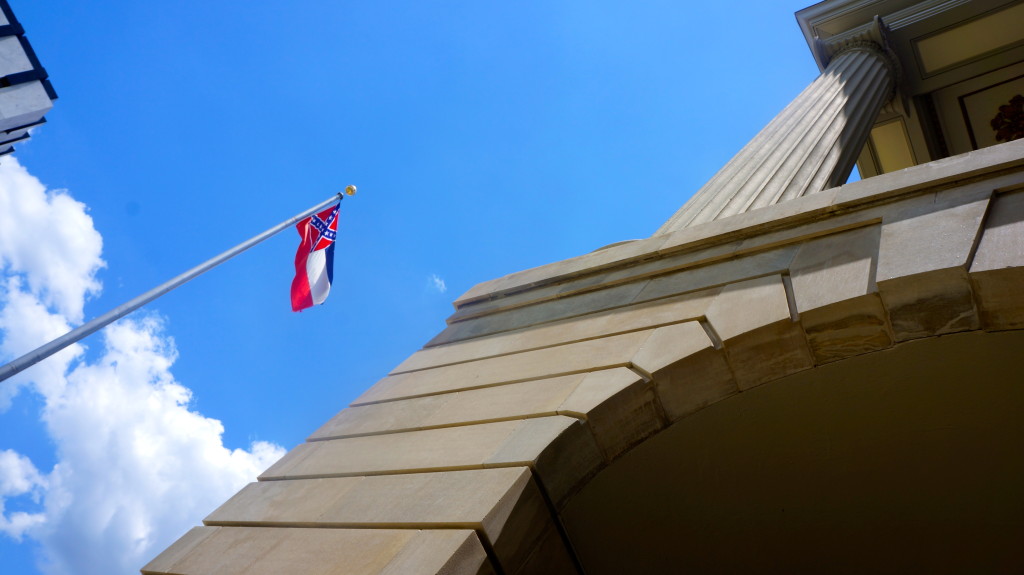
About that Mississippi flag…

Flag_of_Mississippi.svg

I have an idea. And it’s about a heritage that’s unique to Mississippi and Mississippi only.USflag

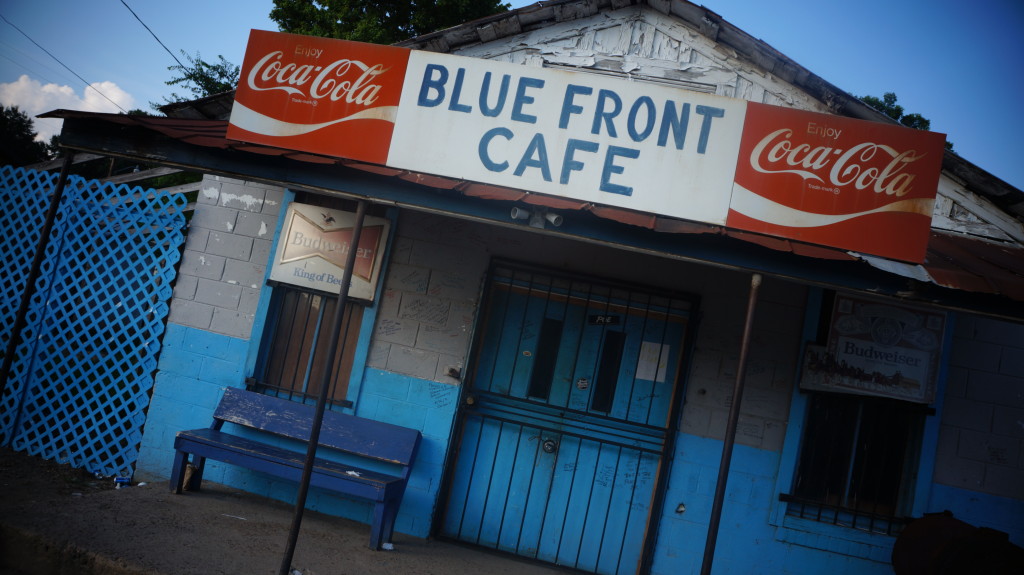
I’ve only been to the state once, but it was to go to a blues festival in Bentonia, Mississippi. You want heritage? There’s nothing more awesome that Mississippi’s role in creating one of the truly original American music forms — the blues. But this is a heritage that not only sets aside the Confederate battle flag that currently adorns the upper left quadrant of Mississippi’s state flag.

jackson

Most of all, it commemorates the role that African-Americans hold in the creation of the blues, in a state with the highest proportion of African-American residents (37.3%). B.B. King. Robert Johnson. Charlie Patton. Howlin’ Wolf. Muddy Waters. Mississippi John Hurt. These are the brilliant sons of Mississippi just as much as its robust literary tradition.

In the wake of South Carolina governor Nikki Haley’s call for the state capitol to lower the Confederate battle flag Monday, attention is turning to Mississippi’s state flag.

Mississippi’s governor, Republican Phil Bryant, remains reluctant to change it, partly because of a 2001 referendum whereby voters chose to retain the current flag, which had unofficially been Mississippi’s flag since the 1890s. But the state house’s speaker, Republican Philip Gunn, said it’s time to revisit the issue — and it’s also time to retire the homage to the Confederacy.

* * * * *

RELATED: The lessons of failed Confederate foreign policy

* * * * *

Let’s be real. The Mississippi Delta, now a depopulated shell of what it once was (which wasn’t much — a land of sharecroppers and cotton and poverty), is like no other place in the United States. The blues? It’s special, it’s mythical, and it’s the heart of Mississippi’s tourism trade, in a state that’s tortured by its past racial violence, a fact that hits you immediately when you land in Jackson’s Medgar Evers International Airport.

I can’t think of a better way to retire one more controversial flag.

DSC02441

As ‘Hillary’ and ‘Jeb’ announce, the 2016 buzz is all about Rubio

rubio

In the space of 48 hours, two political scions will announce their candidacy for president of the United States.USflag

Hillary Clinton, the wife of former president Bill Clinton, and a New York senator and U.S. secretary of state in her own right, formally launched her presidential campaign in a picture-perfect event on Roosevelt Island in New York City on Saturday.

Jeb Bush, the son of former president George H.W. Bush and the brother of former president George W. Bush, announced that he is formally a candidate for president in Miami later today.

* * * * *

RELATED: What Republicans could learn from Cameron’s Conservatives

* * * * *

But the real momentum is with neither Clinton nor Bush. It’s with Bush’s one-time protégé, Florida senator Marco Rubio. At 44, he’s around two decades younger than either Bush (62) or Clinton (67), and it’s an advantage he is using to full effect. Continue reading As ‘Hillary’ and ‘Jeb’ announce, the 2016 buzz is all about Rubio

The lessons of failed Confederate foreign policy

richmond

I write tomorrow for The National Interest that the Confederate States of America lost the American Civil War, 150 years ago this month, in large part because its leaders failed horribly at the diplomatic level to secure allies abroad that would recognize the CSA or even provide the Confederacy with material support:USflag

Though Union forces compelled the surrender of the Confederate army in April 1865, the Confederacy forfeited, by mistake and misfortune, the one potential asset that could have turned the tide much sooner: international recognition from an initially sympathetic Europe. In that regard, the Confederacy lost the war in London and Paris as much as it lost it in Gettysburg and Appomattox.

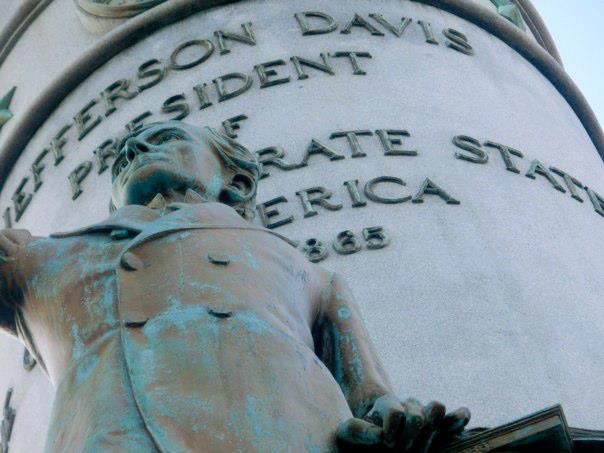
In particular, the CSA got off to a slow start and, with no Benjamin Franklins or Thomas Jeffersons on its bench, it cycled through three secretaries of state in its first 13 months. Confederate president Jefferson Davis also erred in assuming that European merchants were so dependent on southern cotton that Great Britain and France would assist the Confederacy in its infancy — another fatal assumption.

Though few may necessarily lament the Confederacy’s demise on its sesquicentennial, its failure can still teach us important lessons about the wise conduct of foreign policy today. International diplomacy and outreach made the difference for countries like South Sudan and East Timor; conversely, lack of imagination has hampered countries like Kosovo in its early years, and has otherwise set back Palestinian statehood hopes.

You could imagine that the Tibetan independence movement would be way stronger today in the Dalai Lama hadn’t abandoned the effort in the 1970s. You could also easily imagine that Newfoundland would be an independent country today if the energetic Joey Smallwood hadn’t so strongly boosted confederation with Canada.

Catalan regional president Artur Mas, Scottish first minister Nicola Sturgeon and the soon-to-be-leader of the Parti québécois, Pierre Karl Péladeau, should take note.

Read it all here.

Seoul-Tokyo relations at heart of US ‘Asian pivot’ wishlist

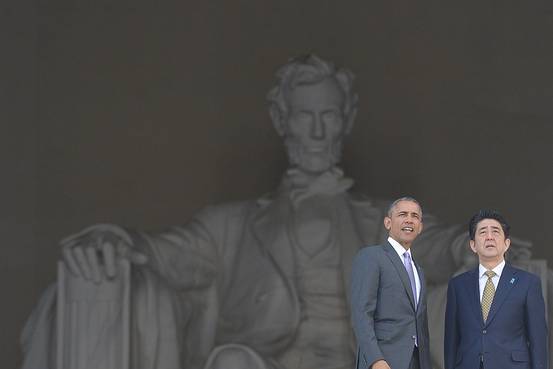
abelincolnPhoto credit to AFP / Getty.

Courting controversy for his refusal to issue a formal apology from Japan to South Korea and other Asian neighbors whose nationals were conscripted into service as ‘comfort women’ during World War II, Japanese prime minister nevertheless embraced the United States in a joint address to the US Congress Wednesday:South Korea Flag IconJapanUSflag

My dear friends, on behalf of Japan and the Japanese people, I offer with profound respect, my eternal condolences to the souls of all American people that were lost during World War II.

Though Abe expressed deep repentance for Japanese actions that caused suffering to Asian neighbors, and though Abe said that Japan must not avert its eyes from that, he bluntly noted that ‘history is harsh’ and that ‘what’s done cannot be undone.’ Presumably, that includes the abduction of women forced into sexual slavery by the Japanese army during World War II across much of Asia, chiefly in Korea, which remained under Japanese occupation from 1910 to 1945. Even discussing the issue today is still widely controversial in both Japan and South Korea, but it’s enough of an affront to South Korea that South Korean president Park Geun-hye has only met with Abe once — and apparently, she was less than impressed with Japanese diplomacy.

* * * * *

RELATED: Japan is once again an essentially one-party country

* * * * *

Abe’s refusal, and the refusal of prior Japanese prime ministers, to apologize has caused diplomatic tension with China and, more importantly for US purposes, South Korea, which US officials hope can become a closer Japanese ally in their mutual quest to balance China’s growing regional power. Though the US-Japanese relationship is strong today, it’s odd, upon reflection, that a Japanese official would apologize to the country that deployed not one, but two, atomic bombs on Japan while remaining recalcitrant vis-a-vis Korea.

Mike Honda, a Democratic member of the US House of Representatives from California and himself an American of Japanese descent, brought Lee Yong-soo, a Korean woman forced into service as a ‘comfort woman’ in 1944 at the age of 16, to Abe’s congressional address in protest.

Mistrust between the two countries runs deep. Surveys show that Abe is more unpopular throughout South Korea today than North Korea’s leader, Kim Jong-un.

The apology issue was the most contentious of a broad portfolio of policy issues between the United States and Japan, as Abe continues his red-carpet visit to the United States, which included a personal tour of Washington’s monuments with US president Barack Obama (pictured above with Abe) and a state dinner on Tuesday night.
Continue reading Seoul-Tokyo relations at heart of US ‘Asian pivot’ wishlist

Nine European women who could join Hillary Clinton at the top

hillary

Part of the undeniable appeal of Hillary Rodham Clinton’s presidential campaign is her push to become the first woman to lead the United States, enhanced by the fact that she aims to succeed the first African-American president.USflag

But, if elected, Clinton will be far from the only powerful woman on the world stage.

If she wins the November 2016 presidential race, she’ll join a list of world leaders that includes German president Angela Merkel, Liberian president Ellen Johnson Sirleaf, Lithuanian president Dalia Grybauskaite, Brazilian president Dilma Rousseff, Danish prime minister Helle Thorning-Schmidt and Chilean president Michelle Bachelet.

What’s more, there’s never been a better moment for women leading their countries. Assuming that Clinton wins the presidency in 2016 and serves two terms, it’s not inconceivable that she’d lead the United States at a time of ‘peak’ female leadership. But nowhere is that more true than in Europe. In fact, it’s not inconceivable that each of the six largest member-states of the European Union could have women in charge during a potential Clinton administration.

Here’s who they are — and how they might rise to power. Continue reading Nine European women who could join Hillary Clinton at the top

Obama’s move to remove Cuba from terror list was long overdue

obamaraulPhoto credit to Mandel Ngan/AFP/Getty.

Fully 15 out of 19 hijackers in the September 2001 terrorist attacks on New York and Washington were Saudi nationals, products of a country governed by a royal family in a centuries-long symbiotic relationship with fundamentalist Wahhabism. When US special forces finally found and killed Osama bin Laden (also a Saudi national) in 2011, he was being protected by Pakistani forces, with plenty of sympathizers within Pakistan’s  military and intelligence community.USflagcuba

Neither Saudi Arabia nor Pakistan, however, have ever been designated by the US State Department’s State Sponsors of Terrorism’ list, which has always had more to do with the geopolitics of American foreign policy than with reality.

So on the heels of US president Barack Obama’s meeting with Cuban president Raúl Castro at the Summit of the Americas last weekend (pictured above), the Obama administration announced on Tuesday that it would recommend removing Cuba from the ‘State Sponsors of Terrorism’ list. The recommendation will take effect in 45 days, following the Obama administration’s notification to the US Congress. Though Congressional action is unlikely to halt Obama’s decision, Obama will need the Republican-controlled Congress to approve any measure to lift the embargo initially imposed on Cuba in 1960 by the United States. Former president George W. Bush took a similar decision with respect to North Korea in June 2008 in consideration for the reclusive country’s decision to allow greater inspection of its nuclear sites.

* * * * *

RELATED: Six key questions about the landmark Cuba deal

* * * * *

Republican president Ronald Reagan initially added Cuba to the list in 1982, when it became clear that its leader Fidel Castro was supporting leftist guerrilla movements across Latin America that the Reagan administration believed imperative to stop. Nevertheless, Sandinista-controlled Nicaragua in the 1980s and Hugo Chavez’s firmly anti-American government in Venezuela in the 2000s never landed on the list. The most recent 2013 State Department review that justified Cuba’s continued ‘terror sponsor’ status reads like satire, noting that the Cuban government is harboring fugitives from the US justice system, Basque nationalists and Colombian rebels. Never mind the Spanish government concluded a ceasefire with the Basque guerrilla ETA in 2011 and even though Havana was by 2012 hosting talking between the Colombian government and the left-wing FARC.

Though a few dozen US nationals are currently in Cuba evading American law, Cuba is hardly the only country guilty of this. Edward Snowden has been in Russia nearly two years. Yemen, Somalia and dozens of other countries are likely harboring individuals who pose much greater threats to US national interests than Cuba these days. The decision leaves just Syria, Sudan and Iran on the list, all of which have ties to the Lebanese militia Hezbollah or the Palestinian group Hamas.

Cuba participated in the pan-American summit last week in Panama City only for the first time since 1994 when the first summit was held, and though Obama and Castro outlined their countries’ respective differences at length, Obama argued that the longstanding enmity between the two countries originated in another time:

“The United States will not be imprisoned by the past — we’re looking to the future,” Mr. Obama, 53, said of his approach to Cuba at the summit meeting’s first plenary session on Saturday. “I’m not interested in having battles that frankly started before I was born.”

“The Cold War,” he added, “has been over for a long time.”

Critics, from hawkish Republicans to Democrats like former Senate foreign relations committee chair Robert Menendez condemned Obama’s decision, and it’s not clear that Obama will succeed in his quest to lift the embargo in the remainder of his administration. Obama’s critics also include the Miami-born Marco Rubio, a Republican senator from Florida and the son of Cuban immigrants. Rubio, who became the third major Republican to announce a presidential campaign on Monday, sharply denounced the Obama administration’s overtures to Cuba, putting him out of step with many American voters, including increasingly younger Cuban Americans.

Though the decision to remove Cuba is mostly symbolic, it will open Cuba to the global payments system because international banks with links to the United States have largely avoided handling Cuban funds, out of fear of repercussions from the US department of justice. That, in turn, will facilitate the formal re-opening of embassies in both Havana and Washington. Lifting the designation also means that the US government may now provide greater economic assistance.

Domestic policy considerations have long delayed the thawing of US-Cuba relations, but Cuba hasn’t been sponsor of terrorism in decades, and there’s no evidence that Cuba ever supported any kind of terrorism that truly threatened US national interests. Even in the absence of the parallel US opening to Cuba, the Obama administration’s decision to remove Cuba from the list of terrorism sponsors was long overdue.

Expect Paul campaign to launch genuine US foreign policy debate

randpaul2015

With the dream of uniting an unlikely coalition of socially liberal Millennials, fiscally conservative ‘tea party’ supporters and a swatch of economic liberals in both parties, US senator Rand Paul of Kentucky became the second major US figure to launch a 2016 presidential bid today.USflag

His chances of winning the White House aren’t, frankly, great. But they’re not non-existent, and if he wins the Republican nomination, he could potentially convince a much wider electorate to support him over the frontrunner for the Democratic nomination, Hillary Rodham Clinton, the former US secretary of state. If he fails, he’ll still have burnished his profile as a thoughtful foreign policy counterweight within the Republican Party — sort of a conservative version of the former Democratic senator from Wisconsin, Russ Feingold. More importantly, he will drive a necessary debate on controversial aspects of US foreign policy that are increasingly taken for granted.

As a deeply libertarian voice in the US Senate and an avowed non-interventionist when it comes to the Middle East, Paul will present the strongest challenge to mainstream US foreign policy that, despite recently squabbles over Iran, Israel and Russia, remains chiefly bipartisan in nature. He will make the case for a truly alternative US policy worldview that questions everything from a 14-year global approach to terrorism, Internet surveillance and civil liberties, the proliferation of unmanned ‘drone’ aircraft in the US effort to stop radical Islamism, the use of drones to target US nationals abroad, ongoing US military action in Afghanistan and escalating action in Syria and Iraq, and the Obama administration’s ongoing diplomatic initiatives with Cuba and Iran. He is also likely to question the US Congress’s decades-long supine position on foreign policy.

* * * * *

RELATED: Six important points from Clinton’s foreign policy interview [August 2014]

RELATED: What would Jeb Bush’s foreign policy look like?
[December 2014]

* * * * *

Paul will find many traditional allies on the right, who believe that the United States is at its best when its military adventurism is kept to a minimum, and he will find many traditional allies on the left, where even Obama supporters have grumbled for years that his administration features more continuity than rupture with many aspects of the foreign policy developed by his predecessor, George W. Bush. Initially, Paul will benefit from supporters who backed his father, Ron Paul, the US congressman from Texas, in his 2008 and 2012 presidential contests. Though Paul (the father) served as something like the crazy/wise uncle of the Republican contests in 2008 and 2012, there’s a sense that his son is both more polished and more pragmatic.

Paul will also benefit from the quiet support of Mitch McConnell, Paul’s Kentucky colleague in the Senate. Paul’s support crucially boosted McConnell, now the Senate majority leader, to primary and general election victories in the 2014 midterm elections. McConnell’s support and his access to national donors should give Paul the kind of ‘insider-outsider’ credentials to make him a serious threat for the nomination. It wouldn’t be surprising to learn that Paul has reached out to the 2012 nominee, former governor Mitt Romney, with whom Paul’s father developed a close relationship in the 2012 contest. Other young, libertarian-minded Republican officials might also support Paul.

Paul’s campaign means that the Republican nomination contest will feature the most robust debate since perhaps the 2008 nomination contest between Obama and Clinton on the role of the United States in the world. Already, Paul has demonstrated his willingness to break with Republican orthodoxy by cautiously welcoming the Obama administration’s relaxation of ties with Cuba. His reticence to engage US troops abroad will also bring him into conflict with much more hawkish Republican voices so long as Iran, Yemen and the Islamic State (ISIS/ISIL) top the list of US foreign policy headaches as the 2016 campaign season unfolds.

But Paul’s presence in the 2016 contest will most importantly highlight that there’s just not that much difference between Clinton, on the one hand, and the Republican foreign policy establishment that would likely take power if Republican frontrunners like former Florida governor Jeb Bush or Wisconsin governor Scott Walker.

Continue reading Expect Paul campaign to launch genuine US foreign policy debate