Tag Archives: obama

Why the future of the LGBT rights fight is international — in 20 tweets

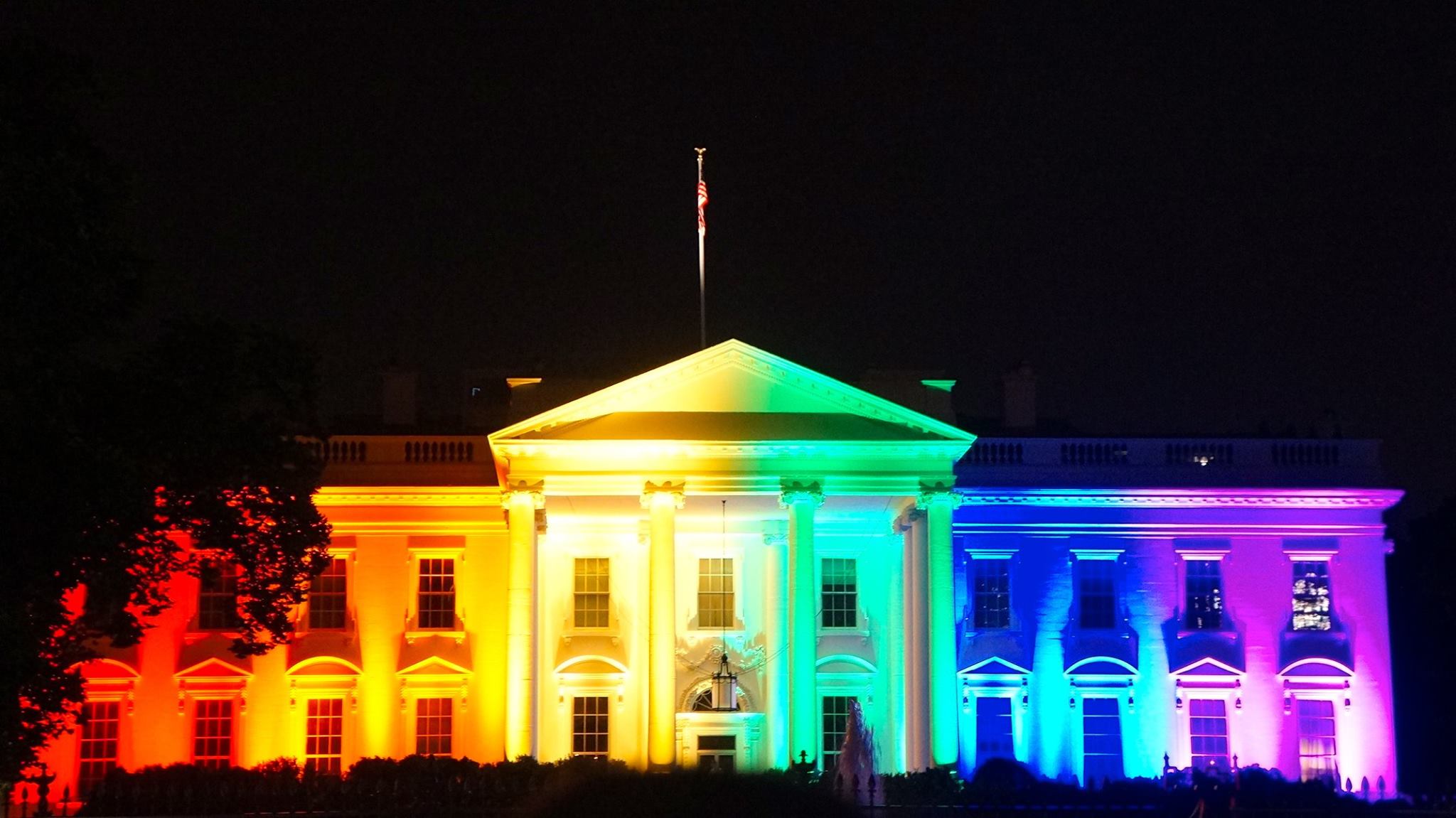
WhiteHouse627

Though I wasn’t able to join The Atlantic‘s conference this week on the future of the LGBT civil rights fight, I took to Twitter earlier today to make that case that the future of the LGBT rights fights is largely international in character.

Without prejudice to the ongoing fights, legal and political, across the United States, I would argue the LGBT outlook should be much more global in 2015 — and as we look to the future and the kind of world we want to see in 2025 for both LGBT rights and human rights more generally. Continue reading Why the future of the LGBT rights fight is international — in 20 tweets

‘Coalition of the frenemies’ is bombing Syria for all the wrong reasons

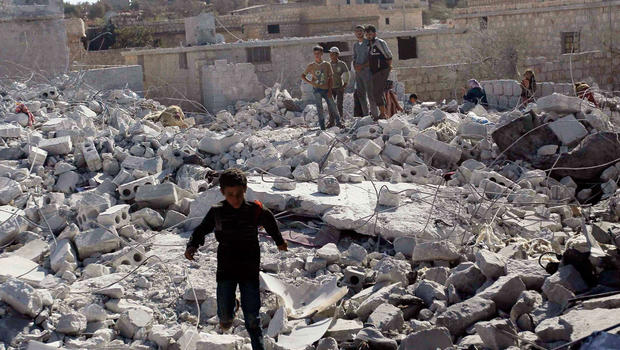
The aftermath of an American strike in Syria's Idlib province last September. (Abdalghne Karoof / Reuters)
The aftermath of an American strike in Syria’s Idlib province last September. (Abdalghne Karoof / Reuters)

Call it the ‘coalition of the frenemies.’Syria Flag Icon

With British prime minister David Cameron’s victory in the House of Commons last week, fully four of the five permanent members of the U.N. Security Council, plus NATO member Turkey and several regional allies, will now be engaged in the fight against ISIS (ISIL/Islamic State/Daesh) in eastern Syria. Following last week’s fatal shooting in San Bernardino, California, by two jihadist sympathizers, US president Barack Obama reassured the United States in a rare Sunday night prime-time address that his administration will continue its intensified airstrikes against ISIS in eastern Syria, increasingly targeting the oil tankers controlled by ISIS that fund its jihadist mission.

Cameron’s team, including foreign minister Philip Hammond, argued that a force of 70,000 ‘moderate’ Syrian forces would be willing and ready to take on the ISIS threat in the event of a coordinated allied campaign to deploy sustained airstrikes against ISIS, both reducing the terrorist threat to Europeans at home and establishing the conditions for peace abroad (and the Obama administration has more or less echoed this sentiment). That seems optimistic, however, given that ‘radical’ rebels, like ISIS and the al Qaeda-affiliated Jabhat al-Nusra quickly overpowered ‘moderate’ rebels like the Free Syrian Army throughout 2012 and 2013.

In reality, there’s no bright line among anti-Assad Sunnis in Syria. Although Syrian president Bashar al-Assad is Alawite, 75% of Syria’s pre-war population was Sunni, which means there’s a lot of room for variation. Nevertheless, after more than a year of U.S. airstrikes, moderate Syrians (whether 70,000 or 7,000) and Kurdish peshmerga forces have not effectively dislodged ISIS, particularly outside traditionally Kurdish areas of Iraq and Syria.

Though U.S. Secretary of State John Kerry is still boosting peace talks in Vienna in early 2016, neither the Assad government nor the anti-Assad rebels have indicated they will join those talks. What’s more, it’s not even clear who would ‘represent’ the anti-Assad rebels, who are fighting as much against each other as they are against Assad.

Even as countries from four continents are running air campaigns in Syria, they are acting in far from a coordinated manner. Tensions are already rising after Turkey downed a Russian military jet late last month, despite repeated warnings that the jet was infringing Russian airspace. Imagine how tense the situation could become if a Russian jet attacks an American one in the increasingly crowded Syrian skies. None of the actors, including Russia or the United States, has any clear strategic plan for an endgame in Syria. Russia still can’t articulate a credible scenario where Assad rules a united postwar Syria, and the United States still can’t articulate a credible scenario where Sunni and Shiite factions can work together to govern Syria — or even Iraq, for that matter.

The descent of the world’s major powers upon Syria was accelerating even before jihadist terrorists left 130 innocent civilians dead in Paris, and the manner in which Syria has now become a proxy war for so many other regional and global actors is starting to resemble the domino trail of alliances and diplomatic errors that began World War I.  It’s irresponsible to argue that the world is plunging into World War III, but the escalations in Syria reflects the same kind of destructive slippery slope that began with the assassination of the heir of a fading empire by a nationalist in what was then a provincial backwater. Continue reading ‘Coalition of the frenemies’ is bombing Syria for all the wrong reasons

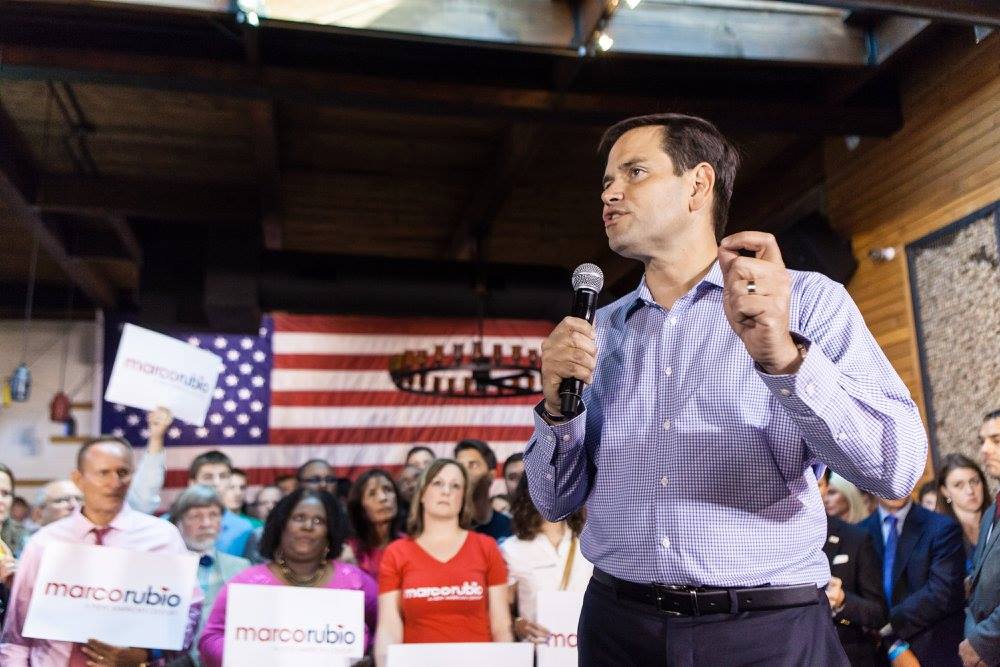
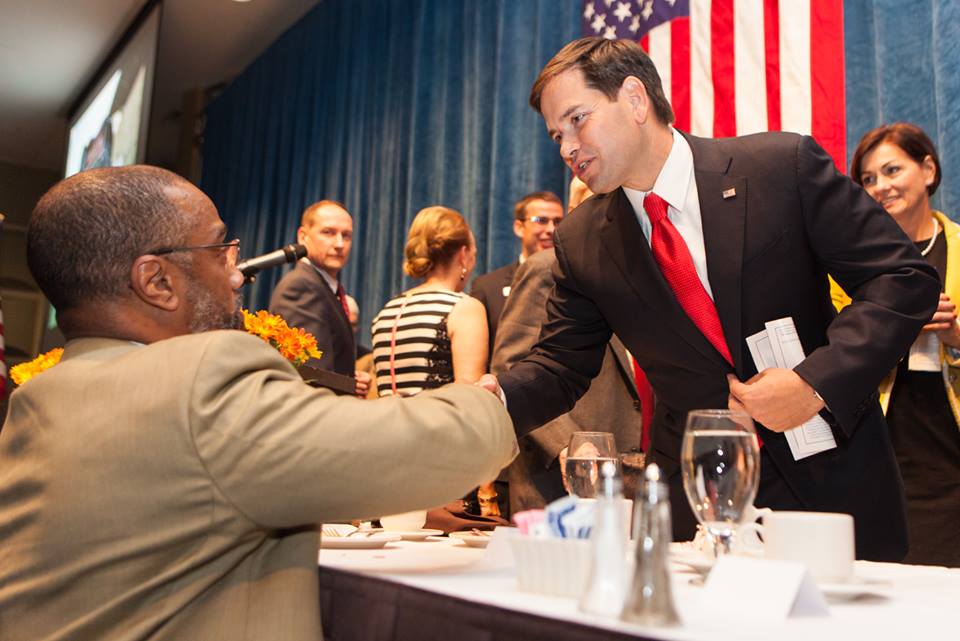
Why Marco Rubio is such a strong candidate for the Republican nomination

rubio

…in 15 tweets.USflag

Step back from the horse race, step back from the scorecards of last night’s debate, step back from the peculiarities of Iowa and New Hampshire. Envision what the Republican general election campaign in November 2016 will have to offer to an electorate where young voters, women (possibly in historical numbers) and racial and ethnic minorities will still favor the Democratic ticket, barring a catastrophic turn in voting patterns or economic conditions.

Who, given the current 15-candidate field, will Republicans want running that campaign?

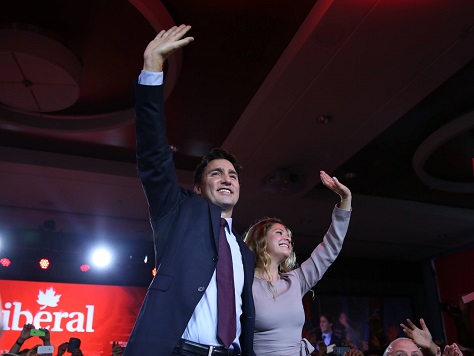
Nine things to watch as Canada’s next Trudeau era begins

trudeauwin

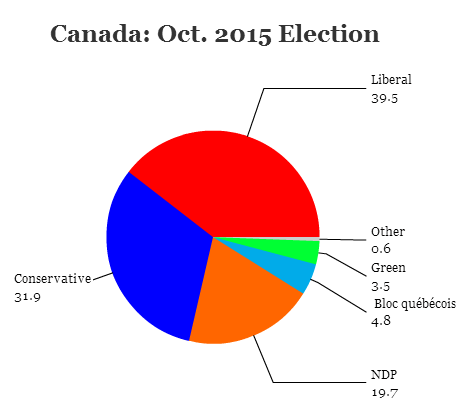
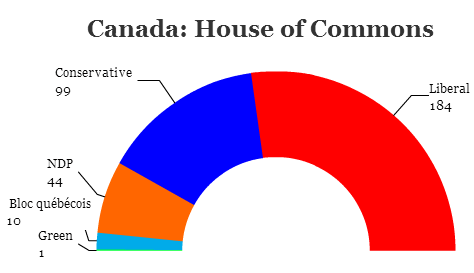
Defying expectations in August that pitted the Liberal Party in third place at the beginning of the election campaign in August, Justin Trudeau has now won a clear majority government and a mandate for change in Canada’s 42nd federal election.Canada Flag Icon

So what does that mean for Canada, for US-Canadian relations and for Canada’s role in the world in the weeks and months ahead?

Here are nine policy areas to keep an eye on as Trudeau begins the rapid transition to 24 Sussex Drive, appoints a cabinet and tackles a full agenda of issues that could dominate what will likely be a full four-year term with the kind of parliamentary mandate that should make it much more easier than Trudeau ever expected to enact his policy preferences.

canada2015 (1) house2015 (1)

Climate change. As the Paris summit on climate change approaches in November, Canada’s government will go from being one of the most skeptical participants at the conference to one of the most enthusiastic supporters of action to reduce carbon emissions. Keep an eye on Stéphane Dion, the former Liberal leader from 2006 and 2008 and a former environmental minister, to play a vocal and supportive role. Nevertheless, global climate change policy is mostly set by the G-2 — i.e., the United States and China. So Trudeau’s role at the summit, while productive, will be more about style than any actual substance. Joyce Murray, a popular left-wing MP and British Columbia’s former environmental minister, who was the runner-up to Trudeau in the 2013 Liberal contest, is also a rising star to watch on environmental matters.

Economic policy. At the start of the campaign, the traditionally more centrist Liberals advanced a tax policy to the left of the New Democratic Party (NDP) by promising a middle-class tax cut to be paid for by slightly higher taxes on those who earn roughly more $200,000 annually. During the campaign, as Canada officially slipped into a shallow recession, Trudeau doubled-down by pledging to engage in deficit spending over the next three years to stabilize Canada’s economy, protect jobs and boost infrastructure. It was this move, again outflanking the NDP (whose leader Thomas Mulcair promised to maintain the Conservative Party’s devotion to balanced budgets), that may have convinced voters that Trudeau, and not Mulcair, represented the most striking contrast with Conservative prime minister Stephen Harper.

Ralph Goodale, a former finance minister under Paul Martin; Bill Morneau, a 52-year-old newcomer first elected last night from the Toronto’s business world and Scott Brison, a former Progressive Conservative MP who defected to the Liberals over a decade ago, could all be leading contenders for finance minister. Continue reading Nine things to watch as Canada’s next Trudeau era begins

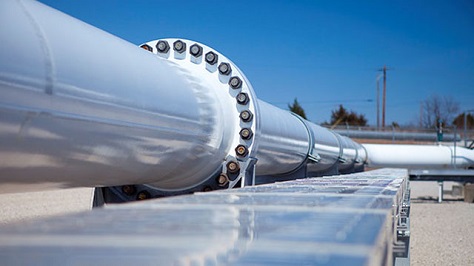
In Canada’s election, Keystone’s not the only controversial pipeline

Energy East

In a debate on foreign policy late last month, each of Canada’s would-be prime ministers parried over the Obama administration’s long-delayed decision not to approve the Keystone XL pipeline. Both of prime minister Stephen Harper’s chief opponents targeted his approach to defending the Keystone XL project, and opposition leader Thomas Mulcair snapped at Harper’s tone altogether:Canada Flag Icon

“It’s an old saying that you catch more flies with honey than with vinegar,” Mulcair said. “You are pouring vinegar all over the Americans.” Harper said that he has worked “productively, overall” with Obama and the U.S. during his reign as prime minister.

But Keystone XL isn’t the only pipeline matter that the next Canadian government will face. It’s possibly not even the most important pipeline or even the most important issue as Canada prepares to join a crucial global summit on climate change regulations in Paris in November.

But for all the accomplishments of prime minister Stephen Harper in the past nine years (lower taxes, attempts at budget surpluses, aggressive pursuit of free trade agreements, a more relaxed attitude to federalism), it might be surprising that such an energy-friendly government of an Albertan prime minister who comes from a Conservative Party with deep roots in the Canadian west hasn’t overseen the full completion of any major pipeline projects.

A National Geographic-designed map that lays out Canada's major proposed oil pipelines.(National Geographic)
A National Geographic-designed map that lays out Canada’s major proposed oil pipelines.(National Geographic)

But the next government will increasingly be faced with key decisions about whether to allow a handful of projects to proceed. Four major pipelines, in particular, have emerged in the campaign, some of which are more popular than others. While the Green Party is almost universally opposed to the projects and the Conservatives are almost universally supportive, each pipeline brings with it a bundle of environmental, economic and even cultural issues. In particular, the four pipelines have been an opportunity for the two center-left parties, Mulcair’s New Democratic Party (NDP) and Justin Trudeau’s Liberal Party to stake out contrasts against each other. Continue reading In Canada’s election, Keystone’s not the only controversial pipeline

Eight things Americans should know about the Danish (and Nordic) welfare state

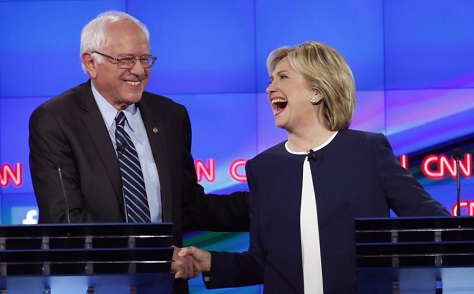
sandersclinton

Tuesday night’s Democratic presidential debate had barely started when the two leading contenders, former US secretary of state Hillary Clinton and US senator Bernie Sanders of Vermont immediately clashed.USflagdenmark flag

Over Denmark.

That’s right. Before Iran or Cuba, Syria or Russia, the US Democratic debate began with a minor tussle over a small Nordic country that’s home to just 5.614 million people.

From the beginning of his campaign, Sanders has called for a Nordic-style state that pays for single-payer health care, free education and other state-provided benefits, and he defended the Nordic model as a lodestar for US policy-making on Tuesday night:

Those are some of the principles that I believe in, and I think we should look to countries like Denmark, like Sweden and Norway, and learn from what they have accomplished for their working people.

Clinton, for her part, argued that the Danish model wasn’t particularly well suited for the United States:

But we are not Denmark. I love Denmark. We are the United States of America. And it’s our job to rein in the excesses of capitalism so that it doesn’t run amok and doesn’t cause the kind of inequities we’re seeing in our economic system.

Neither candidate necessarily went beyond a surface-level comparison with the Nordics, though.

When Sanders — a self-described ‘democratic socialist’ — refers to the Nordic model, he’s referring to a generic set of policies that describe a typically high-tax, high-services government that provides health care, education, child care, ample family leave, copious unemployment benefits and, in some cases, up to five weeks of annual vacation time for workers. It’s often described as a kind of hybrid system that melds elements of socialism and capitalism. Denmark proportionately spends more than 150% on social welfare spending than the United States — 30.1% of GDP, compared to the US standard of 19.2%.

Increasingly, however, across the Nordics, the rise of center-right and sometimes far-right groups have succeeded in reforming that understanding of the welfare state by trimming benefits and reducing taxes, all while pushing for policies that encourage innovation and easing business regulation. Today, there are center-right governments in four of the five Nordics (Finland, Norway, Iceland and Denmark), and an eight-year, reformist center-right government ended just last autumn in Sweden under the still-popular former prime minister Göran Persson. In three of those countries, governments rely on hard-right and often anti-immigrant parties to support their policy agendas.

Taken together, the Nordics — and that includes Denmark — are generally some of the happiest, wealthiest, most productive and surprisingly competitive in the global marketplace.

But the story of the Nordic model is much more complex and nuanced, and there are reasons why it might work better in northern Europe than elsewhere, including the United States.

Here are eight features of the Danish system, in particular, that help explain some of that context — both good and bad.
copenhagen1

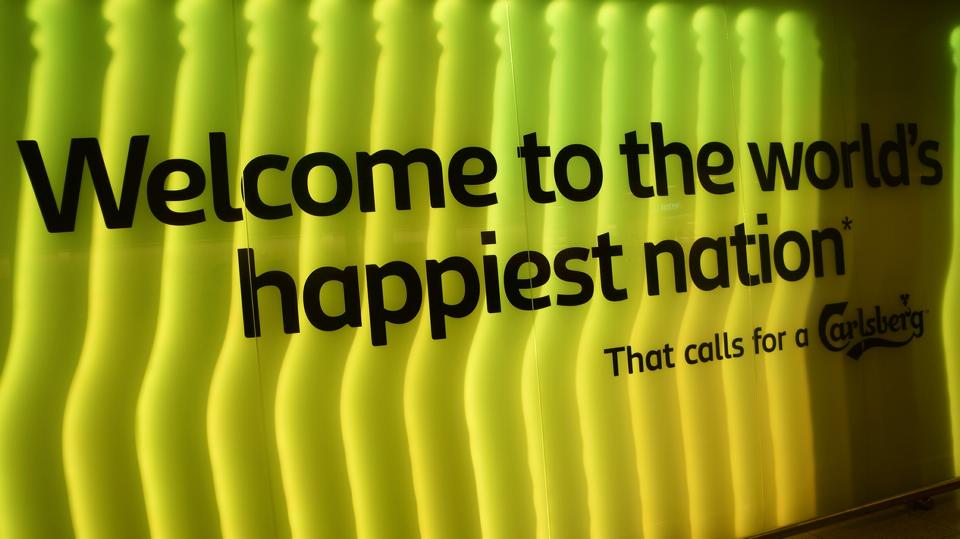
1. Denmark has been ranked the ‘happiest country in the world’

In Danish culture, there’s a concept called hygge, and it’s said that there’s really not an English language translation for it — warmth, coziness, contentment.

It’s one of the elements that motivates the Danish welfare state, and it explains why, for many Danes, consumerism isn’t as important as spending time with family, working reduced hours and using more free time to pursue individual hobbies and non-professional lives.

That explains, perhaps, why a couple of years ago, Denmark was ranked the happiest country in the world.

But it also explains why peculiarly Danish or Nordic or European cultural features do not easily translate in a country like the United States, and why policies based on Danish cultural attributes might not be nearly as popular in the American context.

2. Its reformed welfare state is actually pro-business

The fact of a strong welfare system isn’t necessarily incompatible with a pro-business orientation. As Marian Tupy wrote earlier for the Cato Institute, Denmark today is ranked as an easier place to do business than the United States, boasts a freer trade regime and slightly outpaces the United States on economic freedom.

Companies like Mærsk dominate global shipping, and Danske Bank is a key financial operator throughout northern Europe. But Denmark’s system has also unleashed as much creativity as commercialism. LEGO is a Danish concept, and the country spawned an entire school of designers in the mid 20th century Denmark, most notably the architect Arne Jacobsen. Today, there’s no more cutting-edge trend in cuisine than the ‘new Nordic’ cuisine, and its hub is Copenhagen, which is home to several Michelin-starred restaurants.

It’s true, however, that the Danish welfare state isn’t your father’s Nordic welfare state. Since the 1970s, successive center-right governments, including that of prime minister Anders Fogh Rasmussen in the 2000s, have tried to freeze tax increases or even lower taxes in certain cases, especially for business. Despite the enduring popularity of the Danish welfare state, Danes are increasingly aware of the demands that an aging population will make. So far, reforms include an increase in the retirement age from 65 to 67 gradually over the next eight years, a decrease in the limit for unemployment benefits from four years to just two and certain limits on grants provided to students.
copenhagen2

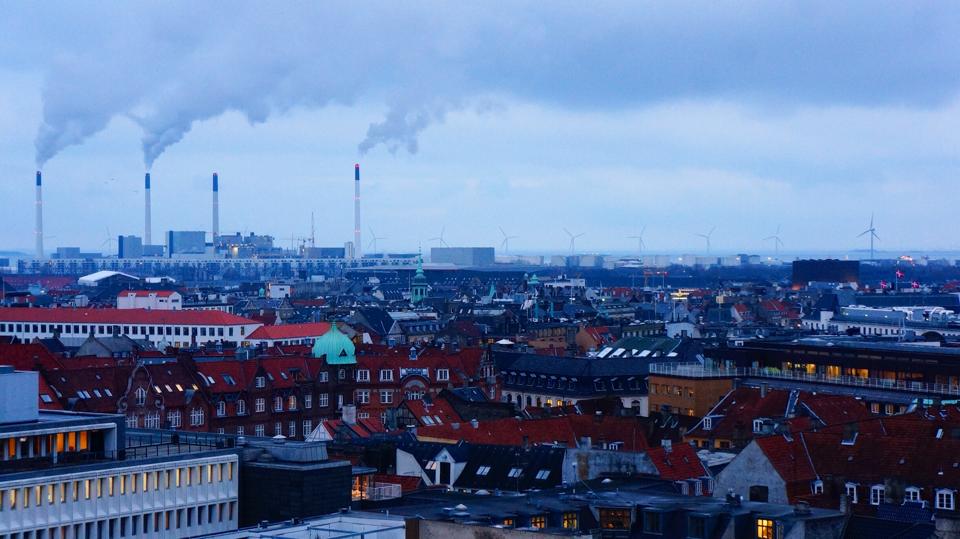
3. It gets nearly 50% of its electricity from wind power

Environmentalists also take much delight with Denmark. It was a leading developer of wind power as a renewable energy source in the 1980s, and today wind power amounts to 39% of Denmark’s total electricity consumption — and that’s set to rise to 50% within five years. On some particularly windy days, Denmark meets up to 140% of its total electricity needs.

Though the results of Denmark’s renewable energy program give heart to environmentalists, they should also perk up capitalists as well. Wind power is now big money, at least for Denmark, despite the highly subsidized start-up costs of building offshore wind farms. Moreover, its push to reduce its reliance on fossil fuels resulted from a sense of conservative prudence from the aftermath of the 1970s oil shocks.

4. Education, even for adults, is an important public value

One of Denmark’s national heroes is the 19th century philosopher Nikolaj Gruntvig, who is credited with formulating Denmark’s national education theory. That translated, from the 1840s onward, a dedication to the value of public education in Denmark. Even today, Denmark has a tradition of the folkehøjskole, or ‘folk high school,’ where adults can return to education to obtain new skills for their careers or even just for fun or for post-retirement intellectual stimulation.

That’s one of the reasons that free education is such a cherished value in Denmark. But it also shows that the roots of the Nordic welfare system are often centuries in the making. Unlike, say, in the United Kingdom, where universal government-run health care was a postwar phenomenon, the ingredients of the Danish welfare system lie in the rise of social democratic and agrarian political movements in the 19th century, and the communal spirit of compromise and reform goes back to the 18th century of beyond.
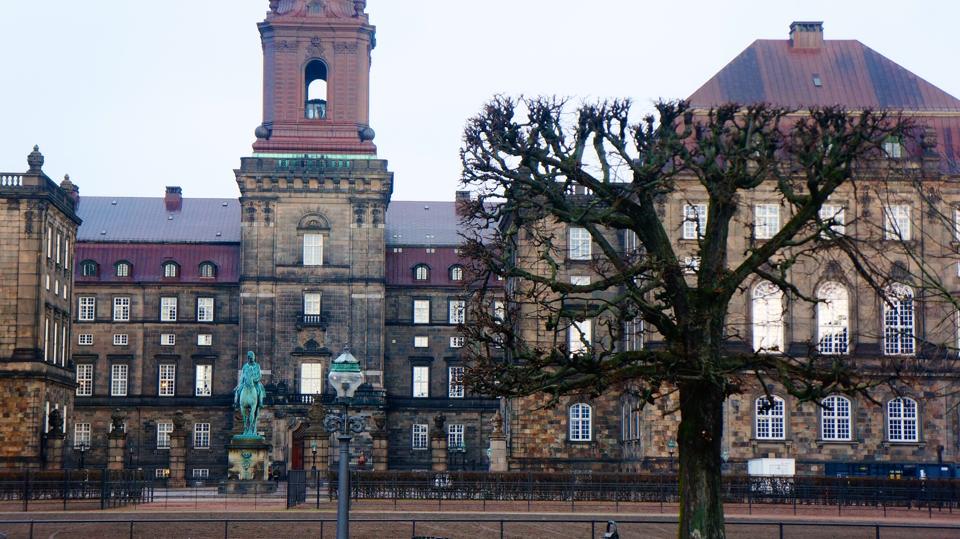
copenhagen3

5. Freedom of information is key to government transparency

Scandinavian countries were some of the first countries to enact freedom-of-information laws. Sweden’s Freedom of the Press Act dates back to 1766, for example, and Nordic countries have generally pushed to expand the European Union’s freedom-of-information directives more widely. Denmark’s most recent law, the Access to Public Administration Files Act, even includes certain private and public energy suppliers in the scope of what’s covered.

That comes with its own benefits. Denmark ranked first in Transparency International’s 2014 Corruptions Perception Index — the United States ranked just 17th, far behind Denmark, Finland (3rd), Sweden (4th) and Norway (5th). The ethos of good government and transparency infuses every level of government (and it’s one of the motivating themes of the hit television series Borgen, a three-season show about the personal and professional lives of Danish politicians and journalists).

The perception that the Nordics are an essentially corruption-free zone are another reason why businesses are so keen on relocating there.

But it’s also the kind of place where an official like Clinton would never be able to get away with keeping a secret server, unbeknownst to the Obama administration, to conduct official and unofficial state business alike.

6. Family leave policies are quite generous

In Denmark, parents receive a full year of maternity and paternity leave — mothers are guaranteed 18 weeks and fathers are guaranteed two weeks, with a further 32 weeks to be split up as between the two parents as they see fit. That’s aside from a guarantee of up to five weeks of vacation time annually for workers.

Though no one expects Sanders (or anyone else, for that matter) to introduce single-payer health care to the United States, there is a growing sense that the United States should offer at least some basic parental leave. American workers currently have no federal guarantee of maternity or paternity leave nor do they have a right to vacation leave — something that makes the United States an extreme outlier throughout the developed world.

This is one area where there’s cause for optimism. If Clinton, as widely expected, wins the Democratic nomination, she will be well-placed as the first female nominee of a major party to make this a chief policy priority. There’s a great symbolism in the notion that the first American woman in the presidency will also implement the first universal maternity leave policy.

But it’s an issue that could resonate with conservatives as well. In the United Kingdom, prime minister David Cameron and the Conservative Party campaigned on extending tax credits for child care. Though he ultimately abandoned it, former Australian prime minister Tony Abbott, also a conservative, campaigned in 2013 on expanding paid parental leave. Certainly, social conservatives and Christian voters who value strong families might also champion a policy. It’s one area where, in an increasingly polarized political scene, both Republicans and Democrats might come to agree.
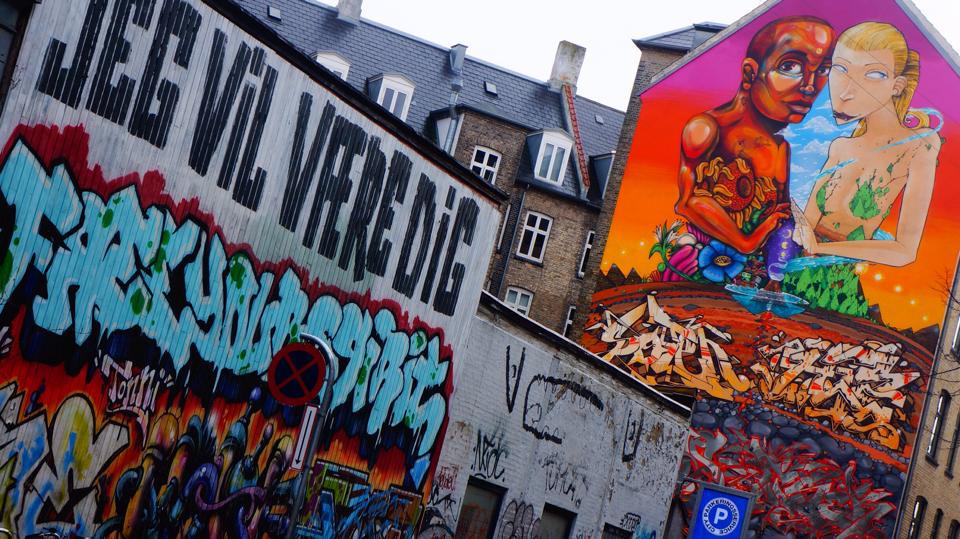
copenhagen4

7. The population is more homogeneous —
and far less welcoming to immigrants

One of the theories behind the Nordic model’s success is that countries like Denmark have greater civic trust because they have small and, on the whole, homogeneous populations. That’s one of the reasons that critics say a Nordic-style approach would never work in such a sprawling and heterogeneous place like the United States.

But that also points to one of the darker sides of Danish policy.

Only recently, Denmark’s center-right government made global headlines for its unwelcoming attitude to mostly Muslim refugees arriving on European shores. It went so far as to take out Arabic-language advertisements in Lebanese newspapers noting that family reunification might not be possible and that public assistance for immigrants is now lower.

The message is clear — Denmark is not a particularly welcoming place for immigrants. Denmark, notably, opted out of the migration quota system agreed among the vast majority of EU nations earlier this year. In early December, Danes will vote in a referendum that could see the country ‘opt-out’ of certain justice and home affairs standards.

The anti-Islam and anti-migrant Dansk Folkeparti (Danish People’s Party) won more votes in the recent June 2015 snap elections than any other party, with the exception of former prime minister Helle Thorning-Schmidt’s center-left Socialdemokraterne (Social Democrats). As the Social Democrats’ left-wing allies lost votes, it remained for the third-placed center-right Venestre to form a minority government under current prime minister Lars Løkke Rasmussen, who depends on the People’s Party as well as other smaller center-right parties to govern.

The rise of the Danish far-right (and the Scandinavian far-right in general) has pushed both of the major parties toward less migrant-friendly positions. Even Thorning-Schmidt tried to co-opt that message earlier this year with billboards proclaiming that migrants to Denmark would have to find work.  One of Rasmussen’s first actions as prime minister was to enact, in August, on a highly divided vote, a measure that cuts benefits by 45% for immigrants who have not lived in Denmark for seven of the last eight years.

Sweden, which remains far more welcoming of migrants, especially Syrians and others from outside the European Union, has not responded to the refugee crisis with the same level of closed-mindedness as the Danish. Nevertheless, growing antipathy toward immigrants (in Denmark and Sweden alike) and increasingly multicultural Nordic populations will certainly test the ‘homogeneity theory’ in the years ahead.

8. There’s not just ‘one’ Nordic model

Generally speaking, it’s a mistake to refer to a single Nordic model, because the five countries that comprise the Nordics are actually very different. Denmark and Sweden, on one hand, spent much of the past half-millennium as colonial powers. Norway, Iceland and Finland, on the other hand, spent much of the past half-millennium as subjugated colonies — Iceland won its independence from Denmark only in 1944, and Norway won its independence from Sweden in 1905. Today, that filters through culture and geography — Stockholm and Copenhagen are imperial cities, while Oslo and Helsinki are not.

Norway’s vast oil wealth, in particular, makes it a special case that has elements of other Nordic states, but also the problems that many petrostates face. Finland’s longtime relationship with Russia gives it a certain sensibility in European geostrategic matters (and that explains why both it and Sweden are still not members of NATO).

Neither Iceland nor Norway are members of the European Union, lest their rich fish stocks be subject to competition from Spanish and Greek fishermen. While Finland is a member of the eurozone, both Denmark and Sweden have retained their own national currencies and control over their monetary policy.

All of which is to say that even Scandinavians can’t agree on which ingredients are most key to their ‘model’ — and that makes its export outside the northern European context all the more difficult.
One reasons for Americans to support TPP? Absolving US sins in Vietnam.

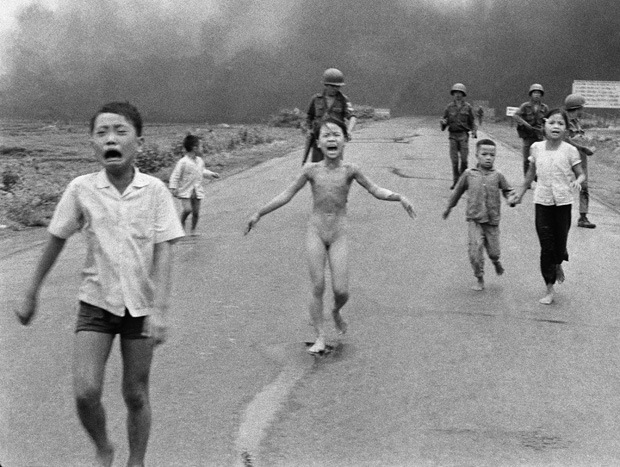
FILE - In this June 8, 1972 file photo, crying children, including 9-year-old Kim Phuc, center, run down Route 1 near Trang Bang, Vietnam after an aerial napalm attack on suspected Viet Cong hiding places as South Vietnamese forces from the 25th Division walk behind them. A South Vietnamese plane accidentally dropped its flaming napalm on South Vietnamese troops and civilians. From left, the children are Phan Thanh Tam, younger brother of Kim Phuc, who lost an eye, Phan Thanh Phouc, youngest brother of Kim Phuc, Kim Phuc, and Kim's cousins Ho Van Bon, and Ho Thi Ting. (AP Photo/Nick Ut)
The iconic June 8, 1972 photo that shows 9-year-old Kim Phuc after an aerial napalm attack on suspected Viet Cong forces. (AP Photo/Nick Ut)

There are a lot of reasons to be cynical about the Trans-Pacific Partnership.USflagvietnam

Like most multilateral trade deals, it seems to bring with it all of the ‘warts and barnacles’ that always seem to accompany these kinds of trade deals:

  • Complex enforcement mechanisms (like ISDS) sometimes seem to threaten to override national sovereignty.
  • Agreements too often fail to address poor labor and environmental standards in the developing world and, when they do, enforcing more equal standards is difficult.
  • Ignoble compromises over intellectual property force higher prices for life-saving drugs throughout the developing world and benefit Hollywood at the expense of locally produced culture.
  • In a globalized world where the World Trade Organization reduced many tariffs to nearly zero over the last half-century, free trade deals too often fail to liberalize non-tariff barriers to trade, at least to the extent that proponents might prefer, especially in the most highly protected industries like agriculture and services.

Hillary Clinton, who often championed the TPP when she served as the Obama administration’s secretary of state, came out against the trade deal last week, citing the protections for pharmaceutical companies and the lack of mechanisms that deal with potential currency manipulation. Those are odd reasons, though, as many analysts have noted, and her opposition comes after sustained support for the trade deal when she was in office. If anything, the protections for drug companies are far lower than those companies sought (just five to eight years of protection instead of the 12 years that the United States originally wanted). Moreover, currency manipulation has never particularly been an issue of focus in multilateral trade deals, and it’s doubtful that the US government could have won any serious concessions on currency, even if it tried.

Generally speaking, even if you dislike the TPP’s ‘warts and barnacles,’ there’s still a strong theoretical basis for freer trade. But there’s an even more important reason to support the TPP.

Vietnam.

No country stands to gain more from the benefits of free trade and liberalization than Vietnam. As Tyler Cowen eloquently wrote in April for Marginal Revolution:

It has large numbers of state-owned enterprises, and its policies toward such enterprises could use more transparency and predictability, as indeed TPP would bring.  Most generally, Vietnam is not today a free country.  Bringing Vietnam into TPP would further ensure their attachment to a broadly liberal global trading order.  TPP also would bring free(r) labor unions to Vietnam.

Other analysts agree, and there’s a growing consensus that Vietnam will be among the top winners if TPP becomes a reality. With tariffs on garments and footwear set to fall to zero under the TPP, Vietnamese exports will get a boost in the United States at the expense of China and even other free-trade partners like Mexico, because labor costs are still lower in Vietnam. That will help Vietnam maintain its advantage for low-cost manufacturing, even as multinational companies look to even lower labor costs in Laos and Cambodia. Moreover, despite challenges ahead, a widely cited analysis by the Petersen Foundation identified Vietnam as the country with the most to gain from the TPP:

Vietnam would face significant challenges in implementing an agreement that requires stringent disciplines in areas such as labor and government procurement. It also faces tough challenges in maintaining a macroeconomic environment that permits adjustment and encourages long-term investments. But overall, Vietnam’s participation in the agreement is well-founded.

TPP will, accordingly, increase the diversity of Vietnam’s trading partners and reduce its economic reliance on China. When the Obama administration talks about the benefits of TPP in strategic or even military terms, this is one of the most important points — TPP will lessen China’s hold on the southeast Asian economy, at least in the short term, both to the benefit of countries like Vietnam (as well as Malaysia and even more developed countries like Japan and Singapore).

Greater trade between the United States and Vietnam, and greater trade between Vietnam and the European Union, pursuant to another free-trade agreement concluded earlier this year, is expected to increase foreign direct investment in Vietnam, which could help develop a more high-tech and services-based economy and a more educated workforce.

Moreover, arguably no country in the world has suffered more at the hands of US incompetence during a war that today seems as pointless as it was brutal. From the My Lai massacre to carpet-bombing and the gratuitous use of napalm, the US-led war in Vietnam in the 1960s and the 1970s didn’t even accomplish its goal of keeping south Vietnam free of communism. The Cold War mentality at the time skewed the nature of Ho Chi Minh’s original struggle, initially more about self-determination and nationalism than about communist ideology. No one today would argue that the war was worth the sacrifices of US forces, the South Vietnamese or the North Vietnamese.

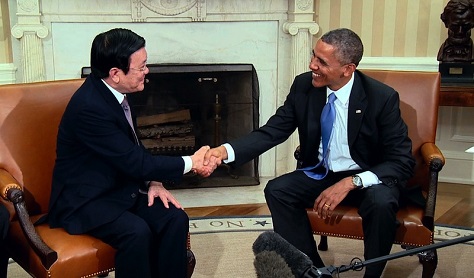
Vietnamese president Trương Tấn Sang met with US president Barack Obama at the White House in July 2015. (White House)

With TPP, the United States has a chance to ameliorate some of those harms. It was Clinton’s husband who restored normal relations with Vietnam in 1995, and it was Republican George W. Bush who facilitated Vietnam’s WTO entry in 2007. Pulling Vietnam, through TPP, into the global mainstream economy is the next logical step in reducing poverty in a country that’s growing at an estimated 6% this year, and Goldman Sachs, for example, predicts that the Vietnamese economy will surge from $186 billion (the world’s 55th largest) to $450 billion by 2025, making it the world’s 17th largest.

Continue reading One reasons for Americans to support TPP? Absolving US sins in Vietnam.

A brief history of Republican speakercide

John Boehner, the Speaker of the US House of Representatives will step down and resign from Congress at the end of October. (Facebook)

Since the end of the decades-long Democratic dominance on Capitol Hill, the House of Representatives has had four Republican speakers (or near-speakers). All four  — all — were forced out by internal coups or otherwise disgraced by scandal.USflag

John Boehner, the affable, business-friendly Ohio congressman who announced his resignation last Friday, is just the latest Republican speaker to meet a difficult end — facing a revolt of tea-party and hard-line conservatives within his caucus threatening a government shutdown over Planned Parenthood funding.

By stepping down at the end of next month, Boehner will be able to keep the government running with the support of Democrats, if necessary. As the Washington Post‘s Chris Cillizza writes, Boehner sacrificed his career for the long-term good of the Republican Party.

A week ago, Boehner grumbled about the difficulties of leading his caucus, comparing himself to a garbageman who has gotten used to ‘the smell of bad garbage.’ Over the weekend, he unloaded to Politico on his party’s most conservative and uncompromising legislators:

“The Bible says, beware of false prophets. And there are people out there spreading, you know, noise about how much can get done,” Boehner said. “We got groups here in town, members of the House and Senate here in town, who whip people into a frenzy believing they can accomplish things they know — they know! — are never going to happen,” he added.

Boehner will join a small club of Republican speakers, all of whose legacies are somewhat tarnished. That’s not even counting the legal troubles faced by former majority leader Tom DeLay or former Senate majority leader Trent Lott, who resigned from the leadership in 2002 after making controversial remarks praising the late Strom Thurmond, a longtime South Carolina senator who mounted a segregationist ‘Dixiecrat’ presidential campaign in 1948.

Newt Gingrich, the Georgia congressman who engineered the ‘Republican revolution’ that brought the party control of both houses of Congress after the 1994 midterm elections, lasted for exactly two cycles. When the party sustained midterm losses in 1998 to president Bill Clinton’s Democratic Party, partially as a result of Republican congressional inquiry into Clinton’s perjury relating to an alleged sexual affair with White House intern Monica Lewinsky, Gingrich resigned rather than face full insurrection from rebels within his own caucus (that, at the time, including a younger Boehner). Continue reading A brief history of Republican speakercide

Xi’s hard power trumps papal soft power on climate change

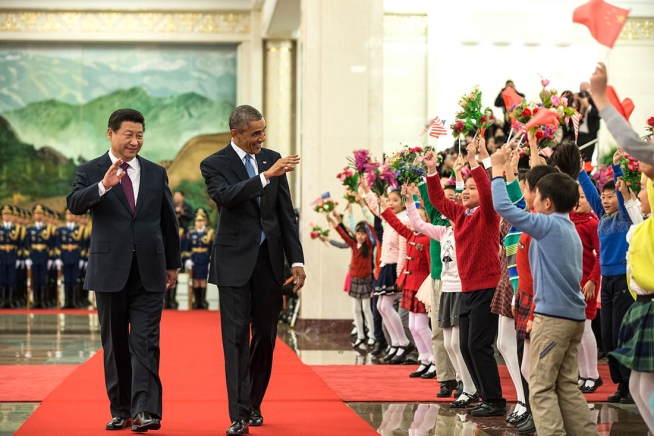
US president Barack Obama and Chinese president Xi Jinping arrive at Beijing's Great Hall of the People in November 2014 (White House).
US president Barack Obama and Chinese president Xi Jinping arrive at Beijing’s Great Hall of the People in November 2014 (White House).

Despite the Fellini-esque excitement that swept the American capital over Pope Francis’s first-ever trip to the United States, it’s the arrival of China’s president, Xi Jinping (习近平), this week that will have the broader impact on global affairs.vatican flagChina Flag Icon

While the pope invoked human rights when he spoke about the environment in spiritual terms at the United Nations General Assembly Friday morning, Xi was preparing to announce that China would initiate in 2017 its own national cap-and-trade program, giving teeth to a pledge for carbon emissions in the world’s most populous country to peak in 2030, declining thereafter, part of an ambitious bilateral agreement signed between the United States and China last year.

It’s hard to think of two actors in international affairs who reside more starkly on the spectrum of ‘soft power’ and ‘hard power’ more than the two men who visited Washington this week. Francis, nominally the head of a country of less than 500 residents and 110 acres, leads a church with over 1.2 billion members, and he carries the moral authority with Catholicism’s believers to influence everything from LGBT rights to immigration reform. But Xi, as the leader of a country with 1.3 billion people, wields the political, military and economic power that comes from controlling the world’s largest economy and military force.

For all the talk about Francis’s ability to deploy soft power with tactical skill, it is Xi’s hard power that is setting the agenda for climate change policy around the world, and the dual contrast on Friday revealed the limits of soft power. There’s no indication that Francis’s exhortations have made any difference on the willingness of the Chinese government to embrace transformative environmental policy.

What’s more, Xi’s increasingly progressive stand on climate change isn’t driven by the desire for international praise or even necessarily the merits of a policy that will reduce global emissions, but by hard domestic politics. In a one-party state, the Chinese Communist Party knows that it ‘owns’ every problem in China (there’s no alternative Democratic or Republican Party it can blame), so Xi knows that his government has to be seen as doing something to ameliorate his country’s crippling and health-threatening pollution. Continue reading Xi’s hard power trumps papal soft power on climate change

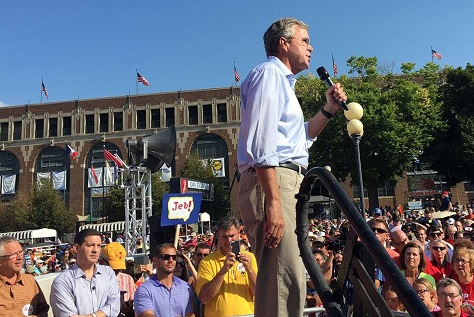
Why you shouldn’t take Bush/Rubio foreign policy speeches seriously

bushiowa

Last week, two of the leading contenders for the Republican presidential nomination delivered Major and Very Serious Foreign Policy Addresses designed to establish their credibility on international affairs. USflag

Former Florida governor Jeb Bush, who delivered an address last Tuesday at the Ronald Reagan Presidential Library in California, and Florida senator Marco Rubio delivered an address to the Foreign Policy Initiative in New York. Bush and Rubio alike delivered plenty of bromides about projecting U.S. strength and toughness against the enemies of the United States, with plenty of withering attacks on the foreign policy of the Obama administration, including the likely Democratic presidential nominee, former secretary of state Hillary Clinton. But critics on both the right and the left panned the speeches as the same old neoconservative sauce poured back into a barely disguised new bottle.

From Slate‘s Fred Kaplan on the Bush speech:

His 40-minute speech, at the Ronald Reagan Presidential Library, was a hodgepodge of revisionist history, shallow analysis, and vague prescriptions.

From The American Conservative‘s Daniel Larison on Rubio:

Once again, Rubio fails to understand the limits of applying pressure to another state…. Rubio boasts about wanting to usher in a “new American century,” and these are the bankrupt, discredited policies he wants to use create it.

From Vox‘s Zack Beauchamp:

Jeb Bush didn’t mention his brother, George W. Bush, Tuesday night in his foreign policy speech. But he might as well have…. Jeb’s speech is a reboot of his brother’s neoconservative view of the world, albeit in a somewhat stripped-down form. He thinks American military power “won” the war in Iraq. The lesson we should learn, Bush suggests, is that a bigger US military commitment to the Middle East is the best way to solve its biggest problems.

Ultimately, these haughty foreign policy speeches have little to do with establishing a foreign policy vision. They’ve become part of the traditional bunting of a modern presidential campaign — like flag pins and campaign rallies and the increasingly customary mid-summer overseas trip in general election years (à la Barack Obama in 2008 or Mitt Romney in 2012) that, at best, amounts to a weeklong photo-op and pedantically positive news coverage. In a primary election, grand foreign policy addresses are one part presidential playacting and one part rallying the base.

* * * * *

RELATED: What would Jeb Bush’s foreign policy look like?

* * * * *

For all the posturing, these speeches will all be long outdated by the time either Bush or Rubio hopes to take office in January 2017. Despite bluster on Cuba and Iran, it will be nearly impossible for any presidential administration, Democratic or Republican, to roll back US-Cuban normalization or to shred an international agreement on Iran’s nuclear energy program agreed among European, Chinese and Russian leaders, notwithstanding Rubio’s promise last week to do precisely that.

That’s assuming Cuba and Iran will even be foreign policy priorities in a year and a half.

Continue reading Why you shouldn’t take Bush/Rubio foreign policy speeches seriously

How the BP spill led to today’s Cuban embassy opening

bpdeepwaterPhoto credit to Reuters.

When US secretary of state John Kerry raises the US flag above the American embassy in Havana today, it will be a diplomatic highlight of the final 18 months of the Obama administration.USflagcuba

But its genesis lies partially in an unrelated disaster of the Obama administration’s first 18 months – the BP Deepwater Horizon oil spill in the Gulf of Mexico. US officials worried initially that weather patterns would disperse the oil to Cuban waters, exacerbating an already troubled relationship, and it’s a fluke of the oceanographic currents that the oil largely flowed chiefly westward back to the US coastline and not eastward internationally. But they also increasingly worried that growing Cuban designs for its own nascent offshore oil drilling program (in the Caribbean Sea just north of Havana, close to the Florida coast) could cause an even more serious accident that could pollute US waters.

William LeoGrande, a professor at American University and the co-author of a new book on decades of back-channel negotiations between Havana and Washington, argues that informal discussions over environmental hazards and future potential ecological disasters built trust between US officials and Cuban policymakers in a multilateral Caribbean-wide framework, paving the way for bilateral talks on normalization, environmental standards and offshore oil production.

It took the US government a while, however, to warm to the idea. Continue reading How the BP spill led to today’s Cuban embassy opening

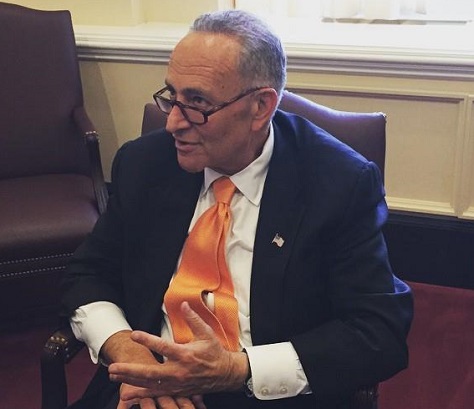
Schumer’s right — if Iran wants nukes, the US can’t deter it indefinitely

schumer

With the entire US political world focused on the Republican presidential debate last night, US senator Chuck Schumer quietly announced that, after much deliberation, he will vote against the nuclear energy deal negotiated between Iran and the P5+1 (the five members of the UN Security Council plus Germany).USflagIran Flag Icon

If Schumer thought his Thursday night announcement would fly under the radar, he was wrong — and US secretary of state John Kerry was quick to say that he ‘profoundly disagrees’ with Schumer. With Senate minority leader Harry Reid retiring after the 2016 election, and with Democrats in a very good position to retake control of the US Senate in 2016, there’s an exceedingly good chance that Schumer will be the Senate majority leader in less than 18 months’ time. Moreover, he’s one of the leading Jewish voices in American politics and, as a senator from New York, the US state with the highest proportion of Jewish voters in the country.

So it’s not surprising that Schumer, a longtime ally of Israel, would reject a deal that Israeli prime minister Benjmain Netanyahu fiercely opposes. (Though New York’s junior senator, Kirsten Gillibrand, announced her support for the Iran deal earlier this week).

* * * * *

RELATED: Winners and losers in the Iran nuclear deal

* * * * *

Schumer was careful to telegraph that he will not be working very hard to convince other Democrats to break ranks with the administration, and that’s probably the wisest course for someone who still wants to become the Democratic leader in the Senate after angering the party’s leftists. There’s no doubt that Schumer’s opposition will embolden the deal’s critics, and it may convince a handful of Senate Democrats to oppose the deal. But the Obama administration still believes opponents of the Iran deal will not achieve the 60 votes that they need to defeat it in the US Senate — or the 67 votes they would need to override Obama’s veto.

Chief among Schumer’s problems with the deal is the fact that after 15 years, Iran could conceivably be free of both international sanctions and restrictions on its nuclear energy program, thereby giving it the ability to build a nuclear weapon: Continue reading Schumer’s right — if Iran wants nukes, the US can’t deter it indefinitely

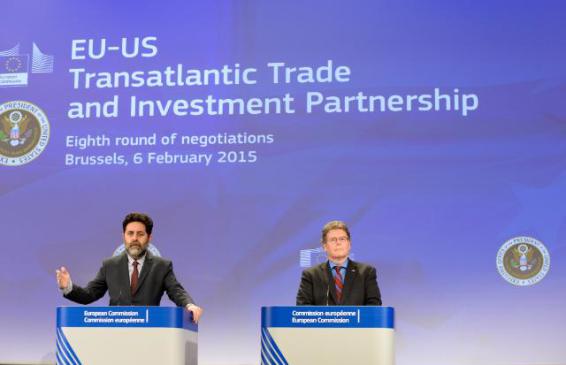
Obama’s error? Prioritizing TPP over TTIP

TTIPtalks

I write tomorrow for The National Interest that the Obama administration made a deep strategic error in allowing the fight for trade promotion authority become dominated by the Trans Pacific Partnership when the Transatlantic Trade and Investment Partnership would have been an easier sell. USflagEuropean_Union

Now, given the difficult fight to win fast-trade promotion authority, momentum may be shifting against both the TPP and the TTIP, especially in Europe, where leftists in the European Parliament are having second thoughts. The ramifications of the Obama administration’s strategic choice will linger far into the next administration, whether Republican or Democratic.

I argue that TTIP would have been an easier (and better) trade deal for three reasons. Continue reading Obama’s error? Prioritizing TPP over TTIP

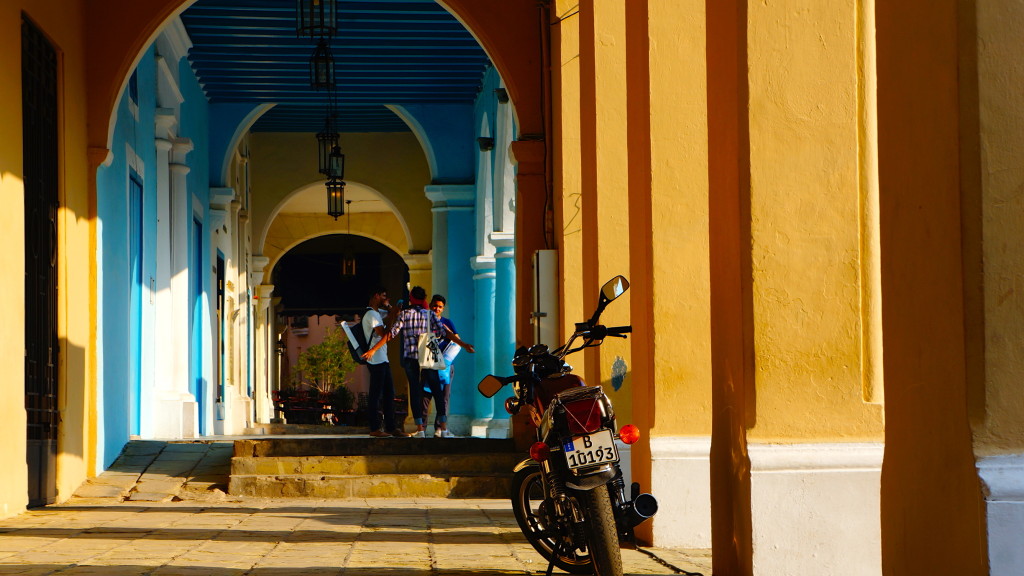
Why ‘normalization’ with Cuba will be harder than advertized

DSC00108

HAVANA — On December 17, U.S. president Barack Obama announced that his administration would pursue executive policies designed to engage Cuba diplomatically and, potentially, restore relations between the two countries severed in 1960 – one year before Obama was born, as he himself noted in a joint conference with Cuban president Raúl Castro at the Summit of the Americas, the first time since the summits began in 1994 that a Cuban leader was invited to the affair. USflagcuba

It’s not only the White House that argues the 55-year embargo hasn’t worked – Republicans and Democrats alike, and Cubans, Americans and many others have long held that the embargo’s worst effects have fallen on the Cuban people, even as the policy gave Fidel Castro a convenient foil and excuse for the failures of his own government. No medicine? Blame the embargo, not the Revolution that guarantees universal health care to everyone. No food? Blame the embargo, not the abrupt end of Soviet subsidies, which plunged Cuba into what Castro euphemistically christened the “Special Period in a Time of Peace,” three years of hunger and deprivation where the average caloric intake dropped from around 3,000 calories per day to 1,400, according to some estimates. For all the initial promise of the Revolution, the reality fell far short for many Cubans, most especially for LGBT Cubans shuttled off to labor camps in the early 1970s and Afro-Cubans, who suffer from race-based income inequality decades after the Cuban government’s declaration that the Revolution “ended” racism. Even Fidel Castro admitted as much in a remarkable interview with Jeffrey Goldberg five years ago.

You don’t have to be a Nobel-winning economist, however, to realize that Cuba’s most recent financial benefactor, Venezuela, is going through some tough times. Two years after the death of leftist populist Hugo Chávez, oil prices are down and so is the level of production from PdVSA, the country’s state oil company. The official rate of the Venezuelan bolívar is comically lower than its market value, inflation runs rampant and shortages and rationing of basic foods and household goods is common. These days, everyday chavistas, who still hold faith in the socialist Bolivarian revolution, have taken to lobbing mangoes at Chávez’s successor, Nicolás Maduro, with messages desperately scrawled on them. Those less charitably inclined to Maduro, including opposition leader Leopoldo López and former Caracas mayor Antonio Ledezma, have been imprisoned. It’s dawning on the Castro regime that the days of exchanging Havana-trained doctors, Cuban intelligence agents and revolutionary slogans in exchange for cheap oil and other goodies may be coming to an end.

William LeoGrande, a professor at American University and the author of a new book on decades of back-channel negotiations between Havana and Washington, argues that the current round of negotiations isn’t the first time that U.S. and Cuban officials have sat down for talks, including the possibility of re-establishing diplomatic relations. This time around, the implosion of Venezuela, has refocused Cuban interest in reconciliation with the United States, which could provide Cuba the kind of tourist revenue and foreign development aid it desperately seeks.

“In one sense, Washington wants [normalization] more,” he said. “The United States was facing lots of diplomatic pressure from Latin America to change its policy towards Cuba. Now, the president has won a lot of credit, not just in Latin America, but around the world, for announcing his willingness to change policy. And it’s an important part of his foreign policy legacy, so I think the administration very much wants these negotiations to succeed.”

Privately, State Department officials agree that the Obama administration and the Castro regime are locked in a giant wager by launching a new era last December. The U.S. government is betting that a wave of liberalization and modernity will drag Cuba into the 21st century by empowering U.S. companies to do business directly with Cuban entrepreneurs, a step that will embolden individual freedom. The Cuban government is betting that it can liberalize à la carte by opening its economy, but not its politics, press or Internet, an approach that China and Vietnam have more-or-less successfully pursued.

News coverage since December paints a rosy, possibly naïve, tapestry of a partnership moving steadily forward. First were reports that Netflix would soon come to Cuba, something of a cruel joke for a country where Internet access is heavily restricted and censored, available for up to $10 an hour at designated government-run Internet cafes, universities and top tourist hotels. Then came AirBNB’s foray into Cuba, where homestays in casa particulares are a more popular option than overpriced hotels. JetBlue, earlier this year, announced grandiose plans to launch a commercial nonstop flight from New York to Havana by year’s end, followed this spring by hopes to re-establish a ferry service across the Straits of Florida between Key West and Havana. In March, Conan O’Brien hosted a virtual commercial for the faded glamour of a Caribbean playground filled with 1957 Plymouths, watered-down daiquiris and overpriced nights at the Tropicana. A high-profile delegation led by New York governor Andrew Cuomo and a group of state business leaders dropped in to talk about future opportunities. Havana is keenly anticipating a scheduled visit from Pope Francis in September, and there are promises of a possible stop by U.S. secretary of state John Kerry and even whispers that Obama himself might make a trip. A visit last month from French president Francois Hollande, the first Western European leader to visit the island since 1986, included an hour-long colloquy with Fidel Castro himself, though it also drew a critique from prolific blogger Yoani Sánchez  when Hollande failed to meet any dissidents during his short trip.

Even in a best-case scenario, the Obama administration’s move could go awry simply because of the political gravity of presidential term limits. None of the nearly two dozen 2016 Republican presidential candidates, excepting Kentucky’s libertarian senator Rand Paul, supports the opening to Cuba. Two candidates, Senator Marco Rubio, himself the son of Cuban immigrants, and former governor Jeb Bush, come from Florida and swear fealty to the fiercely anti-Castro Cuban community in Miami. It’s true that, given the widespread cultural and economic interest among Americans in Cuba’s future, no Republican may be able to undo Obama’s work by the time January 2017 rolls around. In the fight to lift the embargo, the momentum is on Obama’s side, and many business interests, including the American farm lobby, are enthusiastic about accessing Cuban markets. But if the U.S. interests section in Havana is converted into a full embassy, a hawkish Republican in the Oval Office will have vastly greater leverage to undermine the Cuban regime in far more serious ways than broadcasting churlish messages from an electronic ticker or funding outlandish USAID programs to design fake Twitter programs like “ZunZuneo” (the latter ultimately backfired when its popularity crested, filling the coffers of the state-run mobile phone company).

Cuba, too, is set for its own political transition in 2018, when Raúl Castro has pledged to step down as president. For now, his likely successor is 54-year-old Miguel Díaz-Canel, appointed as first vice president in 2013. Alternate reports describe Díaz-Canel as either a hard-liner or a reformer, with varying strengths of ties to the Cuban military (though Díaz-Canel isn’t himself a military figure).

In short, few have credible insight into what Díaz-Canel truly believes, whether he’ll even make it to 2018 as the heir apparent and, if so, whether he’ll just be the civilian puppet that perpetuates the rule of the Cuban military. In the meanwhile, Raúl Castro has groomed his son, 49-year-old Alejandro, a rising figure within Cuba’s all-important MININT. Alejandro traveled with Raúl to the Summit of the Americas, lingering in the background in the photos where Raúl  shook hands with Obama. Some Cubans believe that he will eventually emerge as the next Castro to rule the island. No one knows for sure, however, what the retirement of the elderly Castro brothers will mean for Cuba.

In the meanwhile, young Cubans are waiting for neither the Obama administration nor the Castro regime to deliver change to them. They’re getting on with making lives for themselves in a Cuba that, though still hampered by a heavy-handed state sector, provides more opportunities for them in decades. An informal poll of young Cubans on one weekend night in late May on the Malecón, the long walkway that rings the edge of Havana’s sea walls and where Cubans of every age and background flock on weekend nights, indicated that while Cuba’s youths are generally excited about closer ties with Americans, they don’t necessarily believe it will translate into better futures personally.

For those who believe that reform will not come soon enough, the United States continues to beckon. In the wake of Obama’s December announcement, the U.S. Coast Guard announced that a sharp uptick of Cubans took to boats in hopes of emigrating to the United States, fearing that reconciliation would mean the end of the favorable U.S. immigration policy towards Cubans. Under the current iteration of the U.S. Cuban Adjustment Act, the “wet foot, dry foot” policy extends a path to residency for any Cuban who makes it to American shores (though not to any Cubans caught by the Coast Guard en route to Florida).

unanoche

In the 2012 film Una noche, a highlight of Cuban cinema in the past decade, NYU-trained Lucy Mulloy directed the neorealistic tale of three young Cubans who ultimately attempt to leave the country on a makeshift raft. Life imitated art when, a year later, two of the three co-stars, Anailín de la Rúa de la Torre and  Javier Núñez Florián (pictured above), decided to stay in Miami en route to a film festival in New York. Though they play brother and sister in the film, they fell in love during filming and now live in Las Vegas with their young son.

Unlike the previous generations of Cuban emigrants to the United States, Núñez Florián wasn’t overly concerned about politics when I spoke to him last week. He said that he had always hoped to one day live in the United States and that his decision was about building a better future for himself and his family. He added that it’s not difficult to balance his life between the two worlds, that half his friends are still in Cuba, and that it’s easy for him to visit Cuba. Though he initially demurred when I asked him about the dynamics of US-Cuban relations, he agreed that he sees it in a positive light.

“Yes it’s good,” he said. “The U.S. is meeting in the middle, little by little getting closer to Cuba, and Cuba the same. Little by little everything is changing for the better.”

“Little by little,” though, is the key phrase. It’s easy to forget that, amid the excitement over Cuba’s opening, the Revolution took place only six years after the final armistice that divided North Korea and South Korea. Americans who believe that Cuba will suddenly be transformed, as if overnight, will be sorely disabused. Cuba’s modernization will be a difficult process that moves in zigs and zags.

Former Bush-era commerce secretary Carlos Gutierrez, himself a Cuban-American, believes that Cuba can be a veritable Caribbean Singapore, but that’s hard to believe after a few days on the ground in Havana. The “romance” of 1950s jalopies subsides after a couple of taxi rides in an overcrowded Soviet-era Lada from the 1970s, and Havana suffers from all the other shocks of decades of economic mismanagement, exacerbated by U.S. stubbornness. On my first Friday night in Havana, I stopped at a bar for a little refreshment but by 10 p.m., it was out of shrimp, it was out of tostones (which I’d thought were ubiquitous throughout the region) and, the greatest sin of all, my waiter informed me that mojitos were no longer available. This wasn’t a flashy hotel or a secluded resort in the foreigners-only enclave of Varadero, but it was still a Chilean-themed bar directly across from the Malecón. From transportation to distribution networks, Cuba is woefully unprepared for a deluge of American tourists who won’t take kindly to surly rooms with Soviet air conditioners and bars that run out of mojitos.

Cubans may also find that competing for U.S. customers will be equally difficult. For years, cigar experts have warned that the Cuban tobacco-growing industry suffers from inconsistent quality control. The Havana Club brand, if it ever makes it into the American market given the copyright tangles with Bacardi, will face stiff competition from much smoother aged rums. After the post-taboo novelty of Cuban cigars and rum wear off, Millennial cognoscenti may find they prefer to sip on Guatemalan rum and smoke Nicaraguan cigars.

Meanwhile, Cuba’s infrastructure is broken. The Cold War never turned hot in Havana, but it did singe Nicaragua, Grenada and Panama City, where U.S. forces bombed the city’s charming Casco Viejo district in its ultimately successful 1989 push to arrest the drug-fueled strongman Manuel Noriega. Remarkably, large swaths of central Havana resemble Casco Viejo as it existed ten years ago, when it was still a bombed-out shell. Today, shopping boutiques and gelato shops adorn the Panamanian neighborhood, but central Havana continues to crumble. Buildings routinely fall to the ground in disrepair and floods in early May resulted in the deaths of at least three residents. Cuba’s currency system is also a mess, with the moneda nacional for Cubans and a fixed-rate convertible peso for tourists that’s created a two-tiered economy of have-nots and have-even-less. Neither currency is worth much internationally, and the Cuban government benefits from the privilege of collecting the hard currency of euros and dollars when tourists arrive to the island. Plans to merge the two currencies worry middle-class Cubans, chiefly in the tourism and hospitality industries, who fear that a botched attempt could wipe out the real gains of the past two decades.

It’s not an exaggeration to argue that the 1959 revolution both won Cuba its independence and conclusively ended the Monroe Doctrine, not only for Cuba but for all of Latin America. The relationship between the United States and Cuba has been troubled since the beginning. In 1854, U.S. president Franklin Pierce came close to annexing the island through the Ostend Manifesto proclaimed by Southern Democrats anxious to expand the geography of American slavery. Many Cubans believe the United States, by entering the Spanish-American War in 1898, stepped into a fight against a colonial Spanish force already chiefly defeated by Cuba patriots. For the next sixty years, under the Platt Amendment and a series of other measures designed to maximize American influence on the island, Cuba became a satellite of the U.S. government, with barely more de facto independence than Guam or Puerto Rico. If Cuba seems to have more in common with post-colonial African countries that won sovereignty in the late 1950s and 1960s, that’s because it suffered the same kind of post-independence growing pains under the penumbra of the Cold War.

“The U.S. has a history of meddling in Cuban affairs well before 1959,” said Arturo López-Levy, a Cuban-born scholar and Ph.D. candidate at the University of Denver’s Josef Korbel School of International Studies. “In fact, this is in part what led to the Revolution. Cubans haven’t forgotten that. A normalization of relations doesn’t erase this history, and Cubans are weary of the United States opening an embassy and using it as a base to influence opposition groups.”

That, in part, explains why Americans don’t always understand that Che Guevara is such a hero to Latin America and the rest of the world, no matter how brutal his guerrilla techniques, and that when Fidel Castro dies, his name will be uttered in the same breath as the likes of Nelson Mandela. “Normalization” of U.S.-Cuban relations, as sought by the Obama administration, is really the promise that, for the first time, the United States will treat Cuba as a sovereign equal.


As ‘Hillary’ and ‘Jeb’ announce, the 2016 buzz is all about Rubio

rubio

In the space of 48 hours, two political scions will announce their candidacy for president of the United States.USflag

Hillary Clinton, the wife of former president Bill Clinton, and a New York senator and U.S. secretary of state in her own right, formally launched her presidential campaign in a picture-perfect event on Roosevelt Island in New York City on Saturday.

Jeb Bush, the son of former president George H.W. Bush and the brother of former president George W. Bush, announced that he is formally a candidate for president in Miami later today.

* * * * *

RELATED: What Republicans could learn from Cameron’s Conservatives

* * * * *

But the real momentum is with neither Clinton nor Bush. It’s with Bush’s one-time protégé, Florida senator Marco Rubio. At 44, he’s around two decades younger than either Bush (62) or Clinton (67), and it’s an advantage he is using to full effect. Continue reading As ‘Hillary’ and ‘Jeb’ announce, the 2016 buzz is all about Rubio