Tag Archives: liberal

Rudd’s new policy for asylum seekers tops campaign agenda in Australia

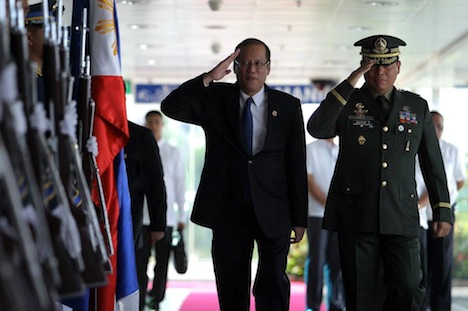
ruddjuly

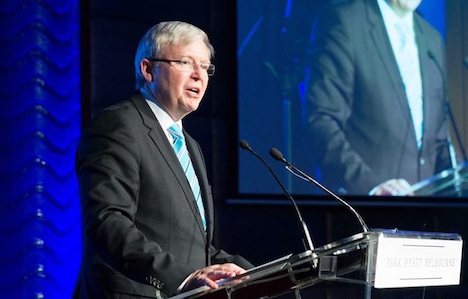
Australian prime minister Kevin Rudd kicked off his campaign for reelection over the weekend after setting September 7 as Australia’s election date — just over a month from today.Australia Flag Icon

Chief among the issues that will dominate the campaign debate is the Australia’s current immigration conundrum, which has been the subject of Rudd’s most controversial policy reversal since he ousted former prime minister Julia Gillard five weeks ago in the latest of years of intraparty battles to become the leader of the Labor Party and, once again, prime minister.  Rudd last month reintroduced elements of the ‘Pacific solution’ of former prime minister John Howard — a solution that Rudd abandoned as prime minister in 2007 — in a shift on asylum policy that leaves Labor now arguably to the right of anything the Howard government ever enacted.

Imagine, for a moment, that back in 2001, then-president George W. Bush introduced a policy that any foreign national apprehended crossing the southern U.S. border would be shipped to either, say, Greenland or Grenada, with whom U.S. officials negotiated a special arrangement to hold and process migrants bound for the United States.

Now imagine that Democratic president Barack Obama won election in 2008 on a promise to end that policy, and that he promptly did so — only to reintroduce the ‘Greenland solution’ a month before seeking reelection — with the added caveat that foreign nationals will never be resettled in the United States, just in Greenland and Grenada.

Though that’s not exactly what Australia is doing, it’s pretty close.  Rudd, who initially came to power on a promise to reverse the ‘Pacific solution’ six years ago, has now embraced a version of the ‘Pacific solution’ on steroids just one month before Australia’s general election — asylum seekers traveling to Australia by boat will be transferred to Papua New Guinea and Nauru where, if they qualify for asylum, will be resettled in Papua New Guinea or Nauru, not in Australia.

Rudd’s shift has left opposition leader Tony Abbott, flat-footed on an issue that Abbott was expected to use to advantage in the coming election, but it’s left Rudd subject to criticism that he’s carelessly tossing aside the human rights of asylum seekers, to say nothing of his previous principles, in order boost his own reelection chances.

Although Australia has always been a popular draw for migrants, the latest crisis stems from the late 1990s and early 2000s, when the number of refugees from Iraq and Afghanistan (and also from Vietnam, Myanmar/Burma and Sri Lanka) began to rise.  Howard instituted the ‘Pacific solution’ in 2001 — Australian naval officials who apprehended refugees off the coast of Australia would no longer escort them to Australia, but instead transfer them to processing centers on Christmas Island, on Manus Island in Papua New Guinea and on Nauru where, eventually, each refugee’s asylum case would be reviewed.  While some refugees were eventually granted asylum in Australia and New Zealand, around a third of the refugees were refused asylum and sent home.

The policy seems to have worked because boat migration fell rapidly by the mid-2000s.

But when Rudd came to power in November 2007, his Labor government quickly ended the policy, in part due to criticism from human rights organizations over the sanitary conditions at the processing centers and the lengthy amount of time that asylum-seekers would spend in detention at the centers.   It was one element of Rudd’s ‘Big Australia’ campaign to reduce barriers to immigration and boost the country’s population.

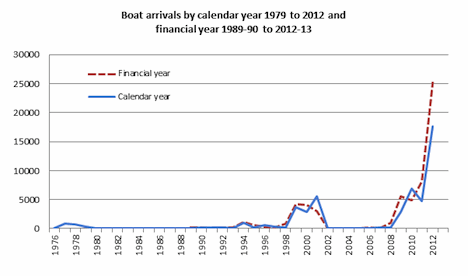
But look what’s happened since 2007:
BoatArrivals-2

Ending the ‘Pacific solution’ eliminated what had become a massive disincentive to the decision to risk life and safety to seek a better future in Australia.  So the Rudd policy encourage an unprecedented wave of migration, supplemented by six years of suppressed demand, and all of the horrors that come with it, including the horrors of people trafficking, higher incidence of fatal crashes at sea.  For Australian policymakers, asylum policy had become a lose-lose proposition: the ‘Pacific solution’ left the Australians subject to charges of humanitarian lapses and of subcontracting its moral responsibility to the much-poorer Papua New Guinea; the revocation of the ‘Pacific solution’ encouraged dangerous migration that led to habitual headlines of death and exploitation in its northern seas. (Here’s one narrative of the long and arduous journey from Afghanistan to Australia from Amnesty International).  Continue reading Rudd’s new policy for asylum seekers tops campaign agenda in Australia

Who is Jojo Binay?

binay

Although Monday’s midterm elections are a clear victory for ‘Team PNoy,’ the electoral coalition of the widely popular president, Benigno ‘NoyNoy’ Aquino III,  they aren’t necessarily a defeat for vice president Jejomar ‘Jojo’ Binay, the most visible member of the opposition coalition, and he’ll turn toward the  Philippine presidential election in 2016 in as good a position as any other potential contender.philippines

Aquino, who handily defeated former president Joseph Estrada in the May 2010 presidential election, chose senator Mar Roxas as his running mate when he abandoned his own presidential campaign to support Aquino for president.  But because Philippines vote separately on the president and the vice president, they elected Binay, and not Roxas, to the vice presidency.  Imagine a world where U.S. president Barack Obama was reelected in 2012, but instead of Democratic vice president Joe Biden, was forced to accept Republican Paul Ryan as vice president.

Although they head opposing political movements, Aquino and Binay have worked harmoniously together in office for the most part — it helps that they are presiding over one of the world’s booming economies, with 6.6% GDP growth in 2012 alone.  That factor, which brought so much success for ‘Team PNoy’ in the 2013 parliamentary elections, is likely to help favor Binay in the 2016 presidential contest.  Aquino won’t be able to run for reelection under the Philippine constitution, so Binay will be the senior incumbent running in 2016, and his advisers are already crowing that, notwithstanding the 2013 midterm elections, Binay is the man to beat in 2016Continue reading Who is Jojo Binay?

Plus ça change… Philippine midterm elections highlight the role of political dynasties

noynoy

Election results are still being tallied in the Philippines (painfully slowly), but it’s been clear since Monday that the results would be good news for the incumbent president, Benigno ‘NoyNoy’ Aquino III.philippines

It’s a result that was wholly expected for the Aquino administration, which is riding a crest of popularity over the fastest-growing economy in Asia (short of the Chinese economy) and over its efforts to reduce corruption in the Philippines, including a zealous effort to prosecute Gloria Macapagal-Arroyo, Aquino’s predecessor as president.

But there’s another more fundamental lesson from the elections that’s hiding in plain sight — namely, the vast extent to which Philippine political power remains in the hands of the same set of elite families that have held power for decades, the ‘political dynasties’ that some Philippines claim contribute to high levels of corruption within the country:

[T]he country’s political landscape “is getting worse,” Bobby Tuazon, director for policy studies at the Centre for People Empowerment in Governance, told Al Jazeera.  Tuazon projected that when all votes are counted, 21 of the 24 Senate seats will fall under the control of political families…. In the House of Representatives, about 80 percent of the 229 seats will also be dominated by dynasties….

“A dynasty, is a dynasty, is a dynasty,” Raymond Palatino, a youth sector representative in Congress, told Al Jazeera. “I refuse to believe that out of a population of 92 million, only a few families have this monopoly of intellect, passion and intention to serve our people.”

It’s a phenomenon that finds its genesis in Spanish colonial times, with mestizo (illustrado) families holding a disproportionate share of power that continued through American occupation and, after 1946, Philippine independence.  Some international election monitors have even recommended an anti-dynasty law.

That new generations of the same political dynasties have been elected to office isn’t necessarily an indication of anything untoward — Canada’s new Liberal Party leader Justin Trudeau is the son of a former prime minister and U.S. president George W. Bush was himself the son of a former president.  But politics in the Philippines features an above-average level of political dynasty in a part of the world where strong political families are common, such as the Bhutto family’s role in Pakistani politics or the Gandhi-Nehru family role in Indian politics.

For all the credit given to Aquino’s administration over the past three years, it’s inescapable that the current president is himself part of a dominant political dynasty in Philippine politics, though his election and popularity owes much to the special role that his father, Benigno Aquino Jr., played as a critical opposition voice during the Marcos era (including his assassination in 1983 upon his return to Manila to lead the call for change), and the role of his mother, Corazon Aquino, in assuming the post-Marcos presidency.  But one of the 12 candidates who has been elected to the 24-member Philippine Senate is Paolo “Bam” Aquino IV, the 36-year-old nephew of the president, bringing yet another generation of the Aquino family into power.

Philippines chose one-half of the Senate and the entire House of Representatives in Monday’s midterm elections.  Though the members of the lower house are elected directly in single-member constituencies, the 12 members of the Senate are elected nationally — the top 12 vote-winners nationwide are ultimately elected, and though Bam Aquino is the only member of the ruling Partido Liberal ng Pilipinas (LP, Liberal Party of the Philippines) to be elected to the Senate, nine of the 12 are part of the ‘Team PNoy’ coalition that Aquino heads, which includes not only the Liberal Party, but also its traditional rival, the Partido Nacionalista (NP, Nacionalista Party).  Just three senators have been elected from the opposition coalition, the Nagkakaisang Alyansang Makabansa (UNA, United National Alliance).

Now more than 25 years after her husband’s fall from power, Imelda Marcos won reelection to the House of Representatives, as widely predicted, capping somewhat of a comeback for the Marcos family in recent years — her daughter, Imee Marcos, is the governor of the Philippine province of Ilocos Norte, and her son, Ferdinand ‘Bongbong’ Marcos, Jr., was elected to his first term in the Senate in 2010 and is considering a presidential campaign in 2016.  Continue reading Plus ça change… Philippine midterm elections highlight the role of political dynasties

Four world elections in four days: Pakistan, Bulgaria, the Philippines, and British Columbia

It’s an incredibly busy weekend for world elections, with four key elections on three continents coming in the next four days.

Pakistan

First up, on Saturday, May 11, are national elections in Pakistan, where voters will determine the composition of the 342-member National Assembly, of which 272 seats will be determined by direct election in single-member constituencies on a first-past-the-post basis.Pakistan Flag Icon

With 180 million people and with nearly 60% of them under the age of 30, the elections in Pakistan will by far have the most global impact by implicating South Asia’s economy and not only regional, but global security with U.S. interests keen to mark a stable transition, especially after a particularly violent campaign season marked with attacks by the Pakistani Taliban.

The incumbent government led by the leftist Pakistan People’s Party, the party of the late prime minister Benazir Bhutto and Pakistani president Asif Ali Zardari, is expected to falter.  Their expense is likely to come at the gain of the more conservative Pakistan Muslim League (N), led by former prime minister Nawaz Sharif, who is a slight favorite to once again become Pakistan’s prime minister on the strength of support in Punjab, Pakistan’s most populous province.  But the upstart nationalist, anti-corruption Pakistan Tehreek-e-Insaf (Movement for Justice) is expected to make a strong challenge under the leadership of Imran Khan, the charismatic former cricket star.

Read all of Suffragio‘s coverage of Pakistan here.

Bulgaria

On Sunday, May 12, it’s Bulgaria’s turn, and voters will decide who controls the unicameral National Assembly .bulgaria flag

When the 2008 global financial crisis hit, the center-left Bulgarian Socialist Party was in office under prime minister Sergei Stanishev.  Voters promptly ejected Stanishev and the Socialists in the 2009 elections in exchange for a new conservative party, Citizens for European Development of Bulgaria (GERB) under the wildly popular Boyko Borissov.  Since 2009, however, Borissov and GERB have become massively unpopular, and rising power costs and general economic malaise have made conditioned markedly worse.  The depressed economy and a wiretapping scandal have left the race essentially a tossup between the Socialists and GERB, though a number of small parties, including an far-right nationalist party and an ethnic Turkish party, are expected to win seats.

Of the 240 seats in the National Assembly, 209 will be determined by proportional representation (with a 4% threshold for entering parliament) and 31 will be determined in single-member districts.  With just 7.5 million people, Bulgaria is on the periphery of the European Union — if the result is close and no party wins a majority, it will cause some concern in Brussels, but because Bulgaria isn’t a member of the eurozone, that outcome wouldn’t necessarily cause any wider financial problems.

Read Suffragio‘s overview of the Bulgarian election here.

The Philippines

The action moves back to Asia on Monday, May 13, when the Philippines votes in midterm elections to determine one-half of the Senate’s 24 seats and all of the 222 seats in the Philippine House of Representatives.philippines

Although, with 94 million people, the Philippines has a population of just about half that of Pakistan, it’s a strategic country with an increasingly important economic, cultural and military alliance with the United States as U.S. policymakers ‘pivot’ to Asia.  It doesn’t hurt that the country’s economic growth rate in 2012 of 6.6% was the fastest in all of Asia, excepting the People’s Republic of China.

All of which means that the current president, Benigno ‘PNoy’ Aquino III, whose father was the opposition leader assassinated in 1983 and whose mother, Corazon Aquino, became Philippine president in 1986 after 21 years of rule by Ferdinand Marcos, is an incredibly popular head of state.  His electoral coalition, ‘Team PNoy,’ dominated by his own Liberal Party, is widely expected to make big gains, giving Aquino a little more help facing an unfriendly legislature.

Read all of Suffragio‘s coverage of The Philippines here.

British Columbia

Finally, on the other side of the Pacific Ocean, voters in Canada’s third-most populous province, British Columbia, will vote for all 85 members of its legislative assembly on Tuesday, May 14.BC flagCanada Flag Icon

The British Columbia Liberal Party is seeking its fourth consecutive mandate since Gordon Campbell won elections in 2001, 2005 and 2009.  After stepping down in 2011, his successor Christy Clark finds herself waging an uphill battle to win over the hearts of an electorate jaded by scandal after scandal.  The frontrunner to become the next premier is Adrian Dix, the leader of the British Columbia New Democratic Party, though his opposition to the Northern Gateway pipeline and a feisty campaign by the Liberals have whittled a 20-point lead two months ago to just single digits.

Though British Columbia is home to just 4.4 million people, the result will have important implications for Canada’s energy industry as well as potential implications for the NDP’s national future — a high-profile loss for Dix will only spell further trouble for the national party.

Read Suffragio‘s overview of the British Columbia election here.

Despite a wave of popularity for Aquino, the Marcos brand attempts a comeback

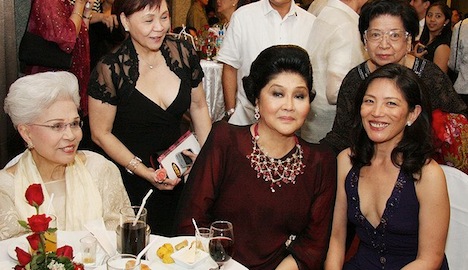
ladieswholunch

You may have thought you’d seen and heard the last from Imelda Marcos and her fancy footwear collection in the 1980s.  But at age 83, she’s still in many ways the ‘iron butterfly’ of the Philippines and she’s running for reelection in the Philippine midterm elections on Monday — and though she’s just one member among 222 in the Philippine House of Representatives, she’s a ‘shoe-in’ for reelection.philippines

That’s not just all — her son, Ferdinand ‘Bongbong’ Marcos, Jr., the namesake of her late husband, Ferdinand Marcos, the leader of the Philippines from 1965 to 1986, is a first-term senator in the Philippine Senate, elected in 2010 to a six-year term for the Partido Nacionalista (NP, Nacionalista Party), which has withered in the days since it was the ironclad ruling party under his father.  His mother has not been shy in recent years in boosting Bongbong as a potential presidential candidate in 2016.

In a country where political networks have long been controlled by generation after generation of the same political elite families, it’s not completely out of the question.

Her daughter, Imee Marcos, a former member of the House of Representatives from 1998 to 2007, has been governor of the Philippine province of Ilocos Norte since 2010, and she’s even more of a lock for reelection than her more famous mother, because she’s running unopposed.  Ilocos Norte, one of 80 Philippine provinces, is a largely rural province that bears out toward the South China Sea on the far northwestern corner of Luzon island.  But though it’s far from the heart of power in the Philippine capital of Manila, it’s the birthplace of the late former president and though the Marcos family may not be entirely popular, their patronage network gives them a political lock on many of the province’s offices.

Whether a Marcos returns to the Philippine presidency in 2016, it’s nonetheless a remarkable comeback for the family’s fortunes.  First elected in 1965 and reelected in 1969, Marcos Sr. became increasingly authoritarian, instituting martial law in the Philippines that essentially left its democratic institutions in tatters.  A staunch U.S. ally during the Cold War, many Philippines look to the 1970s as a golden era of high GDP growth, though it was an era of corruption, above all at the top of the government among Marcos and his family members.

The Marcos regime reached a turning point in August 1983 when the chief opposition leader to Marcos, Benigno ‘Ninoy’ Aquino, Jr., was assassinated in the Manila airport upon his return to the country to contest Marcos’s policies directly.  The economy sputtered, the regime’s international support (above all from the U.S. administration of Ronald Reagan) sputtered, and Marcos’s health sputtered, with Imelda taking an increasing role in state affairs. Marcos was finally ousted in 1986 during the ‘People Power’ movement that drove Ferdinand and Imelda into exile and Aquino’s widow, Corazon Aquino, into power as the country’s first new leader in over two decades.  Though Imelda had long been known for her extravagant lifestyle, she’ll forever be remembered for nearly 3,000 pairs of shoes that she left behind in Malacanang presidential palace upon their exile to Hawaii.

Her husband ultimately died in 1989, but Imelda returned to the Philippines in 1991, and she even ran for president in the 1992 election, though she finished in fifth place with barely over 10% of the vote.  She aborted an attempted run in the 1998 presidential election, but returned to public life in 2010 with her election to the House of Representatives.

Far from chastened by her 1986 tumble from power, Imelda remains defiantly proud of her role in Philippine public life — and yes, even her shoes.

On her Facebook page (which shows that even Cold War-era autocrats can learn social networking), she even features a tantalizingly unrepentant photo album featuring ‘Imelda’s Shoes, Gowns and other fashion items,’ and other photo albums of her with her husband during their previous years in power.

But the May 13 midterm elections are widely expected to result in victory for Philippine president Benigno Aquino III, known as ‘NoyNoy’ or just ‘PNoy’ to voters, and his allies, which have been christened ‘Team PNoy’ for the campaign (it’s also a play on the word ‘Pinoy,’ an informal term for Filipino).  Aquino, the son of Benigno II and Corazon, is expected to ride a wave of good feeling over the Philippine economy’s strong growth and a vigorous anti-corruption campaign to greater congressional support for his administration’s agenda.  Continue reading Despite a wave of popularity for Aquino, the Marcos brand attempts a comeback

Video of the day: Mulcair knows the money’s in the banana stand

It’s been a tough few weeks for the New Democratic Party in Canada, what with the surge of newly elected Liberal Party leader Justin Trudeau pushing his once dominant party back into third place in polls.Canada Flag Icon

But NDP leader Thomas Mulcair, who as the head of the second-largest party in the House of Commons, is also the leader of the opposition, pulled out a reference to the television series Arrested Development today while questioning what happened to government funding under Conservative prime minister Stephen Harper:

[Mulcair] was wondering where $3.1 billion in unaccounted anti-terrorism spending went when he uttered this gem:

“So the question is, is the money just in the wrong filing cabinet, is it hidden in the minister’s gazebo, is the money in the banana stand?”

Thanks to Giancarlo Di Pietro for the tip.

Cartes wins Paraguayan presidency — but what comes next?

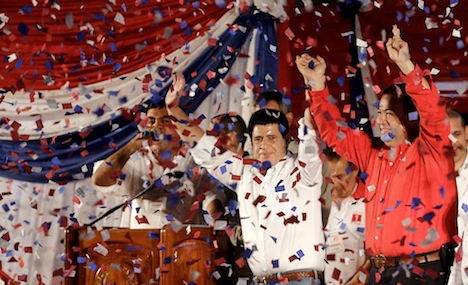
carteswins

Horacio Cartes handily won the Paraguayan presidency Sunday, returning the Partido Colorado to power after former president Fernando Lugo interrupted a 61-year hold on the presidency in 2008.paraguay flag icon new

Cartes (pictured above), one of Paraguay’s wealthiest businessmen, was chosen as the Colorado nominee for his relatively novelty to politics — and it’s true that as a former tobacco magnate, his ties to the old-guard Colorado leadership aren’t incredibly strong, and Cartes didn’t even join the party of former strongman Alfredo Stroessner until 2009, after the election of the leftist Lugo.

Cartes’s election ends an odd gray zone for Paraguay following the rapid-fire impeachment and removal of Lugo from the presidency in June 2012, ostensibly over his administration’s handling of a raid on rural squatters that left 17 people dead, but stemming in large party from mutual hostility from both parties in the Paraguayan political elite that had very little use for Lugo’s administration.

So what comes next for Paraguay?

First and foremost, expect Mercosur, the South American free trade bloc, to reinstate Paraguay’s membership — likely in exchange for Paraguayan acquiescence to the accession of Venezuela, which Mercosur accomplished immediately after Paraguay’s suspension (in light of the fact that Paraguay’s Congress had been holding up Venezuelan membership).

It’s hard to know what to expect from Cartes’s domestic policy priorities, given the vague campaign that he ran, but Cartes will head the most right-wing government in South America — on a continent with various shades of leftism, Cartes remains far to the right of moderate Chilean president Sebastián Piñera (who looks to be succeeded by the moderately leftist former president Michelle Bachelet in November) or the surprisingly dovish Colombian president Juan Manuel Santos.  With few natural ideological allies in the region, that could give Paraguay some tough times ahead in respect of trade and foreign policy.  We know Cartes is no fan of gay rights or gay marriage after claiming in an interview that he’d rather be shot in the testicles than have a gay son.

Before the election, the Colorados and the other longstanding Paraguayan party, the Partido Liberal Radical Auténtico (PLRA, the Authentic Liberal Radical Party) controlled around two-thirds of the seats in both the Paraguayan Congress’s upper house, the 45-member Cámara de Senadores (Chamber of Senators) and the lower house, the 80-member Cámara de Diputados (Chamber of Deputies).

That’s likely to be the case after the election, though the Colorados will control slightly more and the Liberals will control slightly less.  Lugo’s new coalition of leftist parties, the Frente Guasú looks set to have won around 10% in the senatorial elections and will win around five senatorial seats, including one for Lugo himself — somewhat of a success, but certainly not a breakthrough in giving Paraguayans a strong leftist voice in governance for the next five years.

Given that both the Colorados and the Liberals are right-of-center parties, given that the Colorados will not control a majority of seats in either house of Paraguay’s Congress, and given that there were few policy differences between Cartes and his Liberal rival Efraín Alegre, it seems likely that the Colorados and Liberals will likely work together to push through a mutually acceptable agenda.

Cartes clearly has a mandate for the ever-amorphous concept of ‘change,’ winning the presidency with 45.80% to just 36.94% for Alegre.  But the best-case scenario might perhaps be continuity of the moderate reforms that outgoing president Federico Franco, a Liberal, pushed in his 10 months in charge — the implementation of Paraguay’s first income tax and at least some steady moves toward land reform and social welfare programs in one of Latin America’s poorest countries.

Although Paraguay has just 6.5 million people, it’s one of the world’s largest soy exporters — it exports some beef and corn products too, but the landlocked nation lacks the natural resource wealth, a large manufacturing or industrial base or the access to ports or major rivers that many of its neighbors boast.  So economic reform and poverty will remain a key challenge for Cartes.

The worst-case scenario is that Cartes, who is widely rumored to have links to narco-traffickers and to have made his fortune as much in smuggling as anything else, will preside over a country of unfettered corruption that transforms Paraguay into a crony capitalist state and, perhaps, a new safe haven for narcotics in South America.  Despite the small gains Franco made toward alleviating policy through welfare, tax and land reform, those gains could easily be reversed without Cartes’s commitment to see through the full realization of those reforms.

The best candidate for Paraguay’s presidency isn’t on the ballot

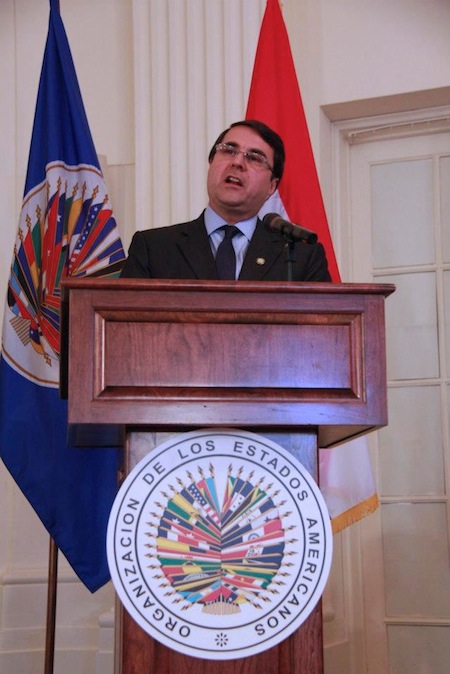
franco

When Fernando Lugo took office five years ago, it was with fanfare that Paraguay would have its first leftist president in decades — no one expected Lugo’s term to end without Lugo himself and with the once-disgraced Colorado Party set to return to power. paraguay flag icon new

Instead, his vice president Federico Franco (pictured above) took over the Paraguayan presidency last June when the Paraguayan Congress overwhelmingly voted to removed Fernando Lugo as president.  Franco has pushed through a handful of reforms in the past 10 months — he’s passed the country’s first-ever income tax, and as The Economist noted last autumn, he’s already putting the planned proceeds to use:

Rather than breaking up big farms, he has speeded up the granting of land titles to rural squatters and bought up private holdings to sell on easy terms to those who lack plots.  Víctor Rivarola, the social-action minister, says he hopes to double the number of households receiving conditional cash transfers within a year.  A law passed in September will dedicate around $40m a year of revenues from the Itaipú dam, which Paraguay shares with Brazil, to promoting information technology in schools.  The government is working on a plan to extend nationwide a One Laptop Per Child scheme now run in the town of Caacupé by Paraguay Educates, an NGO.

It’s a decent record, especially given that Franco took office amid international criticism at the speed by which Lugo was unceremoniously dumped from the presidency.  Even if the reforms lack the ambition that Lugo brought to the presidency, and even if Lugo has disclaimed his successor’s performance, Franco’s reforms more than bear Lugo’s imprint, and it’s hard to believe Paraguay would have made even that progress without the Lugo revolution.

Franco is not without critics, of course, who attack him for allowing Monsanto and Rio Tinto back into the country, business as usual, despite Lugo’s resistance to global corporations.  Lugo himself dismissed Franco’s short-lived transitional administration in an interview with Ed Stocker for Monocle earlier this month:

In Paraguay it’s important to understand where the power is, and Federico Franco doesn’t hold that power. He’s just responding to the interests and initiatives of multinationals and financial capital.

He also worsened already-fraught relations with Venezuela when he immediately called the death of Hugo Chávez a ‘miracle‘, and Mercosur continues to maintain Paraguay’s suspension from its membership, despite the fact that the ‘parliamentary coup’ against Lugo was technically valid under the country’s constitutional and laws.

But as Paraguayans go to the polls today to select a new president, Franco won’t be on the ballot — as the incumbent, even for just a short period, he’s not eligible to run for reelection.  That’s a shame, given that his successful election would go a long way, if belatedly, on putting a popular mandate on Lugo’s removal and the past ten months of Paraguayan government.

Given the frontrunners in the election, however, it’s an even bigger shame.

Race to the bottom

Franco leads the center-right Partido Liberal Radical Auténtico (PLRA, the Authentic Liberal Radical Party), which is supporting a Liberal senator, Efraín Alegre (pictured below), for president.  Alegre, however, has been damaged recently after allegedly directing the government to buy land from the Parguayan parliamentary speaker, Jorge Oveido Matto, in exchange for the support of presidential candidate Lino Oviedo Sánchez, the nephew of Lino Oviedo Silva, himself a controversial candidate until his death in a helicopter crash in February.  Jorge Oviedo Matto resigned his role earlier this week.

alegre

Some background is in order. Lino Oviedo (the elder) was the leader of a the Unión Nacional de Ciudadanos Éticos (UNACE, National Union of Ethical Citizens), though like many powerful Paraguayans, his ethics were far from pristine.  As chief of the army in 1996, he attempted to oust his boss, then-president Juan Carlos Wasmosy in a coup.  Though it failed, and Oviedo himself ended up in prison, he was the popular leader to win the governing Colorado Party nomination for president in 1998.  His running mate Raúl Cubas ultimately won the nomination after Oviedo was convicted for his 1996 coup attempt, and Cubas released Oviedo from prison shortly thereafter.  The Cubas-Oviedo administration collapsed with the assassination of Luis María Argaña in 1999, and Oviedo fled the country.  He returned in 2002 to found the UNACE and won over 22% in the previous 2008 election.  That makes the Liberal-UNACE alliance tainted by much more than the express corruption charges.

Meanwhile, the frontrunner for much of the race has been Horacio Cartes (pictured below), a businessman running under the Asociación Nacional Republicana – Partido Colorado (ANR-PC, National Republican Association — Colorado Party).  The Colorados were famously in power for 61 years without interruption, 35 of which under the cruel military regime of Alfredo Stroessner (from 1954 to 1989).

cartes

Unlike in México, where the Partido Revolucionario Institucional (PRI, Institutional Revolutionary Party) held power for 71 years before a 12-year stint out of power that saw democratic, legal and other institutions take firm root in Mexican governance and politics, there’s no reason to believe that Paraguay or the Colorados have undergone much of a transformation.

Cartes himself carries additional baggage — he’s widely suspected of having deep ties to narco-trafficking, not least because of a leaked 2010 U.S. State Department cable linking Cartes to a U.S. Drug Enforcement Agency action in Paraguay: Continue reading The best candidate for Paraguay’s presidency isn’t on the ballot

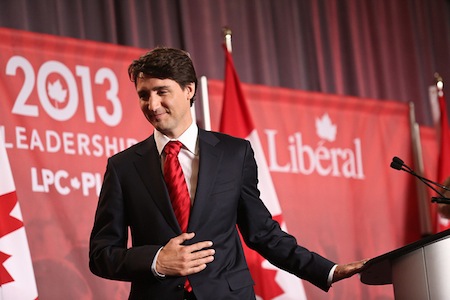
Trudeau overwhelmingly wins Liberal Party leadership

Justin Trudeau, the son of former Canadian prime minister Pierre Trudeau, has been elected the new leader of the Liberal Party in Canada.Canada Flag Icon

As expected, his victory was essentially a coronation — he won 80.1% of the vote to just 10.2% for British Columbia MP Joyce Murray and 5.7% for former Ontario MP Martha Hall Findlay.

Here’s what I wrote last month about the challenges Trudeau will now face in advance of the 2015 general election

Here’s what I wrote last week about Murray, and how she represents the future of Canadian politics in a couple of key ways.

Despite Trudeaumania, Joyce Murray personifies the future of Canada’s center-left

joycemurray

It’s a safe prediction that Joyce Murray will not be the next leader of the Liberal Party.Canada Flag Icon

When the Liberal Party’s membership finishes voting and the winner is announced this Sunday, the winner is certainly going to be Justin Trudeau — and likely by a landslide margin.  His anticipated election is already pushing the Grits ahead in polls, and not only against the official opposition, the New Democratic Party under Thomas Mulcair, but into contention for first place against the Conservatives under Stephen Harper.

It seems equally likely that the Liberals will get an even larger boost in the polls in the ‘Trudeau honeymoon,’ as the presumptive Liberal leader ascends to lead a party that governed Canada during 69 years of the 20th century — and which has seen its share of the vote fall in each of the past five elections.

Murray, who served as minister of water, land and air protection in the Liberal government of British Columbia premier Gordon Campbell in the early 2000s, lost her provincial seat in 2005 and reemerged as a Liberal MP from Vancouver in the House of Commons in the 2008 election.  Since the withdrawal of MP Marc Garneau from the leadership race, however, Murray has been locked in a battle for second place with former Ontario MP Martha Hall Findlay.

The late momentum, however, lies with Murray, whose main campaign strategy has been a unite-the-left platform aimed at pulling together the Liberals, the New Democrats and the Greens together in an alliance for the next general election.  Murray certainly has raised more money than any of the non-Trudeau hopefuls.

The fundamental fact of Canadian politics is that the broad left — from the most moderate business-friendly Liberals to the most ardently progressive New Democrats — remains split between two credible alternatives to the Conservatives.  In many ways, it parallels the split between the old-guard Progressive Conservative Party and the upstart Reform Party / Canadian Alliance in the 1990s and early 2000s, which allowed Liberal prime ministers Jean Chrétien and Paul Martin to govern without much of an opposition from 1993 to 2004.

In the same way, the logic that propelled the conservative merger in 2003 augurs for a similar center-left alliance in 2013.

And the logic is tantalizing — in a country where MPs are determined in 308 first-past-the-post single member ridings, the Tories won a majority government in 2011 with less than 40% of the vote.  A recent Léger poll shows the Conservatives with 31%, the Liberals ascending to 30%, the NDP with 24% and the Greens with 7%.  Taken together, Murray’s dream coalition would trounce the Tories on a vote of 61% to 31%.

The problem is that unlike the PCs, which never won more than 15 seats in the House of Commons after their decimation following the 1980s governments of Brian Mulroney, and unlike Reform/Alliance, which never managed to extend its reach beyond western Canada, both the NDP and the Trudeau-era Liberals are national parties with long, proud histories in Canada that stretch back far into the prior century.

Trudeau himself has argued to the incompatibility of the Liberal and NDP traditions:

But this debate is less about electoral calculations than about Trudeau’s assessment of congenital incompatibilities on the left of the Canadian political spectrum. In an interview last year with Maclean’s, he contrasted the unification of the right, as accomplished by Harper in 2003, and the notion of symmetrical coming together of Canadian progressives.

“The right didn’t unite so much as reunite,” Trudeau said. “I mean, Reform was very much a western movement breaking away from Brian Mulroney. But they broke away, then they came back together. The NDP and the Liberals come from very, very, very different traditions.”

But that overstates the case — keep in mind that the most successful leader the Liberals have had in the past decade, the current interim leader Bob Rae, is the former NDP premier of Ontario.  Mulcair, the current NDP leader, was a member of the Québec Liberal Party during his career in provincial politics.  Though it’s important to keep in mind that provincial parties aren’t affiliated with national parties, it’s fair to say that there’s a significant amount of cross-pollination between the two traditions.

Even beyond her controversial support for a broad center-left alliance, however, the center of gravity in Canada is moving in two directions — both westward in the geographic sense and toward a more globalized, diverse, immigrant-rich Canada in a demographic sense — and British Columbia (and Vancouver) is obviously at the heart of both of those trends.  Continue reading Despite Trudeaumania, Joyce Murray personifies the future of Canada’s center-left

Midterm Filipino elections a referendum on Aquino administration

aquino

When he won election as president of the Philippines in the May 2010 election, Benigno Aquino III — affectionately known as NoyNoy Aquino or simply ‘PNoy’ (it helps that ‘Pinoy’ is an informal term for the Filipino people) — did so largely on a wave of sympathy for his mother, Corazon Aquino, who had died nine months earlier.philippines

Corazon Aquino, the first president of the Philippines following the end of the 21-year reign of Ferdinand Marcos, was the widow of Benigno Aquino, Jr., the chief opponent to Marcos whose assassination in 1983 upon his return to the Philippines led, in part, to the ‘People Power’ revolution that toppled Marcos in 1986.

But sympathy has not fueled 7.6% GDP growth in 2010, 3.9% growth in 2011, and 6.6% growth in 2012, and Aquino (pictured above) and his administration, especially finance minister Cesar Purisima, deserves credit for stories like this, which herald the coming of a new Philippine economic boom:

With $70 billion in reserves and lower interest payments on its debt after recent credit rating upgrades, the Philippines pledged $1 billion to the International Monetary Fund to help shore up the struggling economies of Europe.

That’s the kind of Schadenfreude that the Philippines has come to enjoy in recent years — the country that received its own IMF package in the 1980s and struggled to restart its economy after the 1997 Asian currency crisis is now once again at the crest of another era of prosperity.

Fitch last week became the first of the three major credit ratings agencies to upgrade the Philippines to investment-grade rank, and the Philippine economy shows little signs of slowing (though the fact that nearly 15% of Philippine exports go to China might be cause for concern).

Since the return of democracy to the Philippines in 1986, and despite a narrow boom that the 1997 crisis promptly transformed into busy, corruption and graft have been rampant problems in the country of nearly 95 million people.  But under Aquino, even that seems less an inevitability than an opportunity for reform:

Since campaigning on the slogan kung walang kurap, walang mahirap (if there’s no corruption, there will be no poverty), the administration has made a concerted effort over the past two years to strengthen transparency in budgeting processes, ensure competitive bidding in procurement, and reduce influence peddling within government agencies. The Department of Budget Management has strived to increase transparency by reducing lump sums in the budget, making the executive drafts of the national budget available to the public in spreadsheets, insisting on competitive bidding for projects, and avoiding unsolicited project proposals. Along with a more open procurement process, increased trust in government has enhanced the perception of secure property rights which has encouraged investment.

Still, corruption-fighting can also look like grudge-settling. Last year, Aquino succeeded in removing the chief justice of the supreme court, Renato Corona, who had been convicted for failing to declare $4.2 million in income, and he followed up in November 2012 with the arrest of his predecessor, Gloria Macapagal-Arroyo, president from 2001 to 2010, on charges of corruption, misuse of funds and rigging the 2007 parliamentary elections — a ballsy move that may yet backfire.

Even beyond the joyous economic tidings, the Philippines — with its own tragic role as an early theater of U.S. 20th century nation-building — now finds itself with stronger ties than ever with the United States, given its newfound geopolitical and strategic centrality with the growing U.S. military presence in the Asia-Pacific region and U.S. president Barack Obama’s much-heralded ‘pivot to Asia.’

It’s safe to say that the Philippines, long the sick man of the Pacific, has its mojo back.

So with midterm elections approaching on May 13 — Philippine voters will choose 12 of the 24 members of its upper house, the Senate, and all of the members of its lower house, the House of Representatives — you’d think that PNoy would be well on his way to a landslide — last month, a Pulse Asia poll showed that he had a 68% approval rating to just 6% disapproval.

Continue reading Midterm Filipino elections a referendum on Aquino administration

Trudeau now all but certain to become Liberal leader in Canada

trudeaudebate

While everyone was watching to the Vatican City on Wednesday, another potential world leader took a step toward his own elevation — Justin Trudeau, whose chief rival for the Liberal Party leadership in Canada dropped out and endorsed him in advance of what’s now likely to be a mere formality on April 14. Canada Flag Icon

Like the new Pope Francis, Trudeau will assume control of a once-powerful organization that has had difficulty finding its purpose in a vastly changing world — the world of 21st century Canadian governance.  He’ll do so having risen to the leadership as the son of a beloved former prime minister on a campaign that’s little more substantive than rewarmed platitudes of what’s been orthodox Liberal policy of the past two decades and his airy good looks.

Right now, Canadians love him, though — they say that they would overwhelmingly support the Trudeau-led Liberals in the next election.  Today, however, with his election as leader all but certain, the Liberals remain mired in third place behind the Conservative Party and the New Democratic Party.  So it’s worth taking caution in reading polls that seem to show a Trudeau landslide in the next election — those polls suggest to me the upper limit of what Trudeau might achieve in a best-case scenario in 2015, when the next federal election is likely to be held.

As the leadership race approaches, though, the central question of Canadian politics has now become whether, on the one hand, Trudeau’s rock-star quality and popularity will wear thin after his coronation (dooming the Liberals to what must certainly be oblivion) or, on the other hand, Trudeau will rise to the occasion by navigating the top echelons of federal politics sufficient to bring the Liberals back into power by following in the footsteps of his father.

The future of Canadian politics — and Canadian policy in the next decade — rests on the answer to that question.

His chief rival Marc Garneau exited the race on Wednesday after releasing a survey that showed he would win just 15% of Liberal voter support to 72% for Trudeau, who he also endorsed.

As the first Canadian in outer space, Garneau is somewhat the John Glenn of Canada — he served as the president of the Canadian Space Agency from 2001 to 2006, and then moved into electoral politics, winning a seat in the 2008 election in the Québécois riding of Westmount in the Montréal area.  He’s thoughtful, articulate, and he hasn’t been unwilling to take on Trudeau — taking advantage of several debates to challenge Trudeau directly for running a campaign of ’empty words’ as an untested rookie.

Garneau, ironically, would have been a better candidate than any of the past three Liberal Party leaders — former prime minister Paul Martin, who lost the 2006 federal election to Stephen Harper’s ascendant Conservative Party; former environment minister Stéphane Dion, who won just 26% in the 2008 federal election; and former author and academic Michael Ignatieff, who won just 19% and 34 seats in the 2011 federal election, well behind the more progressive NDP that’s now Canada’s official opposition. He may well have even been a better Liberal leader than Bob Rae, who ruled out a run himself last year, despite receiving high marks for his performance as interim leader.

If Trudeau becomes prime minister in 2015, Garneau will obviously be at the top of the list to fill an important ministry.

But Trudeau fils has always been the frontrunner in the race, and it was never likely that anyone would be able to dislodge what the Liberals believe is their last shot at returning to electoral viability.  Sure, six additional candidate remain in the race — including former justice minister Martin Cauchon, former leadership contender Martha Hall Findlay and British Columbia MP Joyce Murray, who has called for center-left unity with both the NDP and Canada’s Green Party.

Nonetheless, it seems ever more likely that Trudeau will now overwhelmingly win the Liberal leadership and, sure, he probably seems like the best chance that Liberals have to retake power, even if they would need to quintuple their current 35 seats in the House of Ridings in order to win a majority.  We still don’t know if Trudeau’s breezy success in politics to date will continue after he wins the Liberal leadership, though even former prime minister Jean Chrétien, the last Liberal to have widespread electoral success, agrees that the race — and, implicitly, Trudeau’s energetic campaign — has boosted Liberal fortunes.

Either way, the Liberal Party in 2013 is a far cry from the Liberal Party that governed Canada for 69 years in the 20th century — a party dominated by elites from Montréal, Toronto and Ottawa — and personified by Trudeau’s father, Pierre Trudeau, prime minister in the 1970s and 1980s.  Continue reading Trudeau now all but certain to become Liberal leader in Canada

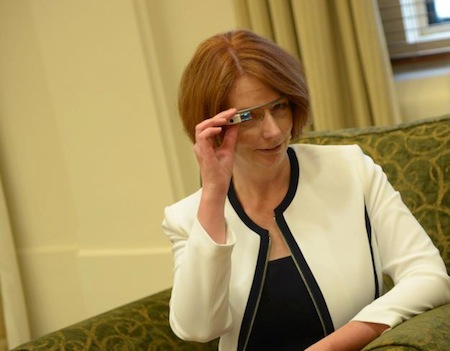
Why Western Australia doesn’t necessarily spell the end for Gillard

gillard

Saturday’s state elections in Western Australia were not good news for the Labor Party or for its leader, Australian prime minister Julia Gillard (pictured above).WA flag iconAustralia Flag Icon

First off, it’s important to note that no one expected Labor to win the election — premier Colin Barnett faced an electorate largely satisfied with the direction of the state’s economy and governance since he came to office in 2008.

Barnett’s center-right Liberal Party won 47.2% on Saturday to just 33.6% for the center-left Labor Party.  The leftist Green Party finished in third place with 7.9% and the conservative agrarian National Party in fourth with 6% — the National Party competes separately in Western Australia against the Liberal Party (unlike in federal elections, where it competes more or less in tandem with the Liberal Party as part of the Liberal/National Coalition).

Barnett’s victory gives him an expected 32 seats — an increase of eight — in the state’s 59-member lower house, the Legislative Assembly, which means that he’ll be governing with a majority for the first time; his previous minority government required a coalition with the Nationals.

Labor will drop from 28 seats to 20, the Nationals rise from five seats to seven.

That has resulted in yet another round of hand-wringing over Julia Gillard’s Labor government, which is seeking reelection in a vote scheduled for September 14 later this year — one former Western Australian Labor minister argues that Labor will suffer a ‘crucifixion’ at the polls if Gillard leads it through the election.

But while Gillard’s government — and her Labor leadership — remain on shaky ground, it seems doubtful that Western Australia, as such, should necessarily be the final domino to topple Gillard. Continue reading Why Western Australia doesn’t necessarily spell the end for Gillard

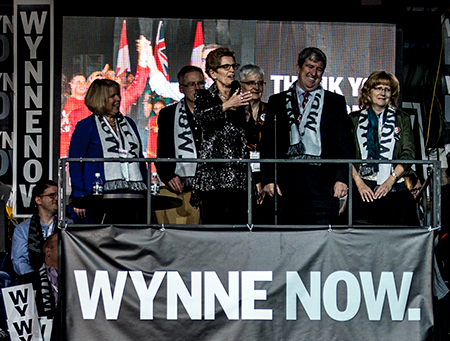
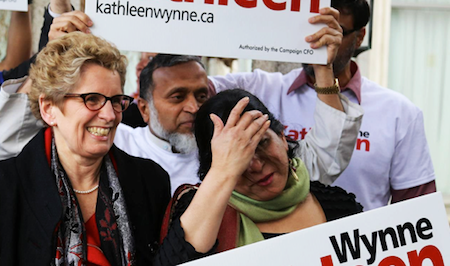
Wynne set to become highest-ranking LGBT official in Canadian history

kathleenwynne

Ontario MPP Kathleen Wynne last night upended former Ontario MPP Sandra Pupatello to become the next leader of the Ontario Liberal Party — and, accordingly, soon to become the next premier of the most populous Canadian province.ontarioCanada Flag Icon

Pupatello, who was a slight favorite headed into the party convention, led on the first two ballots before Wynne clinched the leadership on the third and final ballot, with the support of the race’s original frontrunner, Gerard Kennedy, and another candidate, Charles Sousa.

That support was enough to turn the tide and it gave the leadership to Wynne on a vote of 1,150 to 866.

It also means that Wynne will become Ontario’s next premier — incumbent Dalton McGuinty is stepping down after nearly a decade as premier and after leading the Ontario Liberals to three consecutive electoral victories, albeit with a minority government in his third term.  McGuinty has served as the leader of the Ontario Liberals since 1996.

Wynne defeated David Turnbull, then an incumbent Progressive Conservative minister of enterprise, in the 2003 provincial election in a municipal Toronto riding to enter the Ontario legislature a decade ago.  She served as minister of education (just as Kennedy and Pupatello once did, ironically) from 2006 to 2010 before becoming minister of transportation and then minister of municipal affairs and housing and aboriginal affairs.

Wynne directly addressed the question of whether a lesbian could proceed to win an election province-wide following her win:

I want to put something on the table: Is Ontario ready for a gay premier? You’ve heard that question. You’ve all heard that question, but let’s say what that actually means: Can a gay woman win? That’s what it means….

You know, there was a time, not that long ago, when most of us in this leadership race would not have been deemed suitable. We would have been deemed unsuitable. A Portuguese-Canadian, an Indo-Canadian, an Italian-Canadian, female, gay, Catholic. Most of us could not have hoped to stand on this stage. But the province has changed. Our party has changed.

It’s a strong statement, and with Wynne’s elevation, Canada joins the vanguard of countries in the world where gay men and women have reached the pinnacle of political power.  By contrast, even in relatively liberal California, the most populous U.S. state, it seems unlikely to think that voters would elect a gay governor less than a decade after former governor Arnold Schwarzenegger referred to lawmakers as ‘girly men’.

Wynne, who has three children with her former husband, came out at age 37, and has been with her current partner Jane Rounthwaite, since 1990.

So Wynne’s Saturday evening victory should be recognized for its historic importance.

But back in the world of day-to-day Ontario politics, the reality is that Wynne has a difficult task ahead of her in rejuvenating the Ontario Liberals after a decade in government if she doesn’t want to wind up as the Kim Campbell of Ontario politics.‡ Continue reading Wynne set to become highest-ranking LGBT official in Canadian history

Kennedy falters as Pupatello and Wynne lead race to become Ontario premier

wynne
pupatello

When Dalton McGuinty announced late last year that he would step down simultaneously as both leader of the Ontario Liberal Party and Ontario’s premier, it made this month’s Liberal leadership contest also a contest to become Ontario’s next premier.Canada Flag Iconontario

It’s not the best of times for McGuinty, who lost an opportunity to regain a majority government in Ontario’s unicameral legislative assembly after losing two by-elections last autumn.  The losses came after McGuinty passed — with the support of the opposition Progressive Conservative Party — a bill that froze wages for public teachers and denies the right to strike for the following two years.  The bill was seen as a massive betrayal by teachers’ unions that were key to McGuinty’s electoral victories since first becoming premier in 2003.

So his stepping down, after a decade in power, was seen as an opportunity for the Ontario Liberals to reboot before what’s likely to be an upcoming election (although the next election need not take place before October 2015) — and polls show his party in third place, behind both the Tories and the progressive New Democratic Party, and only leading by the narrowest of margins in the greater Toronto area, one of the last bastions of support for provincial and federal Liberals alike.

Originally, it seemed like the runner-up to McGuinty in the previous 1996 leadership race, Gerard Kennedy, was the frontrunner. But poor organization and his unpopularity among party insiders have pushed him to the background.

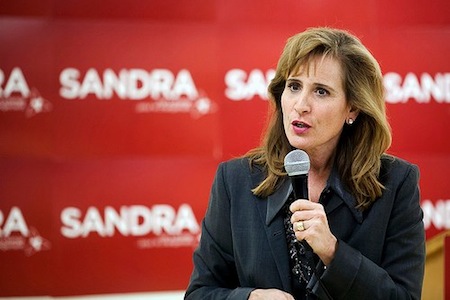
After delegates were selected over the weekend for the Ontario Liberal conference scheduled for January 25 to 27, two frontrunners have emerged — Sandra Pupatello (pictured above, bottom) and Kathleen Wynne (pictured above, top).

Pupatello won the greatest number of pledged delegates with 27%, followed closely by Wynne with 25%.  Kennedy fell far behind with just 14%, with Punjab-born MPP Harinder Takhar in a narrow fourth place with 13%.  Two remaining candidates — Charles Sousa (11%) and Eric Hoskins (6%) — followed far behind.

While there are independent and other ex officio delegates who will also be able to participate in the leadership vote, the pledged delegates clearly seem to indicate that the race will come down to Pupatello and Wynne who, like Kennedy, have all held the position of Ontario’s minister of education in the past decade.

Wynne, who would be Canada’s first openly-gay provincial premier, has been a member of the Ontario legislature since 2003, and she served as minister of education from 2006 to 2010; thereafter, she served as minister of transportation and then minister of municipal affairs and housing and aboriginal affairs.  Ideologically, she’s to the left of Pupatello, which could help her steal voters who might otherwise support the NDP in any future election.

Pupatello served in the Ontario legislature from 1995 to 2011, when she resigned to take a job as director of business and global markets at PricewaterhouseCoopers.  Aside from a stint as minister of education in 2006, she served as minister of economic development and innovation for much of the last five years of her legislative career.  She’s seen as more center-right than either Kennedy or Wynne, and she’s also perceived as the ‘establishment’ candidate as well.

Pupatello, 10 years younger than Wynne, is also seen as the more spirited campaigner, a quality that Liberal voters might like to see in a leader who will have to fight tooth-and-nail to retain power after the next provincial election.   Continue reading Kennedy falters as Pupatello and Wynne lead race to become Ontario premier