It’s now likely that former Panamá City mayor Juan Carlos Navarro will be the presidential candidate for the center-left Partido Revolucionario Democrático in Panamá in 2014 after he won the chairmanship of the party last weekend.
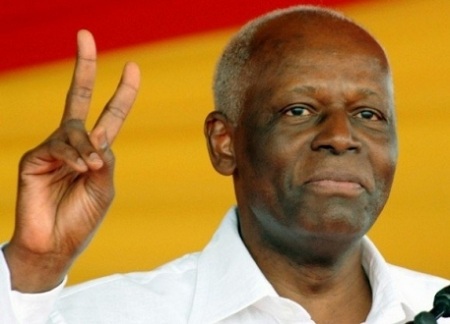
So Angola goes to the polls this week, and José Eduardo dos Santos, Angola’s president since 1979 (pictured above), will overwhelmingly be reelected, notwithstanding the rumblings of dissent among the young, the poor and the unemployed.
The expectations are that Friday’s election will not be free and fair, as I’ve noted in the past.
But a semi-authoritarian regime with sham elections is a vast improvement on decades of civil war. So Angola’s making progress, in that in the past decade, the country has pulled definitively out of a 30-year civil war, which began almost immediately after its independence in 1975. A ceasefire declared in 2002 has held, and the country will have “elections” now for the second time since fighting ended.
An oil boom, too, has boosted the Angolan economy — the country recorded some of the world’s highest GDP growth rates in the past decade, including growth over 20% from 2005 to 2007, and it’s thought to be China’s largest oil supplier. A drop in oil prices slowed Angola’s growth, but the country is expected to grow at around 10% in 2012 — oil production accounts for nearly 45% of the country’s GDP.
That’s where the good news ends.
Around 40% of the country’s 18.5 million citizens remains mired in poverty, and that fact, and the country’s stark rich-poor divide, has been the central issue in the campaigning leading up to the Angolan election.
Political parties in Angola still correspond to the two major groups that contested the civil war.
Dos Santos’s Movimento Popular de Libertação de Angola – Partido do Trabalho (MPLA or the People’s Movement for the Liberation of Angola – Labour Party) currently controls 191 of the 220 seats in Angola’s Assembleia Nacional.
The main opposition party is the União Nacional para a Independência Total de Angola (UNITA or the National Union for the Total Independence of Angola). Although the MLPA is dominated by the northern Ambundu ethnic group and UNITA by the more southern Ovimbundu group, ethnicity does not play an especially huge role in Angolan politics, nor do standard measures of political ideology.
That poll showed, essentially, a three-way race, with the sovereigntist Parti québécois (PQ) leading at 33%, with 28% for the CAQ and 27% for premier Jean Charest and his Parti libéralduQuébec (Liberal Party, or PLQ). Showing the volatility of the race, another poll last week showed Charest’s Liberals with a 35% lead to just 29% for the PQ and 24% for the CAQ.
Although so much has been made of anglophone voters — and their openness to the CAQ — anglophone Quebeckers, which make up roughly 10% of the Québec electorate, are still mostly captive to premier Jean Charest and his Parti libéralduQuébec (Liberal Party, or PLQ). Despite support from the prominent anglophone politician Robert Libman, the CAQ attracts just 15% of the anglophone vote to 67% for the Liberals (the PQ wins just 9%).
It should be fairly clear that the 12% of francophone voters supporting Québec solidaire and Option nationale would otherwise be supporting the PQ in this election. Remember that the first-past-the-post system means that the election next Tuesday will really be 125 separate elections in each election district, so in a close race, that 12% could make the difference.
But to me, the real key to the election is where François Legault and the CAQ are pulling their 30% share of francophone voters, and there are two options:
If the CAQ’s francophone support is coming predominantly from voters who have already decided that they won’t vote for Charest, the CAQ is competing for the same pool of voters as the PQ, which could ultimately lead to Charest pulling off a victory and a minority government.
If the CAQ’s francophone support is coming from voters who, for whatever reason, are attracted to its centrist / vaguely free-market platform, the CAQ is competing with the Liberals, which could allow the PQ to win a minority government.
When Québec’s major party leaders gathered a few days ago for the only multi-party debate in advance of the election for Québec’s Assemblée nationale on Sept. 4, voters saw three familiar faces: Jean Charest, leader of the Parti libéralduQuébec (Liberal Party, or PLQ) and the province’s premier since 2003; Pauline Marois, leader of the sovereigntist Parti québécois (PQ), and François Legault, a former PQ minister and leader of the newly-formed and more center-right Coalition Avenir Québec (CAQ).
They also saw a less familiar face: Québec solidaire spokeswoman Françoise David who, along with spokesman Amir Khadir, are the two “spokespersons” for Québec solidaire, a stridently leftist, environmentalist, feminist and sovereigntist party founded in 2006 when several smaller parties merged.
David wasn’t a wholly outsized presence in that debate, but to the extent it was David’s first introduction to many Québec voters, her above-the-fray tone seemed to make a favorable impression.
David and Québec solidaire are, by far, the most leftwing and anti-neoliberal of the four parties (and party leaders) featured in last week’s debates:
On student fees, not only does David oppose tuition increases for students, but was the only party leader to wear a red square — the symbol of student protesters — on stage (even though Marois wore it in solidarity with students last spring and has come out strongly in opposition to tuition hikes).
On the environment, David has criticized Charest’s Plan Nord, designed to boost mining and other economic efforts in northern Québec, and her party is downright hostile to Québec’s asbestos industry (Québec is essentially the only main producer of asbestos in North America and Europe).
On sovereignty, Québec solidaire is firmly in favor of an independent Québec, in contrast to theMONDAY’S PIECE> nuanced “wait and see” approach that Marois has taken.
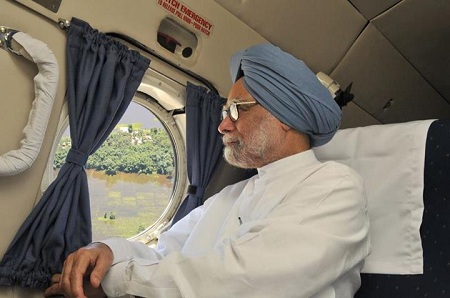
In the span of 10 days, India has seen a government report on government abuse in awarding coal contracts morph into perhaps the most ferocious scandal of Manmohan Singh’s government.
The scandal — known as ‘Coalgate’ — stems from an August 17 report from the Comptroller and Auditor General of India that accuses the governing Indian National Congress (Congress, or भारतीय राष्ट्रीय कांग्रेस) of handing out coal mining contracts to companies without going through the proper competitive bidding process, leading to inflated prices for the ultimate recipients. The accusation comes.
His remarks appear to have emboldened the opposition — the conservative, Hindu nationalist Bharatiya Janata Party (the BJP, or भारतीय जनता पार्टी). BJP leader Sushma Swaraj responded to Singh by accusing Congress of swapping coal mining contracts for bribes:
“Mota maal mila hai Congress ko” (Congress got big bucks),” Swaraj said….
“Congress has got a fat sum from coal block allocation, that is why this delay (in amending the laws) was caused. My charge is that huge revenue was generated but it did not go to the government and went to the Congress party,” Swaraj said.
Her “mota maal” charge was confirmation that the party, unfazed by government’s criticism for holding up Parliament or lack of support from non-Congress players, is in no mood to step down from its “maximalist” demand for the PM’s resignation.
In the past week and a half, Coalgate has monopolized Indian politics and all but ensured that the Indian parliament’s monsoon session* will be held up as a result of the scandal. Congress and its allies control the Indian parliament with 262 out of 543 seats so, short of a formal vote of no confidence, Singh and Congress will likely govern until the next scheduled general election in 2014. The government currently has no plans to call a trust vote itself — Singh, by daring the opposition BJP on Monday to call a trust vote, knows that leftists parties that comprise the ‘Third Front’ in the Lok Sabhawould loathe supporting a BJP-led initiative to bring down the Singh government.
Joshua Keating at Foreign Policy argues that Singh will likely survive this scandal, because some BJP members are also implicated in the coal scandal. Keating lists the growing number of scandals that Singh’s government has already survived:
accusations that Congress bribed allies in return for their support in last vote of confidence in the Lok Sabha — in 2008 over the U.S.-India nuclear pact,
corruption with respect to awarding contracts for the Commonwealth Games,
the ‘2G scam,’ whereby the government sold mobile phone bandwidth at a loss of $30 billion to the Indian government, and
But it’s not been a good year for Singh — or for India — and while most people still believe that Singh is personally one of India’s most honest politicians, he could have a hard time weathering the latest corruption charge plaguing his party. That’s especially true now, with the entire world worried about India’s weakening economy. Just last month, Time Magazine Asia declared Singh an ‘underachiever’ in a scathing cover story.
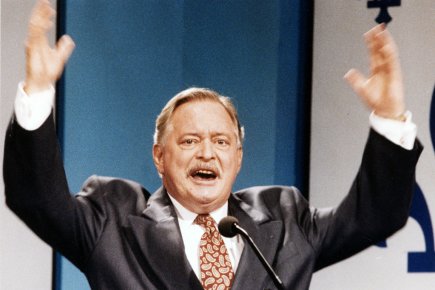
The last time Québec held a referendum on independence in 1995, Jacques Parizeau (pictured above in 1995) was the leader of the sovereigntist Parti québécois (PQ).
With just over a week to go until Québec votes on Sept. 4 for a new Assemblée nationale, Parizeau, in a sharp rebuke to PQ leader Pauline Marois, endorsed the smaller, more stridently sovereigntist Option nationale, a party formed in 2011 by former PQ legislator Jean-Martin Aussant. His move comes with polls showing the PLQ and the PQ see-sawing in the 30% to 35% range for the lead in the election
In this instance, I’m not sure that it harms Marois. To the contrary, it emphasizes the not-so-subtle secret of Marois’s PQ leadership: she’s more interested in forming a government than pushing sovereignty. That’s the very compliant Aussant aired when he formed Option nationale.
If she wins the election, which is as much a referendum on Charest and his government than anything else, it will be because she has emphasized any number of issues — corruption, strengthening education and health care, promoting Québec industry — to the relative exclusion of sovereignty. Continue reading Sovereigntist party runs away from sovereignty issue in Québec election→
It didn’t go so well for Greek prime minister Antonis Samaras on his visits with European Union leaders in Berlin. His plea for more time to come up with cuts to the Greek budget is being met with stony nonchalance from both German chancellor Angela Merkel (pictured above right, with Samaras) and French president François Hollande, to say nothing of German civil society.
Samaras has requested an additional two years to come up with an additional €11.5 billion in cuts to the Greek budget. While Merkel — and especially Hollande — were sympathetic to Samaras’s plea and reiterated their support for Greece to remain in the eurozone, Samaras will return to Athens having won no concessions from Berlin or Paris.
Business dailyHandelsblatt writes:
“Greek Prime Minister Antonis Samaras does not tire of making new demands. Now he wants more time, for the health of his economy. Not more money, only more time — at least according to his requests to Berlin and Brussels. And, in Berlin and Brussels, there will be much discussion about whether Greece should be granted more time.”
“Our instinctive reaction regarding Samaras’ request is, well, that could be something. Given the near 40 degree Celsius (104 degrees Fahrenheit) temperatures that Germany experienced last weekend, we can empathize with Greek lethargy.”
“But is the Greek prime minister right? Is time instead of money really better? I say no.”
“We have known for a long time that time is money. Perhaps Angela Merkel will also say that to the Greeks. Despite the hot and sweaty 40-degree temperatures, there will be no more days off.”
“We expect Greece to deliver all that has been promised,” Merkel declared. In remarks that were unusually sharp for a joint news conference, she stressed that Berlin has heard words in the past but now expects deeds.
The tough talk contrasted sharply with the head of state honours and diplomatic smiles with which Samaras was received on his first official visit, complete with red carpet and band.
Merkel said that Samaras’ visit is a sign of the “very close ties” between the two countries, only to add later that each side had lost credibility in the eyes of the other and that trust must be regained.
And these are demands from someone who ‘Europe’ was desperate to win June’s Greek parliamentary elections.
Can you imagine how horrific the reaction would have been if the request had come from Alexis Tsipras, the leader of SYRIZA (the Coalition of the Radical Left — Συνασπισμός Ριζοσπαστικής Αριστεράς)?
Merkel spent Sunday trying to calm the waters against anti-Greek feeling in Germany, after German Bundesbank president Jens Weidmann attacked the European Central Bank’s buying of state debt, and Alexander Dobrindt, general secretary of the governing Christlich-Soziale Union (Christian Social Union), the Bavarian conservative party and sister party of Merkel’s own Christlich Demokratische Union (Christian Democratic Union), speculated that Greece would leave the single currency by next year.
As Dutch voters and the wider international world begin to pay attention to the Sept. 12 election, it’s becoming clear that ‘anti-austerity’ and ‘pro-austerity’ forces are coalescing behind the party of prime minister Mark Rutte (pictured above, top) and the Socialistische Partij (SP, the Socialist Party) of Emile Roemer (pictured above, below), leaving both newer and traditional parties of the Dutch political landscape floundering.
The election, which is typically followed by months-long coalitions talks, will have a significant impact on the ongoing political and economic eurozone crisis: a Rutte victory would bolster German chancellor Angela Merkel in her cause for Europe-wide austerity, while a Roemer victory would embolden a growing ‘pro-growth’ cause that includes French president François Hollande and, to some degree, Italian premier Mario Monti.
After a relatively quiet election season, Rutte, leader of the Volkspartij voor Vrijheid en Democratie (VVD, the People’s Party for Freedom and Democracy), is back in the spotlight with a promise to increase an existing tax break for workers (arbeidskorting) by €300 in 2013 and by €1,000 in 2014. The move is designed to sweeten the otherwise harsh effect of budget cuts that would lower the 2013 budget deficit to within 3% of GDP — last year’s budget was 4.7% of Dutch GDP, a shortfall that undermined Dutch credibility on the European stage. Since Rutte came to power in a minority coalition government in 2010, he has made broad cuts across the entire spectrum of government spending, and the Dutch retirement age is set to rise from 65 to 67.
Rutte’s attempt to pass more budget cuts in the Netherlands in April led to the fall of his government, when Geert Wilders, the leader of the Partij voor de Vrijheid (PVV, the Party for Freedom) refused to support further cuts — although the PVV had not been a formal member of the coalition, it had provided crucial outside support to Rutte’s government.
Wilders, who rose to prominence and much electoral success in 2010 on his anti-Muslim, anti-immigration platform, is campaigning in 2012 on a full withdrawal from the euro and from the European Union altogether (even though the Netherlands was one of the original six members of the European Coal and Steel Community in 1951). For whatever reason, however, voters are turning away from Wilders — much to Roemer’s benefit.
The subtext to Rutte’s drive to cut the Dutch budget is simple — he wants to retain the country’s pristine ‘AAA’ rating and keep the country out of any sovereign debt crisis and the ballooning yields that follow. Above all, Rutte is determined to keep the Netherlands within the terms set by the Maastricht Treaty that establishes the 3% target. The Netherlands is just one of four eurozone countries that has maintained its ‘AAA’ rating from each of the three major credit ratings agencies (joining Germany, Luxembourg and Finland). Continue reading Rutte and Roemer hope to consolidate support in Dutch election, as Europe watches nervously→
With Europe expected to face its most tense times yet this autumn in its three-year-running eurozone crisis, and with Spain expected to seek a bailout from the European Union in the coming months, the Basque Country — a key autonomous region in Spain — is headed to the polls in October.
The election for the 75-member Eusko Legebiltzarra (or Basque parliament) will be held on October 21.
So what’s likely to happen? And what will it mean for Spain?
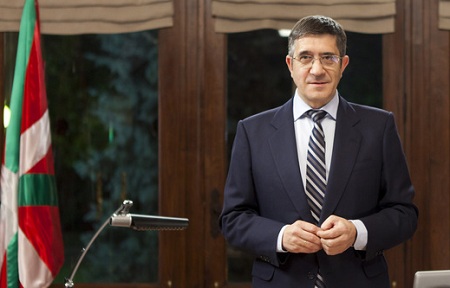
Essentially, the fight will come down to a four-way fight: (1) López’s federalist Basque socialists, (2) the federalist conservatives, (3) the traditional Basque nationalists and (4) a new leftist coalition of Basque nationalists. For now, at least, the chances that López will continue as lehendakari of the Basque Country currently seem slim.
López became lehendakari after the 2009 regional elections, when his party, the Partido Socialista de Euskadi – Euskadiko Ezkerra (the PSE-EE, or the Socialist Party of the Basque Country) joined in a coalition with the Partido Popular (the PP, or the People’s Party). The López-led coalition marked the first time in the three decades of democratic elections in the Basque Country that the region had not been governed by the Partido Nacionalista Vasco (the Basque Nationalist Party or the EAJ-PNV — in Basque, the Euzko Alderdi Jeltzalea).
That coalition unraveled after the PP won the Spanish general election in November 2011 — the local PP leader Antonio Basagoiti demanded that López not use his position to oppose newly-installed prime minister Mariano Rajoy, who has accelerated budget cuts at the federal level. López, however, has opposed Rajoy’s planned cutbacks, especially as regards health and education. Without PP support, López’s government commands just one-third of the seats in the Basque regional parliament.
The election will be held the day after the anniversary of the permanent ceasefire agreed with the ETA (Euskadi Ta Askatasuna), an armed Basque nationalist group that had engaged in many shootings, bombings and kidnappings. That ceasefire, agreed by then-prime minister José Luis Rodríguez Zapatero, a political ally of López, was one of the final landmarks of the Zapatero government before the Rajoy government replaced it. López is certainly hoping that voters will have that ceasefire on their minds on voting day, and that they will give his regional government credit for greater security and stability.
In 1978, the Basque Country — like Catalonia and Galicia — was granted the status of a nationality within Spain, as Spain wrote its new constitution, lurched toward democracy and began to emerge from the brutal and federalist four-decade dictatorship of Francisco Franco. But sentiment for autonomy and/or independence runs strong in the Basque Country, and that sentiment has all too often turned violent in the past, even after 1978. Continue reading Snap Basque elections may return nationalists back to regional government→
So this clip of Irish president Michael D. Higgins from a call on conservative Michael Graham’s radio show taking down the “tea party” movement in the United States has gone viral in the last 24 hours.
The first thing to realize is that it’s from May 2010. Three things follow from that:
It’s the height of the “tea party” movement in the United States.
It’s the height of the U.S. right’s opposition to the health care bill in the United States proposed by President Barack Obama, when many on the U.S. right were calling out every country from Ireland to Canada to Switzerland to Great Britain as having “socialist” health care schemes.
It’s before the October 2011 presidential election in Ireland, so it’s from before the time when Michael Higgins became the Irish head of state.
In his time as president, Higgins hasn’t picked any fights, in Ireland or abroad, however. As head of state, he does not direct policy — that job falls to the taoiseach (Ireland’s prime minister) Enda Kenny.
In the clip, Higgins comes across as passionately defending a strong role for government, but seems a little unhinged (or passionate, depending on your viewpoint) when it comes to disparaging the tea party movement, the American right and former Alaska governor and former U.S. vice presidential candidate Sarah Palin, in particular:
The tactic is to get a large crowd, to whip them up, try and discover what is the greatest fear, work on that and feed it right back and you get a frenzy. This tea party ignorance that is being brought all around the United States is regularly insulting people who have been democratically elected.
Higgins proceeded to call Graham “just a wanker whipping up fear.”
Oh my!
To the extent Higgins seems frustrated and perplexed by the tea party movement and the American right generally, in the clip above, it’s because that strain of particularly American laissez-faire, anti-government politics is so foreign to his own social democratic tradition.
Higgins comes from the Labour Party in Ireland, which is the major leftist force in Irish politics and which has a strong social democratic tradition (in terms of comparison, it would be closer to the New Democratic Party in Canada than to the Liberal Party).
Ireland’s two main parties, historically, have been centrist (Fianna Fáil) and center-right / vaguely Christian democratic (Fine Gail).
Before his presidential election, Higgins had long served in the Dáil (Ireland’s parliament) for the Labour Party, and during the Fine Gail-led government of 1994 to 1997, Higgins served as minister for arts, culture and the Gaeltacht (i.e., the predominantly Irish-speaking regions of Ireland), where he established an Irish-language television station and notably, scrapped Section 31 of Ireland’s Broadcasting Authority Act, which actually forbade the Irish media from broadcasting the voice of any Sinn Féin member.
The 2011 election was a bit odd, given that Fine Gail’s candidate never really connected with voters and Fianna Fáil didn’t really offer up a candidate. The election followed a period of “two Marys” — Mary McAleese, who served from 1997 to 2011 and Mary Robinson before her, who served from 1990 to 1997, both of whom were independent candidates and both of whom changed the Irish presidential concept into something even more abstract and apolitical than the line of Fianna Fáil politicians who preceded them.
For much of the campaign leading up to the election, another independent, Irish senator David Norris (and a Joyce scholar!) was the frontrunner for the presidency, and would have become the world’s first openly gay head of state, but fell behind after being implicated in a scandal.
Accordingly, the race came down to Higgins, independent Seán Gallagher (essentially a placeholder for Fianna Fáil-minded voters) and Martin McGuinness, the Sinn Féin candidate. Higgins ultimately defeated Gallagher by 39.6% to 28.5%, although the race seemed a lot closer than the final tally indicates — Gallagher’s last-minute admission of collecting campaign funds from a Fianna Fáil fundraiser led to a fall-off in his support.
I’ll be live-blogging tonight’s debate — the third and final debate of a series of one-on-one debates — between Pauline Marois, leader of the leftist, sovereigntist Parti québécois (PQ) and François Legault, leader of the newly formed, sort-of maybe center-right Coalition avenir Québec (CAQ).
Québec’s voters go to polls on September 4 to choose 125 members of Québec’s Assemblée nationale.
Read Suffragio’s prior coverage of the Québécois election here.
So that’s a wrap. Marois is queen of the status quo, Legault is the queen of the caribou. Oy. On to Sept. 4.
What’s striking is that they spent so little time bringing down Charest tonight. I wonder if that was a strategic mistake for both Legault and Marois, especially with today’s Forum poll showing the PLQ with a renewed 35% lead over the PQ (29%) and the CAQ (24%). In any event. Full live blog after the jump.
Dom Mintoff, a former Maltese prime minister and the towering figure of Maltese politics since the 1960s, has died at 96.
Mintoff (pictured above in 1972) was leader of the Labour Party from 1949 to 1984, and he was known in Maltese as il-Perit, ‘the architect.’
Always divisive and always entertaining, he served as prime minister from 1955 to 1958 (while Malta remained a British colony) and again from 1971 to 1984.
In his first stint as prime minister, Mintoff was a proponent of full integration of Malta into the United Kingdom — he resigned in 1958 when those negotiations failed. Mintoff had demanded the same level of social services for Malta, and the UK failure to grant that concession led to Mintoff’s turn toward independence. Malta gained full independence in 1964, exactly 150 years after becoming a crown colony of the British empire.
As prime minister, Mintoff brought Malta’s standard of living and welfare state (including a pension system) closer in line with continental Europe, despite Mintoff’s propensity for nationalization of various industries in Malta. Today, however, Malta is not only a member of the European Union but also a member of the eurozone, as of 2008.
The second time around, though, Mintoff was no slouch with Britain and the West, and his foreign policy zig-zags made him unpopular in the West and in the United Kingdom especially. He skillfully played both sides of the Cold War against each other, often to Malta’s benefit. Mintoff kicked the British governor-general and NATO out of Malta upon his election in 1971, and he negotiated to closure of the last UK military base in Malta in 1979. He refused to allow either the United States or the Soviet Union to hold a base in Malta (an island strategically located in the middle of the Mediterranean Sea). Furthermore, Mintoff widened the circle of Maltese diplomacy to include China and other ‘non-aligned’ nations and developed a particularly strong relationship with Libya’s Muammar Gaddafi — he once said Malta was part of the Arab world.
Mintoff’s legacy to Malta is as an architect of the current stable democracy there (even if it was neither entirely stable or democratic with Mintoff in charge). For the world, he’ll remain one of the more ornery and colorful figures of the Cold War era.
With six weeks to go, Venzeulan president Hugo Chávez holds a narrow 49% to 47% lead over Miranda state governor and Mesa de la Unidad Democrática presidential nominee Henrique Capriles.