After years of preparation, it’s now up to voters to make their choice.
So it’s finally here.
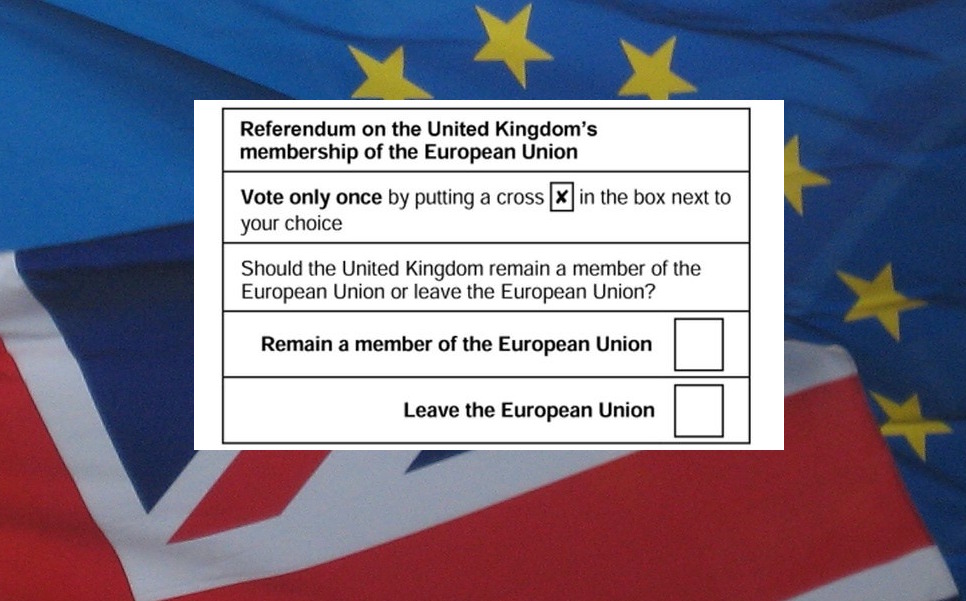
Polls are now open across the United Kingdom of Great Britain and Northern Ireland, where voters are deciding whether to either remain a member of the European Union or to leave the European Union. It’s home to the largest city in the European Union (London) and, with 64.9 million people, it’s the third-most populous state in the European Union, after Germany and France.
Polls are open from 7 a.m. through 10 p.m. — that means that here on the east coast of the United States, polls will be closing at 5 p.m. ET, with the first results to arrive shortly thereafter. No official exit polls are being conducted, but private hedge funds are believed to have commissioned exit polls and early financial indictors could tell us know traders believe the result will go. In any event, the final result is expected to be announced by ‘breakfast time’ on Friday morning.
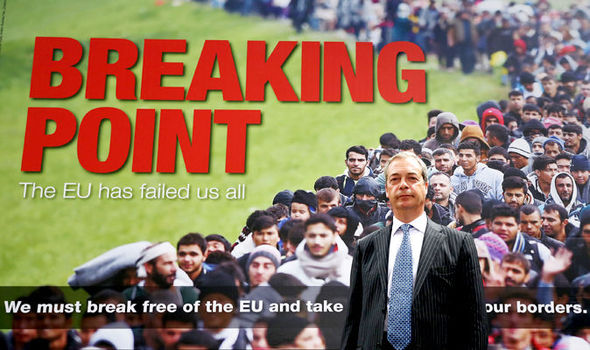
UKIP leader Nigel Farage made immigration the heart of his campaign to leave the European Union. (PA)
Turkey is not going to become a member-state of the European Union anytime soon.
No matter what joint talks take place next week, next month or next decade between Turkish and European diplomats, it is absolutely incomprehensible that the European Union, with or without the United Kingdom, would be willing to grant membership to a state with the level of economic corruption and political authoritarianism as Turkey. Full stop.
Even if European diplomats did, though, and even if each of the other 27 member-states of the European Union wanted to admit Turkey — which today borders war-torn Syria and destabilized Iraq — all it would take is for a British prime minister to say, simply, ‘No.’
That’s because EU membership is one of a handful of issues accomplished only by unanimity of the European Union’s member-states. For example, Greece has held up Macedonia’s EU accession hopes for years over a long-simmering conflict over the name ‘Macedonia,’ and the Greeks, for the better part of the last century, have been none too keen on doing many favors for their Turkish rivals, either.
Last week, EU officials cheekily informed Turkey that the country has not yet met all of the EU conditions for visa-free travel to the European Union, one of the rewards that Turkey received as part of a controversial deal to stem the flow of Syrian and Iraqi migrants from Turkey into the European Union. Though critics of German chancellor Angela Merkel argue that she sold out EU values in exchange for a Turkish solution to the EU migration crisis, Europeans are holding firm in requiring that Turkey’s president Recep Tayyip Erdoğan stop using ‘anti-terror’ laws to arrest journalists, academics and political opponents. This is hardly the stuff of happy Turkish-EU relations. Continue reading ‘Leave’ campaign’s immigration emphasis could trump Brexit economics→
Stripped of distractions, it comes down to an elemental choice: whether to restore the full self-government of this nation, or to continue living under a higher supranational regime, ruled by a European Council that we do not elect in any meaningful sense, and that the British people can never remove, even when it persists in error.
For some proponents of the ‘Leave’ campaign, sovereignty matters so much that the warnings of a significant short-term disruption to the British economy simply do not matter. In the long run, Brexit’s benefits will come, supporters hope, from the ability of future British policymakers to enact laws and regulations unhindered by the grinding bureaucracy of Brussels and Strasbourg.
That Brexit will lead to such full-throated British sovereignty is not so clear — at least if the United Kingdom wants to leave the European Union while still retaining access to the single market, one of the world’s most integrated free-trade zones.
Britain, contemplating divorce, already has a ‘separation’ with Europe
It’s not always easy to sort the alphabet soup within the European Union, let alone the rest of Europe that lies outside the technical European Union. But arguably the United Kingdom today enjoys much more freedom than any of the other 27 member-states of the European Union. As British voters consider divorce from Europe, they would do well to consideration that their country is already in something of a separation with Europe.
Today, the United Kingdom is neither a member of the euro currency zone and monetary union, nor (like Ireland) the Schengen zone of free movement. The former means that the United Kingdom still has its own currency, the pound sterling, and the Bank of England controls British monetary policy. The latter means that the United Kingdom retains more control over its borders than even non-EU states like Switzerland and Norway (both party to the Schengen Agreement). Continue reading Why British sovereignty would be even weaker after leaving the European Union→
In 2015, Greenlandic prime minister Kim Kielsen signed a new declaration over EU relations.
The year was 1985.
Germany was still divided into east and west, and Portugal, Spain, Austria and Sweden were all still outside the European Economic Community, the forerunner to today’s European Union.
But it marked the first — and, so far, the only — time that any territory voluntarily exited the European Union.
It was Greenland, then and today an autonomous country within the kingdom of Denmark. In the 1980s, Greenland was fresh off winning a new layer of home rule in 1979 from the Danes. Angry about the fact that its own local fisheries were forced to compete with more industrial fishing outfits from the European Union, Greenlanders voted to leave the European Economic Community, many of them noting that Greenland is closer, in geographic terms, to the North American continent than to Europe.
In the intervening years, of course, several rounds of treaties have refined the European Union’s structure, including the Treaty of Lisbon, which for the first time introduced in Article 50 a legal mechanism for a member-state’s exit from the European Union that establishes a two-year framework for negotiation from the moment of withdrawal notification to final exit.
Greenland, however, set the only real-world precedent that British voters and policymakers have if, indeed, the country decides to leave the European Union in the June 23 referendum.
Flush off the excitement from winning a modicum of self-government from Denmark nearly 3,500 miles away, the eurosceptic, left-wing and outright separatist Siumut (Forward) soon won the first local elections after the introduction of home rule. Among other things, Greenland’s prime minister Jonathan Motzfeldt scheduled a referendum for February 23, 1982, in which Greenlandic voters would be asked whether the country should continue to be a member of the European Economic Community after becoming a member, nearly by default, when Denmark acceded in 1973.
Boris Johnson, former mayor of London, hopes to win Thursday’s referendum on the back of English nationalism. (Telegraph)
Imagine yourself as a typical, middle-class voter in Northumberland.
Two years ago, you watched as your Scottish brethren to the north held a vote to consider whether to declare independence from the United Kingdom.
When they narrowly voted against independence, you watched as prime minister David Cameron renewed not only the Conservative, but the Labour and Liberal Democratic promise to enact ‘devolution max‘ for Scotland. He also declared, within hours of the vote, that he would seek to prevent Scottish, Welsh and Northern Irish MPs from voting on local English matters in Westminster, thereby correcting the long-discussed West Lothian question. (He managed mostly to annoy Scottish voters, pushing them in even greater numbers to the Scottish National Party and its talented leader, first minister Nicola Sturgeon). As the independence threat receded, however, Cameron failed to follow up on either the Scottish or the English side of the federalism issues that the referendum brought to the fore.
Now imagine that you feel like your fraught middle-class status is threatened — by the global financial crisis of 2008-09 or by the widening scope of inequality or even by the rising tide of immigrants to your community, making it even more difficult to compete for dignified and meaningful work.
Maybe you even decided to abandon the Tories or Labour in the 2015 general election, voting instead for the eurosceptic United Kingdom Independence Party (UKIP) as a way to send a message to Westminster about immigration or globalization. But with the first-past-the-post system, 12.7% of the vote for UKIP translated into just one seat among the 650-member House of Commons. Within England alone, UKIP won an even larger share of the vote (14.1%) than it did nationally. Again, you might have felt that your vote counted for little. Or nothing.
And so, as another referendum approaches this week on whether the United Kingdom should remain a member of the European Union, you might feel doubly disenfranchised. First, to the nameless bureaucrats in Brussels that you believe dictate too much in the way of the laws and policies that govern England. Secondly, within a national political system whose rules minimize third parties and whose leaders have devolved power to all of the regions except, of course, the region where nearly 84% of the population lives: England.
Leaders of the ‘Leave’ campaign make it none too clear that, among their goals is this: Take. Back. Control. Perhaps it’s not coincidental that the parts of the United Kingdom with the greatest amount of regional devolution — London, Scotland, Wales and Northern Ireland — largely support the ‘Remain’ side in the Brexit referendum, according to polls. If ‘Leave’ wins on June 23, there’s a very good chance that it will do so despite the firm opposition of non-English voters.
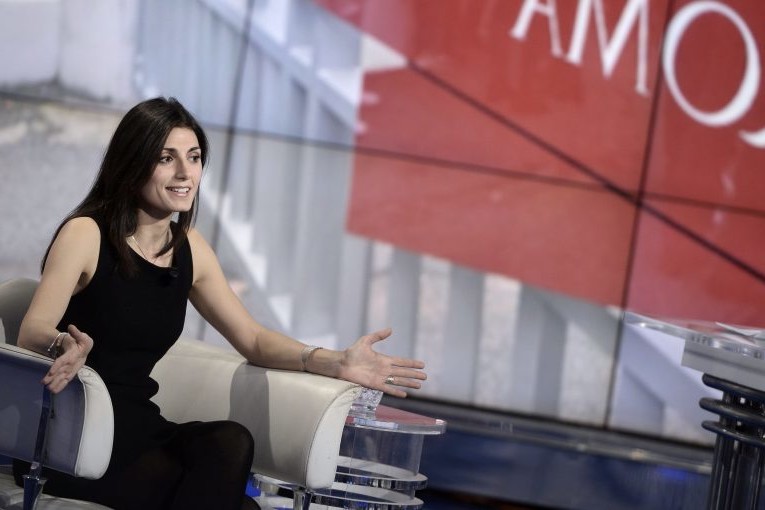
Virginia Raggi hopes to become the most influential Five Star Movement activist on Sunday by winning Rome’s mayoral election.
Fifty-four years after Amma Magnani starred in Pier Paolo Pasolini’s classic Mamma Roma, redefining feminism for Romans and Italians alike, the Eternal City is getting what centuries of imperial and papal rule never allowed — a woman in charge.
Say what you will about her, unlike Magnani and unlike the founder of her party, Beppe Grillo, Virginia Raggi is no comedian.
For a movement that has sometimes suffered by the fact that its most prominent leader and founder is Grillo, a comic-turned-politician, it now enters a phase where it will be judged by governance, and not just politics. The protest Movimento 5 Stelle (M5S, the Five Star Movement) emerged in Italian politics in the 2013 parliamentary elections as an anti-austerity and anti-eurozone force, drawing votes from the remnants of Silvio Berlusconi’s center-right coalition as well as disenchanted leftist voters.
The Five Star Movement controls 91 seats in the 630-member lower house of Italy’s parliament, the Camera dei Deputati (Chamber of Deputies), where its role has chiefly been to throw sand at both the Italian right and the dominant Partito Democratico (PD, Democratic Party) of prime minister Matteo Renzi.
That will all change after Sunday, when Rome’s (and Turin’s) voters elected two women affiliated with the Five Star Movement, giving it the opportunity to mature into a new role — a functional party of municipal government.
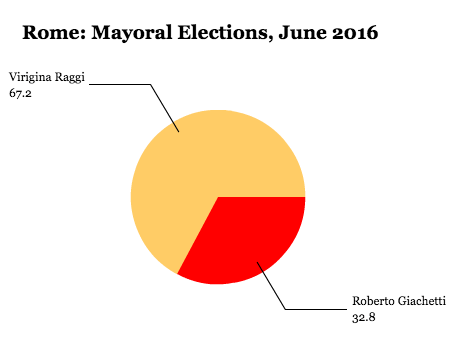
The 32-year-old Chiara Appendino has won a runoff to become the next mayor of the northern industrial city of Turin, but the real prize is Rome, where Virginia Raggi has easily won a runoff against Democratic Party challenger Roberto Giachetti to become the Italian capital’s first female mayor. It is also, by far, the most high-profile electoral success of the Five Star Movement to date.
Rome, home to nearly 2.9 million people, is the European Union’s fourth-largest city after London, Berlin and Madrid. But successive governments have left voters angry, just about everything — roads are worn, public transportation chugs along slowly and trash often goes uncollected. Residents have been dreaming for decades of a third line for the city’s burdened two-line subway system, but construction has stalled under each of the last two administrations.
The last elected mayor, Ignazio Marino, a novice in Italian politics and a former transplant surgeon, resigned in disgrace late last year after just two years in office, implicated in an expense scandal in which Marino apparently charged around €20,000 for personal dinners with friends.
Marino’s personal scandal followed the even wider Mafia Capitale scandal, which saw politicians misappropriate public funds (including funding set aside for the education of marginalized Roma children) to organized crime units in both Rome and the surrounding Lazio region. Moreover, by the time Marino finally resigned, no one — not even Renzi, let alone everyday Romans — seemed to have much faith in Marino’s ability to run the city. The Genoa-born Marino came to politics only in 2006 with his election to Italy’s Senato (Senate).
Marino managed to win election in June 2013 only because of the massive unpopularity of his predecessor, Gianni Alemanno, a controversial figure and Berlusconi ally with former ties to the neofascist right who seemed more concerned with stirring up his national profile than the mundane matters of day-to-day governance in Rome. Continue reading Rome elects Raggi, Five Star Movement candidate, as first female mayor→
Donald Trump would be the oldest American president at inauguration, but his doctors claim he would be… the healthiest?
A thought exercise.
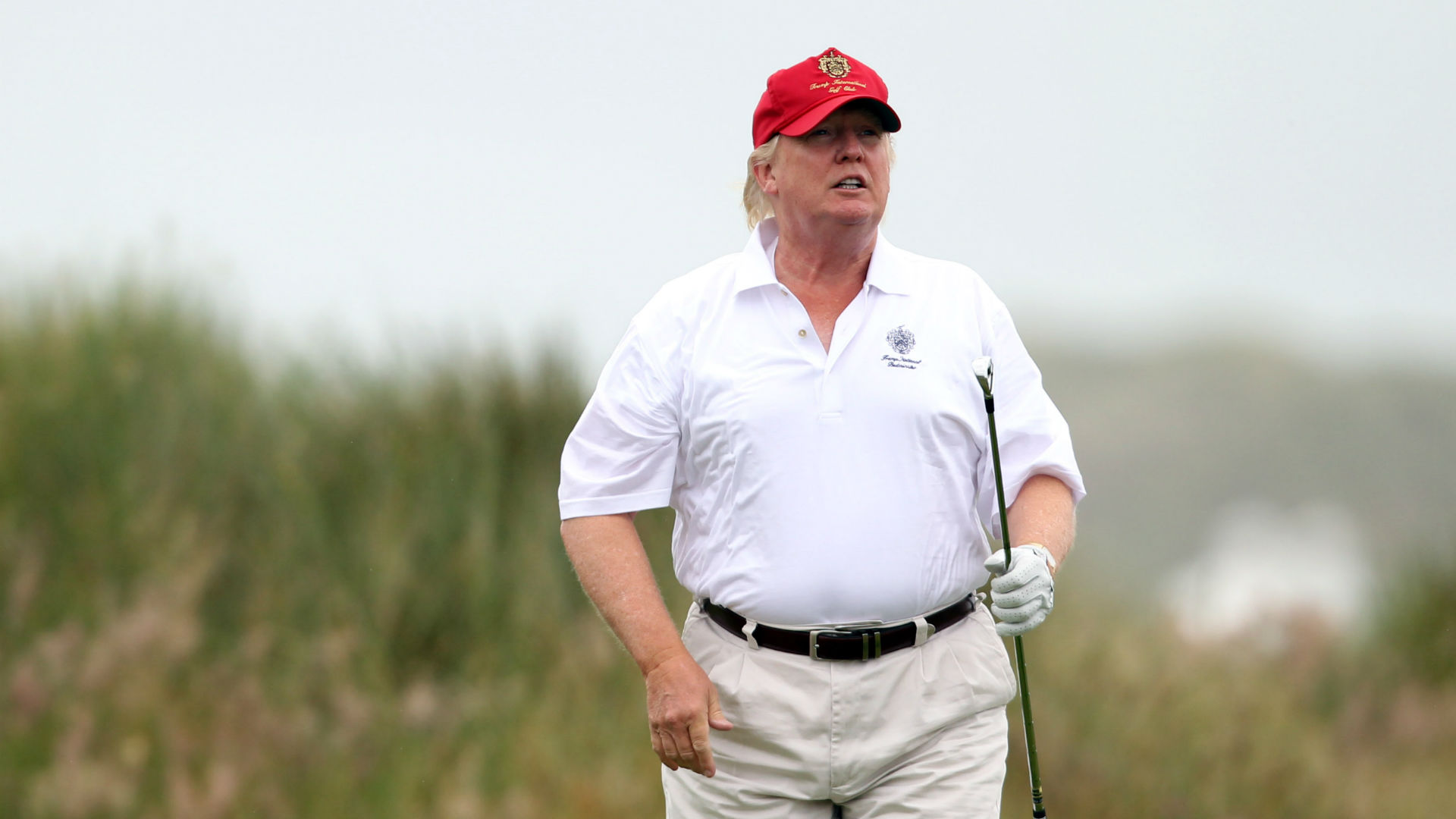
Donald Trump just turned 70.
That makes him (slightly) older than Hillary Clinton. It would make him older than any other president in US history, though obviously not older than many other world leaders who were active well into their 80s, including Winston Churchill and Charles De Gaulle or, more recently, Italian prime minister Silvio Berlusconi, Cuban president Raúl Castro and former Indian prime minister Manmohan Singh.
But where are the stories about his health?
He has released exactly one report — last December — about his health, and it’s far from authoritative. In fact, by the standards of presidential campaigns, it was more comical than informative:
“If elected, Mr. Trump, I can state unequivocally, will be the healthiest individual elected to the presidency,” [Dr. Harold] Bornstein wrote.
If Trump has eviscerated traditional norms about releasing tax information as the presumptive nominee, he’s done the same with health disclosure.
His father, Fred Trump, died at the age of 93, but he suffering in his final years from Alzheimer’s disease, and so it’s worth knowing if Donald Trump is at risk for developing Alzheimer’s disease over the next eight years. Though you might agree with his rhetoric, his statements are sometimes so incoherent (‘I know words…’) and so inconsistent that you wonder sometimes if he suffers from some kind of cognitive impairment. A clean bill of health from a neurologist could help ameliorate that doubt, but it’s an important question. Many advisors to Ronald Reagan (and even his son) admit that the late president may have been suffering from the early stages of Alzheimer’s in his second term. Continue reading Where is the scrutiny of 70-year-old Trump’s health?→
19th century Edo-period painting of Kiso Kaido highway with a view of Mt. Fuji.
The horrific massacre at Pulse, a gay nightclub in Orlando, early Sunday morning has, not unpredictably, set off a new round of calls for more stringent gun control, especially on the American left.
As Chris Murphy, the Democratic senator from Connecticut, held a filibuster on the floor of the US Senate Wednesday and Thursday to demand that Senate Republicans agree to hold a vote on gun control, the one measure that both sides seems even potentially likely to agree is a bill to deny (or delay) gun purchases to individuals on the national ‘terrorist watch list.’
Even that bill is controversial. On both the left and the right, critics rightly argue that the terrorist watch list and the related ‘no fly list’ are compiled in a way that violates basic due process. To use these as a proxy to restrict additional rights, such as 2nd amendment freedoms, only magnifies the due process problem with these secret lists. It’s hard to imagine that the US Supreme Court would uphold as fully constitutional a new law that ties gun restrictions to the terrorist watch/no fly lists, at least in their current forms. Imagine, too, what could happen if a president Donald Trump decided to list all of his domestic political opponents on a ‘watch list.’
But put that aside for a moment. Imagine a world where Republicans and the National Rifle Association agreed, for instance, to re-introduce the ‘assault weapons’ ban that was initially passed in 1994 and that phased out in 2004.
As Dylan Matthews has written at Vox, however, it is not clear that the measures that most Democrats support, including president Barack Obama and presumptive presidential nominee Hillary Clinton, would accomplish significant reductions in mass shootings or gun homicides.
He argues that the United States would have to go much, much farther, including the kind of mandatory confiscation and widespread bans on firearms that Australia’s conservative government (at the time) introduced after the 1996 Port Arthur massacre, which left 35 people dead and 23 people wounded:
Realistically, a gun control plan that has any hope of getting us down to European levels of violence is going to mean taking a huge number of guns away from a huge number of gun owners.
Other countries have done exactly that. Australia, for example, enacted a mandatory gun buyback that achieved that goal, and saw firearm suicides fall as a result. But the reforms those countries enacted are far more dramatic than anything US politicians are calling for — and even they wouldn’t get us to where many other developed countries are.
As Matthews notes, there’s only so much that American politicians can do in the current political climate. Moreover, the 2nd Amendment potentially places real constitutional limits on gun control. After the Supreme Court’s 2008 decision in District of Columbia v. Heller, I’m not so sure that even the current Court, deadlocked with four generally conservative justices and four generally liberal justices, would necessarily give its blessing to an Australia-style reform.
But the fundamental problem isn’t necessarily constitutional or legislative. It’s culture. Americans have a gun culture unlike anywhere else in the developed world. Until and unless Americans eliminate that culture (not likely anytime soon), it’s going to prove impossible to enact the kind of gun control legislation that could show dramatic reductions in gun violence.
As a Millennial gay man living in downtown Washington, I don’t really care for guns. Hunting bored me, even when I was a kid in rural Ohio. But I’m not everyone in the United States, and many law-abiding Americans love their guns — as a means of protecting their homes, as a principled symbol of individual liberty, for the sport of hunting or just for the love of firearms in its own right. I would personally love an American culture that looks more like European culture or Japanese culture. But no one could make that happen unilaterally, even if he or she were elected president tomorrow with a majority in both the House and the Senate.
Any effort to eradicate the number of guns in circulation in the United States would be most successful if you went back in time to the middle of the 20th century. It’s hard, frankly, to think of a single policy issue that suffers more from path determination (including rail and public transportation). Even more, if you’re a leftist and you care anything about civil liberties, you should also be worried about the kind of police power you would need to round up the vast majority of guns in the United States, because it would rival the kind of force you would need to, say, round up 11 million Mexican immigrants for deportation.
What’s fascinating is to chart the trajectory of gun culture in Japan. An early adopter, Japan was one of the first countries to experiment with the gunpowder invented in nearby China, and it might have started using very primitive firearms as early as the middle of the 13th century. Throughout the 16th century, however, Japan was a country divided and at war, among various daimyo (feudual lords) across the islands we today recognize as Japan. Firearms, imported from traders in Portugal and the rest of Europe, played an important and lethal role in those civil wars. In particular, firearms played a pivotal role in Oda Nobunaga’s victories in the 1570s and early 1580s that largely unified the island of Honchu. Continue reading What 21st century Americans can learn from Tokugawa-era Japan on guns→
Labour MP Jo Cox was killed in her own constituency Thursday, just one week before a once-in-a-generation referendum on British EU membership.
I had a series of posts that I was planning to finalize starting today about the Brexit referendum but, of course, the news of Jo Cox’s murder has preempted everyone’s thoughts about the European Union debate today.
There will be plenty of time for more debate in the week ahead, one of the most important weeks of political debate in the United Kingdom’s postwar history and, indeed, in Europe’s postwar history.
But it will now be forever marred by Cox’s assassination, especially if, as has been widely reported, the gunman shouted out ‘Britain first!’ as he was shooting the 41-year-old Labour MP.
Cox, a wife who leaves behind a grieving husband, Brendan, and two young children, was elected to the House of Commons in 2015 after a longtime career with Oxfam and other charitable organizations. She was in particular passionate about providing relief to those suffering in war-torn Syria. As a Labour candidate and MP, she was a passionate supporter of resettling refugees from Syria in the United Kingdom. She was one just a few supporters of Liz Kendall in last summer’s Labour leadership contest, but she was also one of the MPs willing to put Jeremy Corbyn’s name on the ballot. If anyone personified the kind of rising star who could carry forward the center-left policy perspective of ‘Blairism without Blair,’ it might reasonably have been someone like Jo Cox.
She was also a passionate product of Yorkshire, and she was genuinely proud of the fact that she grew up in Bentley and that she never lost touch with her roots in that community, indeed the community where a deranged killer ended what should have been decades more of public service.
Readers will note Suffragio‘s sparse publication schedule over the Memorial Day holiday and the following week.
That’s because I’ve been traveling in Japan (for the first time, though not the first time in Asia), and though I had been planning to scale down my writing on world politics, I hadn’t expected to spend quite so much time walking, talking, eating, drinking and exploring in a culture in which I’ve tried to immerse myself, at least as time has allowed, in the three months leading to the trip. I hope to spend much of the rest of the summer continuing to learn more about the country’s history, food and, above all, its cinema. (And, of course, its politics — senatorial elections are coming quickly in August).
A bamboo grove on the outskirts of Kyoto.
In any event, everyone needs a break from world politics, especially in an American presidential election year that’s atypically unpredictable. There’s only so much one can write about Brexit.
If interesting, here are some of my thoughts about 11 days in Japan.
The train rolls up before 6:30 am in rural Mie peninsula.
The best infrastructure in the world. I am tempted to say that the United States could benefit from Japan’s counter-occupation for a few years. I understand why Japan, which has a smaller area and a denser population (especially on Honshu, the most populous island), has a more plausible rationale for a high-speed rail network than the United States. But to come from Washington, D.C., where the Metro system is experiencing dangerous fires and unimaginable levels of dysfunction, the sophistication of Japan’s infrastructure is staggering by contrast. Japan’s 1990s-era bullet trains were faster than today’s Acela Express, the so-called ‘high speed’ train that runs from Boston to Washington. Continue reading Some thoughts on Japan→
In five months, we could be living in a world where:
British voters have wisely rejected Brexit, and prime minister David Cameron continues the drive to reform the European Union and its institutions,
Donald Trump has been vanquished by an even wiser American electorate that has turned to two eminently qualified alternatives in Hillary Clinton and Gary Johnson,
Venezuela has (through legal methods) removed its socialist president from power, ending 18 years of chavismo,
Alain Juppé has defeated Nicolas Sarkozy for the center-right presidential nomination and is poised to defeat Marine Le Pen in the first round of France’s spring presidential election,
Matteo Renzi has won a referendum endorsing his broad course to reforming the Italian economy and political system, and
Angela Merkel will be well on her way to a fourth term as Germany’s chancellor, giving her a mandate to reform and repair the clear damage to the European Union.
(Though Brazil, Japan, China, India, Russia, Egypt, the Philippines and Indonesia could still be in deep trouble).
The point here isn’t to be Pollyanna. But maybe the pessimism that extremism is sweeping the United States and Europe will turn out to be wrong. There’s every chance that at the end of this awful year, we’ll all wake up to electorates that have landed on the side of reforming our institutions, not tearing them down.
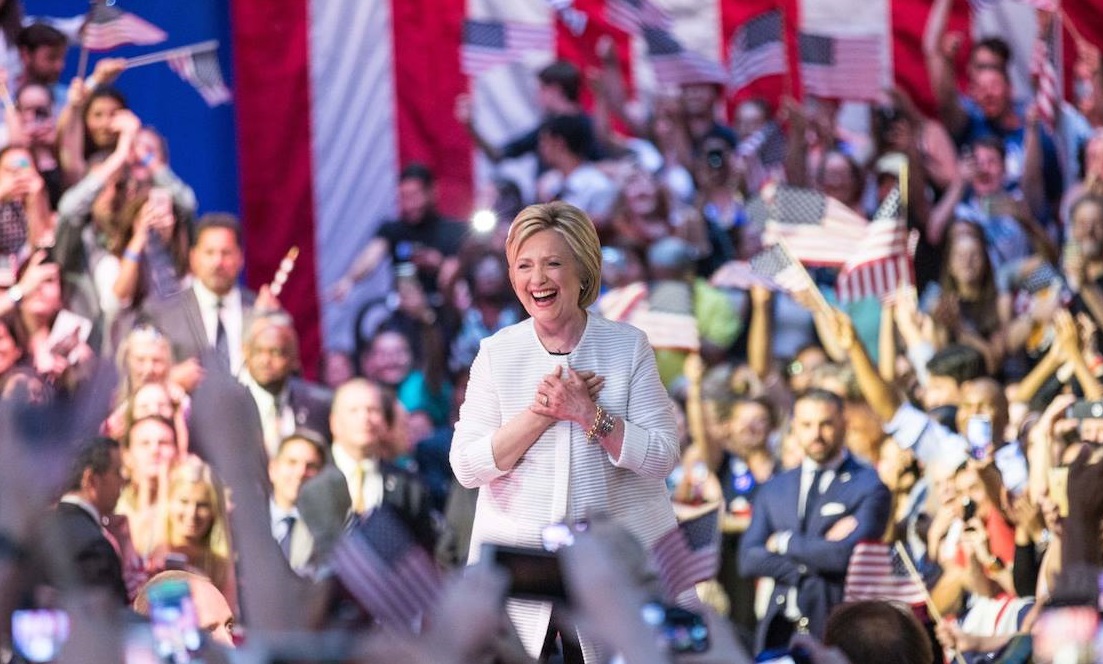
Hillary Clinton isn’t the first woman to run for president in the United States, but she is the first to be nominated by a major party. (Facebook)
This is a very good piece, and Hillary Clinton’s nomination is of course a milestone that means that, long after many other democratic countries in the world, the United States has, for the first time, a real chance to elect its first female president.
From Victoria Woodhull in 1872 (whose running mate was Frederick Douglass) to Shirley Chisholm in 1972 to Pat Schroder in 1988 to Carol Moseley Braun in 2004, there’s a long line of credible women who have challenged for the presidency, and Clinton’s accomplishment builds upon the stepping stones that they laid down (not least of all her own run for the presidency in 2008).
But without denying this moment’s importance, what’s even more fascinating to me is that someone who has been at the center of American political life for 24 years (I’m not counting over a decade as Arkansas’s first lady), with a record, warts and all, in the first Clinton administration, eight years in the US Senate and four years at State has won a major-party nomination.
The trend, increasingly, has been rapid-fire rises to the top from people who seemingly come out of nowhere. Barack Obama. In a way, George W. Bush, too. Jimmy Carter. Bill Clinton. Enrique Peña Nieto in Mexico, Justin Trudeau in Canada, Tony Blair and David Cameron in Britain. There’s just something undeniably attractive about a ‘shiny new toy’ in electoral politics.
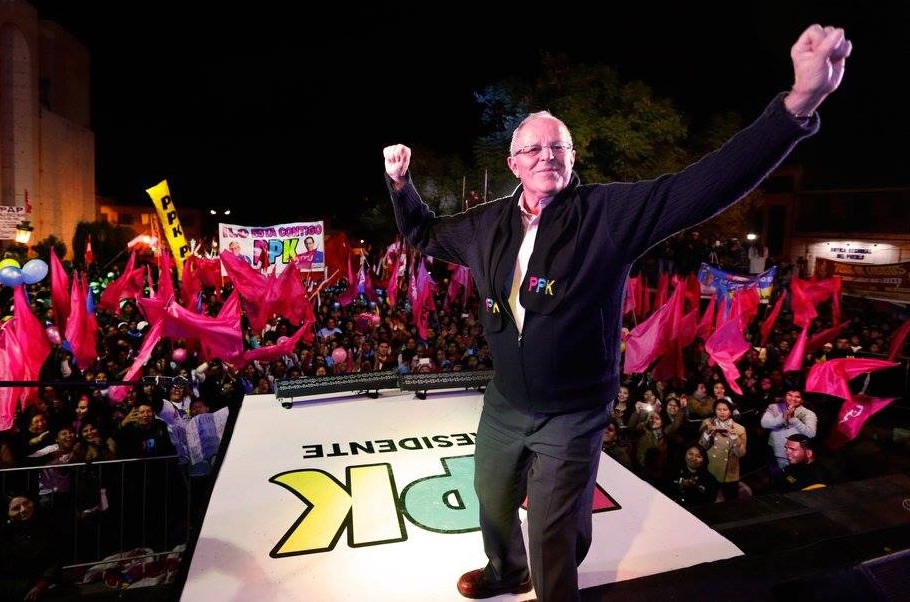
Pedro Pablo Kuczynski appears headed to a narrow victory in Peru’s presidential race. (Facebook)
For the second time in as many elections, it’s looking like Keiko Fujimori will narrowly lose a runoff to become Peru’s president.
With nearly 93% of the results counted, Fujimori was trailing behind economist Pedro Pablo Kuczynski, the 77-year-old former banker and International Monetary Fund official who served briefly as prime minister in the 2000s. Kuczynski, widely known across Peru by his initials, ‘PPK,’ was winning 50.32% of the vote to just 49.68% for Fujimori.
Though we do not know the exact results, and we might not know them until later today or this week, all signs point to a narrow victory for PPK, who placed third in the 2011 presidential election (behind Fujimori) and who trailed Fujimori by double digits in the initial April vote. Indeed, for years, the 2016 election seemed like it was Fujimori’s to lose. Kuczynski, an internationalist who seemed more at home in Washington, D.C. than in the Andean highlands, is not exactly a natural on the campaign trail. He took an incomprehensible break from the runoff campaign to visit New York (where he attended his daughter’s graducation, but where he also gave a speech to the Council on Foreign Relations, feeding the hype that he’s not ‘authentically’ Peruvian).
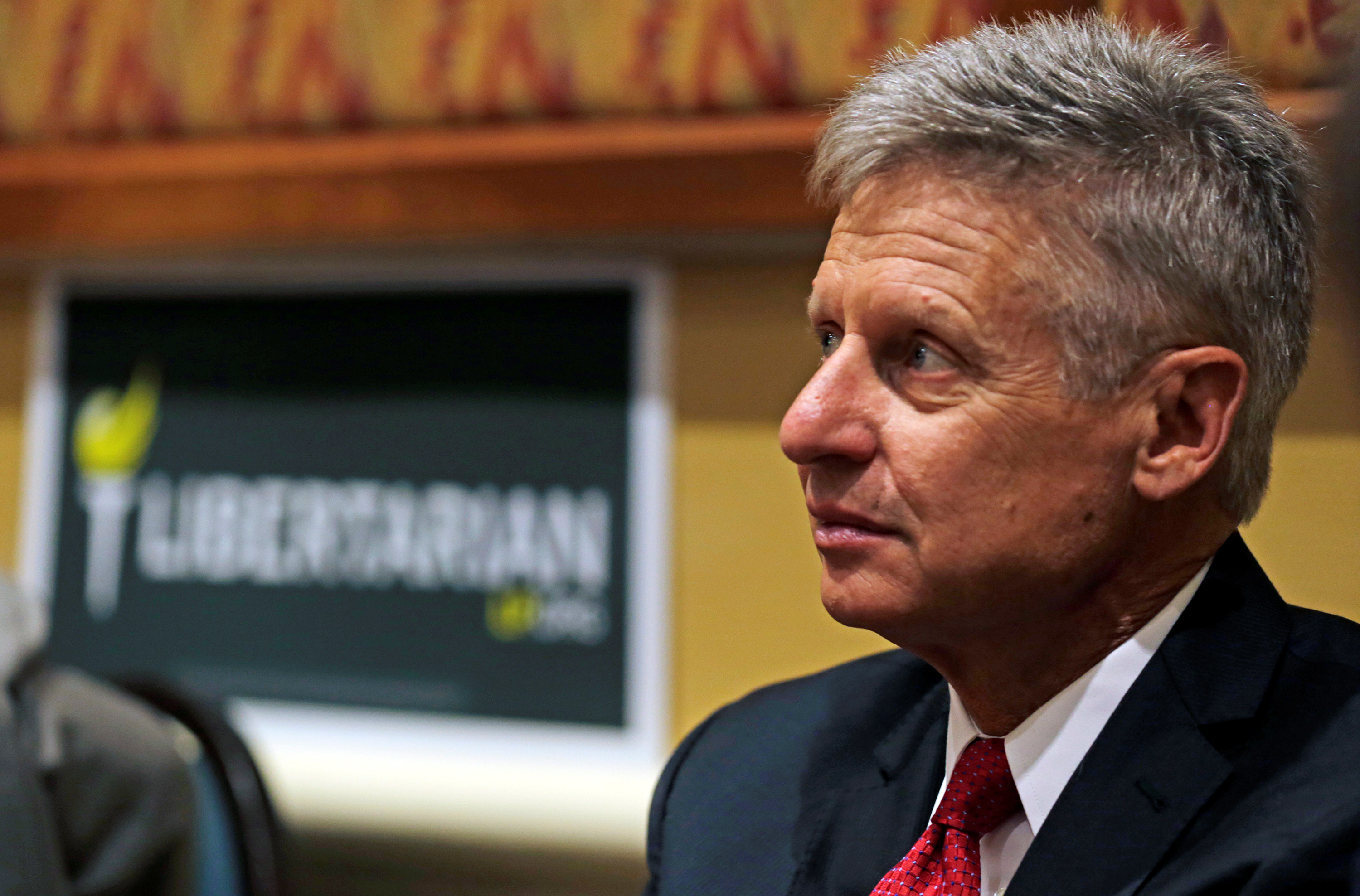
Libertarian Party presidential candidate Gary Johnson looks on during National Convention held at the Rosen Center in Orlando, Florida, May 29, 2016. (Reuters / Kevin Kolczynski)
Will it be ‘groovy Gary’ or ‘goofy Gary’?
With over five months to go in what’s already become a nasty presidential election, presumptive Republican presidential nominee Donald Trump hasn’t shied away from abusing his competitors, often giving them pejorative nicknames on Twitter and everywhere else on the campaign trail. Amused Americans might wonder whether Trump will welcome the Libertarian Party’s freshly minted 2016 presidential nominee, former New Mexico governor Gary Johnson, to the campaign with a similarly dismissive nickname as his other competitors — ‘low-energy’ Jeb Bush, ‘little’ Marco Rubio, ‘lyin” Ted Cruz and, most recently, ‘crooked’ Hillary Clinton.
The Libertarian Party nominated Johnson for a second consecutive time Sunday night at its national convention in Orlando, on a holiday weekend when most Americans were more concerned with summertime diversions than politics. But with Johnson leading the ticket, and with Libertarians, however reluctantly, nominating Johnson’s preferred running mate, former Massachusetts governor William Weld, as its vice presidential candidate, the party has for the first time since its inception in 1972, nominated a viable presidential ticket.
A ‘Never Trump, Never Clinton’ option in all 50 states
No one disputes that it will be an uphill fight, though the Libertarian Party will likely be the only third party to make the presidential ballot in all 50 states. But, at least on paper, the Libertarian ticket looks formidable. Johnson is enough of an ‘outsider’ to harness the same kind of energy as Trump and Vermont senator Bernie Sanders on the Democratic side of the race. For now, the Libertarian ticket is the only one with experience in executive government (not counting, of course, Clinton’s eight years in the East Wing as first lady).
Republican-leaning voters who believe Trump lacks the maturity, temperament, tone or experience for the Oval Office will be cheered by the shared ideological values with Libertarians, such as fiscal restraint and limited government. Democratic-leaning voters who mistrust Clinton will prefer the traditional Libertarian social liberalism on many cultural issues, such as abortion, LGBT marriage and drug decriminalization. Sanders supporters, in particular, who credibly hope that Sanders can defeat Clinton in the June 7 Democratic primary in California and who less credibly hope that Sanders can wrest the nomination from Clinton at July’s Democratic convention in Philadelphia, will find in Johnson a kindred spirit. Johnson would be smart to target Millennial voters who overwhelmingly backed Barack Obama in 2008 and 2012 and who even more overwhelmingly back Sanders against Clinton.
The ticket includes two proven vote-winners who, in aggregate, won four gubernatorial elections in the 1990s and the 2000s as ‘small-l’ libertarian Republicans in Democratic-leaning states. Even before his formal nomination and his decision to name Weld as a running mate, some polls were already showing that Johnson could win up to 10% of the vote in November. The most important polling threshold, however, is 15%, which would entitle Johnson and Weld to participate in the formal series of presidential and vice-presidential debates later this autumn that millions of American voters will watch. That, alone, would be an impressive achievement for the Libertarian Party.
Red governors in blue and purple states
Johnson, who briefly ran for the 2012 Republican presidential nomination before winning the Libertarian nomination in the same election cycle, served as the governor of New Mexico from 1995 to 2003, coming to politics after a successful business career in construction. As governor, Johnson widely used veto powers to limit state spending and pushed for both marijuana decriminalization and education reform to introduce greater choice and competition among schools.
Johnson can point to his experience spent eight years governing a state with the most proportionally Latino/Hispanic population in the United States (47% as of the 2010 census). In 2016, Latino voters are expected to be crucial in determining the next president. It’s a group of voters than has grown from just 7.7 million in 1988 to 23.3 million in 2012 (and a projected 27.3 million in 2016). Johnson, an avid outdoorsman, Ironman enthusiast and mountain climber who has scaled Mt. Everest, can nevertheless be awkward and a bit wooden on the stump. But he radiates sincerity, and in a race against Trump and Clinton, neither of whom voters seem to like or to trust, his lack of bombast or glib soundbites could appeal broadly, especially among authenticity-craving Millennials. Continue reading Libertarians nominate party’s 1st viable presidential ticket in US history→