Tag Archives: capriles

The policy case for Maduro in Venezuela

madurobus

In my earlier companion piece today, I discussed the policy case for electing Henrique Capriles as the next president of Venezuela in an attempt (however vain) to separate the emotional divide in Venezuela from the policy rationales that underline each candidacy.Venezuela Flag Icon

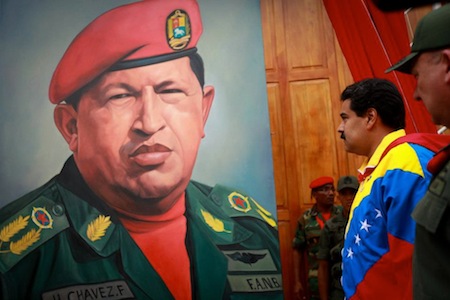
Separating the policy from the personal is even more difficult in the case of Nicolás Maduro, however, whose campaign at every turn has been one massive embrace of Chávez, not only as a predecessor, but as nearly a deity in his own right.  So far, the Maduro campaign begins and ends with ‘Chávez,’ and there’s no guarantee that once elected, Maduro would wield a sufficient personal mandate even to take sufficient control of Chávez’s Partido Socialista Unido de Venezuela (PSUV, or United Socialist Party of Venezuela).

There’s frustratingly little substance as to what Maduro (pictured above) would do with a six-year presidency, let alone whether he could come to dominate a governing regime with a handful of key powerbrokers, such as energy minister Rafael Ramírez, finance minister Jorge Giordani, and national assembly president Diosdado Cabello, none of whom will easily step aside from their relative and significant fiefdoms in government.

But, as I asked with respect to Capriles earlier today, what policy arguments should motivate a moderate voter who enthusiastically supported Chávez in 1998 but who’s become increasingly disenchanted about the reality of Venezuelan governance and who may be flirting with supporting Capriles — is there a rational case for supporting Maduro over Capriles?  Continue reading The policy case for Maduro in Venezuela

The policy case for Capriles in Venezuela

caprilesboat

Tuesday kicks off the official start of the campaign in Venezuela for the presidential election on April 14.Venezuela Flag Icon

It’s a little artificial, given that the campaign really began unofficially the day that Hugo Chávez died and certainly both the pro-chavismo and opposition forces have been preparing for such a campaign since Chávez left for his final, unsuccessful round of treatment in Cuba.

Not surprisingly, much of the pre-campaign has been waged on visceral and emotional lines — the pro-/anti- chavismo debate in Venezuela has become inextricably so linked to personalities and identity politics that it’s often hard to step back and articulate the policy rationale for each candidate.  Henrique Capriles, the opposition candidate, has even stepped up his attacks against acting president Nicolás Maduro, in a much more insistent (even populist) tone than he ever took in his 2012 presidential campaign against Chávez.

That seems likely to intensify over the next 13 days.

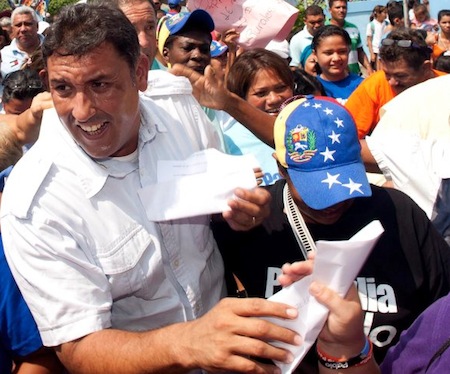
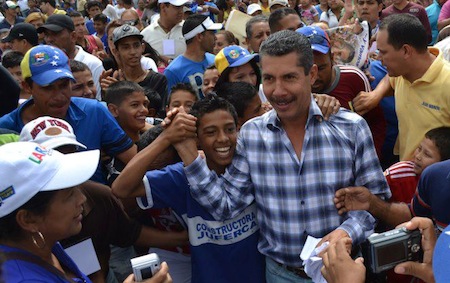
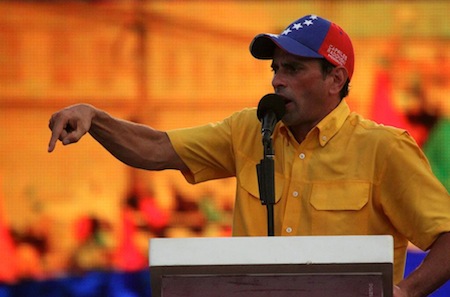
But to the extent it’s possible to put aside the emotional in favor of policy, what policy arguments should sway, say, the moderate voter who enthusiastically supported Chávez in 1998 and well into the last decade but who has doubts about the performance of the government in recent years to make the jump to support Capriles (pictured above) and the broad Mesa de la Unidad Democrática (MUD)?

Continue reading The policy case for Capriles in Venezuela

Book review: ‘Comandante: Hugo Chávez’s Venezuela’ by Rory Carroll

comandante

I’ve been reading an increasing amount of material in advance of the Venezuelan presidential election on April 14 (and will be covering it in Caracas), so luckily for me, Rory Carroll’s newly released book on the Chávez era was right on cue.Venezuela Flag Icon

Like most thoughtful writing on Chávez and chavismo, Carroll notes how incredibly complex the phenomenon has been — Chávez is neither hero nor villain, and he captures with credibility the reasons why Chávez was, and remains, so popular with a majority of Venezuelans, especially the country’s poorest.

It’s a fascinating read throughout, very highly recommended — I learned something about Venezuela on nearly every page.

The most jaw-dropping parts of the book are those that explain the ‘through-the-looking-glass’ nature of Miraflores, the presidential palace, and El Silencio, the colonial Caracas neighborhood that’s home to Venezuela’s government ministries.

This part of the book felt inspired by Ryszard Kapuściński’s The Emperor, a short (perhaps fictionalized) work on the final years of Ethiopian emperor Haile Sellassie II’s reign, so thick does the sycophancy hang in the air among Venezuela’s ministers — ministers nervously laugh over Chávez’s public claim that capitalism may have killed off life on Mars, and they fret when suddenly Chávez appeared in a yellow shirt (not the trademark red shirt that had become associated with his Bolivarian revolution) and announced there was too much read.  What follows is something out of Kapuściński or even Kafka:

Consternation around the palace. What to do? Some ministers hesitantly abandoned the color, worrying it was a trick.  Others flashed just a bit of red, trying to gauge the correct level.  When, a few weeks later, the comandante resumed wearing red again without elaboration, the crisis passed, and ministers reverted to red.

The winner of the survival game, Jorge Giordani, Chávez’s longtime finance minister, comes off as especially craven and incompetent, the ‘monk,’ a man of austere personal finances who turned a blind eye to widespread corruption and economic mismanagement, all while expending energy to retain his own favor in the administration.

The Castros in Cuba come off as wily as ever, having tapped into Chávez a willing disciple (or, less charitably, a dupe) to provide the ostracized island with precious fuel subsidies and cheap credit, and the relatively rapid infiltration of the G2 Cuban intelligence apparatus into Chávez’s security regime.

Here too are also details from the ill-fated April 11, 2002 coup against Chávez, and Carroll here paints one of the most damning portraits of Pedro Carmona, who took power for just hours and who, ‘drunk with power,’ literally failed to fit into the gold-plated sphinx chair, feet dangling, in the presidential office in Miraflores.

There are anecdotes a-plenty, too, like the episode of ¡Alo, Presidente! in which Carroll is invited to ask Chávez a question, lobs a mildly critical question, and is treated to a long diatribe about colonialism in the New World, Christopher Columbus and, oddly enough, given Carroll’s Irish background, the British monarchy.

We meet Giovanni Scutaro, tailor to chavismo (and, one suspects, everyone with enough money for fashion in Caracas), the American writer and Chávez enthusiast Eva Gollinger, and Baldo Sansó, a fast-talking executive at Venezuela’s state-owned oil company.

Later in 2010 during an energy shortage, we’re treated to Chávez counseling Venezuela to take three-minute showers:

‘Some people sing in the shower, in the shower half an hour.  No, kids, three minutes is more than enough.  I’ve counted, three minutes, and I don’t stink.’ He wagged his finger. ‘If you are going to lie back in the bath, with the soap, and you turn on the, what’s it called, the Jacuzzi… Imagine that, what kind of communism is that? We’re not in times of Jacuzzi.’

But it’s not all fun and games and showers.

Despite the histrionics of U.S. conservatives and others, Chávez’s administration been a largely bloodless regime, though there are plenty of chilling tales human rights shortcomings: stories of folks like Raúl Baduel, who was imprisoned on a politically motivated conviction after asserting the separation of the Venezuelan military from politics and becoming increasingly critical of Chávez’s rule, and María Lourdes Afiuni, a judge who delivered an acquittal of disgraced superstar Eligio Cedeño, who thereupon found herself imprisoned.  We also meet the Nuñez brothers of the El Cementerio barrio, caught in a bleak life-and-death struggle for survival as the leaders of El Cementerio’s gang in the rough hills above the Caracas valley.

Though Carroll could hardly have known his book would emerge nearly simultaneous with the death of Chávez, its publication comes at a time when both Venezuelans and non-Venezuelans are wondering about what comes next — under either Nicolás Maduro or Henrique Capriles.

I would have liked to see more discussion on how chavismo actually replicates many of the elements of the petrostate of the regimes that preceded it in Venezuela, and in other petrostate regimes throughout the world, as well as more discussion of the future of chavismo after Chávez, but those are topics that could easily be volumes of their own.  And it’s notable that neither Maduro nor Capriles play a starring role over the past 14 years.  Máduro himself is a bit player in the book, a sycophant who’s managed to survive in El Silencio from the earliest days of Chávez’s ‘Movement for a Fifth Republic’:

Whatever hour Chávez phoned, whatever law he wanted amended or revoked, Maduro assented.  He became head of the assembly in 2005 and then, despite not speaking any foreign languages, foreign minister in 2006, a post he held for six years.  He crisscrossed the world following Chávez’s orderes and reading Chávez’s script, never deviating, never ad-libbing, never proposing his own initiatives… When the comandante praised Maduro in public — ‘Look at Nicolás there, handsome in his suit, not driving a bus anymore’ — he just smiled.  Foreign ambassadors said the foreign minister grew into his job but that he never took a big decision.  Only Chávez was allowed to shine, so Maduro did not shine.  And thus he prospered.  He acquired an extensive wardrobe, put on weight, grew thick around the trunk.

That perhaps explains why Maduro, not the more cunning current assembly president, Diosdado Cabello, won Chávez’s pre-death endorsement as his successor.

Carroll begins with an anecdote from an interview from beloved Latin American writer Gabriel García Márquez, who wrote the following about Chávez on the eve of his inauguration in 1999:

While he sauntered off with his bodyguards of decorated officers and close friends, I was overwhelmed by the feeling that I had just been traveling and chatting pleasantly with two opposing men.  One to whom the caprices of fate had given an opportunity to save his country.  The other, an illusionist, who could pass into the history books as just another despot.

Carroll’s sophisticated treatment of chavismo produces examples of all of the above — Chávez as savior, Chávez as illusionist and Chávez as despot — and takes chavismo up as a mirror to reflect how all of those impressions have marked Venezuela for the past decade and a half.

In death, the Chávez cult has become even creepier

cheque

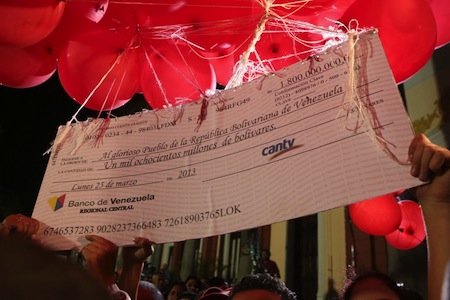
If you already thought that Venezuela was the Turkmenistan of Latin American politics, you need no further proof than the latest stunt on Tuesday from acting president Nicolás Maduro.Venezuela Flag Icon

In the clip below, Maduro has launched an oversized check up to the heavens to a grateful Hugo Chávez, representing the dividends received by CANTV, the Venezuelan telephone company that Chávez nationalized in 2007.  It’s another great find from Caracas Chronicles, which has been on quite a roll in the post-Chávez era in covering Venezuelan politics:

‘!Vuela, Vuela!, ¡en homenaje al Comandante!,’ Maduro exclaims (‘Fly! Fly! In tribute to the comandante!’), as red balloons (red symbolizing the color most associated with Chávez) float the check of 1,800 million bolívars upward to the skies.

As outrageous as it seems, it’s part of a series of impressions that the post-Chávez era is featuring an even creepier cult of personality in Venezuela than when el comandante was alive.

It began with the plans — now apparently aborted — to embalm Chávez and place him on display, just like Vladimir Lenin is on display in Moscow or Mao Zedong is on display in Beijing.  Those plans were belatedly phased out after officials determined that officials had waited too long after Chávez’s death in order to embalm him.

Then there are the over-the-top tributes like this, mingling the legacy of Chávez with that of Venezuelan founding father Simón Bolívar and other left-wing martyrs, and even Chávez’s Cuban benefactors have a thorough celebration of his life at Granma. 

Maduro even joked (or was it a serious claim?) that Chávez, his place in heaven secured, nudged God to make Argentine cardinal Jose Maria Bergoglio the world’s first Latin American pope.

It wouldn’t surprise me if, like in Turkmenistan, Maduro started trying to rename the months of the calendar after Chávez — there’s even a snarky website, madurodice.com, that tracks the number of Maduro’s mentions of Chávez on the campaign pre-campaign trail.

But the massive miles-long queues of people waiting to pay tribute to Chávez in death, and an extremely elegant funeral that drew nearly every leader in Latin America from Chile to México, with a ley seca (dry law) implemented to keep life in Caracas especially a bit more subdued in the potentially challenging days following Chávez’s death should have been enough to mark the extremely oversized impact that Chávez played within Venezuela’s political system — and above all in the spoils system that funneled oil wealth from the government to its supporters, from top government officials on downward.

All of this and Venezuela’s formal campaign season doesn’t even kick off until April 1.

French public intellectual Bernard Henri-Lévy has already decried the growing chavismo cult of personality:

What is less known, something that we will regret overlooking as the posthumous cult of Chávez swells and grows more toxic, is that this “21st-century socialist,” this supposedly tireless “defender of human rights,” ruled by muzzling the media, shutting down television stations that were critical of him, and denying the opposition access to the state news networks.

For Chávez supporters, there are certainly myriad policy reasons to support Maduro in the upcoming election over challenger Henrique Capriles — like him or not, he fundamentally transferred Venezuela’s oil wealth to the poorest Venezuelans in amounts unknown in nearly a century of the country’s oil wealth.  You can argue that Chávez’s redistribution of wealth has been inefficient, that his expropriations and other economic policies have left Venezuela mired in debt, a pariah of the global financial system and ill-prepared for the day that oil prices drop, and that other more moderate regimes from Perú to Brazil have notched records of poverty reduction just as impressive as — or more so than — Venezuela under chavismo. Continue reading In death, the Chávez cult has become even creepier

Meet the new heir to Hugo Chávez: the feistier, populist Capriles 2.0

caprilesgetsanimated

Just days after the death of longtime Venezuelan president Hugo Chávez, his previous opponent in the 2012 election, Henrique Capriles, lost no time in taunting acting president Nicolás Maduro:Venezuela Flag Icon

Nicolás, nobody elected you president. The people didn’t vote for you, kid.

It was quite a bit out of character for Capriles (pictured above), who often campaigned against Chávez, then ailing with the cancer that ultimately took his life, with kid gloves — after all, Chávez remained the beloved champion of Venezuela’s poor, and Capriles himself pledged to retain the misiones that provided education and health benefits in the event of his election.

In fact, Capriles’s sneering and taunting attitude was more reminiscent of Chávez, who never lost an opportunity for a little name-calling.

Although Capriles is reported to have seriously considered boycotting the election, he announced March 10 that he would accept the presidential nomination of the opposition coalition, the Mesa de la Unidad Democrática (MUD) with the kind of intensity that critics claimed his previous 2012 campaign lacked.  In a fiery, nearly hour-long speech, he attacked the record of chavismo and pursued Maduro with a newfound aggression, challenging Maduro by his first name (¡Y tu, Nicolás…) and attacking the government’s handling of the constitutional succession and its performance since Chávez won reelection:

Maduro was hand-picked by Chávez as his new vice president and anointed as his preferred successor, and he has — for now — secured the support of the Partido Socialista Unido de Venezuela (PSUV, or United Socialist Party of Venezuela) and much of the Venezuelan army, now sympathetic to the ruling chavista regime after 14 years of Chávez in power.

But from his newfound abilities in populist rhetoric and campaign aggression, it may well be Capriles who is becoming the true heir to Chávez.

For example, on March 10, in response to ‘homophobic’ slurs from Maduro, Capriles took the opportunity not only to deny them, but to make a full-throated attack on the machismo of the chavistas and to argue forcefully for social inclusion for all Venezuelans, no matter what their sexual orientation:

That takes a lot of brass — and perhaps it’s the kind of brass that comes from a campaign against Maduro that seems more doomed than the one last year.

The conventional wisdom is that Maduro will ride the wave of sympathy for Chávez to victory so soon after the funeral, and polls show that Maduro is leading Capriles, in some cases by a wider margin than the 11% victory Chávez won in 2011 (such as a recent Datanalysis poll that gives Maduro a 14-point lead).

Capriles has attacked the polls, too, arguing that the government are paying pollsters to show Maduro leading.  True or not, it’s a classic play from the Chávez playbook — disregard the facts, and turn a negative into a way to attack your opponent.

What it means is that Capriles is running the kind of offensive campaign that Chávez ran throughout his career, and Maduro is running the kind of defensive, hesitant campaign that’s typically been associated with the opposition.

But regardless of whether Capriles has a chance to win, he’s now free to run against chavismo without having to run against the charismatic commandante himself.

After a setback for opposition forces in the regional and gubernatorial races in December 2012 (Capriles himself won reelection only narrowly against Elías Jaua, a well-financed former Chávez vice president), a feisty loss in the April 14 presidential election would not only energize the opposition, but keep it united and prepare it to take on the PSUV in parliamentary elections due in 2015.

Even more slyly, one of the subtle themes of the Capriles campaign is simply, ‘Maduro is no Chávez.’

The subtext here is that, even if you supported Chávez, and perhaps especially if you supported Chávez, you don’t necessarily need to support Maduro, who doesn’t measure up to Chávez.  Capriles has argued that Maduro, in less than a hundred days as the de facto acting president during Chávez’s terminal illness, has already begun to dismantle the achievements of the Chávez era.

That’s one reason Capriles has been so aggressive in attacking Maduro’s February devaluation of the bolívar, Venezuela’s currency, which lowered its value by 32%.  Maduro doubled down this week, however, announcing a second devaluation that is expected to cut even more deeply into the value of the currency, and a new foreign exchange system to assist importers acquire increasingly rare U.S. dollars.  The devaluations are also designed to cut a budget deficit that swelled in 2011 and 2012 in advance of Chávez’s reelection, despite abundant oil wealth.

It’s also why Capriles has gone on the offensive about cutting subsidies to Cuba — it’s widely believed that Maduro was Havana’s preference as Chávez’s successor, hoping that Maduro’s election will secure the uninterrupted flow of oil subsidies, cheap credit and other goodies to the Castro regime.  Again, the anti-Cuba rhetoric is subtle way of reclaiming nationalism at the expense of Maduro’s relatively weaker position.  Capriles would never have been able to attack the nationalist bona fides of Chávez, the 21st century champion of ‘bolivarian’ revolution.  Not so with Maduro.

Consider, too, this television advertisement from the Capriles campaign yesterday — although it’s only a simple 21-second spot, it’s a harsh indictment of chavismo that lists five reasons for change: violence, power outages, expropriations, deficient hospitals and lack of water:

Capriles may well still lose the election because the wall of sympathy for Chávez was always going to be too high to surmount.

But make no mistake, Capriles is certainly waging a more spirited campaign than anyone every really anticipated — it may not be enough to win the election, but it may well make it a far closer run than the chavista regime would have liked.  That, in turn, will lay the groundwork for a future challenge if Maduro wins and conditions deteriorate in advance of parliamentary elections or before the next presidential election in 2018.

Caracas bleg

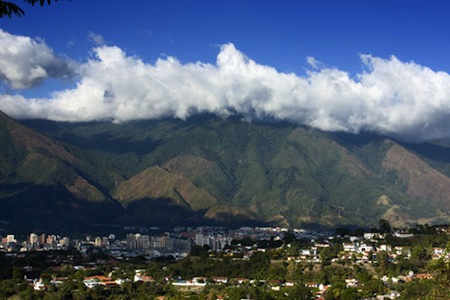
caracas

I’ll be in Caracas from April 9 to April 16 — hopefully in pursuit of learning a little more about chavismo, its supporters, its opponents and the state of current Venezuela in advance of — and during — the April 14 snap election there. Venezuela Flag Icon

Any tips — or contacts — are extremely welcome.

Should Capriles automatically get a second shot at Venezuela’s presidency?

capriles

Venezuela’s now-acting president Nicolás Maduro is tending to affairs of state today, including a funeral for the late president Hugo Chávez on Friday, and making sure that his longtime Venezuelan predecessor’s death doesn’t result in any turbulence.Venezuela Flag Icon

But as Francisco Toro, of the always-insightful Caracas Chronicles writes today in The New York Times, politics has not stopped simply because the 14-year leader has died:

And now, Chávez’s hand-picked successor is telling the man’s grieving followers that we — those who disagree with him — are responsible for the illness that took his life.

Within hours of the president’s death being announced, gangs of motorcycle-riding Chávez supporters burned down an encampment where opposition-minded students had been demanding that the government tell the truth about his condition. Rumors of riots circulated feverishly on Twitter throughout Tuesday evening, still unverified.

Maduro, for now at least, seems to have firmly grasped control of the government, including the immediate support of the Venezuelan military, and the parallel power structures of Chávez’s governing Partido Socialista Unido de Venezuela (PSUV, or United Socialist Party of Venezuela).

Foreign minister Elías Jaua (former vice president), who announced that Maduro was taking over as acting president, seems to be on board the Maduro bandwagon, and Cuba has long thought to have favored Maduro as Chávez’s successor (incidentally, one of the most fascinating aspects of the past three months and the months ahead is the role that Cuba plays in Venezuelan governance).

There’s a chance that Diosdado Cabello, the speaker of the National Assembly, could attempt to win the presidential nomination, but that seems unlikely, at least today. Time will tell.

Under the Venezuelan constitution, Maduro must call an election within 30 days of Chávez’s death but, as Diego Moya-Ocampos noted last month in Americas Quarterly, it’s not clear whether Maduro must call the election to be held within 30 days or whether Maduro must make the announcement within 30 days.

In one instance, Venezuela faces a presidential election on or before April 5.  In another instance, Venezuela faces an election anytime over the course of 2013, conceivably, so long as it is announced before April 5.  My first instinct is that Maduro will want to schedule the election as quickly as possible — to take advantage of lingering sympathy for Chávez and the legacy of his ‘Bolivarian’ project, to subdue intraparty rivals such as Cabello and to avoid giving the opposition a chance to develop support over a long campaign, especially at a time when so many problems are so visible: Venezuela’s economy remains in shaky condition, shortages and outages are commonplace and the country’s violent crime remains, as ever, some of the worst in the Western hemisphere.

Chávez’s former opponent, Henrique Capriles (pictured above), is assumed to become the candidate who will challenge Maduro in the upcoming presidential election to determine Chávez’s successor — he was the candidate of the unified opposition umbrella group, the Mesa de la Unidad Democrática (MUD), in the October 2012 presidential election.

There are a lot of strong reasons to make that assumption: Continue reading Should Capriles automatically get a second shot at Venezuela’s presidency?

Chávez’s death kicks off sudden presidential election in Venezuela

chavezdies

Venezuelan president Hugo Chávez has died today at age 58 after a long battle with cancer, and that sets off a snap 30-day campaign to select his successor. Venezuela Flag Icon

Putting aside politics and policy for a moment, it is clear that Chávez commanded a huge amount of support among the 29 million residents of Venezuela.  Though many critics, both within Venezuela and outside the country, especially in the United States, found his style of populist ‘bolivarian’ socialist government offensive, his largest legacy may well be addressing poverty in Venezuela after decades of leaders ignored Venezuela’s poorest– and even lift many Venezuelans out of poverty with massive amounts of social welfare spending on health, education and other support through his misiones, though we’ll leave for another day the question of whether that spending, based largely on Venezuelan natural resources and high global demand for oil, is sustainable in the long run.

It’s a testament to Chávez’s influence that Henrique Capriles, his opponent in the October 2012 presidential election, campaigned on a basis of retaining many of the misiones.  Although Chávez won reelection with nine-point victory over Capriles, the opposition made clear to Venezuelans that, to some degree, ‘we’re all chavistas, now.’ (follow all of Suffragio‘s coverage here).

His legacy will also be one of a troubling, divisive, oppressive autocrat — an erratic style of rule that diminished press freedom and blurred the line between the military, the government and politics.  Although elections remained free in Venezuela under Chávez, his mobilization of government to support his political survival meant that elections weren’t necessarily fair.  He also championed an anti-imperialist style that antagonized the United States and other Western governments (he famously called former U.S. president George W. Bush ‘Mister Danger‘ and a donkey), seeking instead common cause with countries like Iran and other rogue states.

But Chávez’s health — which was always an issue, however muted, during the campaign — took a turn for the worse after his reelection.  He departed for Cuba very soon after the election for cancer treatment, missing his own re-inauguration, and really since the day he was reelected, Venezuela’s been trapped in a bit of political paralysis with a president on what turned out to be his deathbed.

Upon reelection, Chávez was scheduled to have remained in office through January 2019; now that he’s died in office, Venezuela faces a snap election to be held within 30 days.

That’s right — Chávez’s successor will be chosen by April 5.

Before leaving for treatment in Cuba, Chávez appointed a new vice president, former foreign minister Nicolás Maduro, and anointed him specifically as his successor.  That means Maduro is likely to lead Chávez’s ruling Partido Socialista Unido de Venezuela (PSUV, or United Socialist Party of Venezuela) into the snap election, though it’s possible that Diosdado Cabello, the speaker of the National Assembly, could attempt to win the presidential nomination.  Given the outpouring of sympathy for Chávez, though, and the suddenness of the election, that seems unlikely.

I’ll note that Cabello himself is far from Caracas today, dealing with the death of his own mother, Felicia de Cabello, which makes the timing of Chávez’s own death perhaps suspicious.

Though Cabello may command more support within the PSUV ranks, Cuba’s leadership is thought to back Maduro, and that’s likely to be a hugely determinative factor in the days to come — one of the key questions is the role that the Cuban government of Raúl Castro has played in Venezuela’s governance in the past couple of months while Chávez has been incapacitated.

His recent opponent, Capriles, was narrowly reelected as the governor of Miranda, Venezuela’s second-most populous state, in the state elections in December 2012, and so the dynamics of the snap elections, held so closely after the previous presidential election, means that Capriles, the highest-ranking official from within the broad opposition coalition, the Mesa de la Unidad Democrática (MUD), will likely be its candidate — and we’ll be asking once again whether Capriles defeat chavismo, this time without Chávez.  Again, the governor of Lara state, Henri Falcón, himself a former chavista, might also emerge as a potential challenger, though with such a short presidential campaign, Capriles has more national name recognition and the ability to mobilize a rapid campaign team, and the opposition will surely see this as their best opportunity to take power in the past 13 years.

I’m not sure what the next 30 days will bring.

We could see infighting over the nomination from both the PSUV or the MUD or we could see very rapid alignment in light of the election ahead.

We could see Venezuelans turn away from the chavistas without their charismatic leader, with Venezuela’s economy sputtering and with the most credible opposition in years providing a compelling alternative government.  We could also see a wave of sympathy for the long-ailing Chávez sweep his chosen successor Maduro into power.

Although for now the military has vowed loyalty to Maduro, meaning that there’s no imminent threat of a coup, will the military, now fully integrated into Chávez’s political empire, even allow a fully free and fair election in 30 days that could result in the election of an opposition candidate?  We just don’t know.

For now, it’s enough to note Chávez’s passing, note his complicated legacy to Venezuela and to the world, and hope for the most peaceful and seamless transition possible for the people of Venezuela.

With Chávez’s health in doubt, regional Venezuelan elections assume greater importance

pabloperez

falcon

With Venezuelan president Hugo Chávez recovering from surgery, due to what may be terminal cancer, it’s easy to forget that this weekend will mark a handful of key regional races throughout Venezuela, including a gubernatorial race in Miranda state that pits Chávez’s former presidential rival against Chávez’s former vice president.zuliamiranda flagVenezuela Flag Icon

Although the attention this week has been mostly on Chávez’s health, his departure to Cuba for surgery and, perhaps above all, his speech last Saturday night indicating that his preferred successor is former foreign minister and vice president Nicolás Maduro, the results of Sunday’s races will establish the backdrop for the leading figures of both Chávez’s Partido Socialista Unido de Venezuela (PSUV, or United Socialist Party of Venezuela) and the broad opposition coalition, the Mesa de la Unidad Democrática (MUD).

Indeed, with rumors flying of complications after his surgery, the weekend’s races have counterintuitively become more important as Venezuela prepares for the possibility, at least, of a new early presidential election if Chávez resigns or dies in office.

In their own right, however, because 20% of the federal budget is (theoretically) allotted to state governments, governorships provide the MUD and other opposition candidates a platform for government, notwithstanding the centralization of Venezuela’s federal system under PSUV rule.

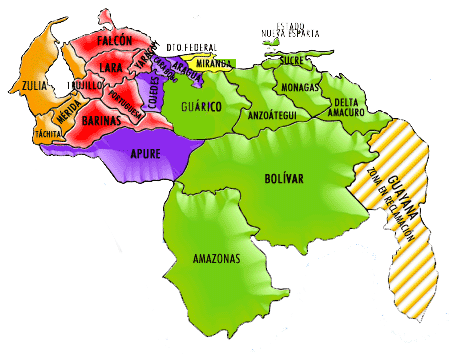
venezuela states

The key race that everyone will be watching is the governor’s race in Miranda, where the incumbent, Henrique Capriles, recently finished his unsuccessful presidential campaign against Chávez as the MUD’s standard-bearer — although he lost by 9 points, Capriles won 45% of the vote, making him Chávez’s most successful political opponent in his 13-year reign.  Miranda state is likely Venezuela’s most developed state and its second most populous, bordering (and in some cases including) the broad Caracas metropolitan area.  Chávez actually won this state in the October presidential race by a squeaker — with 49.96% to Capriles’s 49.52%, and Capriles won the 2008 election with just over 52% of the vote.

His opponent is the somewhat humorless former vice president, Elias Jaua, and although one poll has shown Jaua with a five-point lead against Capriles, other polls have shown varying Capriles leads and it’s certainly difficult to believe Capriles is an underdog.  By all accounts, the fresh-faced Miranda governor has been a more-than-capable administrator in the past four years, bringing a dose of good government to Miranda after the corruption of his predecessor, Diosdado Cabello.  Furthemore, Jaua’s record as a colorless Chávez yes-man makes it seem like he’s less than likely to sweep to victory, although if Chávez’s health takes a serious turn for the worst between now and Sunday, Jaua may yet benefit from a vote of sympathy.

Capriles defeated Cabello, the governor from 2004 to 2008, in the prior election, and Cabello, who’s since become the leader of Venezuela’s PSUV-dominated National Assembly, would temporarily take over as president in the event that Chávez resigns or dies after he is sworn in for his next term (set to begin January 10), with a snap presidential election to follow within 30 days.  Despite Chávez’s speech anointing Maduro as his preferred successor, Cabello has long harbored presidential ambitions, he, along with Jaua (especially if Jaua wins) may try to become the PSUV’s presidential candidate in any such election instead.

Of course, in the event of such a rapid election, Capriles is very likely to lead the opposition against Maduro, Cabello or whomever the PSUV runs.  But that  could change if Capriles doesn’t win Sunday’s vote in Miranda handily — given his narrow loss to Chávez and the very short 30-day window for a new presidential election, Capriles may nonetheless still be the main opposition candidate.  But it would open the door for another candidate to emerge, likely from among the other six states where opposition governors are currently in power.

That brings us to Zulia state and with 3.8 million people, it’s Venezuela’s most populous.  Nestled in Venezuela’s far northwest bordering Colombia along the Caribbean coast, Zulia’s oil and agricultural wealth makes it, like Miranda, one of the country’s wealthiest states.  Pablo Pérez (pictured above, top), who widely lost the MUD’s presidential nomination to Capriles by a 2-to-1 margin way back in February 2012, is running for reelection in what should be an even more solid opposition win for Un Nuevo Tiempo (UNT, a New Era), the centrist party that was founded in Zulia in the late 1990s and which has controlled the governor’s office since 2000 (until 2008, under Manuel Rosales, who lost the 2006 presidential election against Chávez by a 25-point margin).  Pérez is running against the PSUV’s Francisco Arias Cárdenas, governor of Zulia from 1995 to 2000, though Pérez is heavily favored.  Capriles did better in Zulia than he did nationwide in October, winning 46.27% to just 53.34% for Chávez.  Both Chávez’s national government and Pérez’s UNT regional government have spent large sums on social programs in the state, and a win for the PSUV would be quite a staggering victory for chavismo.

If Capriles falters in Miranda, Pérez, who lies politically to the left of Capriles, could well become the next consensus opposition presidential candidate.

Continue reading With Chávez’s health in doubt, regional Venezuelan elections assume greater importance

Chávez officially names Maduro as anointed successor

Venezuelan president Hugo Chávez, only two months after winning reelection against his strongest opponent in 13 years in office, appears to have taken a turn for the worse in his ongoing struggle with cancer, has returned to Cuba for surgery. 

Before leaving, however, he indicated his express preference for his successor — for the first time — in the event that his health declines terminally.  That’s as close as any indication that Venezuelans have received from Chávez that he is battling terminal cancer, in a hasty address to the nation late Saturday night:

Unfortunately, comprehensive tests (performed in Cuba) found the presence, in the same area (previously) affected, of malignant (cancerous) cells. It has been decided that it is absolutely necessary and essential to undergo further surgery. This should happen in the coming days. Doctors even recommended performing the surgery yesterday (Friday) or this weekend at the latest.

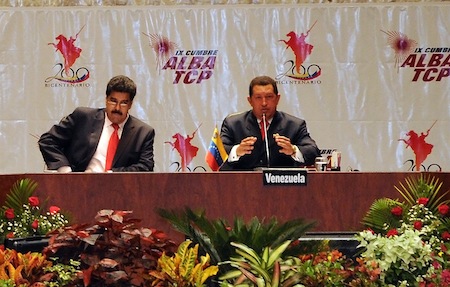
Not surprisingly, Chávez anointed Nicolás Maduro (pictured above, left, with Chávez) as his favored successor, expressing openly what he had indicated implicitly in October when he elevated Maduro, formerly foreign minister, to become Venezuela’s new vice president.

Maduro, a former bus driver and trade unionist, has been part of Chávez’s ruling Partido Socialista Unido de Venezuela (PSUV, or United Socialist Party of Venezuela) since its foundation, and he was by Chávez’s side in 1998 when the PSUV first won power.  He was a member of Venezuela’s parliament until 2006, serving as speaker from 2005 to 2006, when he was named as Chávez’s foreign minister.  As such, he’s a fairly well-known figure to Venezuela’s key allies and opponents alike, including China, the United States and Cuba, although observers are cautiously optimistic he would be a more moderate leader, more in the mould of former Brazilian president Luiz Inácio Lula da Silva than Chávez.

Chávez is set to be inaugurated for his fourth term on January 10 — if he were to die during his third term, Maduro would take over as president until January 10.  If Chávez dies after reelection, Diosdado Cabello, the speaker of the National Assembly, would take over temporarily while new elections are organized.  Under Venezuelan law, a new presidential election would be required within 30 days of Chávez’s death or resignation during the first four years of his term (which is set to run for six years, through 2019).  Chávez’s announcement on Saturday makes it very likely that, despite Cabello’s presidential ambitions, Maduro would likely lead the PSUV in any such presidential election in the near future.

Venezuelans return to the polls on December 16 to vote for regional governments, including in Miranda state, where Chávez’s one-time challenger Henrique Capriles is facing a strong challenge from Maduro’s predecessor as vice president, Elías Jaua.

Capriles won 45% of the vote nationally against Chávez in October as the leader of the opposition coalition, Mesa de la Unidad Democrática (MUD).  If Capriles wins on Sunday in Miranda state, he will be well placed to compete in any future presidential election against Maduro.

In naming Maduro as new VP, Chávez indicates preference for successor

Fresh off his reelection after nearly a year-long and tough-fought election campaign against Henrique Capriles, Venezuelan president Hugo Chávez yesterday named Nicolás Maduro as his vice president.

The move clearly establishes Maduro as a favorite successor for a president who’s also over the past year received treatment abroad for cancer and whose new presidential term runs fully until January 2019.

As such, one of the questions looming over Sunday’s election was whether Chávez would even survive until the election (he did, of course), and if so, whether he could groom a successor who would both stand on his own among the Venezuelan people as a champion of chavismo after Chávez’s death (or retirement) and whether the various factions of Chávez’s ruling Partido Socialista Unido de Venezuela (PSUV, or United Socialist Party of Venezuela).

Maduro himself is a former bus driver and trade unionist (unofficially, however, as trade unions were not permitted in the 1970s and 1980s), and became politically active on the Venezuelan left.  He helped found the PSUV and its predecessor movement, he was a key aide in Chávez’s winning election campaign in 1998 and was elected that year to the Chamber of Deputies (which preceded today’s National Assembly, which was introduced under Chávez’s 1999 constitution) and has been a member of the National Assembly thereafter, serving as the speaker from 2005 to 2006.  Since 2006, Maduro has served as Chávez’s foreign minister, and has been generally known as a loyal, but moderate, member of Chávez’s inner circle.

A very juicy (and perhaps wine-soaked) internal email from the private intelligence group Stratfor from 2011 leaked by Wikileaks earlier this year pinpointed Maduro as the likeliest candidate:

Maduro is loyal as a dog to Chavez. (the source knows Maduro personally, from the days that Maduro was a driver of the metro bus.) At the same time, maduro is seen as the most pragmatic in the regime. If Chavez’s health deteriorates significantly before the scheduled Oct 2012 elections, expect him to proclaim Maduro as his successor in one way or another. You can already see him propping up Maduro in a lot of ways. This is less risky than Chavez going through with elections, winning, suddenly dying and then a power struggle among the Chavistas breaking out. It will be much harder in this latter scenario for Maduro to assert himself against rival Chavistas like Diosdado Cabello, Rafiel Ramirez, etc.

Maduro is seen as more of a Lula candidate. He has a following, he has charisma, but he’s also a balancer. He’s the kind of guy that would open up to the US and keep tight with everyone else, but that still makes Iran nervous. The source seems to think that Obama in his second term would open up to Maduro (and this is something that he is actively working on.)

The e-mail claims that both Russia and China — and possibly Cuba — support Maduro as the preferred successor to Chávez.  Sure enough, Maduro has true roots in the movement for social progress that represents the best of what the Chávez regime has accomplished since 1998, and he has sufficient charisma to carry forward that project in the 2018 election, and sufficient moderation to be a calming influence on each of the United States, Russia and China, even as he has worked to develop closer ties to the Castros in Cuba.  Even Juan Cristobal Nagel at Caracas Chronicles, not exactly a partisan, has some nice things to say about Maduro, but Maduro is not quite the second coming of Lula (nor even, apparently, as open to LGBT rights as the Castro regime in Cuba is fast becoming).

So who loses out with Madero’s elevation? Continue reading In naming Maduro as new VP, Chávez indicates preference for successor

Chávez headed for apparent narrow reelection in Venezuela

According to Venezuela’s election commission, Venezuelan president Hugo Chávez has won reelection with 54.42% of the vote in today’s election, apparently, with just 44.97% for Henrique Capriles, his most effective challenger since Chávez was elected as president for the first time in 1998.  Capriles has conceded victory to Chávez. 

The top-notch Caracas Chronicles blog is also reporting that Chávez has won, despite early exit polls that suggested Capriles may have pulled off an upset against Chávez — there’s been no indication as to whether there’s been fraud in the election results, but the election was conducted without international observers.

While the vote may turn out to have been free, it is more difficult to know whether the vote was fair, with many government employees allegedly scared to vote against Chávez, lest they lose their jobs in retribution.

After he is re-inaugurated in January, Chávez’s term will run until 2019.  In power for 14 years, he has brought a uniquely personal brand of ‘Bolivarian’ revolution to Venezuela, and he has now survived an incredibly effective and energetic challenge from the governor of Miranda state, who was supported by a highly unified opposition in the form of the umbrella group Mesa de la Unidad Democrática (MUD).  Capriles, however, it could signal the resurgence of a true opposition and the emergence of a more normal politics in the South American country of nearly 30 million people after Chávez won reelection with 61% six years ago.

Serious questions remain about the future of chavismo, however, starting with the health of the president himself, who underwent treatment abroad earlier this year and last year for an unspecified form of cancer.  Beyond questions of Chávez’s health and issues of transition within his party, the Partido Socialista Unido de Venezuela (PSUV, or United Socialist Party of Venezuela), there remains the question of a stagnant economy propped up solely by Venezuelan oil, murder rates and violent crime that’s some of the worst in the world, and government institutions rife with corruption, abuse and waste and a lack of commitment to freedom of speech and expression in many regards.

Chávez’s support for communist regimes in Latin America, such as Cuba and Nicaragua, and pariah states throughout the world, such as Belarus and Iran, and his wider campaign to oppose and irritate the United States, has left the government isolated.

While Chávez has effected a massive redistribution of wealth to the poorest citizens of Venezuela, Capriles accused his government of squandering the country’s oil wealth both at home and abroad through subsidizes for other socialist regimes.  Capriles ran on a program of liberalizing an economy that Chávez has consolidated under state control.  With Chávez’s reelection, however, it seems likely that Chávez will want to consolidate the socialist nature of Venezuela’s government.

No, but really: Can Henrique Capriles defeat Chavismo?

I asked that question — Can Henrique Capriles defeat Chavismo? — back in February.

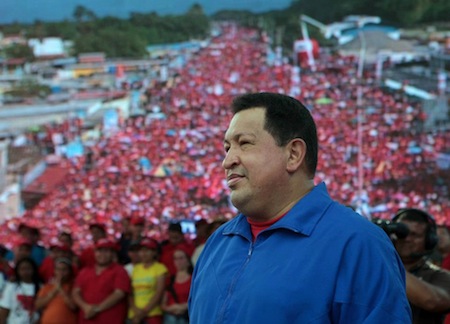
Today, the Toque de Diana blared at 3 a.m. throughout the country, signaling that Venezuelans will go to the polls to decide whether to reelect Hugo Chávez (pictured above, top) for another term in office after 14 years or to elect Capriles (pictured above, below), the 40-year-old governor of Miranda state, to the presidency, but I think the answer is just as unclear right now, hours away from the close of polls, as it was in February.

There have been so many pieces out there this week that describe the state of the race, and an excellent blog that can give you more detailed analysis of the Venezuelan presidential race.  There’s no doubt that Capriles has run a very smart and energetic campaign, and that the race is essentially the first truly contested presidential election since Chávez took power.

But as we get word of results tonight, there are three sets of questions to keep in mind — first, about the election itself; second, about Venezuela if Capriles wins; and finally, about Venezuela if Chávez wins.

First, the election:

What to make of Venezuelan polling? Polls have been all over the place, some showing Chávez locked in a tight race and others showing him winning in a landslide.  Given that Venezuela’s democratic institutions are a standard deviation lower in quality than, say, Peru or other countries in South America, to say nothing as compared to the United States or the European Union, it’s safe to say that we can’t rely much on polls or exit polls to show us too many insights on the Venezuelan result.

How will we even know that the result is accurate? There are no international observers, and Chávez’s Partido Socialista Unido de Venezuela (PSUV, or United Socialist Party of Venezuela) controls many of the levers of government.  If Chávez wins by just a small margin, there’s really no way to know whether the result will have been valid or whether.

As Lara state goes, so goes Venezuela?

If Chávez wins: Continue reading No, but really: Can Henrique Capriles defeat Chavismo?

A shift in tone about Chávez’s health

It sounds like Hugo Chávez’s cancer may be taking a turn for the worst, if his teary-eyed moment at a pre-Easter service is any indication. 

From the always superb Caracas Chronicles:

As he customarily does, Chávez turned a religious service into a revival session-cum-political rally-cum-touchingly televised cinematic cliffhanger. He wept, prayed for his life to be spared, and movingly thanked his family for their support.

I don’t want to be too cynical about this, and I am willing to forgive the uncomfortable use of a religious service for … something else. To me, the most noteworthy aspect of this is the shift in tone.

I’ve noted in the past that chavismo without Chávez does not have a promising future — but that may not be the best news for presidential candidate Henrique Capriles.

Capriles has been tied with Chávez in polls in advance of October’s presidential election, although the latest poll from Caracas-based Datanalysis, released on March 29, shows Chávez with a 44.7% to 31.4% lead over Capriles.

Nonetheless, there remains a chance that Chávez’s death or incapacity could trigger any number of events that could supersede the election, including a coup by Chávez’s ruling Partido Socialista Unido de Venezuela or a coup by Chávez opponents.

Venezuelan presidential race a toss-up

The latest poll from Consultores 21, a well-respected Venezuelan poll, released today and taken from March 3 through March 13, shows  Venezuela’s presidential race fairly well tied, as current president Hugo Chávez takes 46% and his challenger Henrique Capriles takes 45%.

The election won’t be held until October, but Capriles provides a unique challenge — in his anti-crime, centrist message to voters, in the unity of the opposition to Chávez, and in the youthful and energetic contrast that the Miranda state governor provides against the cancer-striken president, who’s led Venezuela for the past 13 years.

This will be one to watch.